


Brown Walnut Lap Desk
These brown walnut lap desk pieces are portable writing companions built for travel and correspondence, offering fitted storage and sloping surfaces.
Brown Walnut Lap Desk
A brown walnut lap desk encompasses portable writing slopes, correspondence boxes, and desk accessories designed for travel and home use. These items range from late Georgian examples to Victorian pieces, capturing the shifting tastes of the nineteenth century.
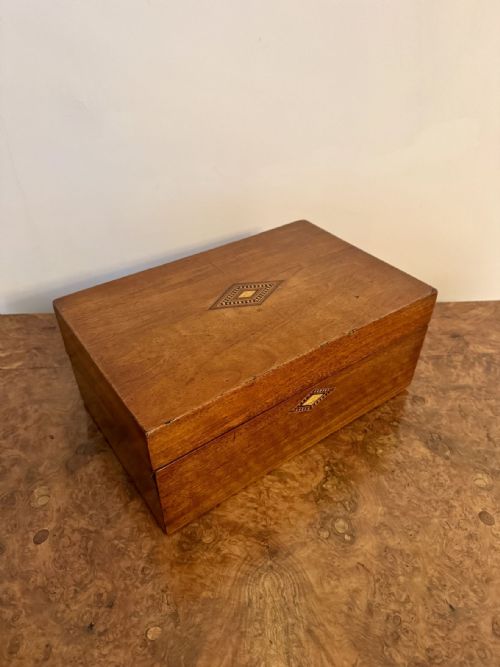
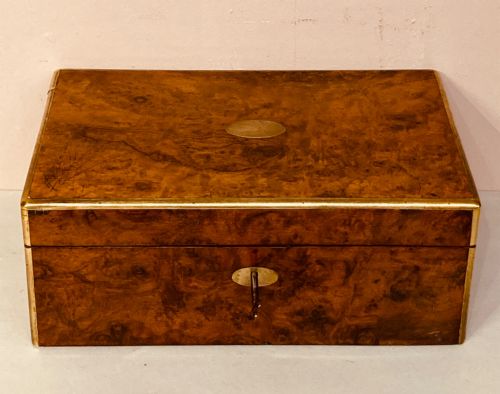
The versions most frequently met on this page are walnut and burr walnut writing slopes from the Regency and Victorian eras. Many incorporate brass mounts, secret drawers, and fitted interiors for stationery and inkwells.
How they were made
Cabinet makers utilised solid walnut and burr walnut veneers over secondary woods to create rich grain patterns across the sloping lids. Marquetry inlay, Tunbridge wear decoration, and boxwood stringing were frequently applied to enhance the exterior appearance.
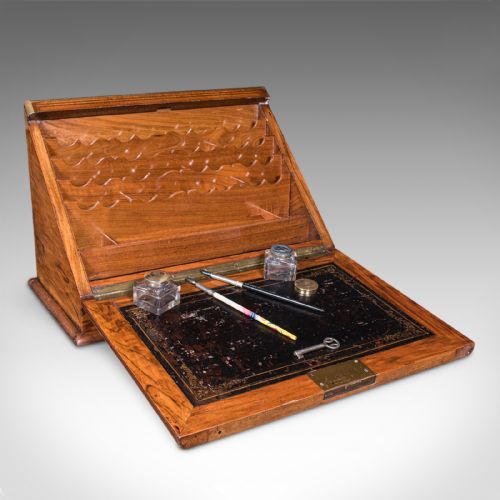
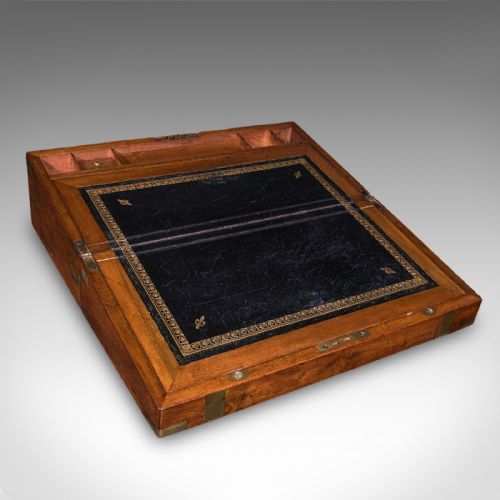
Internal fittings incorporated leather writing surfaces, glass ink bottles, and brass hardware such as Bramah locks. Campaign variations featured recessed brass carrying handles for durability during travel.
Materials appearing alongside walnut include brass, boxwood, leather, glass, and marquetry inlay.
What varies in quality
Quality rests upon the selection of timber, particularly the depth and movement of the burr walnut veneer used across the exterior surfaces. Finer boxes display meticulous matching of grain patterns across the lid and sides.
Internal complexity also dictates worth, separating simple writing boxes from those featuring secret drawers, brass-bound edges, and signed locks. The precision of inlaid marquetry or boxwood stringing further separates standard production from superior workshop output.
Austin
The Brown Walnut Lap Desk Glossary
- Burr walnut
- A prized timber harvested from the growth excrescences of walnut trees, yielding intricate and swirling grain patterns. It was favoured by cabinet makers for high-status veneered surfaces.
- Writing slope
- A portable box with a hinged sloping lid designed to provide a comfortable angle for handwriting. When opened, it typically reveals compartments for paper, pens, and ink.
- Bramah lock
- A high-security cylindrical lock mechanism invented by Joseph Bramah in the late eighteenth century. These sophisticated locks are commonly found on better-quality Regency and Victorian boxes.
- Tunbridge wear
- A specialised form of woodworking involving small mosaic tiles of variously coloured woods assembled to form geometric or pictorial scenes. It appears on decorative desk accessories from the nineteenth century.
- Campaign
- A descriptor for portable furniture and accessories constructed for military officers or travellers. These pieces often feature brass binding and flush handles to withstand rough journeys.
Brown Walnut Lap Desk: Frequently Asked Questions
What is a brown walnut lap desk used for?
These portable boxes served as mobile writing desks for correspondence during travel or in rooms without large tables. They opened to reveal a slanted writing surface alongside compartments for paper and ink.
Inside, owners stored nibs, sealing wax, and letters away from dust and prying eyes. Many included clever locking mechanisms to secure private documents.
How do I date a walnut writing slope?
Dating relies on stylistic clues, construction methods, and hardware details like locks and hinges. Regency examples often feature clean brass banding and simpler geometric lines.
Victorian pieces frequently display richer burr walnut veneers, marquetry inlay, or elaborate fitted interiors. Maker marks and patent stamps on locks can also narrow down the period of manufacture.
What is a campaign lap desk?
Campaign versions were built sturdy for officers and travellers on the move. They typically feature recessed brass handles and reinforced corners to endure rough transit.
These utilitarian yet handsome boxes prioritize durability without sacrificing the fitted interior compartments needed for writing on journeys.
How do I care for antique walnut wood?
Keep walnut boxes away from direct sunlight and radiators to prevent the wood and burr veneers from drying and cracking. Maintaining stable indoor humidity preserves the finish and structural integrity.
Apply a traditional beeswax polish sparingly to nourish the grain and clean surface dust. Avoid harsh chemical cleaners that can strip the historic polish.