


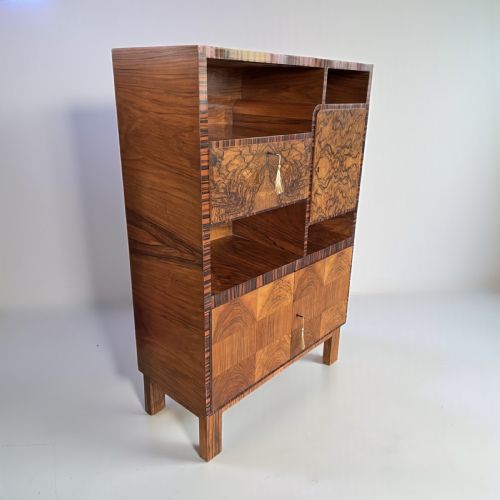

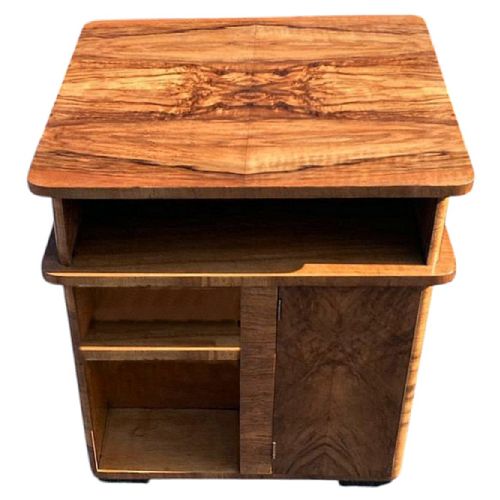
Brown Walnut Cocktail Cabinet
A brown walnut cocktail cabinet brings sophisticated hosting into the home with distinctive grain patterns and fitted interiors.
Brown Walnut Cocktail Cabinet
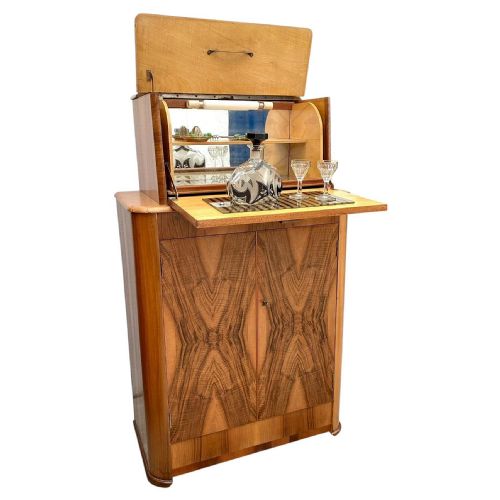
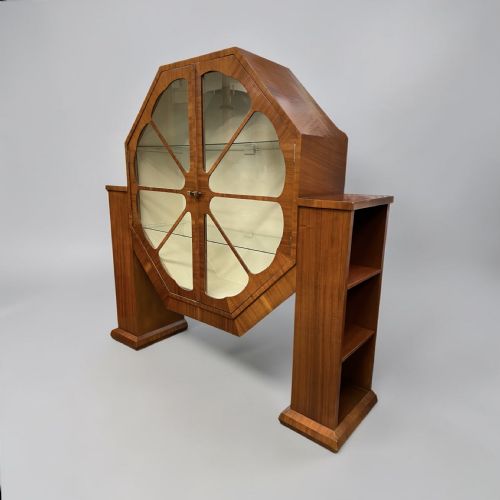
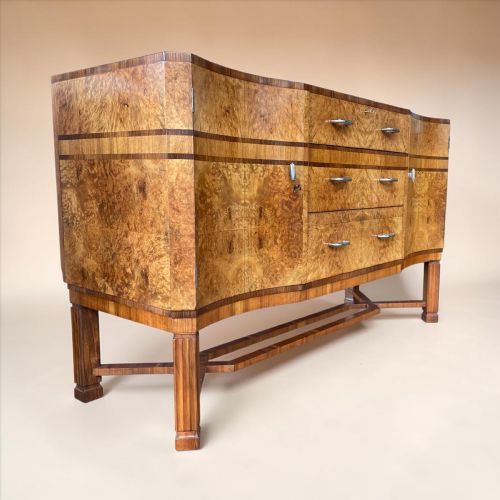
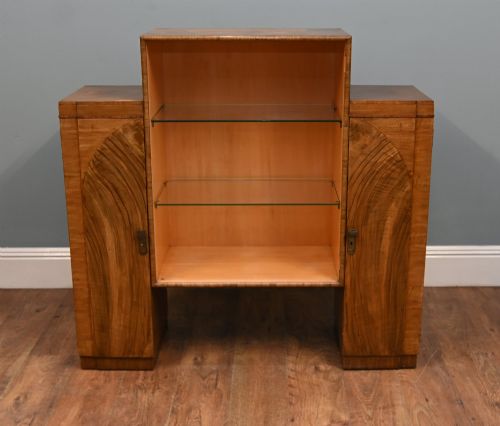
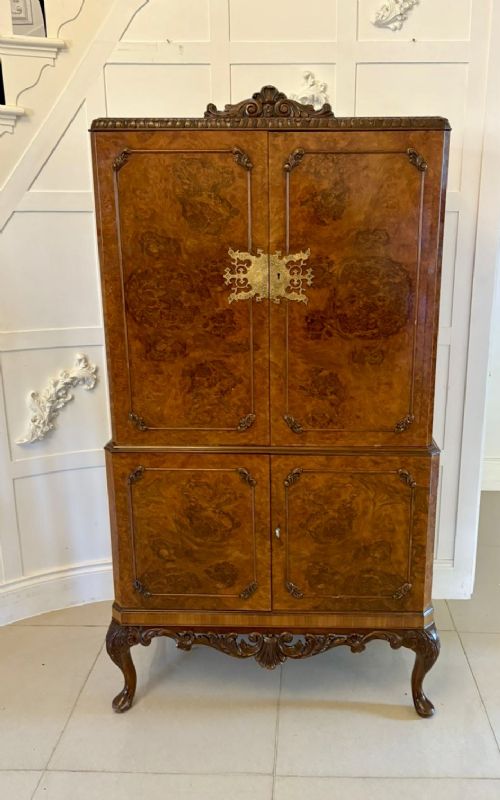
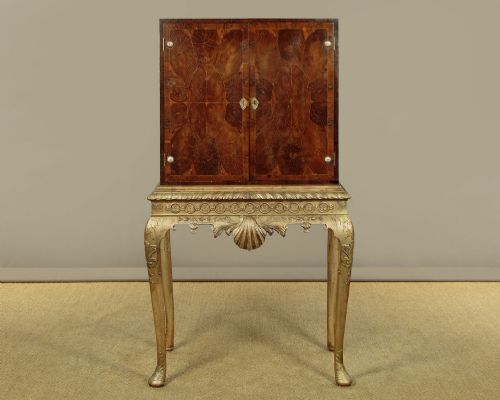
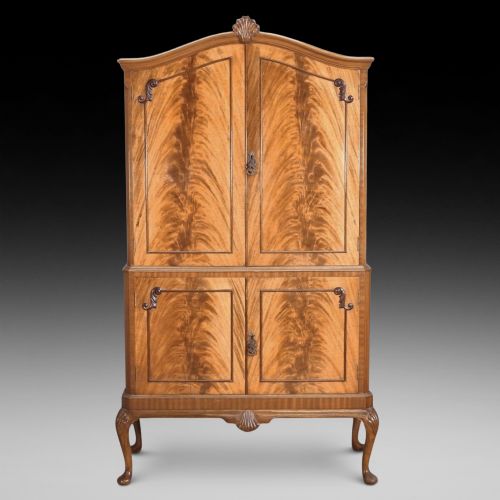
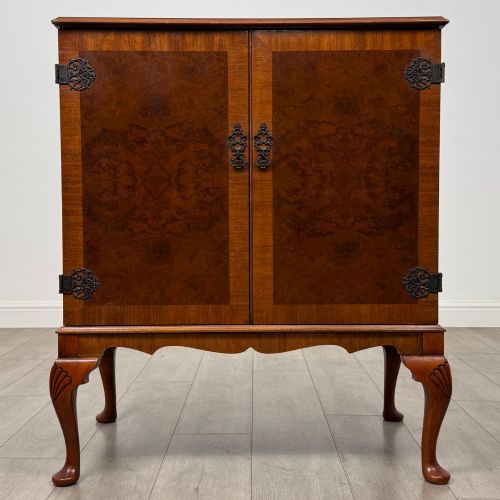
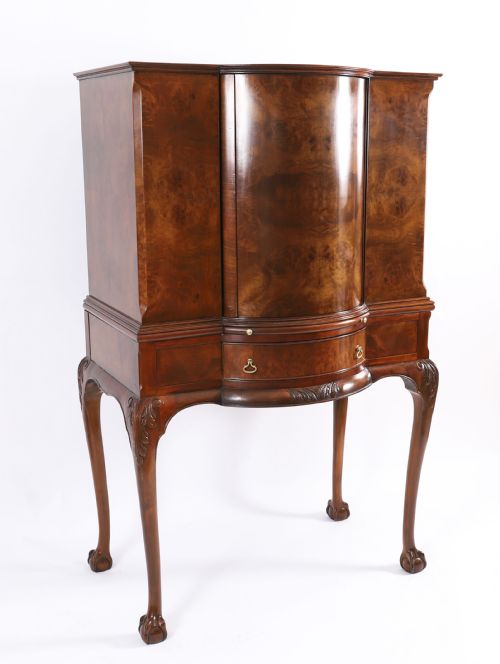
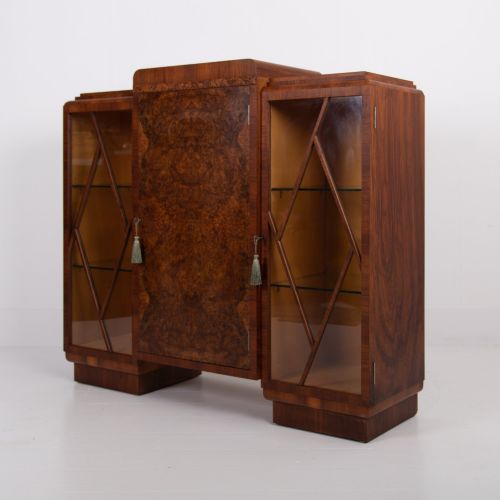
A brown walnut cocktail cabinet is a specialised storage piece designed for entertaining, appearing primarily across Art Deco and earlier twentieth-century periods. These items combine practical interior fittings like glass shelving and mirrored sections with impressive exterior cabinetry intended for formal reception rooms.
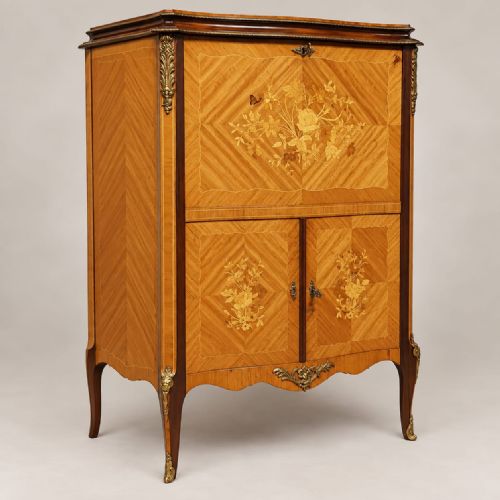
The selections available range from streamlined Art Deco forms to Edwardian and Victorian precedents, alongside Queen Anne Revival styles. Buyers frequently encounter double bow front designs, sideboards, and specialised drinks chests that house glassware and bottles behind panelled doors.
Factors of quality
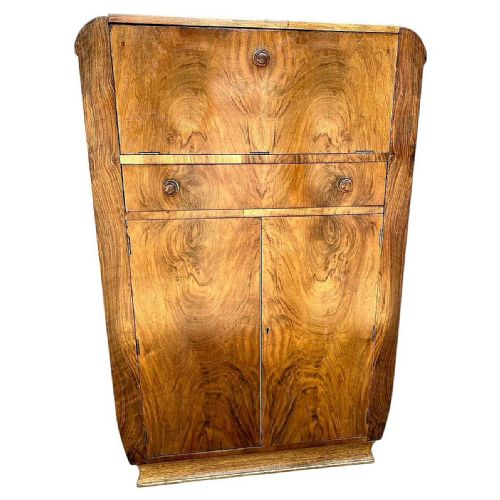
Quality in these items is determined by the selection and bookmatching of the burr walnut veneer across the primary surfaces. Finer examples display symmetrical grain patterns that wrap seamlessly around the contours of the cabinet.
The sophistication of the internal fittings, including specialised lighting, mirrored backs, and original glass or metal accessories, separates standard storage from exceptional pieces. Maker attribution and the precision of the joinery further distinguish the cabinet's tier.
Brown Walnut Cocktail Cabinet Retail Price Guide 2026
Typical asking prices for brown walnut cocktail cabinet among the pieces listed under this phrase on Sellingantiques today, from the lower quarter to the upper quarter. They describe what is for sale here now, not the wider market.
Some ingenious 1930s hosts relied on revolving dry bar cabinets that spun the gin and glasses into view with a gentle push.
Hille·Harry and Lou Epstein·Hamptons of Pall Mall London·Waring and Gillow
The Brown Walnut Cocktail Cabinet Glossary
- Burr walnut
- A specialised timber cut from the abnormal growth of a walnut tree, yielding intricate swirling grain patterns. It is prized for decorative veneering on statement furniture.
- Art Deco
- A design style dominant in the 1930s characterised by sleek geometric lines, stylised motifs, and modern industrial materials. This aesthetic defines many of the drinking cabinets from the era.
- Metamorphic
- Furniture designed to transform its shape or function through mechanical action, such as unfolding or rising sections. These clever designs appear in specialised drinks chests.
- Queen Anne Revival
- A revival style drawing on early eighteenth-century English furniture characteristics, often featuring cabriole legs and curved walnut forms. It provides a traditional contrast to geometric Deco pieces.
Brown Walnut Cocktail Cabinet: Frequently Asked Questions
How were these cabinets used originally?
These cabinets served as the social centrepiece for home entertaining, holding spirits, mixers, and specialised cocktail glasses. The drop-down flap frequently functioned as a small serving shelf or mixing bar during evening gatherings.
Lower cupboards and side compartments provided additional storage for taller bottles, cocktail shakers, and related barware. This kept all entertaining essentials organised and concealed within a formal piece of furniture.
How do I style a cocktail cabinet at home?
Position the cabinet in a living room, dining area, or home study where it can function as a focal point. Leaving the doors open or the drop-down flap lowered during gatherings highlights the internal mirrors and glassware collections.
Complement the warm brown tones of the walnut and burr veneer with vintage barware, crystal decanters, and subtle room lighting. The piece works equally well paired with mid-century modern seating or traditional interior schemes.
How can I tell the period of a cabinet?
Look to the overall silhouette and decorative details, as 1930s pieces typically display streamlined Art Deco geometry or waterfall edges. Pieces from the Edwardian era or Victorian periods often lean towards Queen Anne Revival styling with cabriole legs and more traditional proportions.
Materials and hardware also offer clues, with chrome and mirrored glass pointing strongly towards the 1930s. Maker stamps or badges inside the drawers and cupboards frequently confirm the exact period and workshop origin.