


Brown Tribal Carpet
A brown tribal carpet brings together nomadic hand-weaving traditions from Central Asia, Persia, and the Caucasus.
Brown Tribal Carpet
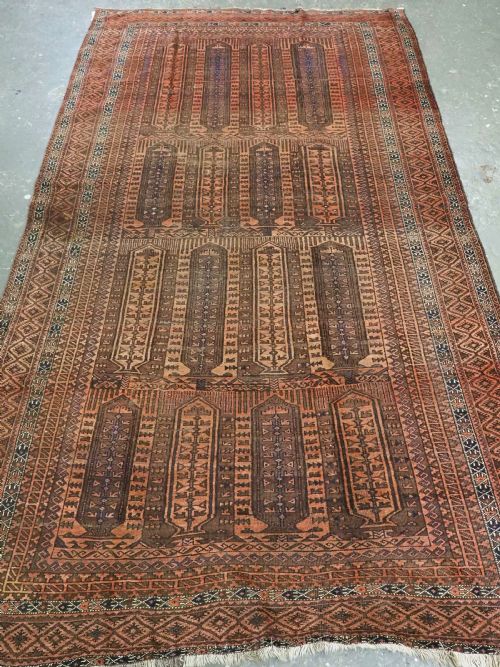
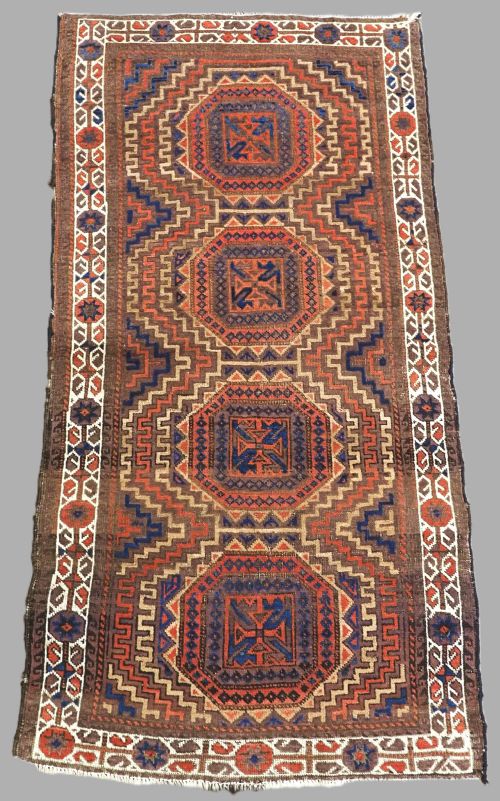
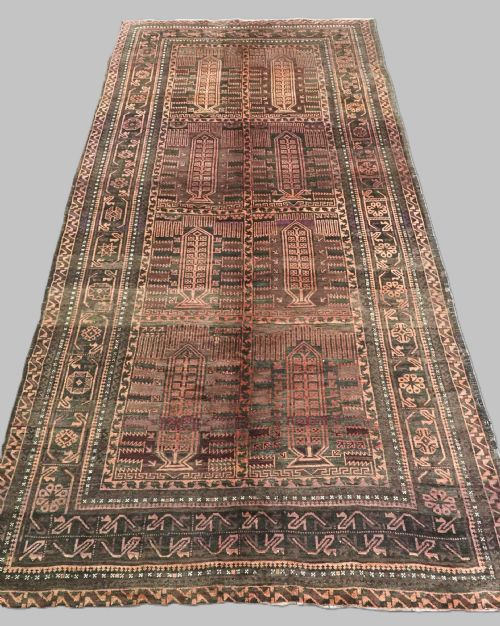
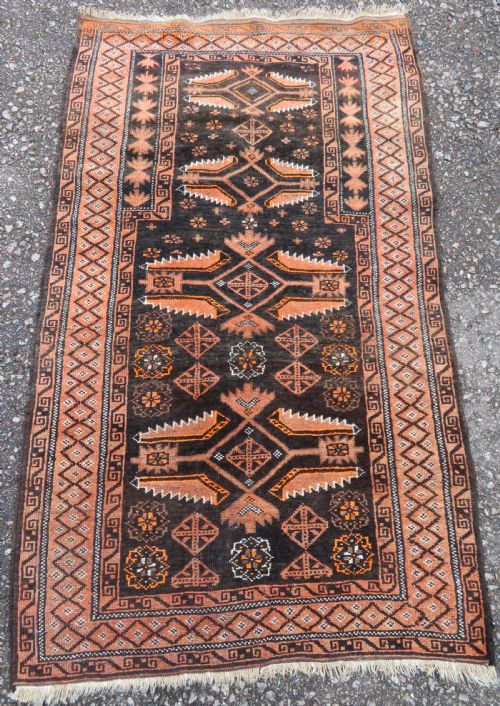
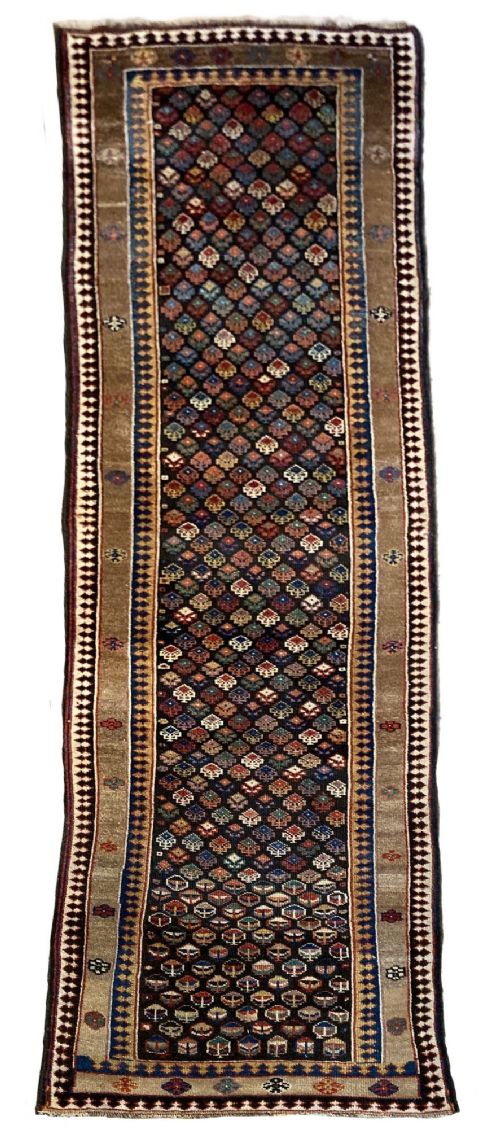
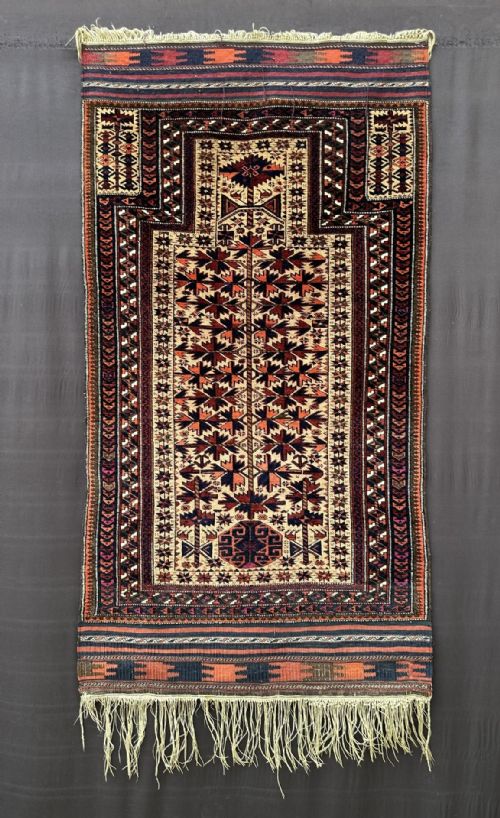
A brown tribal carpet encompasses hand-knotted rugs, flatweaves, and nomadic textiles produced across regions such as Afghanistan, Persia, and Central Asia. The most frequently encountered examples on this page date from the late nineteenth century to the early twentieth century, reflecting traditional village and tribal production.
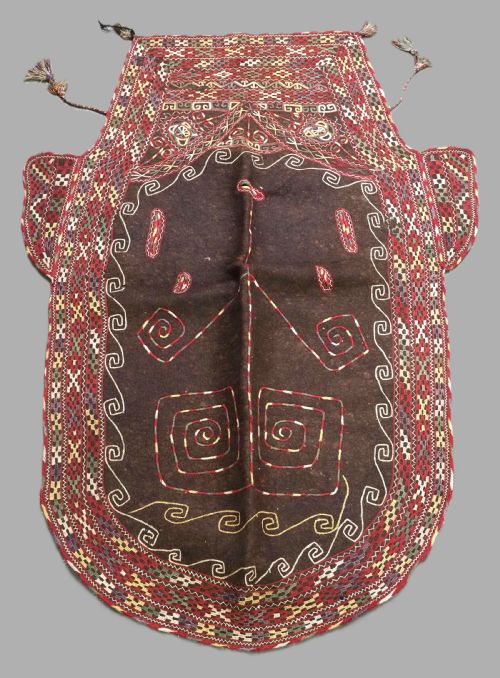
These floor coverings and tent furnishings take various forms, including main carpets, runner rugs, prayer rugs, and torba faces. Makers utilised local designs such as guls, mihrabs, and geometric repeats unique to groups like the Baluch, Yomut, and Ersari Turkmen.
Nomadic weavers constructed these pieces for utilitarian domestic use, communal gatherings, or ceremonial purposes. Their enduring appeal lies in the varied earth tones and authentic tribal iconography that distinguish village work from urban workshop production.
Materials and Construction
Makers relied primarily on hand-spun wool for the pile and foundation, often supplemented by cotton foundations and goat hair or camel wool in specific regional types. Natural dyes provided the distinctive palette of browns, reds, and indigos seen across these textile traditions.
Weavers employed traditional warp-and-weft knotting techniques alongside flatweave constructions like kilim ends and embroidered felt work. The integration of mixed animal fibres and specialised pile lengths resulted in durable, tactile surfaces built for nomadic lifestyles.
Brown Tribal Carpet Retail Price Guide 2026
Typical asking prices for brown tribal carpet among the pieces listed under this phrase on Sellingantiques today, from the lower quarter to the upper quarter. They describe what is for sale here now, not the wider market.
Nomadic weavers occasionally incorporated camel hair directly into prayer rugs, adding subtle natural softness and varying texture to the pile.
Assessing the Weavings
Quality in a brown tribal carpet is determined by the density of the knotting, the handling of the wool, and the complexity of the design structure. Finer weaves and tighter construction allow intricate motifs like guls or shrub patterns to maintain crisp definition.
The choice of natural dyes significantly influences the depth and longevity of the colour palette, creating subtle tonal variations across the field. Intact original details, such as kilim ends and well-preserved side cords, indicate superior preservation and careful original craftsmanship.
The Brown Tribal Carpet Glossary
- Gul
- A repeating octagonal medallion motif frequently found in Turkmen and Baluch tribal weavings. This design element often serves as a primary identifier for specific tribal clans.
- Mihrab
- An arched design element indicating a prayer rug, representing the direction of Mecca. Weavers adapt this architectural form into portable textile formats.
- Kilim
- A flatweave textile produced without a pile by tightly interweaving warp and weft strands. These sections frequently appear at the ends of carpets.
- Torba
- A small storage bag face produced by nomadic groups for tent organisation. These panels display characteristic geometric borders and face designs.
- Mafrash
- A large rectangular storage bale panel used for bedding and household goods during nomadic migrations. Fragments of these pieces are occasionally repurposed into smaller flatweaves.
Brown Tribal Carpet: Frequently Asked Questions
How do I identify a tribal carpet?
Tribal carpets display geometric motifs, repeating guls, and irregular field layouts distinct from court workshop designs. They reflect the regional traditions of specific nomadic groups across Central Asia and Persia.
Examination of the wool, fringe construction, and natural dye palette helps confirm the nomadic or village origin of the piece.
Where were these rugs made?
These textiles originate from nomadic and village communities in regions spanning Afghanistan, modern Turkmenistan, East Persia, and the Caucasus. Different tribes utilised distinct design vocabularies and material combinations.
Local environmental conditions and available livestock directly influenced the specific wool types and dye sources used in each area.
How should I clean a vintage carpet?
Gentle surface cleaning and regular low-suction vacuuming without a rotating brush help maintain the pile. Professional textile conservators should handle deep cleaning to protect natural wool and historic dye formulas.
Avoiding direct, prolonged sunlight prevents fading in older vegetable-dyed wool fibres.