


Brown Tone Watercolour Art
Brown tone watercolour art captures landscapes and figures in restrained, sepia and earth palettes, offering an intimate glimpse into nineteenth and twentieth century British life.
Brown Tone Watercolour Art
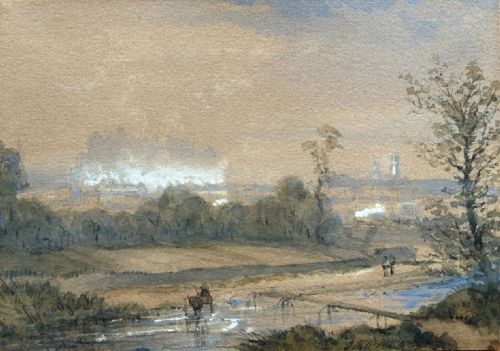
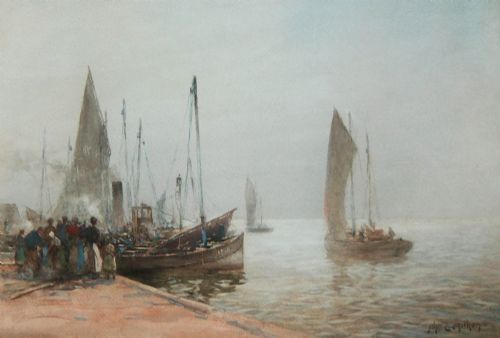
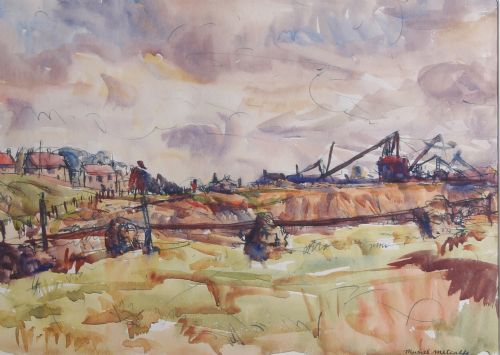
Brown tone watercolour art comprises original works on paper executed predominantly in monochrome or muted earth pigments. These pieces range from detailed rural vistas and coastal harbours to domestic figures and still life compositions.
The selections available here date mainly from the nineteenth century through to the mid twentieth century. Buyers will frequently encounter Victorian landscapes, Edwardian street scenes, and later works associated with regional British artists.
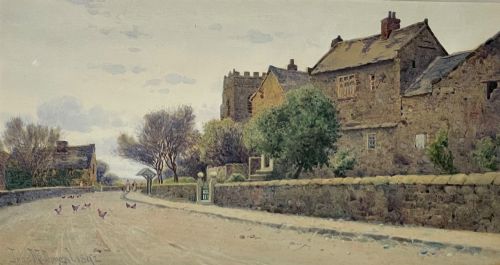
Subjects frequently record specific locations across Britain, from Yorkshire villages and Scottish highlands to Welsh valleys. The restraint in palette focuses attention on draughtsmanship, tone, and atmospheric depth rather than bright colour.
How They Were Made
Artists worked primarily with watercolour pigment and water-soluble ink applied to absorbent paper stocks. Washed amber, umber, and sepia tones established shadow and form, sometimes supplemented by pencil or bodycolour for highlights.
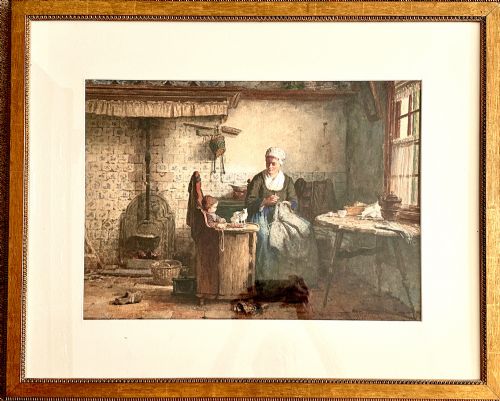
Finished sheets were commonly housed beneath glass in wooden frames to protect the delicate paper surface and water-soluble pigments from moisture and light damage.
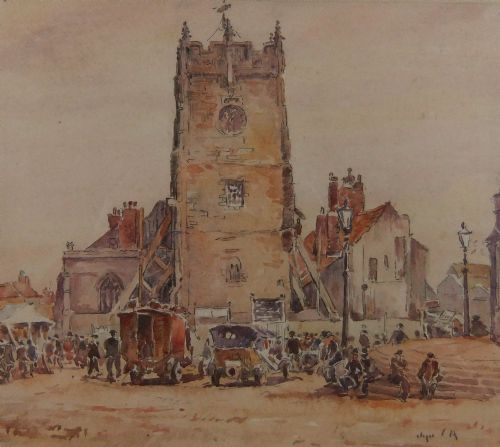
Even a rainy Yorkshire village looks charming when rendered in warm tea-coloured washes.
What Varies in Quality
Quality rests upon the confidence of the brushwork and the precision of the tonal gradation. Strong compositions utilise the natural white of the paper to create light within a restricted brown palette, avoiding muddy or overworked passages.
The distinction between ordinary and exceptional works lies in the artist's economy of line and the ability to convey atmosphere through subtle shifts in hue. Established names and signed pieces from recognised regional painters generally demonstrate superior handling of perspective and light.
John R Prentice·John McDougal·James E Aitken·Muriel Metcalfe·John Smith Atherton·Hendrik Valkenberg·James Hayllar·Alfred George Morgan·James Tower·James Hardy·John Atkinson·Louie Stanley Maurice Prince·John Syer·Adrian Jones·Henry Charles Fox·Roland Batchelor·Percy Brooke·Leonardo Morello·Rowland Henry Hill·Thomas Pyne·Sir William George Gillies·Edward Killingworth Johnson·Lieutenant Harold E Frecker·Charles James Adams·J V R Parsons
The Brown Tone Watercolour Art Glossary
- Watercolour
- A painting method in which the paints are made of pigments suspended in a water-based solution. The paper surface often shows through the translucent washes.
- Monochrome
- A painting or drawing executed in a single colour or varying shades of a single colour such as sepia or brown. This approach emphasises light and shadow over chromatic variety.
- Bodycolour
- Watercolour mixed with white pigment to make it opaque. Artists used this to add highlights and solid areas of light to brown tone works.
- Provenance
- The chronological ownership history of a work of art. Documentation confirming past ownership adds certainty to attribution.
- Wove paper
- Paper made on a fine wire mesh screen, leaving a smooth, uniform texture without visible chain lines. It served as a common support for nineteenth and twentieth century watercolours.
Brown Tone Watercolour Art: Frequently Asked Questions
What is brown tone watercolour art?
Brown tone watercolour art refers to works on paper created using sepia, umber, and earth pigments rather than a full primary colour spectrum. These pieces rely on tonal contrast to define form and atmosphere.
Such works were produced across the nineteenth and twentieth centuries, capturing landscapes, architectural views, and figurative studies with subtle gradation.
How should I frame and display these watercolours?
Watercolours require careful framing behind glass with acid-free mounts to prevent the paper from touching the glazing. This protects the delicate pigments from atmospheric moisture and handling.
Display them away from direct sunlight to prevent the brown washes and ink lines from fading over time.
How do I identify the period of a watercolour?
Period identification relies on a combination of paper type, framing style, artist signatures, and subject matter. Stylistic clues, such as Victorian romanticism or mid-century modern composition, also offer guidance.
Examining the reverse of the paper or frame can sometimes reveal gallery labels, artist inscriptions, or dates that confirm when the piece was created.
Where were these landscape watercolours typically painted?
Many landscape watercolours depict specific British scenes, including Yorkshire villages, Welsh valleys, Scottish highlands, and coastal harbours. Artists frequently worked out of doors to record direct observations.
Inscribed titles on the front or back of the sheet often record the exact location, providing a direct connection to the topography of the period.