




Antique Domestic Interior Art
Antique domestic interior art captures quiet domestic scenes through oil paintings and watercolours that bring the character of past households into modern spaces.
Antique Domestic Interior Art
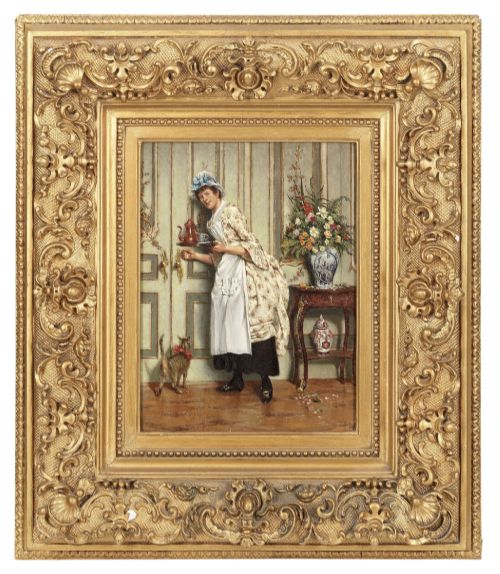
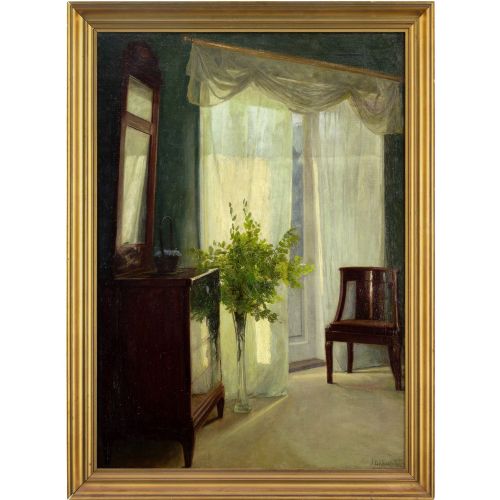
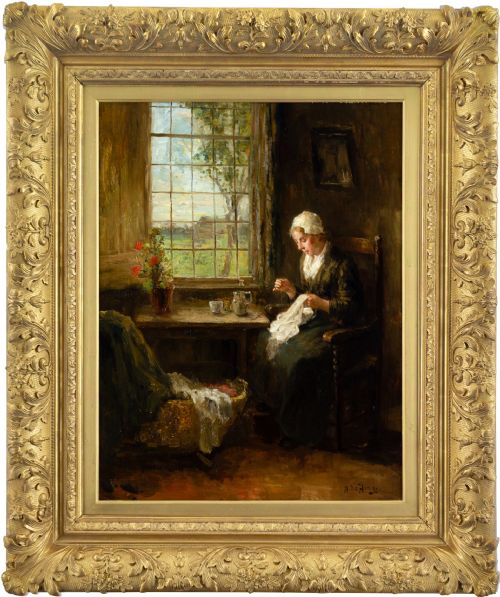
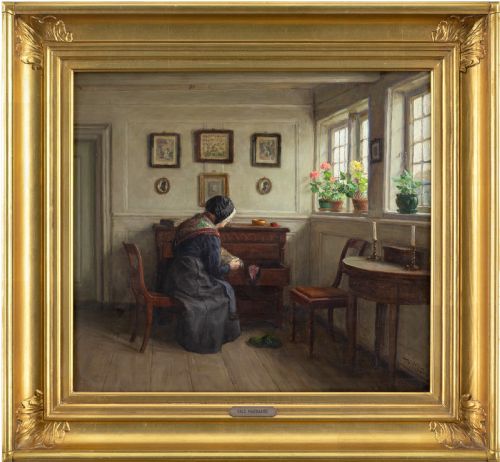
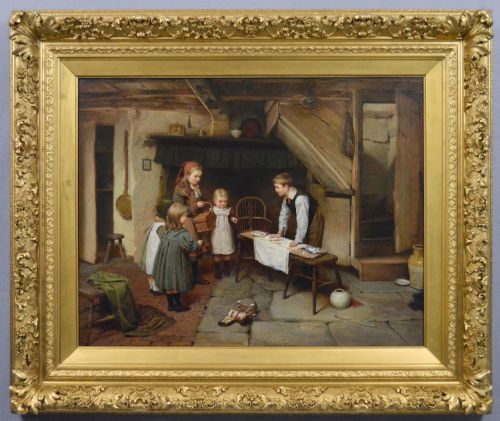
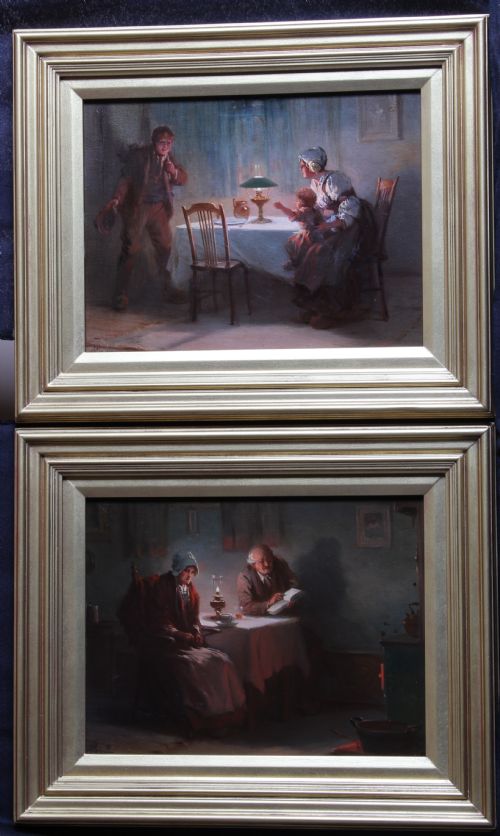
Buyers seeking antique domestic interior art look at framed artwork and oil paintings portraying cottage life, tea times, and fireside moments. These works record everyday household scenes from the nineteenth and early twentieth centuries, spanning Victorian genre painting to Scandinavian and Dutch realism.
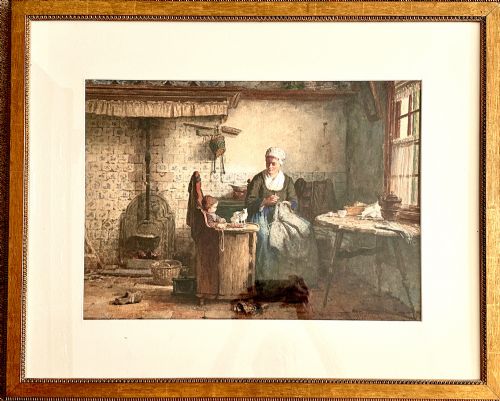
The version most commonly met on this page is the oil painting on canvas or panel, frequently housed in giltwood frames with gesso ornamentation. Watercolours and original drawings on paper also appear, depicting domestic activities from spinning wool to children playing.
Materials and construction methods
Painters applied oil paint and watercolour onto supports of canvas, wood panels, paper, and copper plates. These foundational materials dictated the fine detail achievable in rendering cottage interiors and figures.
Frames combine wood cores with applied gesso and gold leaf finishes to house and protect the painted surface. Gilding techniques provided a decorative border that complemented the domestic subject matter within.
Canvases frequently catch household pets interrupting quiet moments, from dogs stealing food in the kitchen to goldfish swimming in naive watercolours.
Distinctions in execution and condition
Quality separates through the artist's handling of light, particularly where sunlight crosses a garden door or illuminates a hearth. Mastery in depicting human expression and textile textures elevates a piece.
The preservation of the original paint layer and the integrity of the giltwood frame influence the overall character of the artwork. Evidence of brushwork and the clarity of artist signatures or exhibition labels mark superior examples.
Stephen Samuel Lewin·John Lübschitz·Hendrik Valkenberg·Bernard De Hoog·Valdemar Magaard·James Hayllar·Harry Brooker·Alexander Rosell·James Kyd·George Smith·William Henry Knight·Théophile Emmanuel Duverger·Henry Spernon Tozer·Rolinda Sharples·Pauline Delacroix Garnier·Alfred Provis·Henry Silkstone Hopwood·Ralph Hedley·Alexandre Decamps·Jonathan Pratt·Pierre-Louis Bouchard
The Antique Domestic Interior Art Glossary
- Genre painting
- Artwork depicting scenes from ordinary life, typically featuring people in domestic settings. These works focus on narrative moments like tea time or fireside rests.
- Giltwood
- Wood that has been coated with gold leaf or a gold-coloured substance. This material is standard for period frames enclosing fine art.
- Gesso
- A plaster mix applied to wood frames to create a smooth surface for gilding. It allows for moulded decorative details along the frame edges.
- Realism
- An artistic movement aiming to represent subject matter truthfully without artificiality. Scandinavian and Dutch variations appear frequently in domestic interior works.
Antique Domestic Interior Art: Frequently Asked Questions
What subjects appear in domestic interior art?
These paintings portray cottage life, family scenes, and daily household rituals such as spinning wool, sharing tea, or resting by the hearth. Animals, including dogs and kittens, frequently share the space with human subjects.
Artists recorded the intimate details of domestic routines across Britain, France, Denmark, and the Netherlands during the nineteenth and early twentieth centuries.
How were these artworks framed originally?
Period pieces are typically housed in wooden frames finished with gesso and gold leaf. These decorative surrounds were designed to complement the warm tones of oil on canvas or panel.
The presence of original framing adds historical context to the artwork, preserving the complete presentation intended by the maker.
Where should I hang a domestic interior painting?
These works suit living rooms, studies, and dining spaces where their intimate scale and domestic subject matter create a warm atmosphere. They pair effectively with traditional interiors and wood furnishings.
Keep paintings away from direct sunlight and damp environments to protect the oil paint, canvas, and giltwood frames over time.
How do I identify the period of an interior painting?
Dates are often indicated by the clothing styles of the figures, the household utensils shown, and the painting technique itself. Stylistic movements like Victorian genre painting or Hague School realism provide specific chronological markers.
Signatures, dates on the canvas reverse, exhibition labels, and framing materials offer further evidence for dating each piece.