
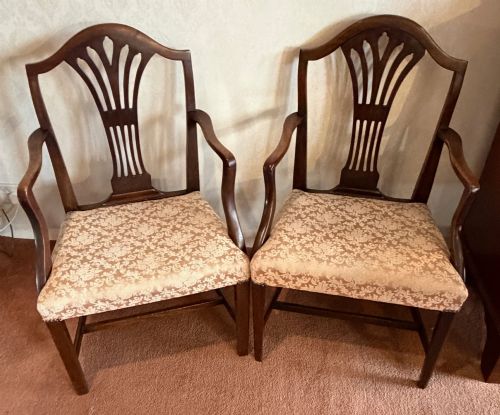


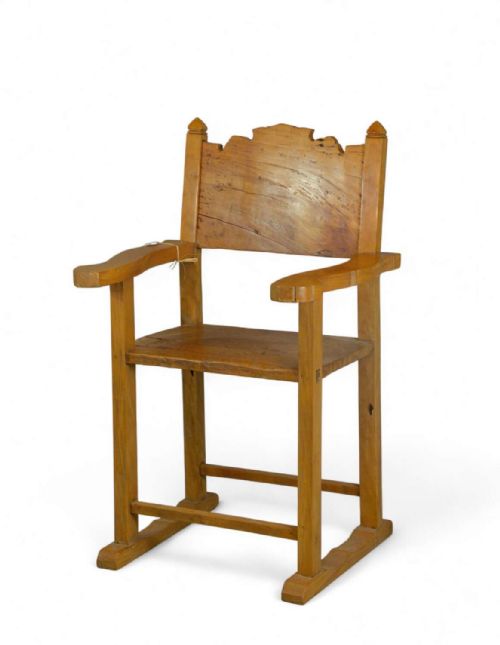


Brown Timber Armchair
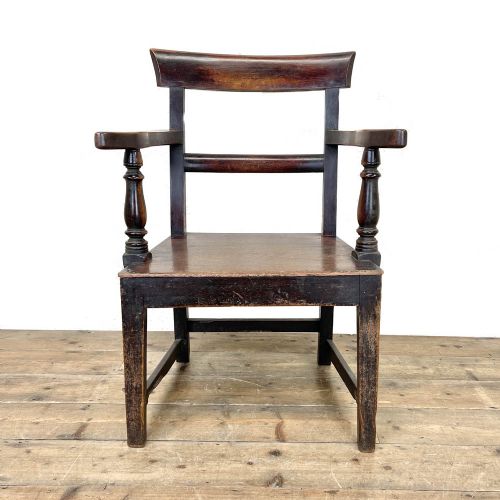
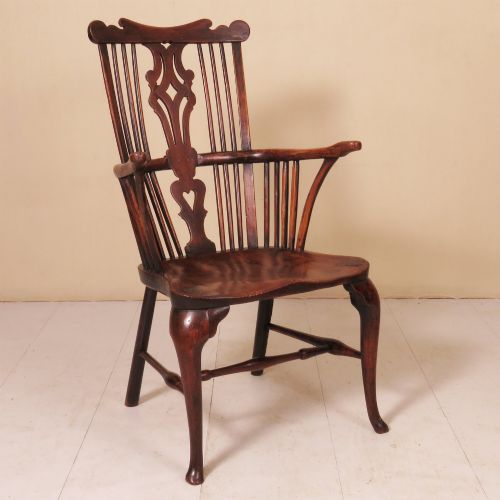
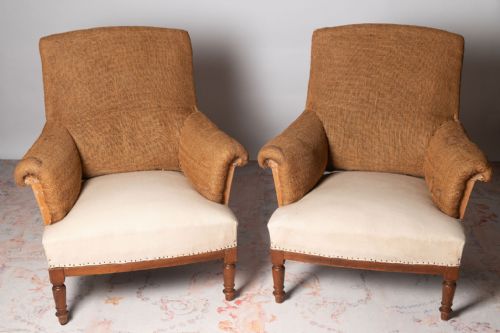
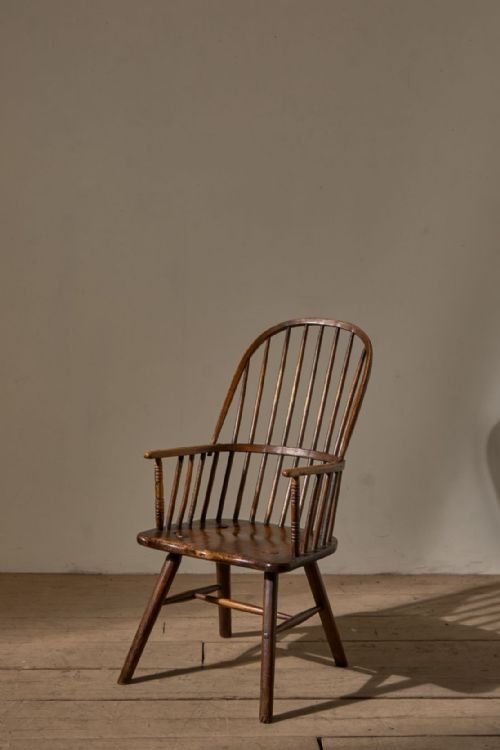
A brown timber armchair anchors a room with solid presence, offering deep seating shaped by generations of domestic use.
Brown Timber Armchair
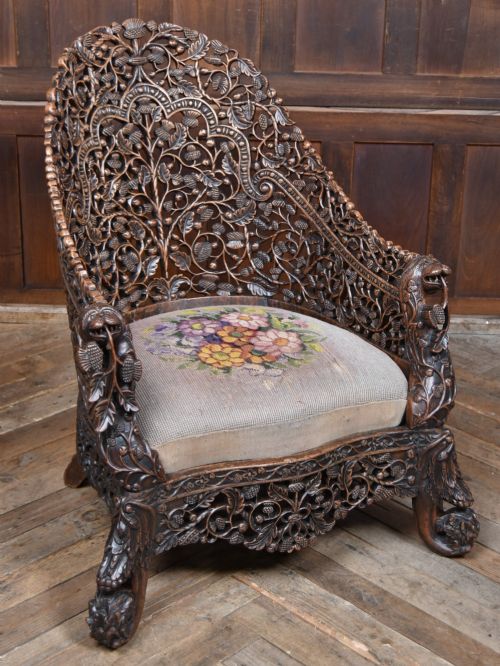
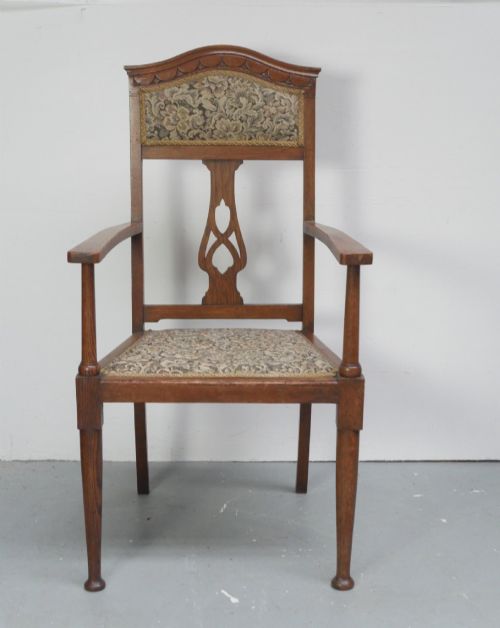
A brown timber armchair encompasses robust seating forms originating from various historical periods, ranging from the seventeenth century through to the early twentieth century.
Buyers will encounter functional domestic seating alongside specific regional types, including Orkney chairs, ladderbacks, and occasional children's seating.
How they were made
Construction relies heavily on traditional domestic timbers, predominantly elm, oak, ash, beech, and mahogany, often combined within a single frame for structural integrity.
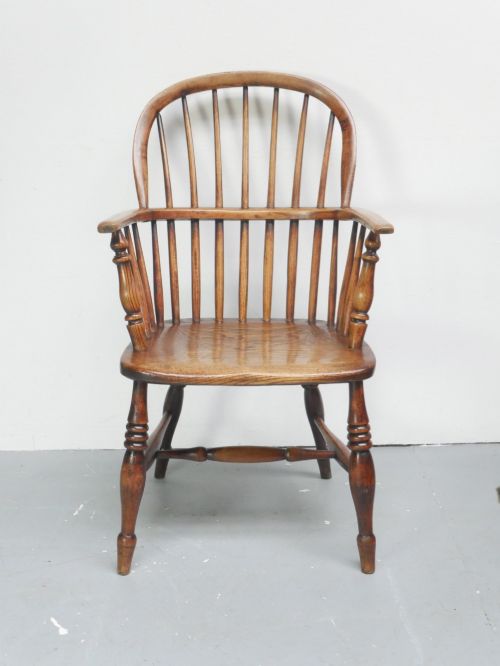
Makers utilised rigid joinery techniques such as mortise and tenon alongside steam-bending for curved elements like hoop backs and bentwood arms.
Surface finishes range from simple wax polish on exposed grain to stained beech and carved decorative detailing on hardwood frames.
Materials recorded across the selection include elm, oak, ash, beech, mahogany, and yew wood.
What varies in quality
Quality rests upon the integrity of the timber selection and the retention of original structural components without excessive replacement parts.
The finesse of hand-carving and the balance of regional proportions distinguish vernacular country pieces from formal stylistic exercises.
The Brown Timber Armchair Glossary
- Windsor chair
- A wooden armchair featuring a solid saddle-shaped seat into which the legs and back spindles are directly inserted. This form evolved through various regional styles.
- Wainscot chair
- An early heavy wooden armchair constructed primarily from oak with panelled backrests. These pieces reflect solid sixteenth and seventeenth-century joinery.
- Comb back
- A Windsor chair variation where the vertical spindles extend upward to support a horizontal headrest piece resembling a traditional hair comb.
- Lathe back
- A Windsor style featuring flat wooden slats or splats arranged vertically within the backrail. These are frequently found on nineteenth-century fireside seating.
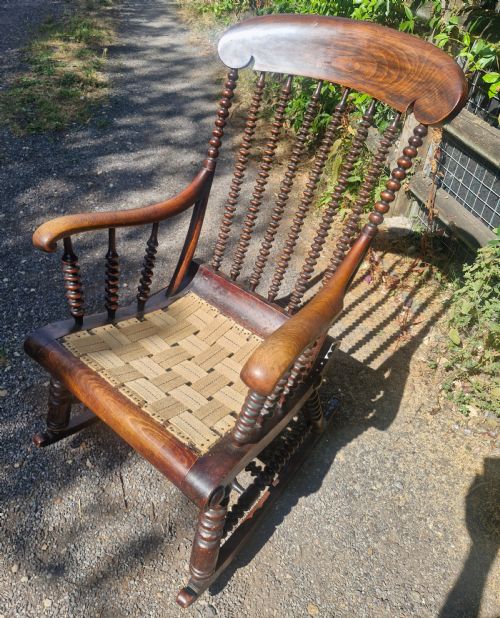
- Bobbin framing
- A decorative turning technique producing a series of rounded spheres resembling bobbins along the structural wooden members.
Brown Timber Armchair: Frequently Asked Questions
How do I care for antique timber?
Antique timber benefits from regular applications of traditional beeswax rather than modern liquid polishes. This nourishes the dry wood and maintains a natural sheen.
Keep chairs away from direct heat sources and drastic humidity changes to prevent the timber from splitting or the traditional joinery from loosening over time.
Are these chairs comfortable for daily use?
Many of these wooden armchairs were shaped to fit the human body through sculpted saddle seats and curved back rails. They offer solid ergonomic support without deep cushions.
Adding a loose squab pad or cushion can increase seating comfort while preserving the historic wooden frame underneath.
How can I date an old armchair?
Dating relies on observing tool marks, timber species, joinery methods, and the specific turning style of the legs and spindles. Regional vernacular traditions also shifted across centuries.
Comparing construction details with documented examples from periods like the Georgian or Victorian eras helps narrow down the probable date of manufacture.