


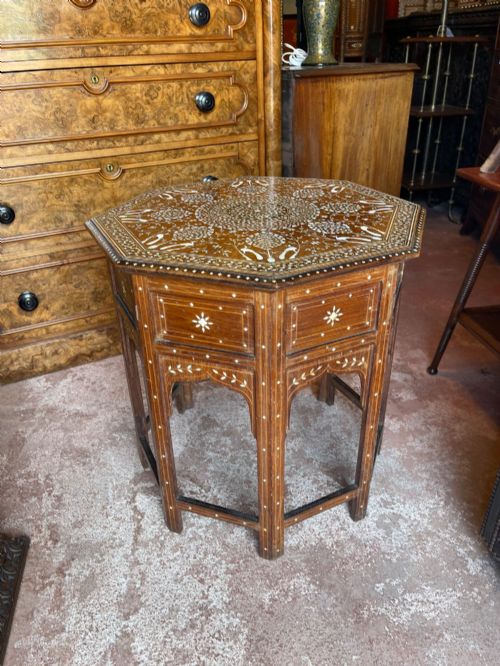
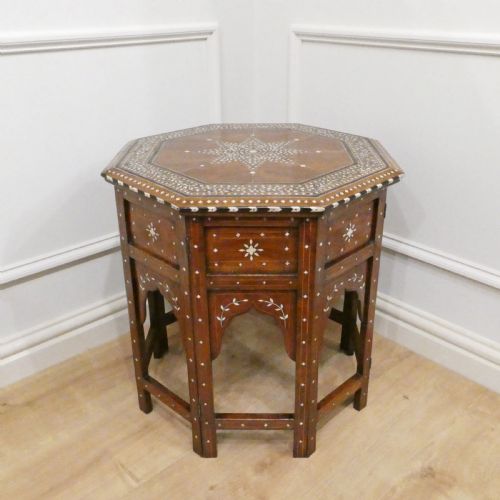


Brown Teak Occasional Table
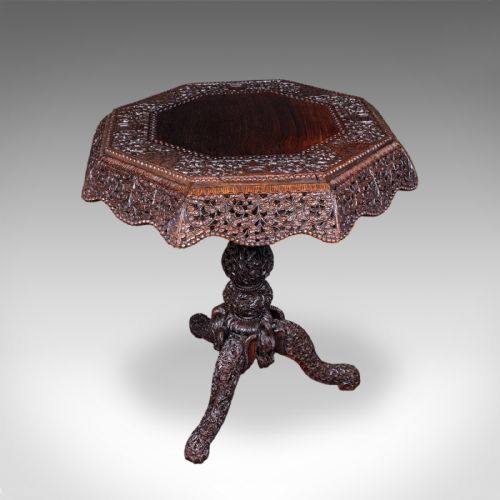
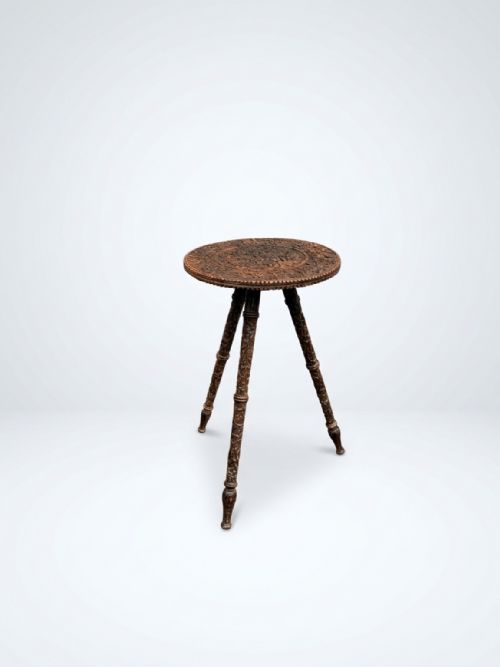
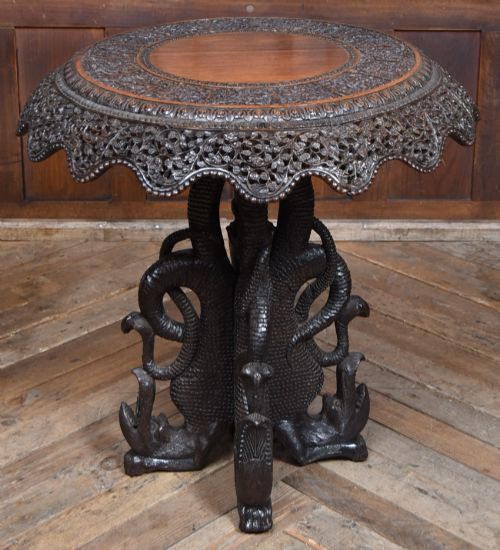
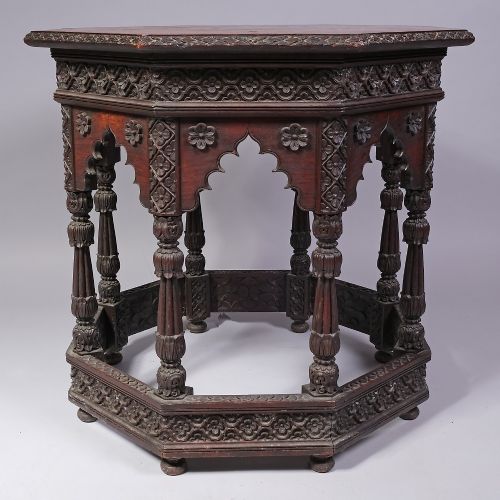
A brown teak occasional table brings intricate colonial craftsmanship and rich timber into a room as a practical side surface.
Brown Teak Occasional Table
A brown teak occasional table encompasses a range of imported colonial furniture types, primarily side tables, nests, and plant stands created during the nineteenth and early twentieth centuries. These pieces originate predominantly from Anglo-Indian and Anglo-Burmese workshops, reflecting the aesthetic exchange between British domestic demand and overseas manufacturing centres.
The most common formats met here include octagonal centre tables, pedestal designs, and tip-top occasional stands featuring carved or inlaid surfaces. Many incorporate figural elements or geometric patterns influenced by regional traditions in places like Hoshiarpur and Bombay, utilising dense tropical timbers.
The chronological scope spans from the Victorian era into the early twentieth century, taking in campaign furniture and nesting sets alongside static lamp tables. Their compact dimensions make them suitable for modern interiors requiring moveable surface space with historical character.
How they were made
Makers constructed these items primarily from teak and related hardwoods, selected for stability and suitability for intricate carving. Workshops applied traditional joinery methods suited to both folding campaign formats and rigid pedestal frames.
Surface decoration frequently involves deep relief carving alongside contrasting inlays of bone, brass wire, and rosewood. Artisans finished the dense timber with wax treatments to highlight the natural grain and tonal variations of the brown hardwood.
Brown Teak Occasional Table Retail Price Guide 2026
Typical asking prices for brown teak occasional table among the pieces listed under this phrase on Sellingantiques today, from the lower quarter to the upper quarter. They describe what is for sale here now, not the wider market.
Listings demonstrate that teak and hardwood dominate these tables, frequently enhanced with brass and bone inlay across Victorian and early twentieth-century periods.
What varies in quality
The distinction between standard and superior examples lies in the crispness and depth of the hand-carved relief work, as well as the precision of bone and brass inlay. Better pieces maintain structural rigidity across folding joints and multi-tiered frames without excessive play.
Material selection also dictates overall merit, with heavier teak specimens showing superior timber selection and more elaborate multi-wood combinations. The integrity of the original wax finish and the retention of delicate inlay elements separate well-preserved items from heavily restored alternatives.
The Brown Teak Occasional Table Glossary
- Anglo-Indian
- Furniture made in India during the British colonial period, combining traditional local craftsmanship with European forms. These pieces often feature dense carving and regional timber selections.
- Hoshiarpur
- A North Indian town renowned for intricate woodwork, specifically pieces decorated with dense geometric patterns of brass and bone inlay. Items from this centre utilise teak and shisham woods.
- Campaign table
- Portable furniture designed for military officers or travellers, featuring folding or collapsible frames for ease of transport. Teak served as the primary material for durability in transit.
- Tip-top table
- A small occasional table with a hinged top that pivots to a vertical position for storage when not in use. This mechanism often sits upon a tripod or pillar base.
- Nest of tables
- A set of graduated tables designed to slide one beneath another to save floor space. Examples from this tradition are frequently carved from teak or fitted with multiple surfaces.
Brown Teak Occasional Table: Frequently Asked Questions
How do I date an Anglo-Indian table?
Dating relies on stylistic shifts, timber density, and construction methods recorded across Victorian and early twentieth-century production. Pieces from the nineteenth century often display heavier hand-carved relief work and traditional pegged joinery.
Later iterations tend to incorporate simpler folding mechanisms or machine-finished elements alongside brass and bone inlay. Examining the wear on the teak base provides additional context regarding age.
Were these tables made for export?
Many of these items were produced in workshops specifically catering to the British domestic market during the colonial era. Makers adapted traditional regional forms, such as octagonal stands and elephant motifs, into portable occasional furniture.
This exchange resulted in hybrid designs that suited Victorian and Edwardian drawing rooms while maintaining overseas craftsmanship techniques.
How should I care for a teak table?
Maintaining these surfaces involves applying occasional natural wax to preserve the dark grain of the hardwood. Avoid placing the timber near direct heat sources to prevent the wood from splitting.
Gentle dusting with a soft cloth protects intricate carved recesses and delicate bone or brass inlays from accumulating stubborn debris.