
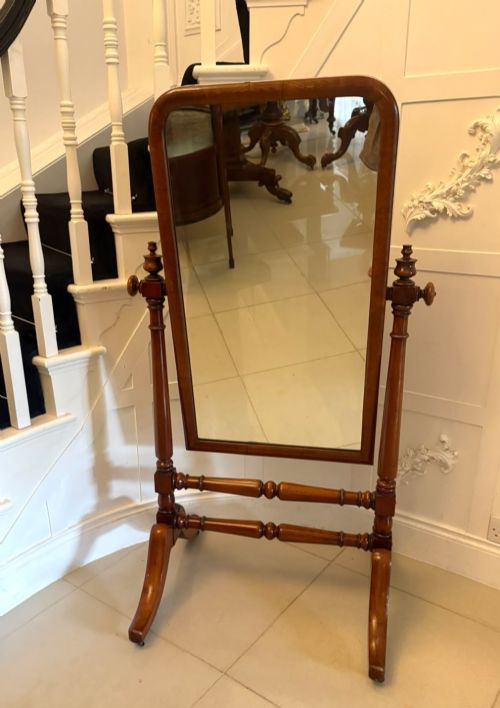
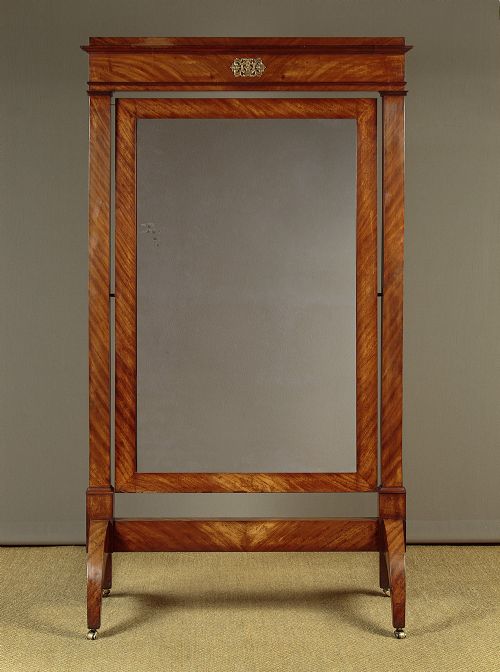
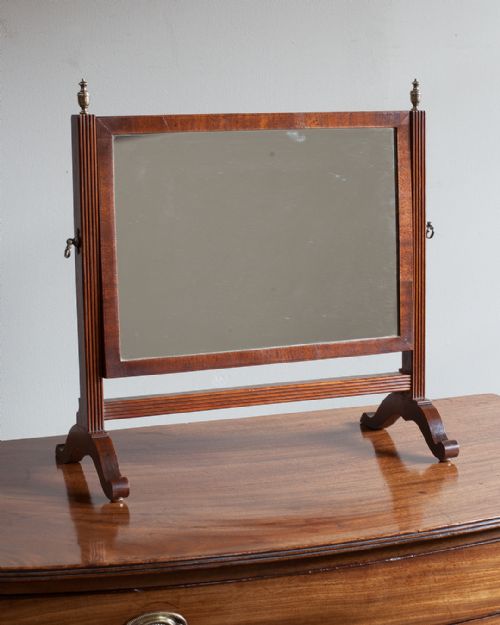
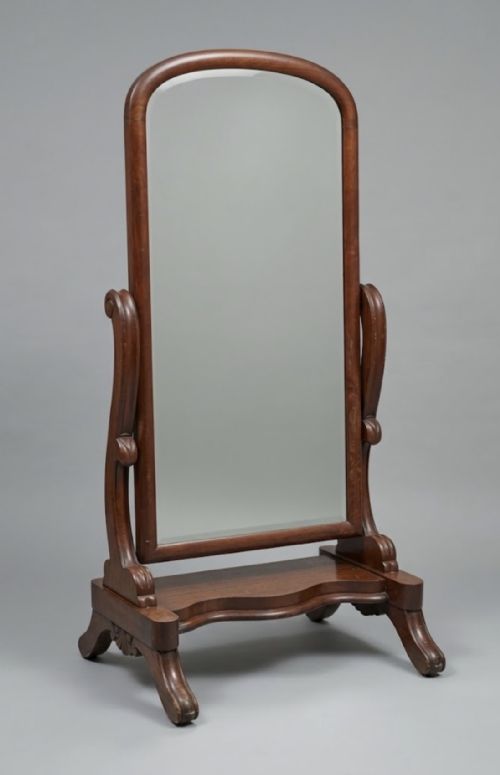
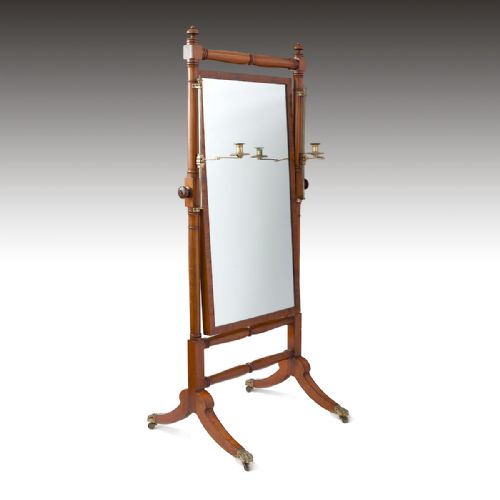
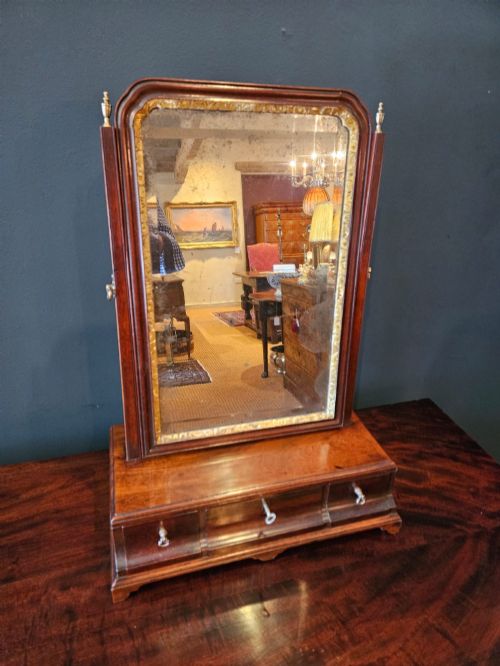
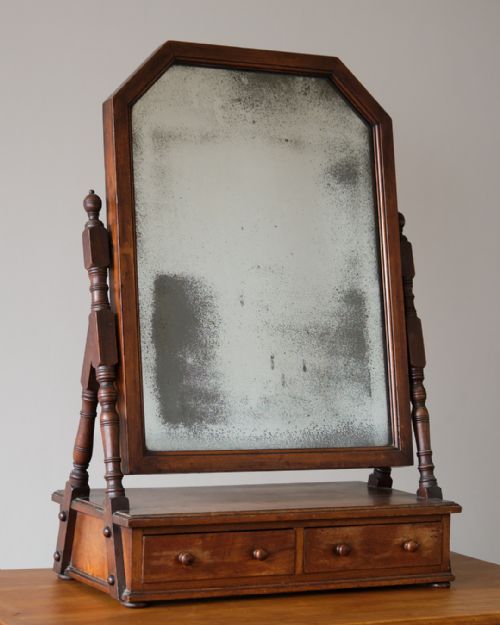
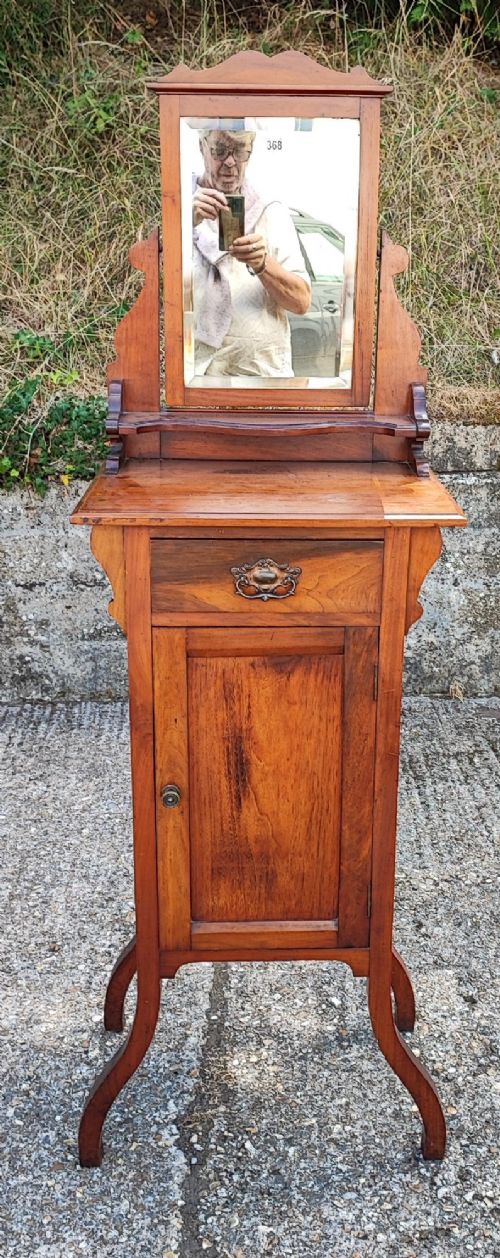
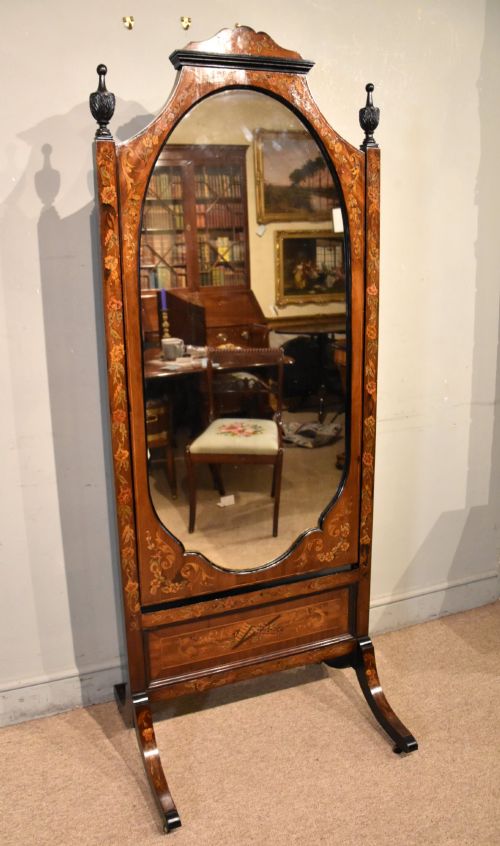
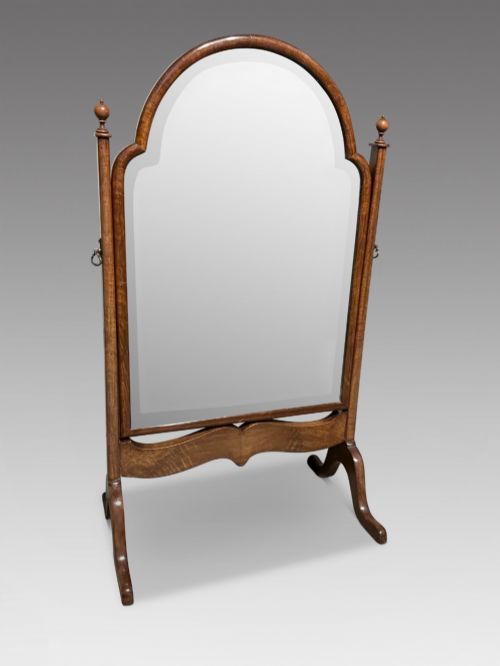
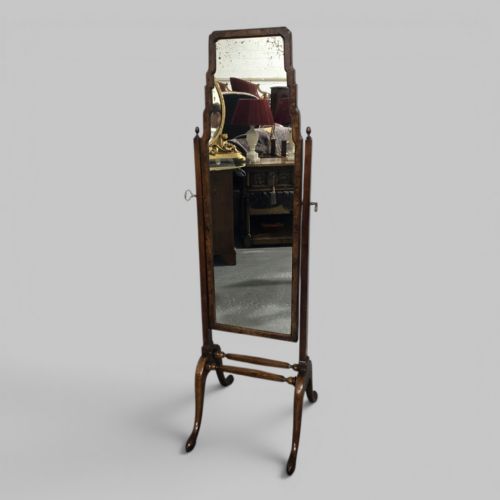
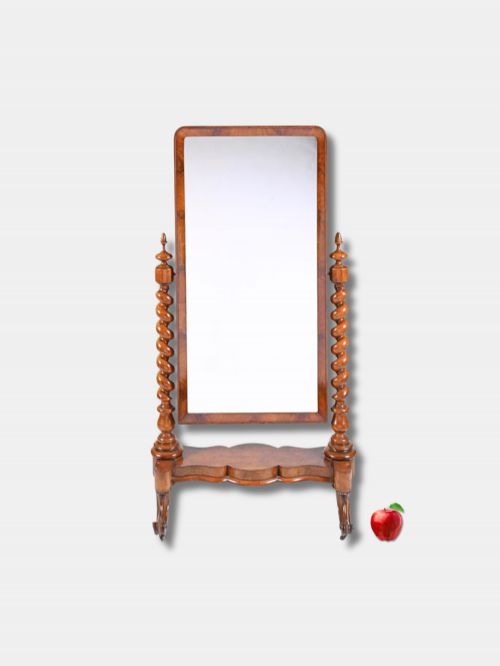
Brown Standing Dressing Mirror
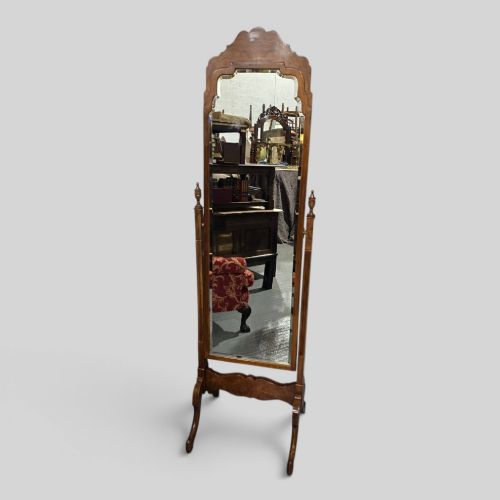
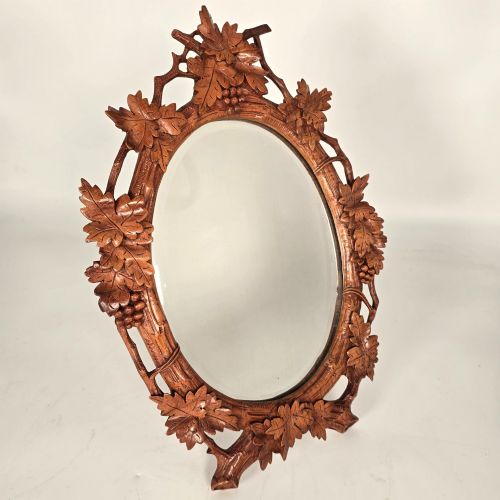
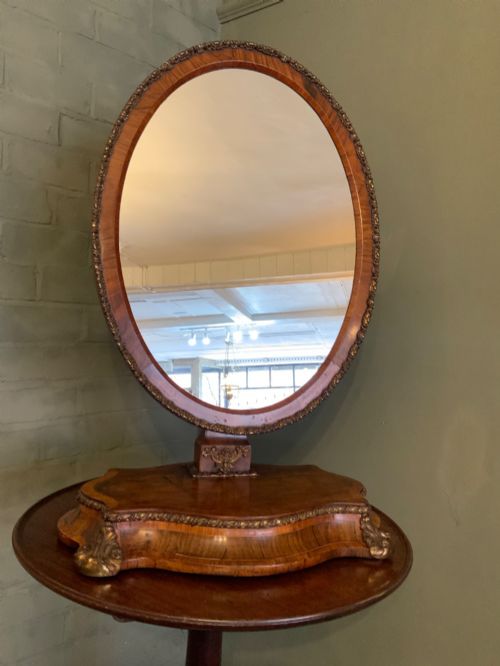
A brown standing dressing mirror is a floor-standing or table-top glass that brings period warmth and functional grace to a room.
How they were made
Cabinet makers constructed these mirrors predominantly using rich timber frames of mahogany, walnut, burr walnut, oak and satinwood. These woods were chosen for their deep grain patterns and strength, often polished to a high finish or inlaid for decorative effect.
Metal components such as brass sabots, castors, ormolu mounts and adjustable pivot screws provided both structural support and mobility. Mirror glass was set securely within wooden frames or hung between upright pillars with functional hardware.
What varies in quality
Quality in a brown standing dressing mirror rests upon the selection of timber veneers, such as burr walnut or figured mahogany, and the crispness of any carved detailing. Finer examples display meticulous joinery and substantial proportions that anchor the piece securely.
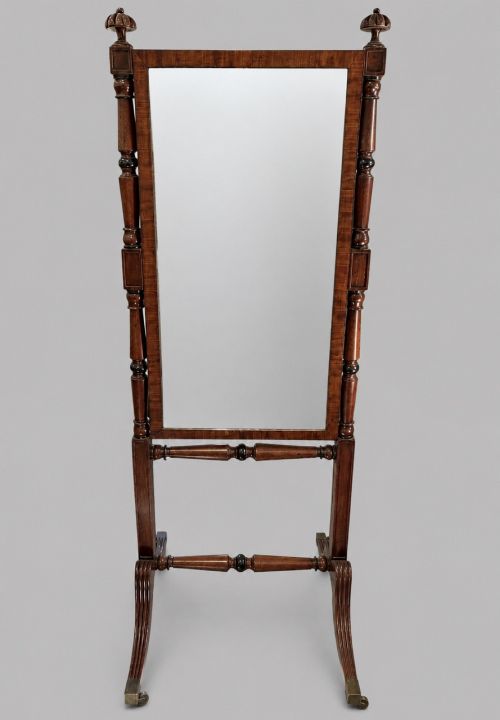
The sophistication of the hardware and turning, from barley twist supports to cast brass castors and sabots, separates standard utilitarian pieces from workshop items of notable distinction.
Listings feature woods including mahogany, walnut, burr walnut, oak, satinwood and lime wood across multiple centuries.
Heal & Sons·harrods·Gillows·James Shoolbred
The Brown Standing Dressing Mirror Glossary
- Cheval mirror
- A large, floor-standing mirror mounted on a vertical frame that permits the glass to swing freely. This form became popular for full-length viewing in bedrooms and dressing rooms.
- Sabot
- A metal shoe or sleeve fitted to the foot of a furniture leg. In these pieces, they are frequently cast in brass to protect the timber and add ornamentation.
- Barley twist
- A decorative woodworking technique where the support column is turned in a spiral resembling a twisted rope. This feature appears on Victorian frames.
- Swing mirror
- A glass mounted on pivots between two upright posts that allows the user to tilt the reflective surface. It is characteristic of both table and floor-standing variants.
Brown Standing Dressing Mirror: Frequently Asked Questions
Where should I place a cheval mirror?
A floor-standing cheval mirror functions best in a bedroom or dressing area where its pivoting glass allows for full-length viewing.
Position it near a natural light source to brighten the room while maintaining stable floor clearance.
What is the difference between a cheval mirror and a toilet mirror?
A cheval mirror is a tall, floor-standing glass mounted on a frame that permits movement from top to bottom.
A toilet mirror is much smaller and designed to sit on a tabletop or chest of drawers.
How do I adjust the swing on an antique mirror?
Most period swing mirrors utilise pivot screws or metal pins inserted into the side posts to hold the glass at the desired angle.
Tightening or loosening these side fixings regulates the tension of the moving frame.
What woods are typical for these mirrors?
Mahogany, walnut and oak form the primary timbers seen across these listings, often enhanced by burr walnut veneers or satinwood details.
These dense hardwoods provided the structural integrity needed to support heavy glass panels.