


Empire Dressing Mirror
An empire dressing mirror brings classical symmetry and rich mahogany into a room, offering both a functional glass and a bold architectural statement.
Empire Dressing Mirror
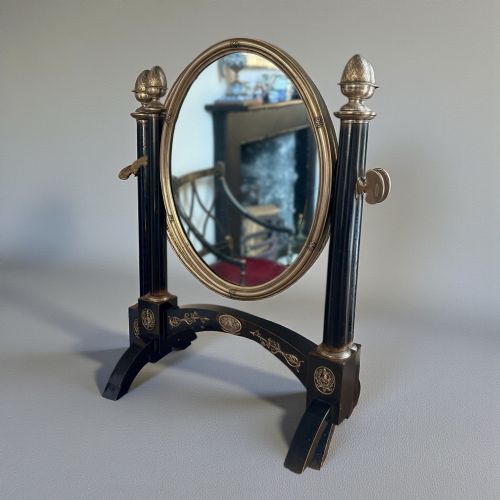
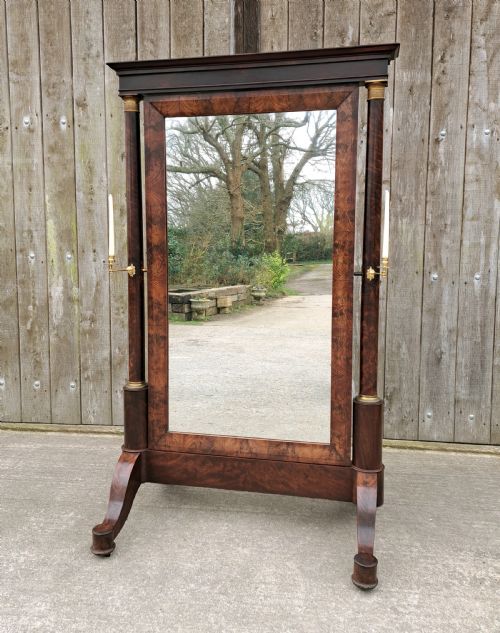
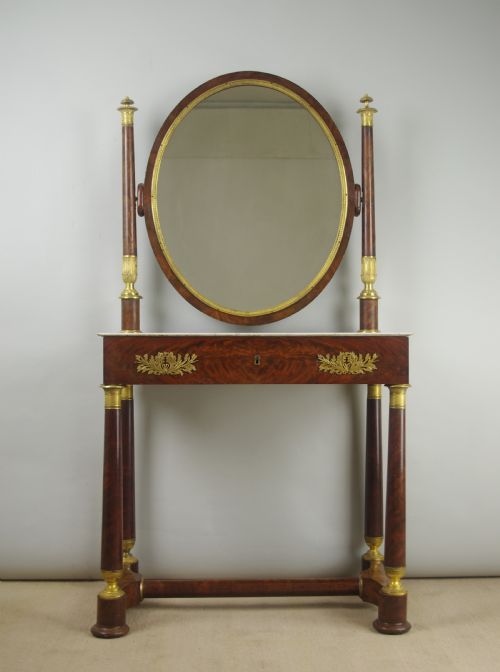
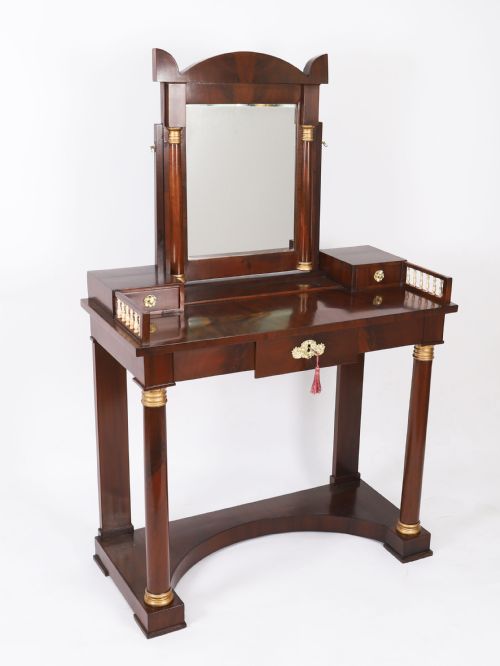
An empire dressing mirror encompasses various forms designed for personal grooming and interior reflection, ranging from small table models to full-height cheval mirrors. These pieces originate primarily from the nineteenth century, including periods such as 1870 and 1890, reflecting the enduring influence of French Empire, Napoleon III, and American Empire aesthetics.
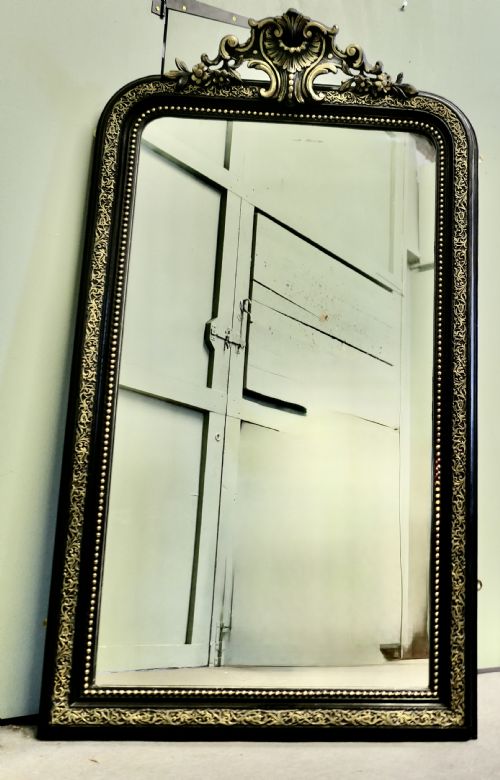
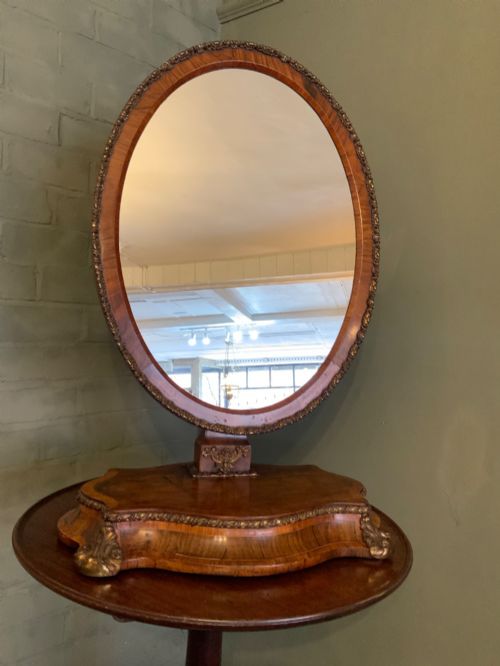
The objects appear on this page in configurations like dressing tables, vanity mirrors, toilet mirrors, and adjustable pedestal mirrors. Buyers encounter items that combine storage or support structures with tilting glass plates, often drawing on styles like Swedish Biedermeier or French Chateau to anchor a room's decor.
Materials and Construction
Cabinetmakers constructed these pieces predominantly using mahogany, walnut, rosewood, birch, and ebonised wood, frequently selecting flame veneers to create striking grain patterns. The woodwork is combined with structural glass and heavy cast metal elements.
Gilt bronze, ormolu, brass, and marble provide structural mounts and decorative accents, securing the pivoting mechanisms on cheval and toilet mirrors while adding classical contrast to the dark wood bodies.
Listings for this phrase feature nineteenth-century items utilising mahogany, glass, ormolu, brass, and marble across French Empire and American Empire styles.
Evaluating Quality and Design
The standard of a piece rests on the integration of its cast bronze or ormolu mounts with the underlying timber frame, where finely chased metalwork and crisp classical motifs distinguish superior examples from simpler production. The choice of timber, such as highly figured flame mahogany or birch, dictates the visual depth of the body.
Proportion and mechanical execution also divide the range, as seen in the smooth articulation of swivel mirrors, the inclusion of original candle holders, and the structural harmony of combined dressing tables.
The Empire Dressing Mirror Glossary
- Ormolu
- Gilded bronze used for decorative mounts and furniture trim. This technique involved applying a mercury and gold amalgam to cast bronze before heating.
- Cheval mirror
- A full-length freestanding mirror suspended on a vertical frame with pivots. It allows the glass to tilt to various angles for viewing an entire outfit.
- Toilet mirror
- A small mirror designed to sit atop a dressing table or chest of drawers. These often feature small drawers or compartments in their bases.
- Ebonised wood
- Timber treated to imitate ebony, usually through staining and polishing. This dark finish was common in nineteenth-century revival styles.
- Flame mahogany
- Timber cut at the junction where branches meet the main tree trunk, producing a distinctive flickering flame pattern. Cabinetmakers prized this veneer for high-status surfaces.
Empire Dressing Mirror: Frequently Asked Questions
Where should I place an empire dressing mirror?
These mirrors suit bedrooms, dressing rooms, and hallways where their architectural presence can anchor the space.
Freestanding cheval versions work well against large wall spaces, while table or toilet variants sit comfortably on top of compatible chests and sideboards.
How do I adjust the mirror angle?
Most pivoting mirrors rely on side screws or threaded brass pins fitted into the vertical uprights. Adjusting these tension fittings allows the glass to hold its position.
Care should be taken to support the glass plate with one hand while loosening or tightening the side hardware.
What is the difference between French and American empire styles?
French empire pieces often incorporate lavish ormolu mounts, Greco-Egyptian motifs, and rich mahogany veneers. They lean towards decorative grandeur and classical symmetry.
American empire examples tend to display heavier, bolder structural forms with less intricate metal ornamentation, focusing on robust mahogany construction.
How do I care for the wood and ormolu?
Maintain the timber surfaces with a microcrystalline wax to protect the polish and grain without causing buildup. Avoid harsh chemical cleaners that can damage the finish.
Dust the ormolu and brass mounts gently with a soft dry brush to preserve the metallic sheen without stripping the underlying gilding.