

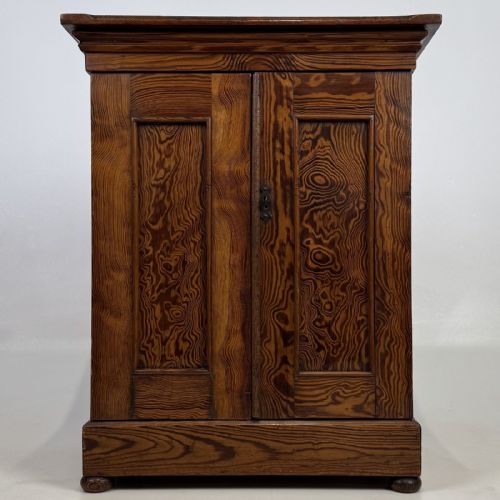

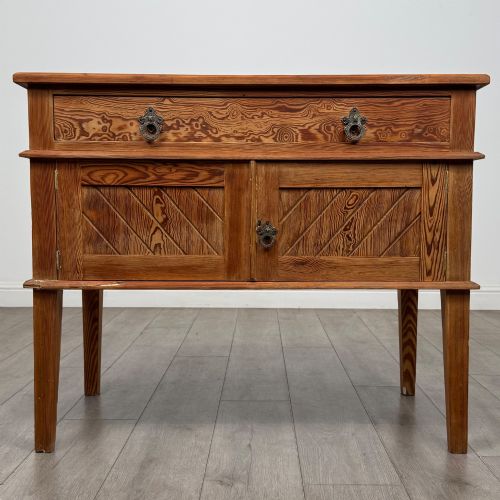

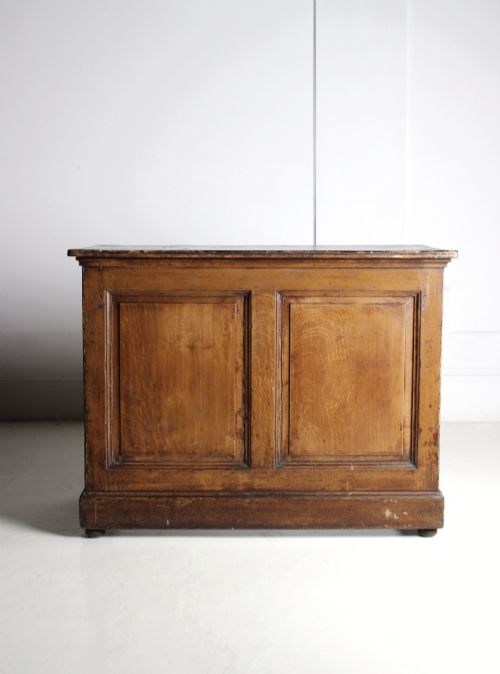
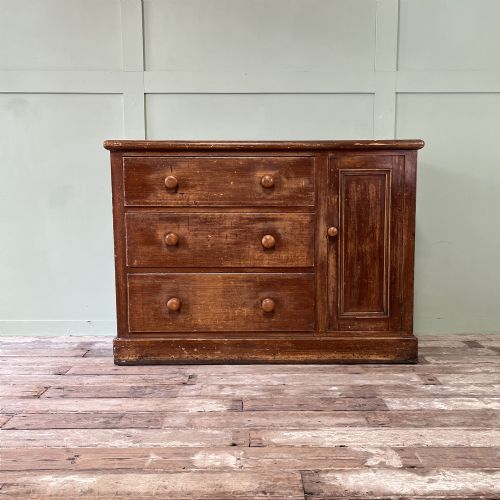


Brown Pine Sideboard
These brown pine sideboards and related utilitarian pieces offer honest country craft, built from robust timber to serve generations of practical domestic life.

Brown Pine Sideboard
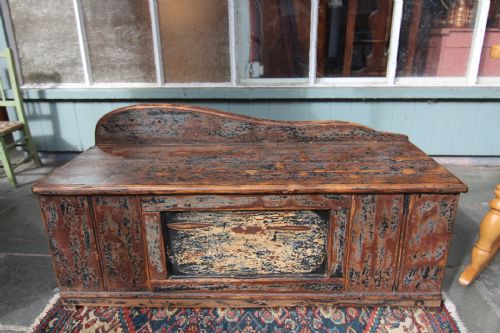
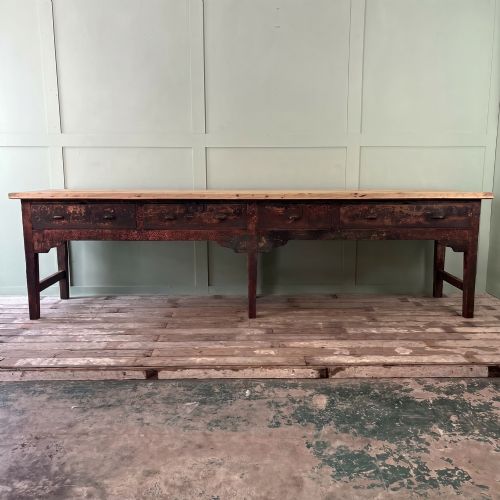
A brown pine sideboard and its close kitchen relatives encompass a utilitarian range of sturdy cupboards, serving tables, and dresser bases. These items emerge primarily from the Victorian and nineteenth-century periods, alongside earlier eighteenth-century examples and Regency variants.
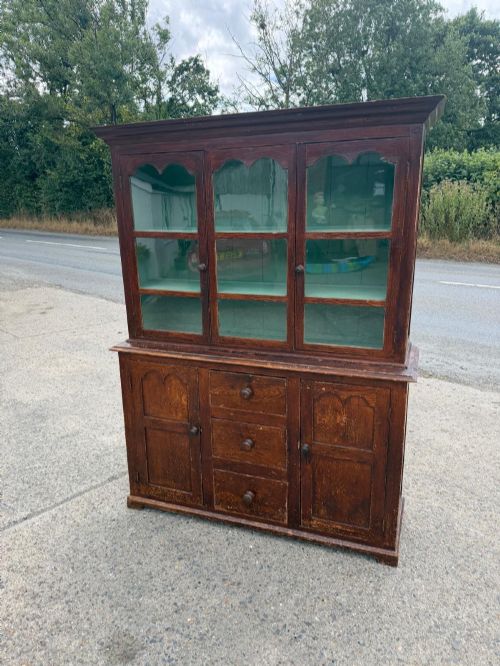
The selection ranges from tall cupboard bookcases and Welsh dressers to compact apprentice cabinets and serving desks. Such forms reflect the practical storage needs of traditional English, Scottish, Welsh, and Swedish households.
How they were made
Makers constructed these sturdy items chiefly using pine and pitch pine, sometimes combining them with oak or mahogany elements. Iron and brass hardware such as hinges and handles secured doors and drawers, while occasional glass panes fitted upper cabinets.
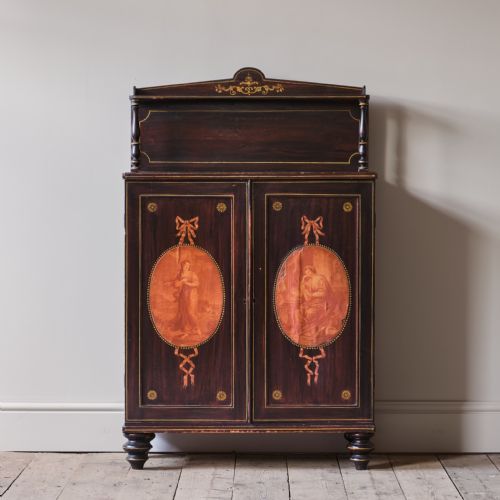
Surface treatments define much of the construction evidence, featuring layers of original paint, decorative scumbling, or applied pigmented finishes mimicking rosewood. Carpenters built these items for daily utility rather than elite display, relying on solid joinery appropriate for domestic service.
Brown Pine Sideboard Retail Price Guide 2026
Typical asking prices for brown pine sideboard among the pieces listed under this phrase on Sellingantiques today, from the lower quarter to the upper quarter. They describe what is for sale here now, not the wider market.
Listings span the eighteenth, nineteenth, and twentieth centuries, incorporating materials like pine, pitch pine, glass, iron, brass, paint, oak, and mahogany.
What varies in quality
The distinction between ordinary utility items and superior examples often rests on the survival of an original paint finish or scumbled decoration. Pieces retaining untouched historic surfaces command greater interest than those stripped down to raw wood.
Proportion and regional carpentry characteristics further separate the selection, with distinct forms like Welsh Talwrn dressers or simulated rosewood finishes showing specific craftsmanship. The integrity of the timber and the retention of period brass or iron hardware complete the hierarchy.
The Brown Pine Sideboard Glossary
- Pitch pine
- A dense, resinous variety of pine timber prized for its prominent grain pattern and durability in heavy furniture. It frequently appears in Victorian serving tables and cabinets.
- Scumbled
- A decorative paint technique involving translucent layers dragged over a base coat to simulate finer hardwoods like oak or rosewood. It was widely employed on nineteenth-century kitchen furniture.
- Dresser base
- The lower section of a kitchen dresser featuring cupboards and drawers without the plate rack superstructure. These low units frequently function as sideboards.
- Chiffonier
- A compact low sideboard or cabinet equipped with drawers and doors below, originating in the Regency and Victorian eras. They provided convenient storage in smaller domestic rooms.
- Polychrome
- Decorated or painted in multiple colours. This finish appears on traditional nineteenth-century utilitarian boxes and storage pieces.
Brown Pine Sideboard: Frequently Asked Questions
Are these sideboards made from solid pine?
Most examples utilise solid pine or dense pitch pine throughout their construction, reflecting the practical domestic requirements of the nineteenth century and earlier periods.
Carpenters selected these resilient softwoods for daily utility, occasionally incorporating secondary hardwoods for structural framing or drawer linings.
How do I care for painted pine furniture?
Historic painted and scumbled surfaces require gentle maintenance using dry dusting and minimal moisture to protect the original finish. Avoid harsh chemical cleaners that can lift or dull nineteenth-century paint layers.
Maintaining stable indoor humidity prevents timber movement and preserves the integrity of both the wood and the decorative coating.
What is a Welsh Talwrn dresser?
A Talwrn dresser is a specific regional Welsh variant of the kitchen storage unit, known for particular local craftsmanship and proportion. These pieces represent traditional rural woodworking traditions.
They offer distinct storage configurations compared to standard English country dressers while serving the same domestic function.
Can I use a dresser base as a sideboard?
Dresser bases serve exceptionally well as sideboards in modern dining rooms or kitchens due to their low profile, drawers, and cupboard space. Their historical role was identical for storing tableware and serving food.
They provide ample surface area and practical enclosed storage without the height of a full plate rack.