
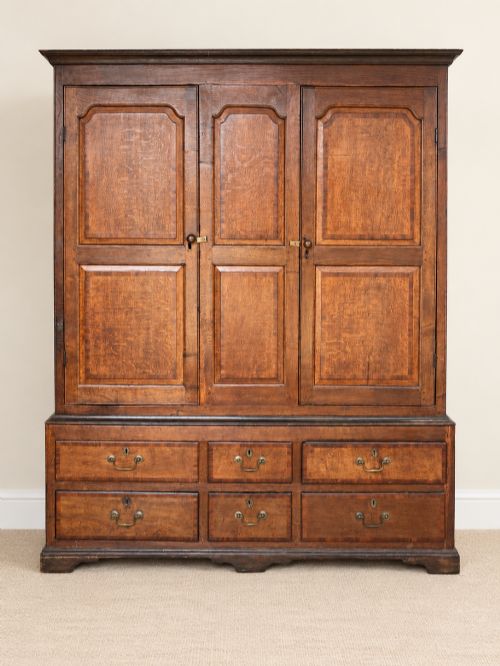
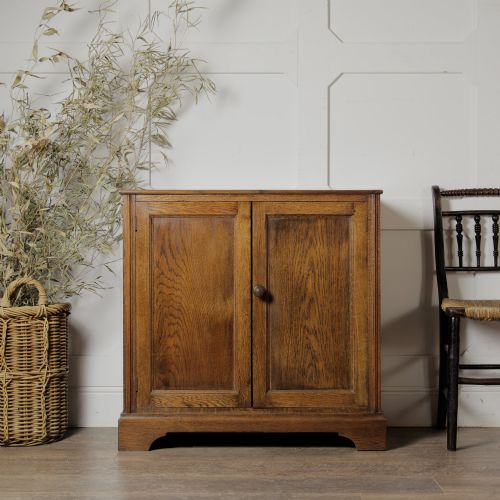
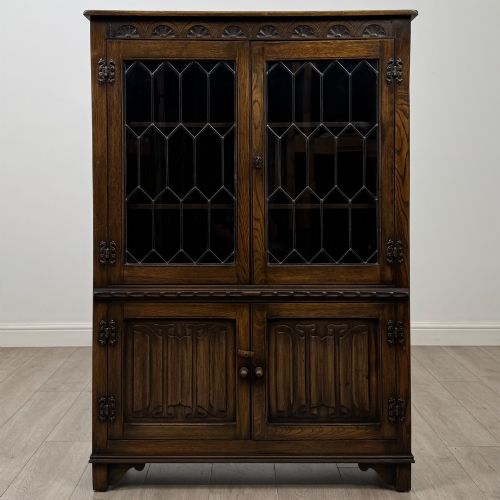
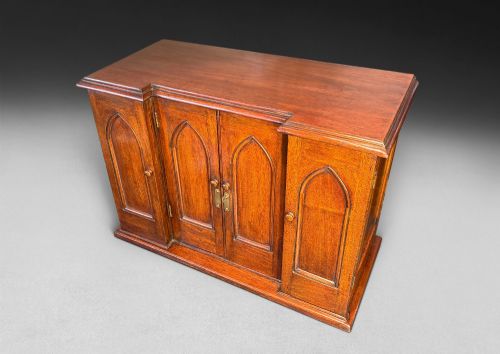
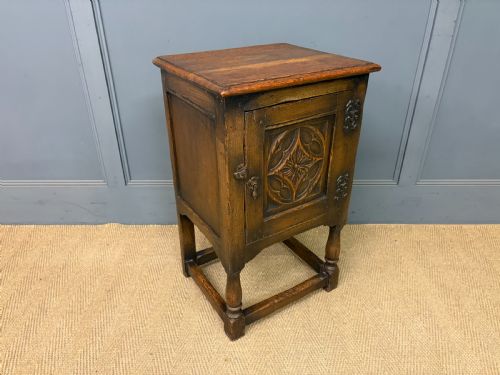
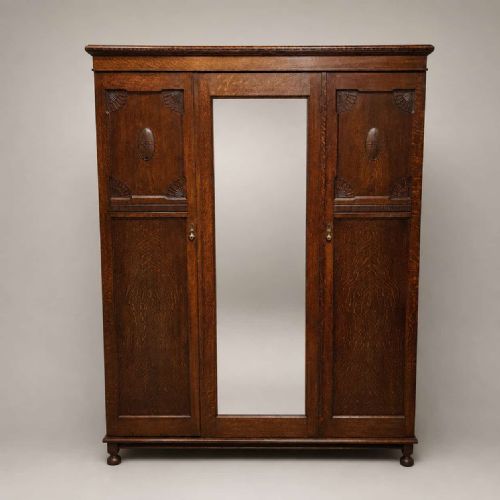
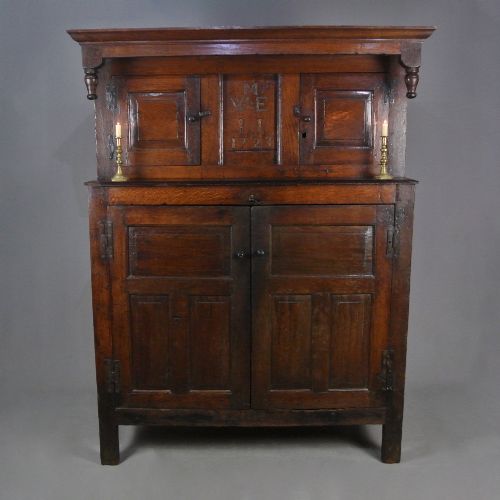
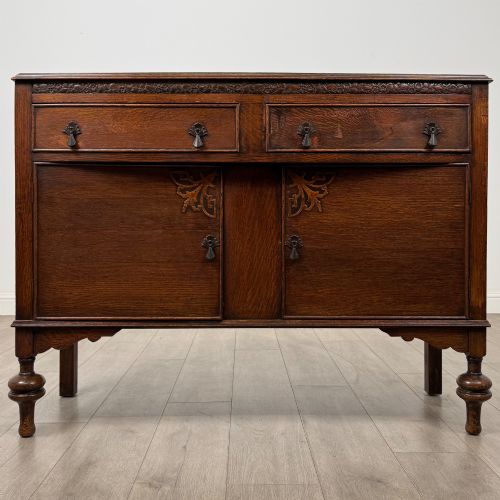
Brown Oak Storage Cupboard
A brown oak storage cupboard offers rich timber tones and robust utility, making it a practical anchor for any room.
What these cupboards are
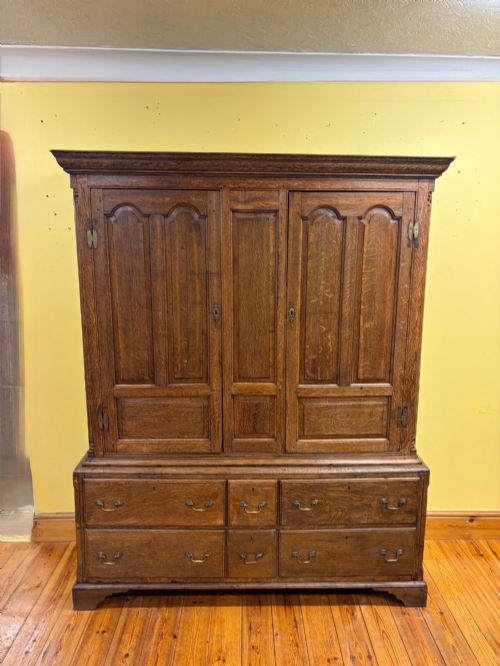
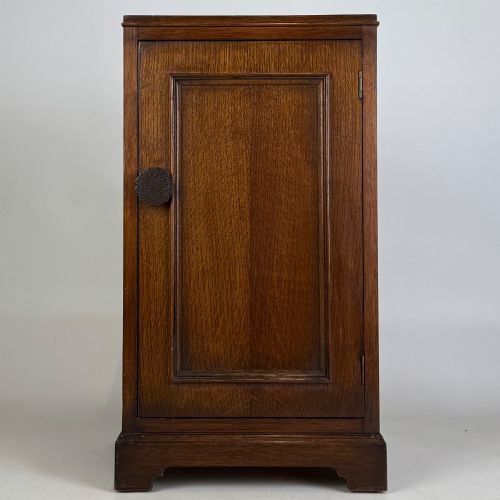
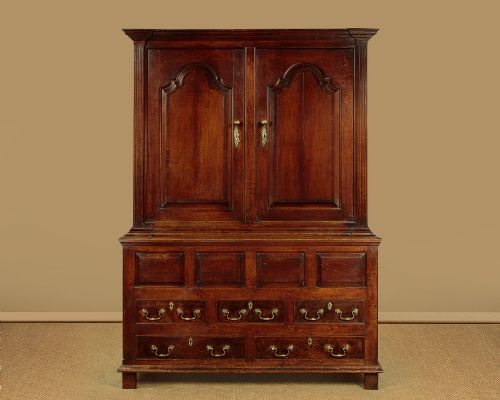
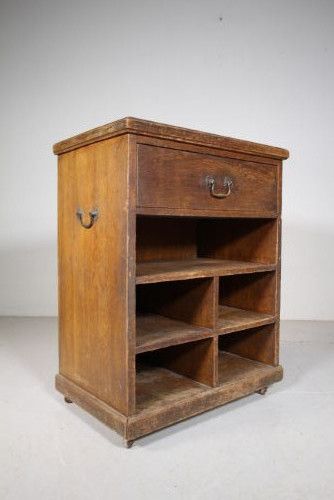
When you search for a brown oak storage cupboard, you encounter robust timber furniture designed to keep rooms tidy. These pieces range from substantial housekeepers and cloakroom cupboards to low cabinets and corner units.
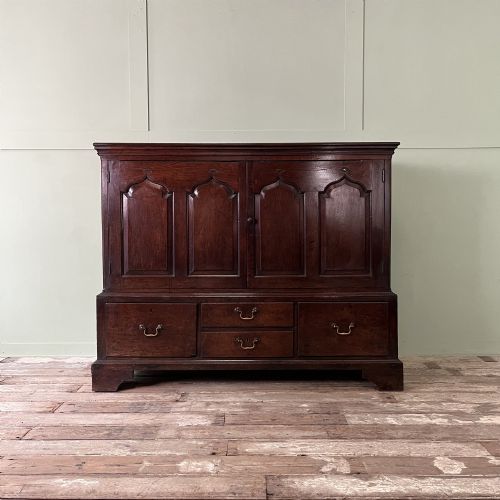
The versions most frequently met on this page span the 18th century, the Victorian era, and the early 20th century. Styles include Georgian proportions alongside French provincial and hunt designs.
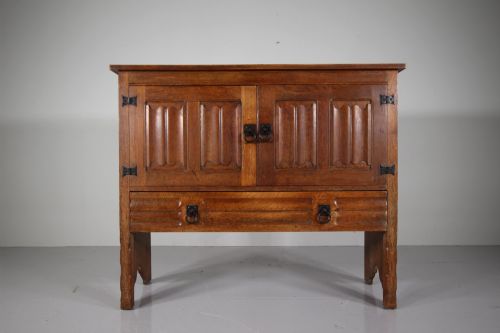
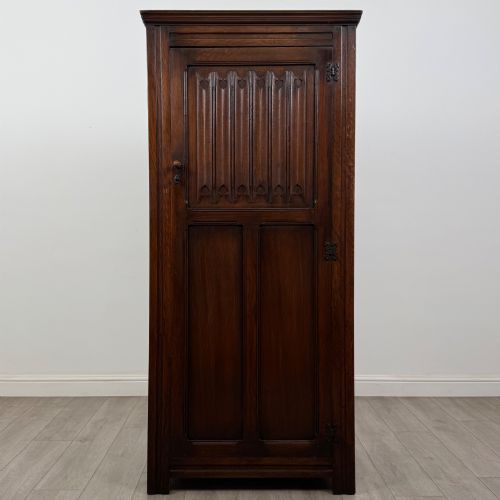
Forms vary from raised panel fronted corner cupboards to two-door models standing on bun feet and low solid timber units. Each object serves a primary function of concealed storage while displaying the distinct grain of oak.
How they were made
Construction relies heavily on solid oak timbers joined to create durable carcases and doors. Raised panels feature in traditional examples, adding depth and structural stability to the front elevations.
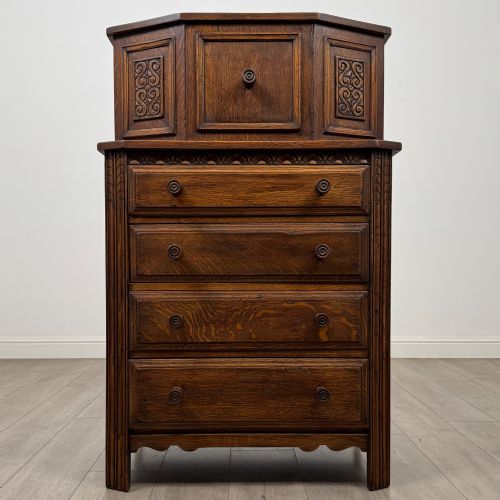
Metal hardware such as brass fixtures often accompanies the woodwork for hinges and locks. Carved details appear on specific regional forms, notably French game cupboards and buffets, demonstrating traditional hand-carving techniques.
Retail Price Guide 2026
Typical UK retail prices for brown oak storage cupboard, calculated from the Sellingantiques database of over a million retail prices indexed since 2003. This retail price guide relies exclusively on Sellingantiques data; no external sources or auction records are used, so the figures do not describe the wider market.
French game cupboards occasionally retain subtle carved woodland motifs, hinting at centuries of country suppers and rustic feasts.
What varies in quality
Quality reveals itself in the choice of timber and the precision of the joinery rather than surface ornamentation. Finer examples display harmonious grain patterns across large panels and doors, whereas lesser pieces show more utilitarian timber selection.
The execution of detail, from bun feet to carved panels, dictates the overall refinement of the piece. Well-proportioned cornices and tight joints distinguish superior regional or period examples from standard utility items.
The Brown Oak Storage Cupboard Glossary
- Oak
- A hard, heavy timber prized for its durability and prominent grain markings. It serves as the primary material for all the pieces listed here.
- Bun foot
- A rounded, flattened spherical foot often turned on a lathe. These frequently support Victorian case furniture.
- Raised panel
- A central wooden panel with edges thinned down to fit into a grooved frame. This technique allows the wood to expand and contract with humidity changes.
- Corner cupboard
- A specialised cabinet built with an angled back to fit directly into the corner of a room. Georgian examples often feature shaped shelves inside.
- Housekeeper cupboard
- A large storage piece traditionally used in large country houses for linen and dry goods. They offer substantial internal capacity.
Frequently Asked Questions
What rooms suit a brown oak storage cupboard?
These cupboards suit dining rooms, hallways, and living spaces where concealed storage is beneficial. Their substantial proportions provide ample room for crockery, linens, or everyday clutter.
Smaller low cupboards work well beneath windows or in tight corners, while taller housekeepers and corner units utilise vertical space effectively in period or modern interiors.
How do I date an oak cupboard?
Dating relies on construction methods, timber preparation, and stylistic cues present in the hardware and mouldings. Georgian and 18th-century pieces often display hand-planed surfaces and traditional pegged joints.
Victorian and early 20th-century examples may incorporate machine-sawn timber, standardised brass fittings, and distinct period revival styles such as French provincial or hunt motifs.
Are corner cupboards practical for modern homes?
Corner cupboards turn neglected room angles into useful storage space without protruding far into the floor plan. They make efficient additions to dining areas or kitchens.
Georgian iterations provide character and shelving behind panelled doors, keeping items dust-free while maintaining a tidy perimeter in the room.
What is the difference between a buffet and a housekeepers cupboard?
A housekeepers cupboard is typically a tall, utilitarian storage piece designed for linens and dry goods in a large domestic setting. They focus heavily on internal shelving and capacity.
A buffet de corps is a substantial regional French cabinet, often featuring carved motifs like game panels, combining display or serving surfaces with lower enclosed storage.