

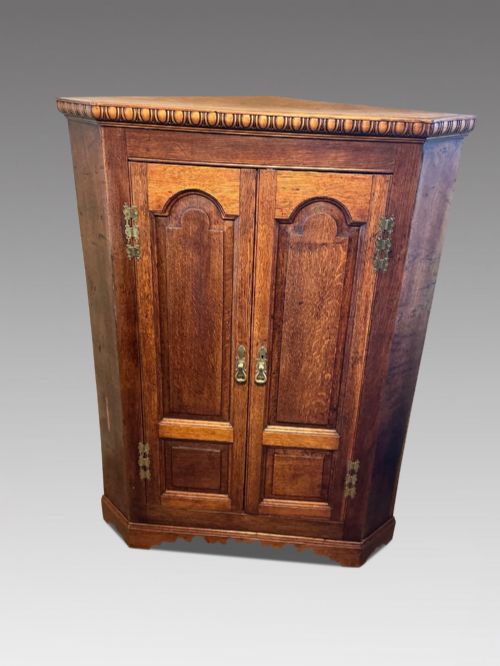
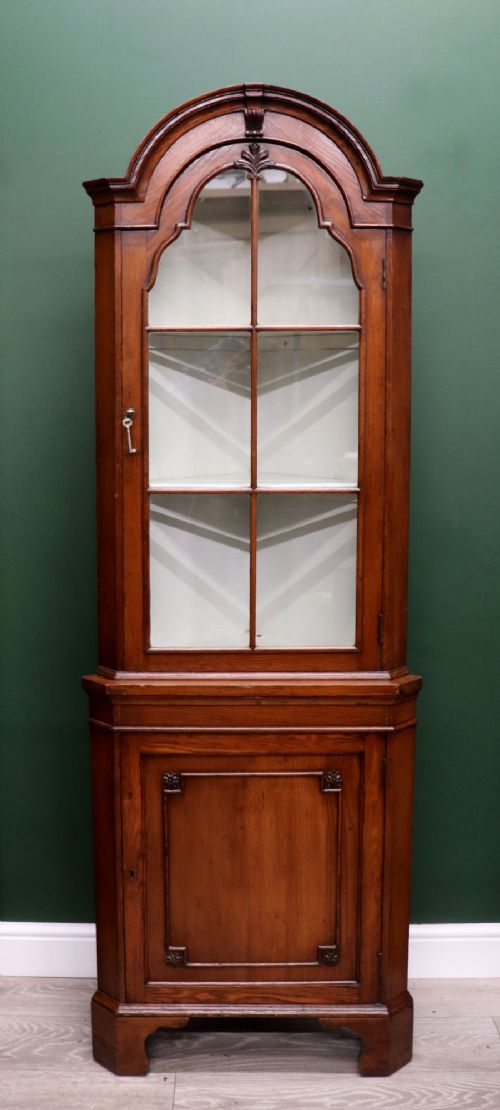


Brown Oak Standing Cupboard
A brown oak standing cupboard brings deep warmth and practical storage to a room, drawing the eye with rich timber grain.
Brown Oak Standing Cupboard
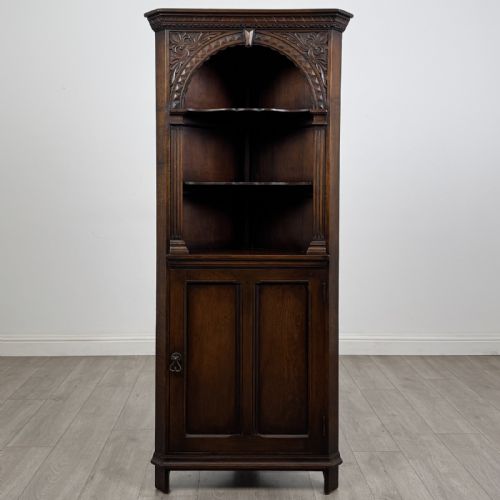
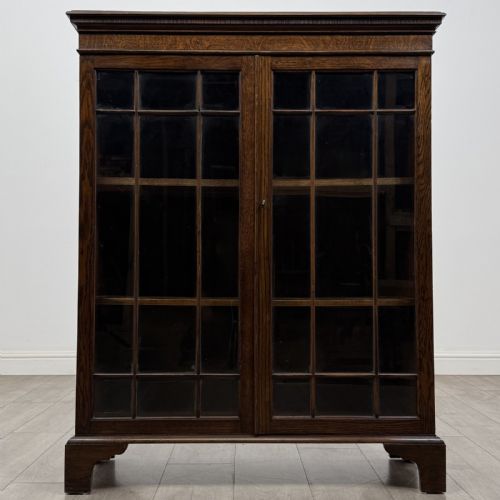
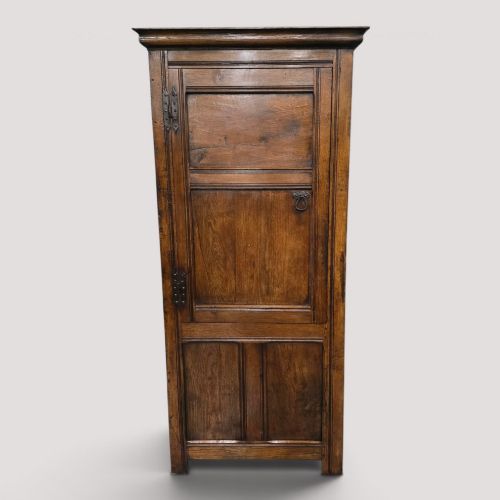
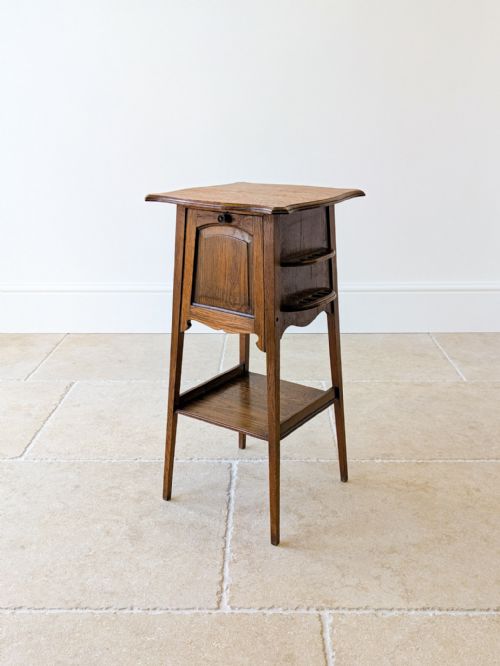
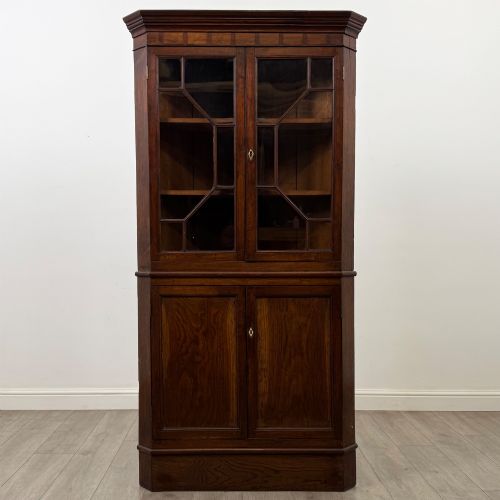
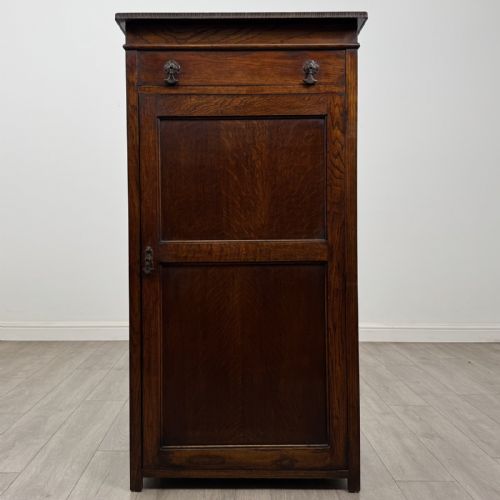
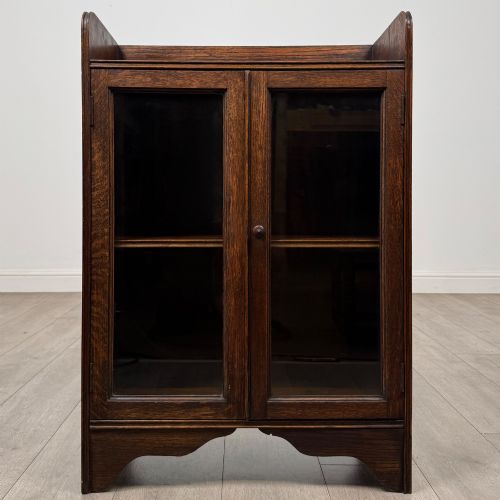
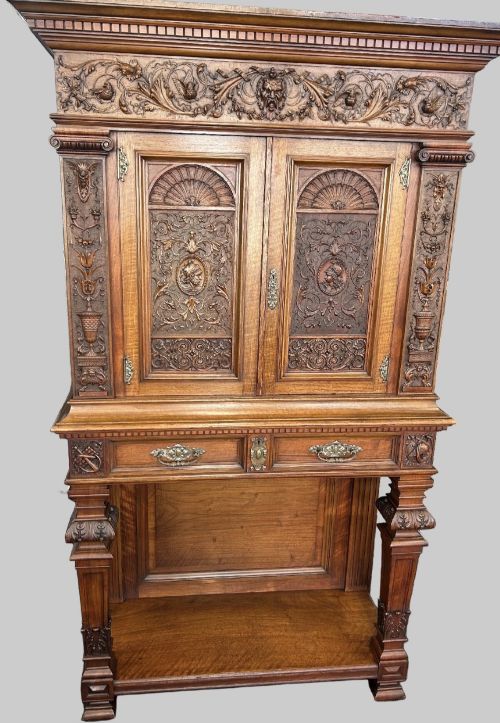
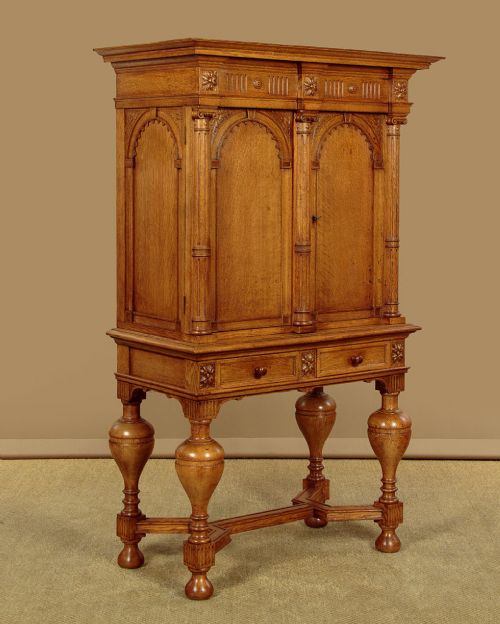
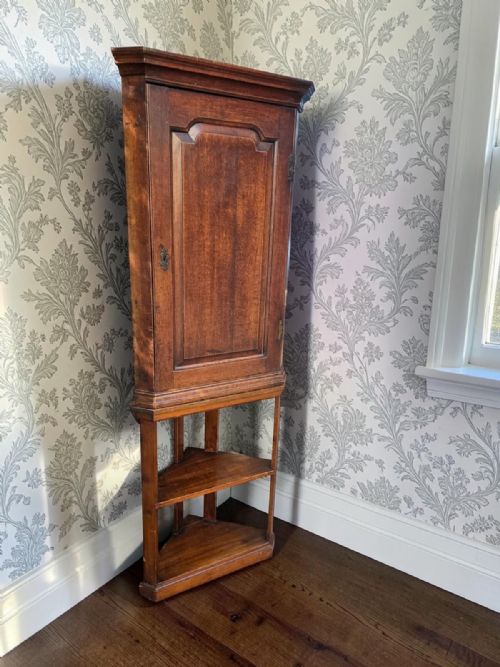
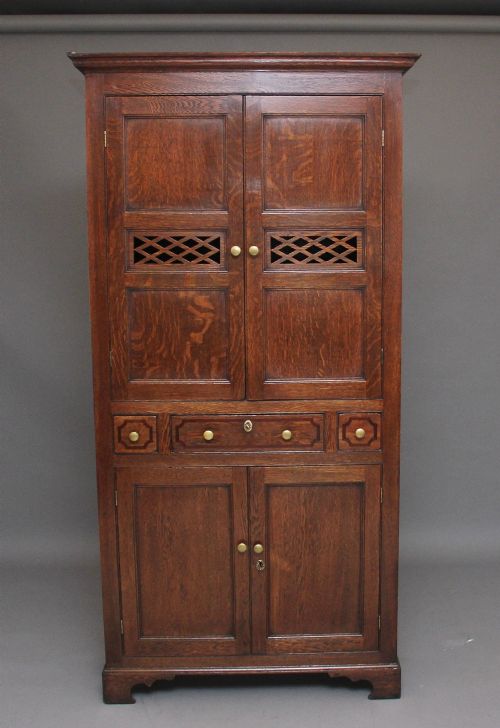
A brown oak standing cupboard combines sturdy architectural form with the distinct character of durable timber. Buyers searching for a brown oak standing cupboard encounter tall floor-standing storage pieces, corner units, and cabinets raised on stands.
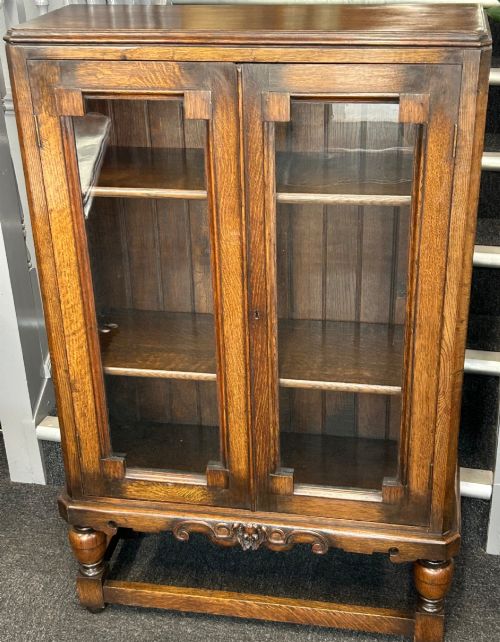
The selections span centuries of cabinet-making, featuring Georgian proportions, Victorian Gothic revival details, and early twentieth-century interpretations. Corner cabinets and floor-standing cupboards dominate the available forms, often utilising panelled doors or glazed display fronts.
How they were made
Cabinet-makers relied on solid oak timbers, joining boards with traditional pegged mortise and tenon construction to ensure lasting rigidity. Blacksmiths forged iron hinges and locks by hand, securing heavy doors to sturdy frames.
Surfaces often show subtle fruitwood inlay or deep hand-carved detailing, finished with wax to bring out the natural grain. Glazed sections use leaded or clear glass panes set into timber lattices.
Brown Oak Standing Cupboard Retail Price Guide 2026
Typical asking prices for brown oak standing cupboard among the pieces listed under this phrase on Sellingantiques today, from the lower quarter to the upper quarter. They describe what is for sale here now, not the wider market.
Listings feature oak combined with brass, glass, wrought iron, and ceramic tile across multiple centuries.
What varies in quality
The distinction between standard utility storage and superior cabinet-making rests in the selection of timber and the precision of the joinery. Finely figured oak grain, crisp hand-carving, and intact original blacksmith hardware elevate a piece above simpler workshop output.
Proportion and structural integrity dictate the standing of each cupboard. Pieces retaining their original stands, locks, and patinated surface finish command greater appreciation among collectors.
James Shoolbred
The Brown Oak Standing Cupboard Glossary
- Standing cupboard
- A tall piece of furniture designed to rest directly on the floor rather than hang upon a wall. These units provide enclosed vertical storage for household goods.
- Corner cabinet
- A specialist storage unit built with an angled footprint to fit snugly into the corner of a room. Many examples feature glazed upper doors and panelled lower compartments.
- Cabinet on stand
- A storage chest elevated upon a separate supporting base with legs. This form lifts the main body of the cupboard off the floor.
- Livery cupboard
- An early form of ventilated storage traditionally used for food and provisions. These pieces often feature turned spindles or pierced panels for air circulation.
- Mortise and tenon
- A traditional timber joint where a protruding peg fits tightly into a matching hole. This method provides strong structural union without relying on metal fasteners.
Brown Oak Standing Cupboard: Frequently Asked Questions
How do I place a standing cupboard in a modern room?
A standing cupboard anchors a corner or blank wall, providing substantial vertical presence without demanding excessive floor space. Their deep timber tones ground lighter interior colour schemes effectively.
Interior shelves hold books, dinnerware, or everyday objects while keeping rooms tidy. Pairing the timber with simple walls lets the natural grain remain the focal point.
What is the difference between a corner cupboard and a floor standing cupboard?
A corner cupboard uses a triangular footprint designed specifically to utilise dead space where two walls meet. Floor standing cupboards present a flat rectangular facade intended for placement against a single straight wall.
Both types offer generous enclosed storage but serve entirely different spatial arrangements within a room.
How do I care for antique oak furniture?
Maintain the timber by applying a traditional beeswax polish occasionally to nourish the dry wood and preserve the surface sheen. Avoid placing cabinets near direct heat sources or strong sunlight to prevent warping.
Dust regularly with a soft, dry cloth. This simple routine protects the historic finish built up over generations.
How can I tell the period of an oak cupboard?
Examine the construction methods, such as hand-cut dovetails, pegged joints, and the style of the iron hinges and locks. Georgian pieces display balanced classical proportions, while Victorian items often show heavier Gothic revival carving.
Tool marks left by the carpenter offer clues to the age and workshop practices. Comparing panel thickness and timber preparation helps date the piece accurately.