


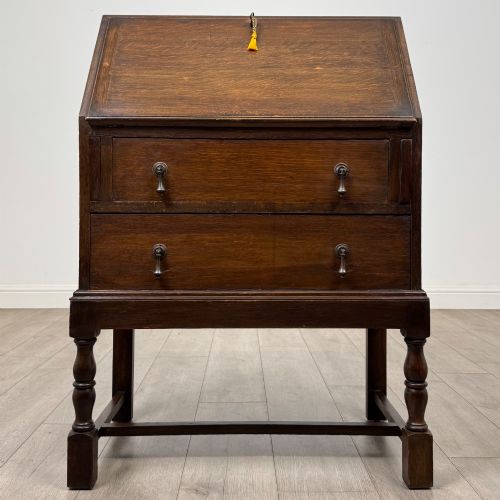
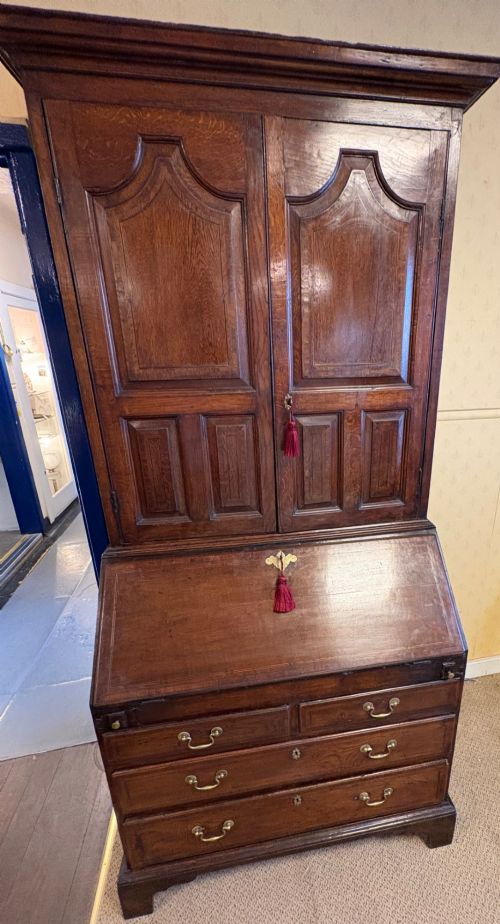
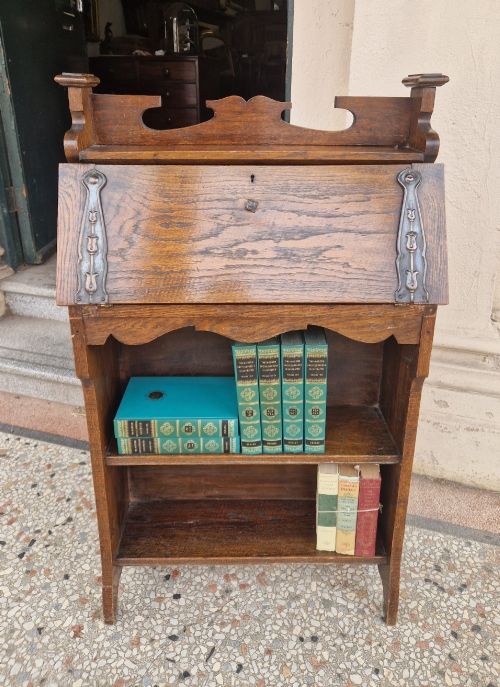
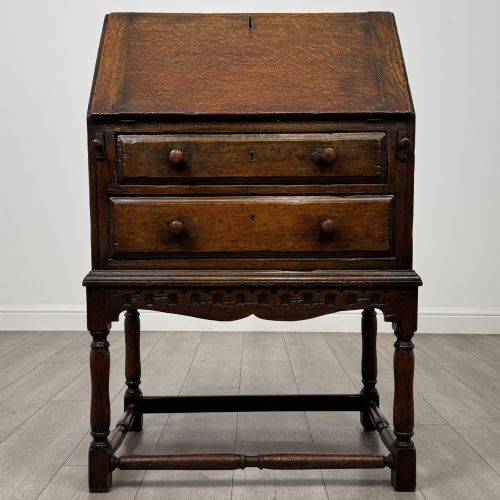

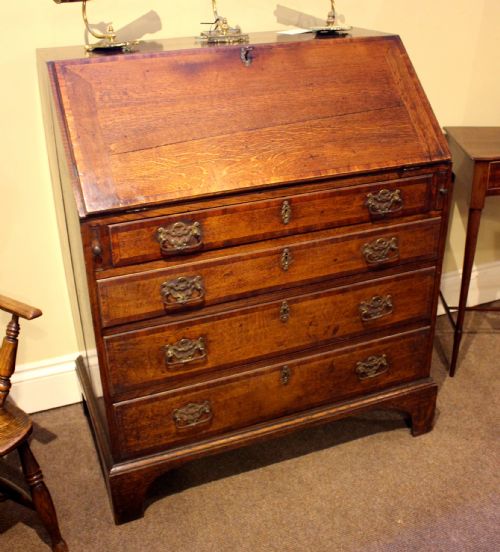

Brown Oak Secretary Desk
A brown oak secretary desk brings rich grain and practical workspace into a room, offering a clever drop-down writing surface alongside storage.
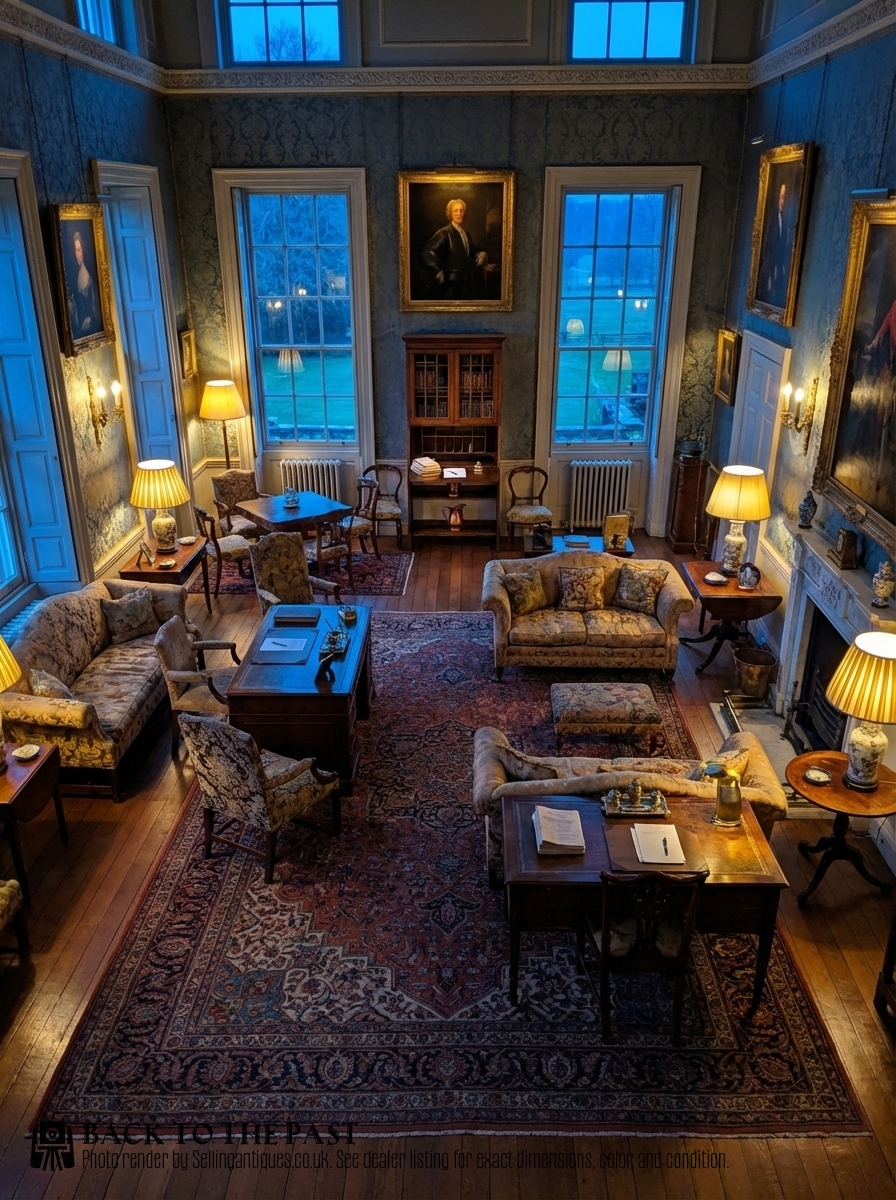
Brown Oak Secretary Desk
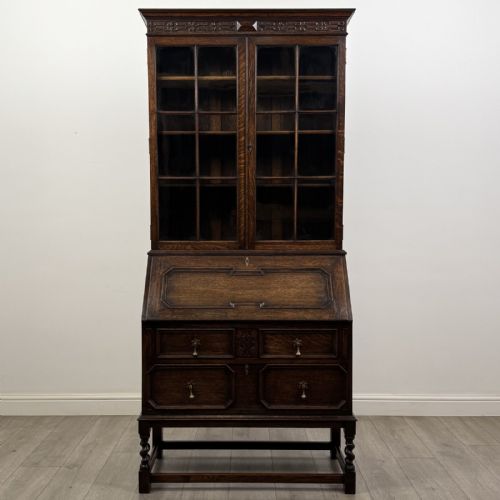
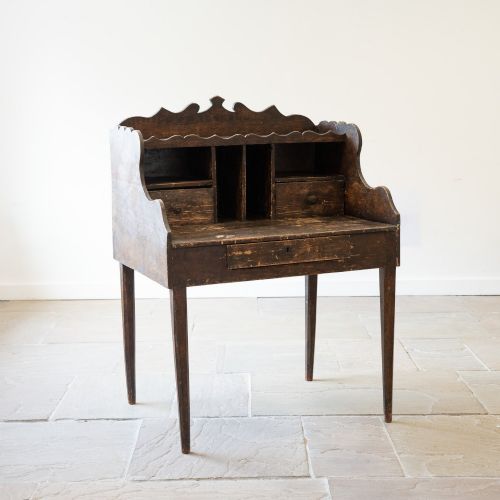
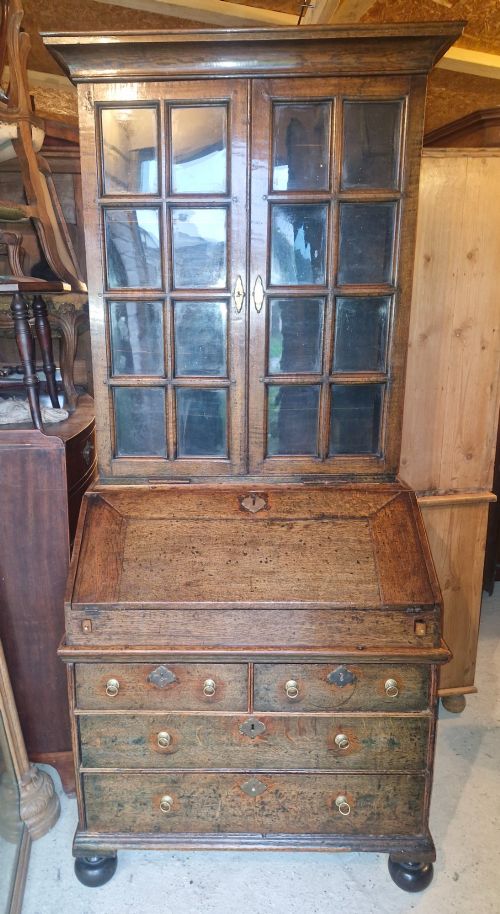
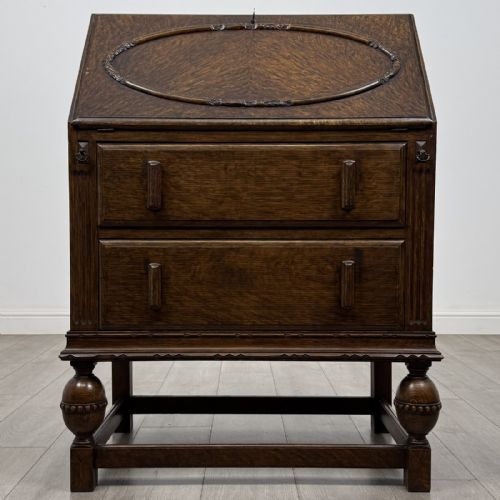
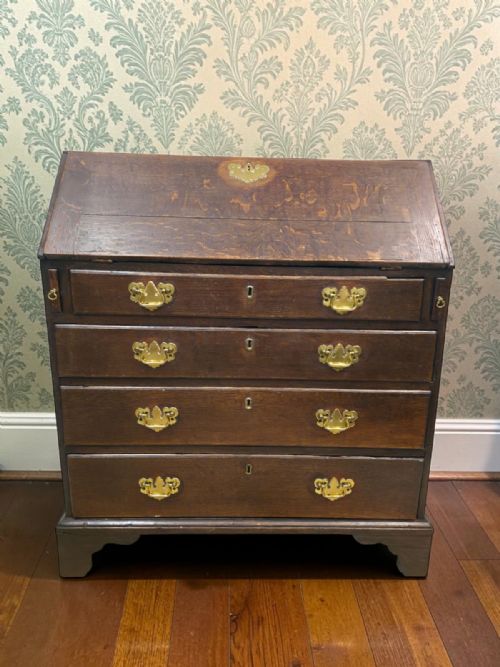
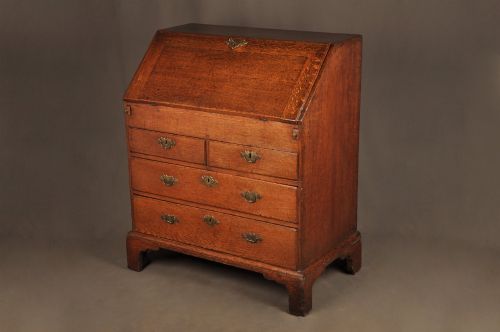
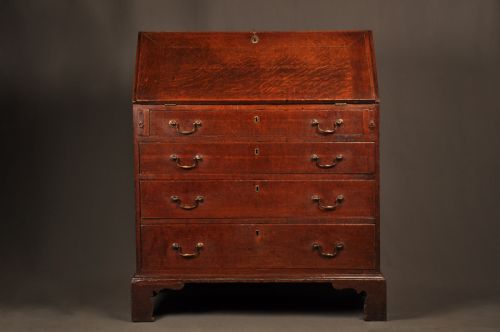
A brown oak secretary desk combines a writing flap with drawers or a bookcase, spanning periods from the Georgian era through Edwardian times to the mid-twentieth century. These pieces appear in forms such as compact bureaux, bureau cabinets, and tall bureau bookcases.
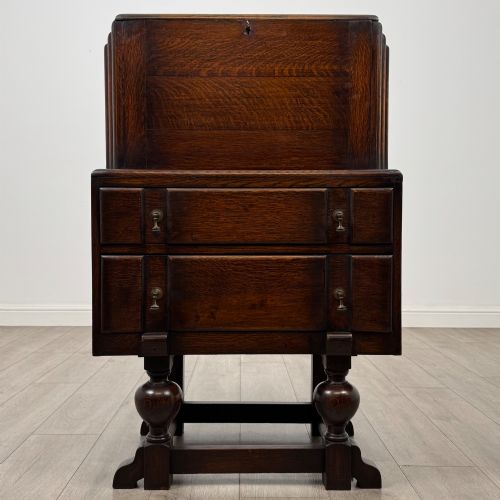
The Edwardian and early twentieth-century versions emerge most frequently on this page, alongside Arts and Crafts and Jacobean Revival interpretations. Makers and styles range from Harris Lebus and Robert Mouseman Thompson to reproduction pieces built in the Georgian style.
Each brown oak secretary desk serves as a functional workspace while displaying the distinctive figuring of English oak. Buyers find formats that integrate display shelving with private compartments hidden behind the drop-down writing slope.
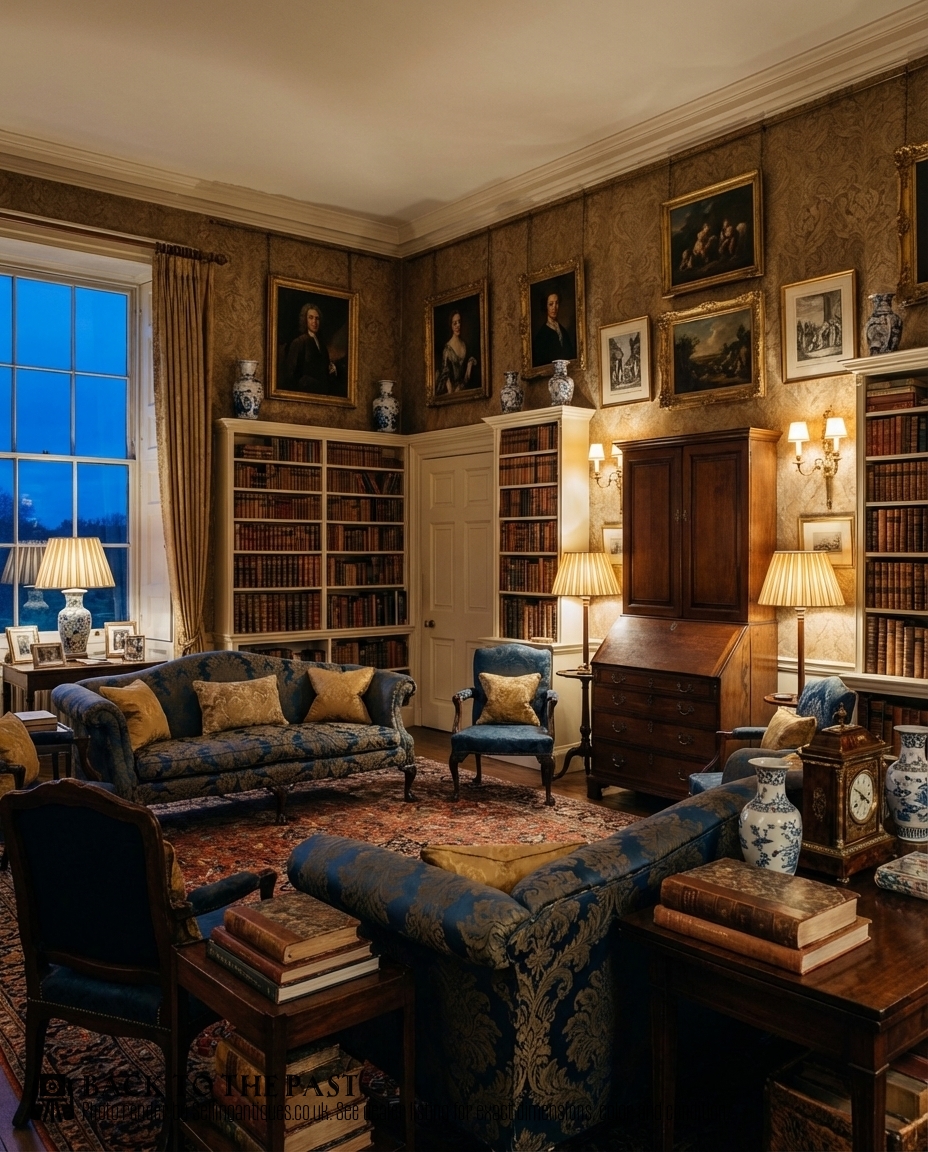
How they were made
Construction relies primarily on oak and English oak, selected for durability and pronounced grain patterns. Workshops shaped these timbers into robust cabinet bodies and fitted interiors using traditional joinery.
Hardware details incorporate brass fittings and wrought iron work to secure doors, drawers, and drop fronts. Glass panels are integrated into the upper bookcase sections where fitted.
Surface finishing highlights the natural warmth and texture of the wood, preserving the distinct character of each period from the late nineteenth-century Arts and Crafts examples onwards.
Brown Oak Secretary Desk Retail Price Guide 2026
Typical asking prices for brown oak secretary desk among the pieces listed under this phrase on Sellingantiques today, from the lower quarter to the upper quarter. They describe what is for sale here now, not the wider market.
Listings span the Georgian, Edwardian, and 1940 periods, utilising oak, brass, glass, and wrought iron across Arts and Crafts and revival styles.
What varies in quality
The refinement of the timber selection and the depth of the grain figure distinguish finer examples from standard production. Superior construction is evident in the precision of the joinery around the internal pigeonholes and drawer dividers.
Hardware integration, from original brass pulls to the movement of the writing flap hinges, separates accomplished cabinet work from simpler output. The harmony of proportions between the lower bureau base and any upper bookcase superstructure dictates visual balance.
Robert Mouseman Thompson·Harris Lebus
The Brown Oak Secretary Desk Glossary
- Bureau
- A writing desk featuring a sloping hinged flap that opens to reveal a fitted interior of small drawers and pigeonholes. This term often applies interchangeably with secretary desks in British antique furniture.
- Bureau bookcase
- A taller piece combining a bureau base with an enclosed shelving unit above, usually protected by glazed doors. This dual-purpose form maximises storage and display in domestic interiors.
- Arts and Crafts
- A design movement valuing honest construction, visible craftsmanship, and simple forms inspired by medieval traditions. Pieces from this style often feature hand-worked hardware and unadorned timber surfaces.
- Jacobean Revival
- A nineteenth- and twentieth-century style resurrecting seventeenth-century decorative motifs such as geometric mouldings and turned legs. Furniture in this vein displays heavier proportions and deep oak tones.
- English oak
- The native timber prized by British cabinetmakers for its strength, durability, and distinctive medullary rays. It forms the structural and visual foundation of traditional regional furniture.
Brown Oak Secretary Desk: Frequently Asked Questions
What is a brown oak secretary desk?
A brown oak secretary desk is a dual-purpose furniture piece featuring a hinged writing flap that conceals inner compartments, paired with drawers or a bookcase above.
These pieces utilise English oak and appear across various historical periods, combining workspace functionality with enclosed storage.
How were these desks used originally?
These desks served as private writing stations for correspondence, household accounts, and reading.
The upper bookcase or lower drawer sections provided secure storage for books, papers, and personal valuables within domestic studies or living spaces.
How do I date a bureau?
Dating relies on examining construction methods, timber choice, hardware style, and stylistic markers such as Arts and Crafts or Jacobean Revival details.
Comparing the internal drawer dovetails and secondary woods helps place the piece within periods ranging from the Georgian era to the mid-twentieth century.
Where should I place a secretary desk?
These desks suit studies, living rooms, and bedrooms where a compact workspace and additional storage are required.
Ensure adequate floor clearance is left in front of the piece for the writing flap to drop down fully during use.