


Brown Oak Relief Carving
Brown oak relief carving brings deep natural grain and historic sculptural form into a room, spanning centuries of woodworking tradition.
Brown Oak Relief Carving
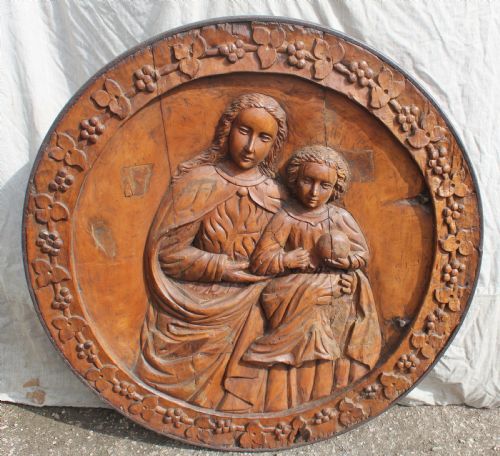
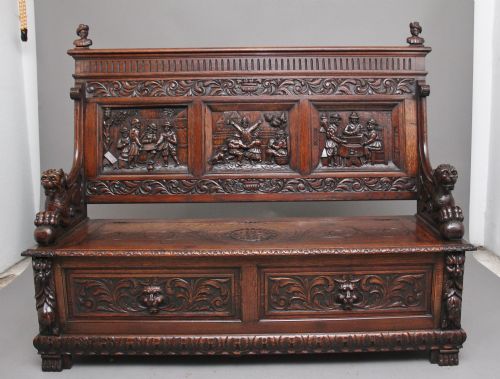
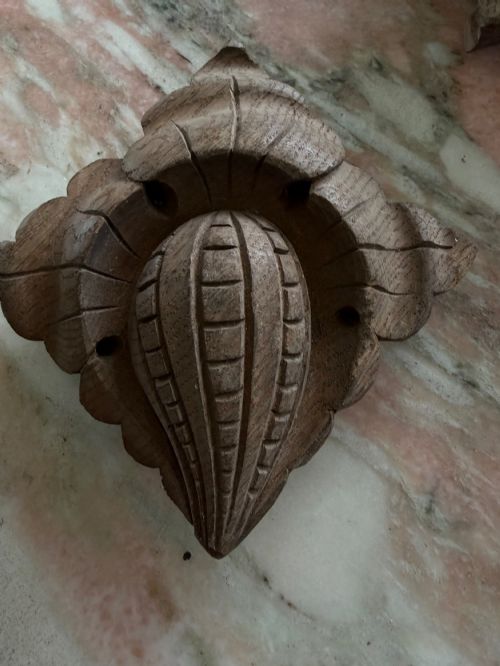
Brown oak relief carving comprises architectural elements, wall panels, plaques, and furniture components created across the sixteenth, seventeenth, eighteenth, and nineteenth centuries. These items range from small ceiling bosses and armorial panels to large overmantles, cupboards, and hall stands.
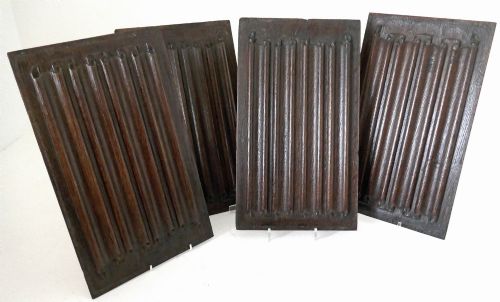
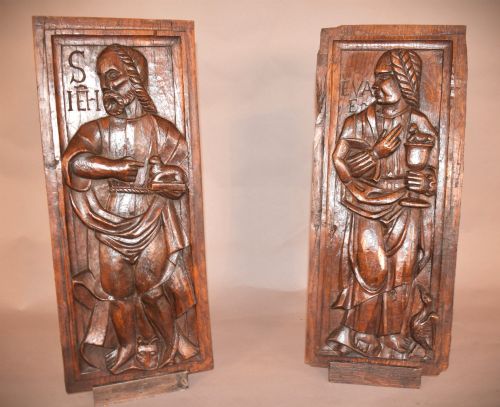
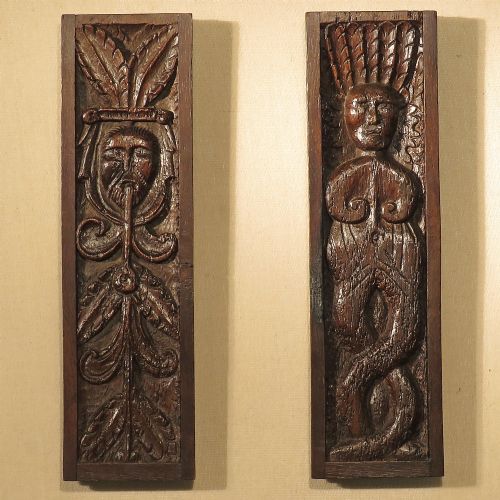
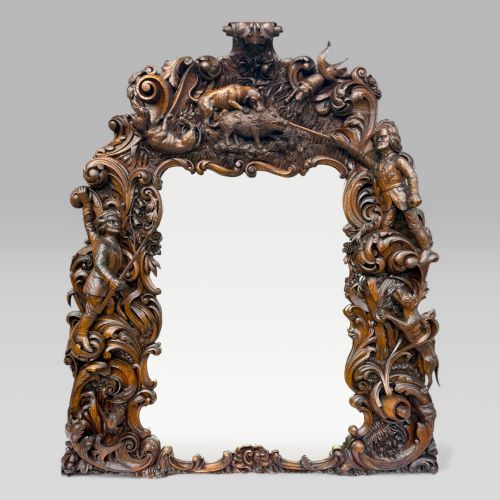
The sixteenth and seventeenth-century pieces frequently display linenfold patterns, figural subjects like Green Men and saints, and intricate Gothic or Renaissance motifs. Later nineteenth-century examples often revive these earlier Baroque and Gothic styles through heavy architectural salvage and decorative wall sculptures.
How they were made
Makers utilised seasoned oak, alongside occasional supplementary fruitwood, walnut, and iron or brass hardware, shaping the material with hand chisels and gouges. The timber was worked to create deep undercutting and projecting surfaces that catch the light across panels, corbels, and friezes.
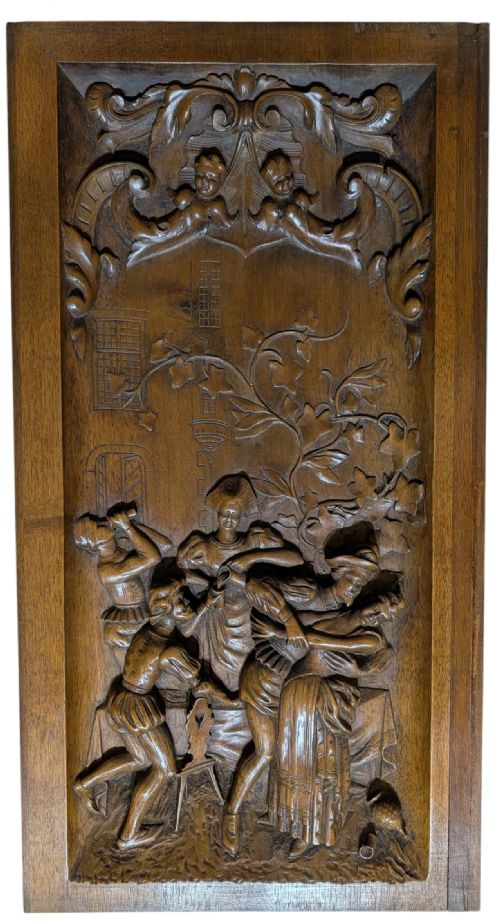
Relief carving techniques vary from low plane incision to high relief sculpture, where figures and foliage project significantly from the background board. Joinery methods such as mortise and tenon secure the carved panels within larger furniture assemblies like cupboards and settles.
Listings feature oak as the primary material, alongside fruitwood and walnut, spanning periods from the sixteenth century to the Victorian era.
What varies in quality
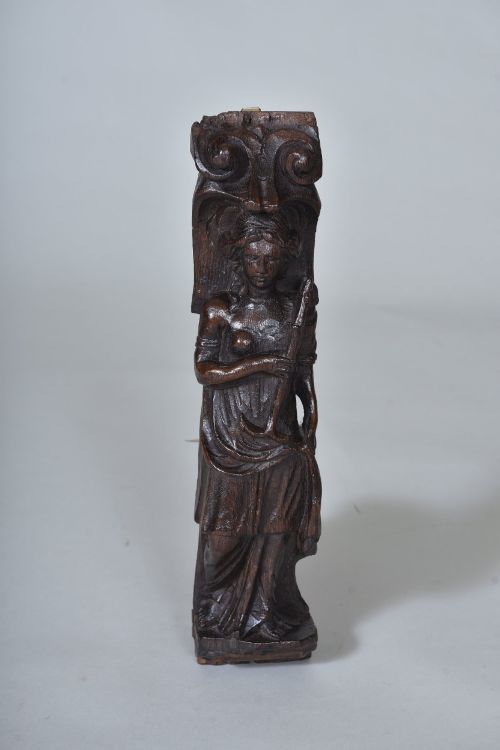
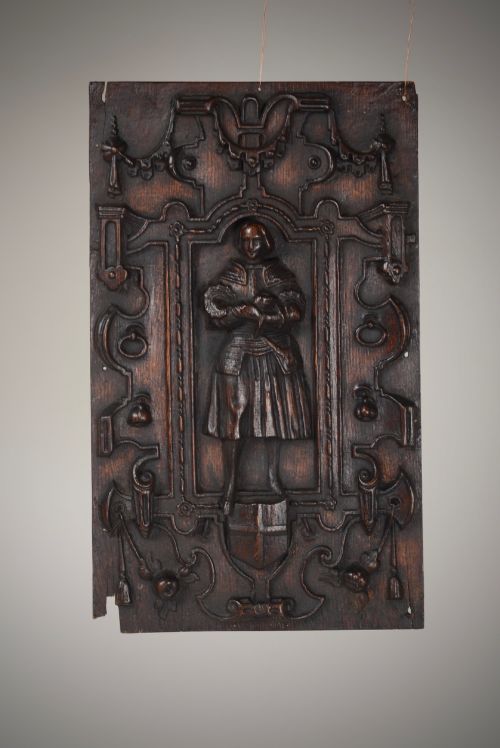
The standard of a brown oak relief carving depends on the depth and definition of the chisel work, distinguishing crisp, articulate figures from soft or worn profiles. Anatomical proportion in human figures, such as cherubs or historical subjects, indicates the carver's skill.
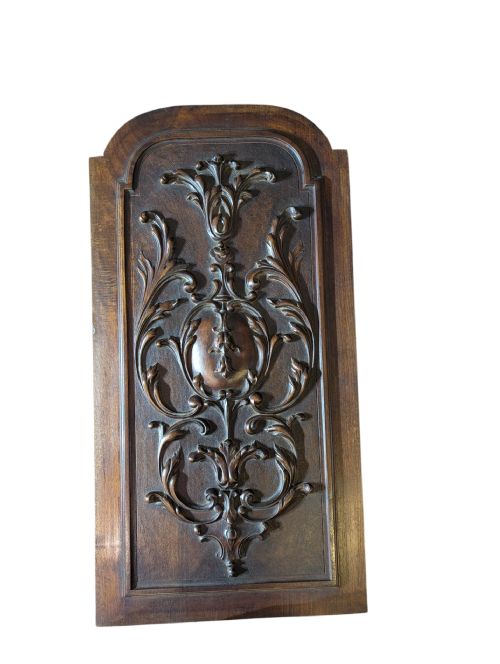
The integration of the carving with its surrounding wood grain and the complexity of the composition, whether pierces acanthus leaves or detailed armorial crests, separates standard decorative panels from exceptional sculptural works.
Edward Pearce
The Brown Oak Relief Carving Glossary
- Relief carving
- A sculptural technique where figures or designs project from a flat background plane. This method creates depth and shadow on panels and plaques.
- Linenfold
- A style of wood carving that mimics folded fabric or linen, popular on sixteenth-century panels. It provides a geometric texture to architectural woodwork.
- Ceiling boss
- A projecting decorative block placed at the intersection of ribs in a ceiling vault. These structural elements often feature carved foliage or faces.
- Corbel
- A structural piece of stone or wood projecting from a wall to support a weight. In woodworking, these often take the form of carved figures or scrolls.
- Armorial plaque
- A flat panel bearing a coat of arms or family crest. These items commemorate lineage and status through heraldic carving.
Brown Oak Relief Carving: Frequently Asked Questions
How were these carved panels originally used?
Many of these pieces functioned as architectural elements built directly into wall panelling, staircases, and ceilings of period homes. Others served as structural components for large furnishings such as cupboards, overmantles, and partner desks.
Religious subjects and armorial plaques often decorated specific rooms to display family lineage or devotion. Over time, many of these architectural elements were salvaged to be displayed independently as wall art.
How do I identify a sixteenth or seventeenth-century piece?
Early pieces from the sixteenth and seventeenth centuries typically display characteristic construction methods, such as hand-riven oak boards and peg joinery. The style of the carving, including linenfold motifs, early Renaissance strapwork, or primitive figural representations, reflects the period's aesthetic.
Wear patterns, patination, and tool marks left by hand chisels further distinguish antique execution from later nineteenth-century Gothic Revival reproductions.
Can I hang a heavy carved oak panel on a modern wall?
Due to the substantial weight of dense hardwood and deep relief work, these pieces require secure anchoring into wall studs or masonry. Proper hardware distribution ensures the weight is supported safely without damaging the timber frame.
Professional mounting brackets or custom backing supports help distribute the load evenly across the structure of the panel.
What is the difference between a wall plaque and architectural salvage?
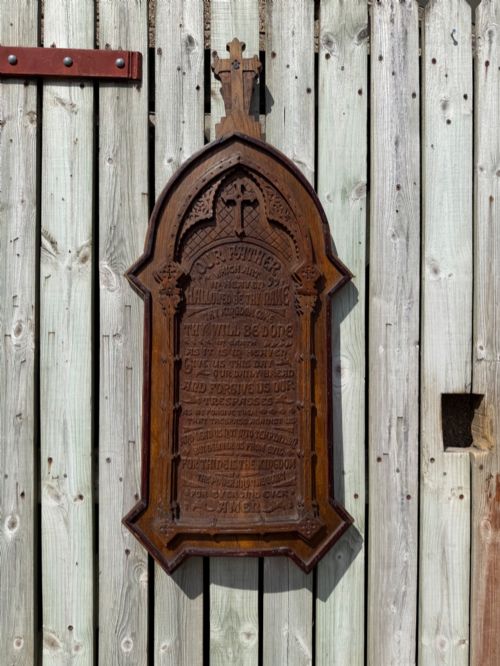
A wall plaque is generally an independent decorative item designed from its inception to hang flat against a surface, often featuring a distinct border or frame. Architectural salvage consists of elements removed directly from buildings, such as staircase panels, ceiling bosses, or cupboard doors.
Salvaged pieces carry the physical marks of their original structural context, whereas dedicated plaques were usually created as standalone artwork.