
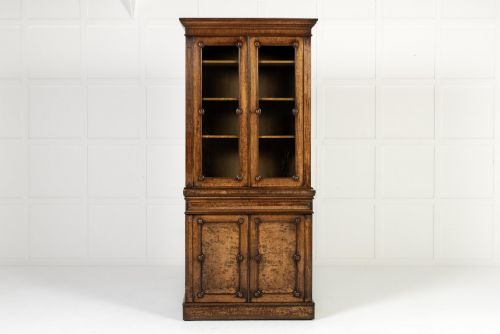
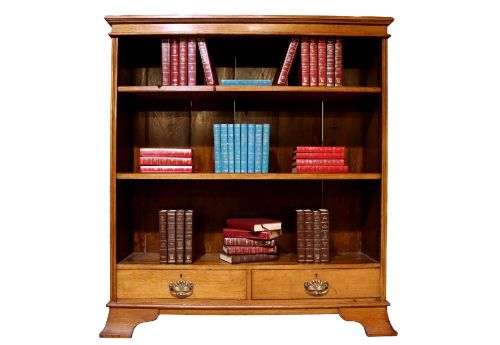
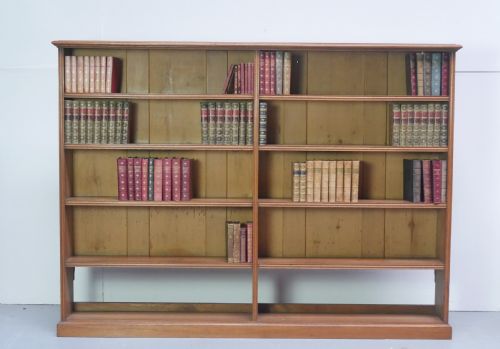

Brown Oak Library Cabinet
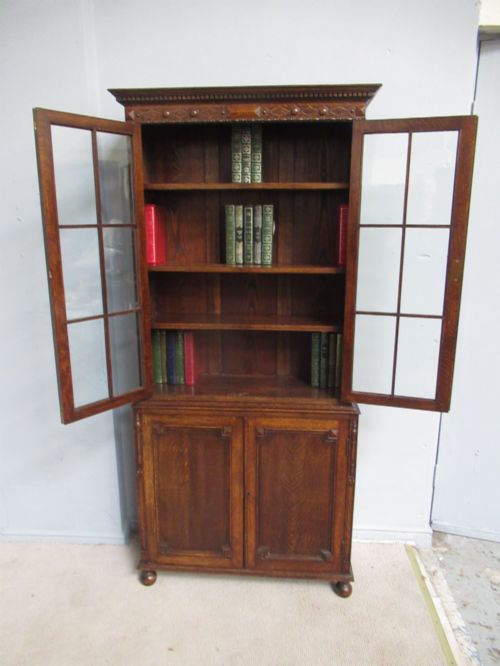
A brown oak library cabinet brings rich grain and practical utility to a room, holding centuries of collected volumes.
Brown Oak Library Cabinet
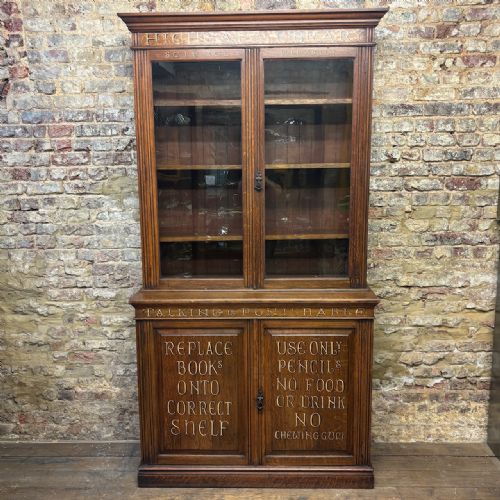
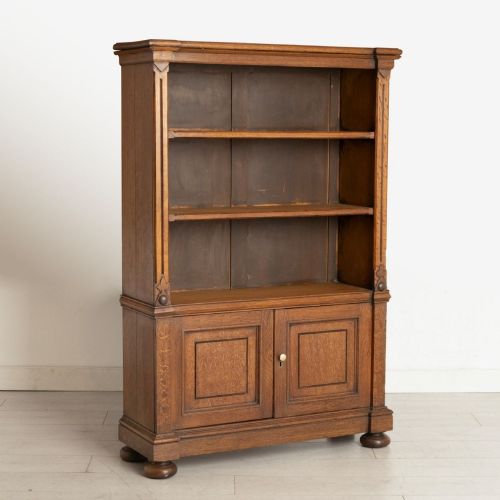
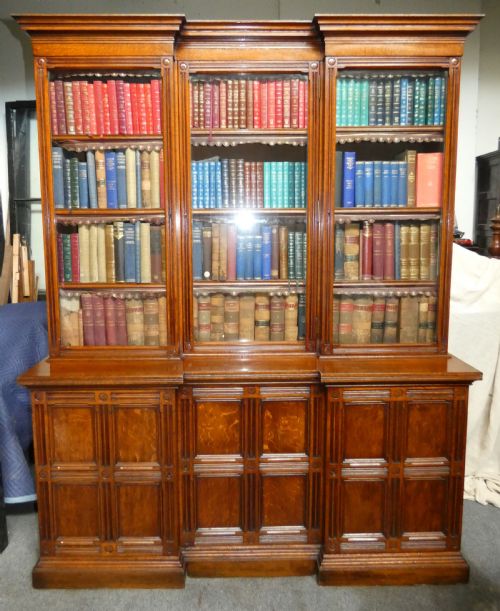
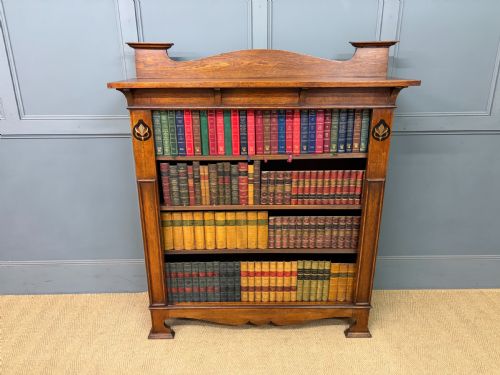
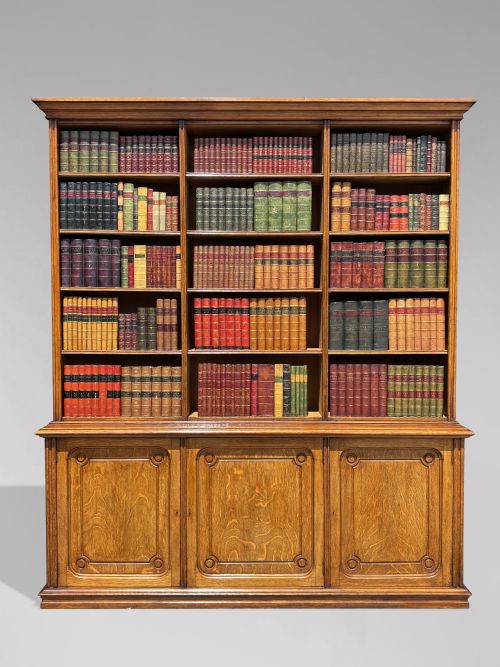
When you search for a brown oak library cabinet, you encounter sturdy storage designed to house books, folios, and documents in domestic or institutional settings. These pieces primarily emerge from the Victorian, Edwardian, and early twentieth-century periods, taking forms such as open bookcases, breakfront cabinets, and sectional stacking units.
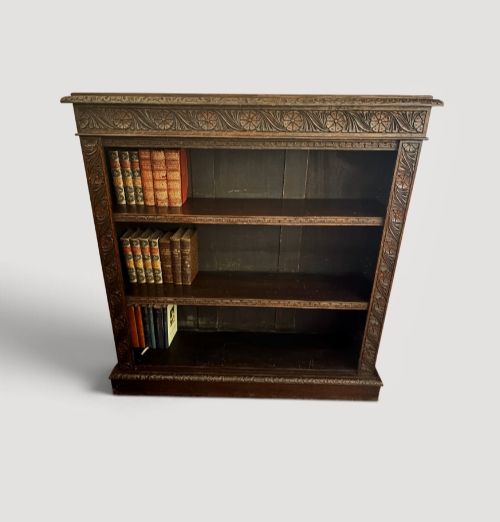
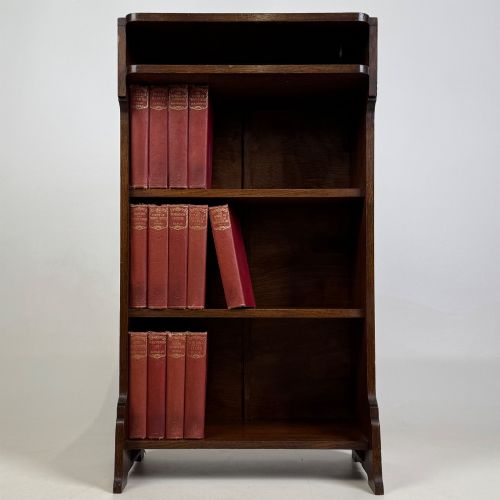
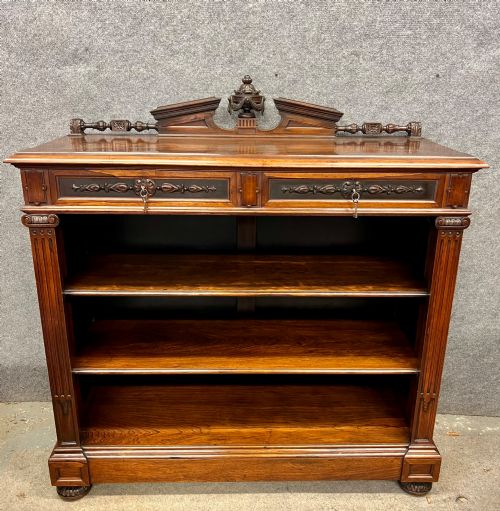
You meet a variety of styles on this page, ranging from plain functional school pieces to heavily carved Gothic Revival and Arts and Crafts designs. Materials span solid oak, pollard oak, and walnut, frequently accented with glass doors and brass hardware.
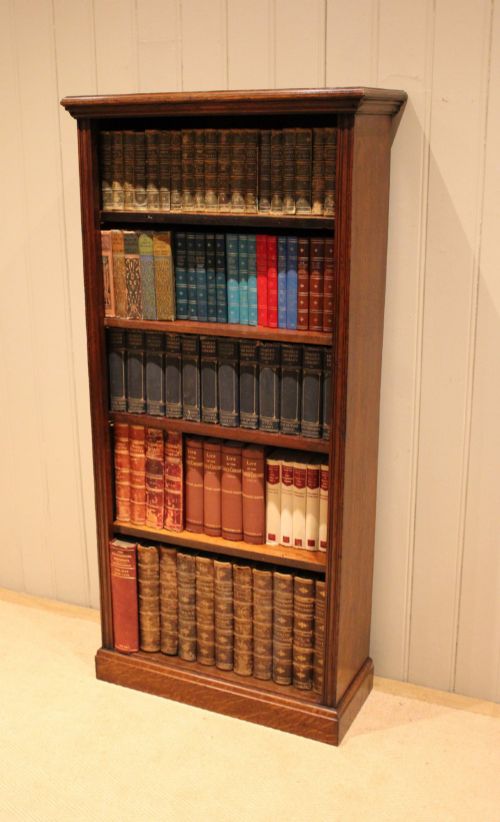
The standard version on this page is a tall or open-front oak bookcase suited for daily use, often fitted with adjustable shelves to accommodate volumes of varying heights.
Materials and construction methods
Cabinetmakers utilised solid oak and pollard oak as the primary timbers, selecting boards for durability and striking figuring in the grain. They combined these heavy woods with glass panels for display doors and fitted iron or brass mechanisms for adjustable shelving and stacking Globe Wernicke sections.
Joinery techniques relied on sturdy framing and housing joints to support the considerable weight of bound books. Carvers applied intricate ornamentation by hand on Victorian and Gothic Revival examples, while institutional pieces favoured utilitarian efficiency.
Object forms recorded here include standard bookcases, breakfront library cabinets, folio cabinets, and modular stacking units.
Distinguishing quality across pieces
The grade of timber sets the baseline for quality, with select pollard oak and rich brown oak displaying superior grain movement compared to plain utility timber. Finer pieces demonstrate meticulous hand-carving and careful timber selection, particularly in breakfront and monumental library furniture.
Construction details also separate standard commercial output from exceptional cabinetmaking. Adjustable shelving mechanisms, robust brass fittings, and tight joinery indicate a higher standard of original manufacture.
Globe Wernicke·Benjamin Taylor & Sons·Lebus
The Brown Oak Library Cabinet Glossary
- Breakfront
- A piece of furniture where the central section projects forward from the flanking wings. This layout adds architectural depth to large library cabinets.
- Pollard oak
- Timber taken from trees that were cut back close to the trunk to encourage dense, highly figured branch growth. It creates a swirling grain pattern prized in fine cabinetry.
- Sectional bookcase
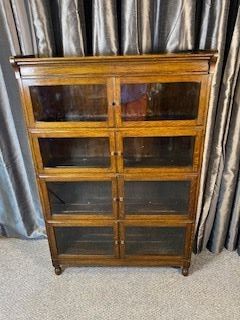
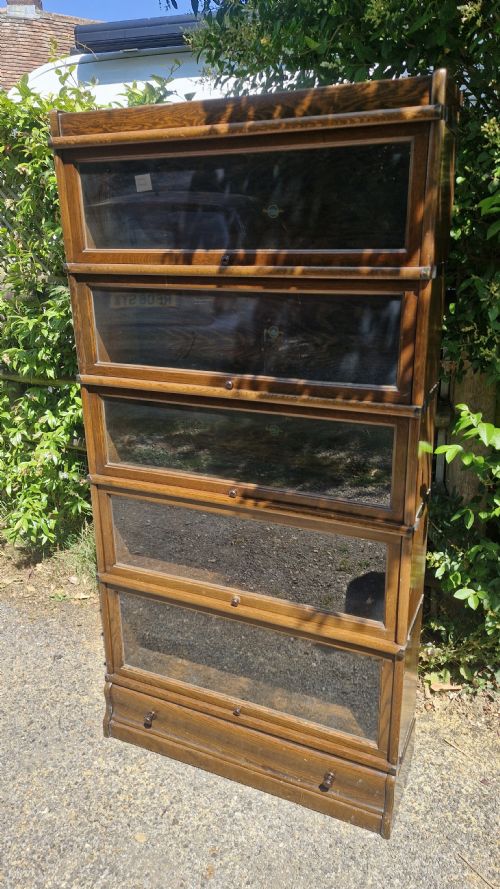
- A modular shelving unit made of stackable tiers with glass lift-up doors, often associated with the Globe Wernicke design. This allows the cabinet to expand vertically as a collection grows.
- Gothic Revival
- A nineteenth-century design movement inspired by medieval architecture. It incorporates pointed arches, trefoils, and heavy carved details into furniture.
Brown Oak Library Cabinet: Frequently Asked Questions
What is a brown oak library cabinet used for?
These cabinets served primarily to store, organise, and protect bound books, manuscripts, and folios in private homes and institutions.
Today, they fulfil the same domestic function while displaying collections behind open shelving or glass doors.
How do I tell Victorian from Edwardian pieces?
Victorian examples frequently feature heavy proportions, dark finishes, and elaborate carved details such as Gothic Revival motifs.
Edwardian pieces generally lean towards lighter oak tones, simpler lines, and practical innovations like sectional stacking units.
Are the shelves adjustable in these cabinets?
Many of the bookcases and cabinets listed feature adjustable shelving systems to accommodate books of varying heights.
Some institutional or school pieces use fixed partitions built for uniform ledgers and textbooks.
What is a sectional bookcase?
A sectional bookcase consists of individual modular tiers that stack together, commonly featuring glass front panels that lift and slide inward.
This design originated to protect books from dust while allowing owners to add matching tiers as their libraries expanded.