
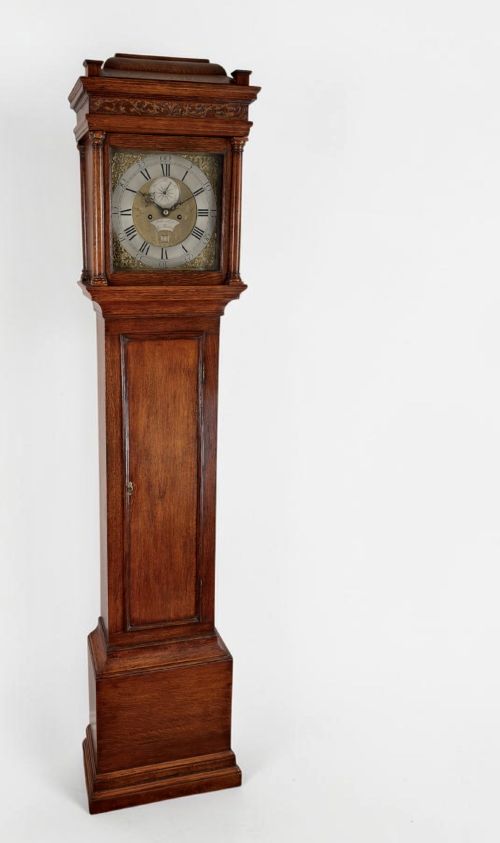
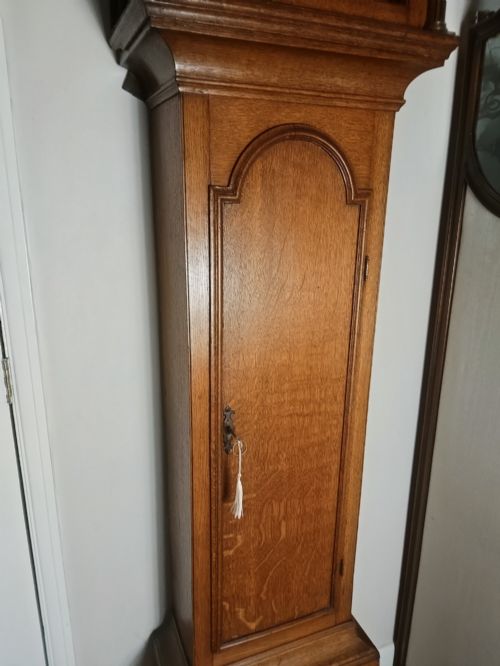
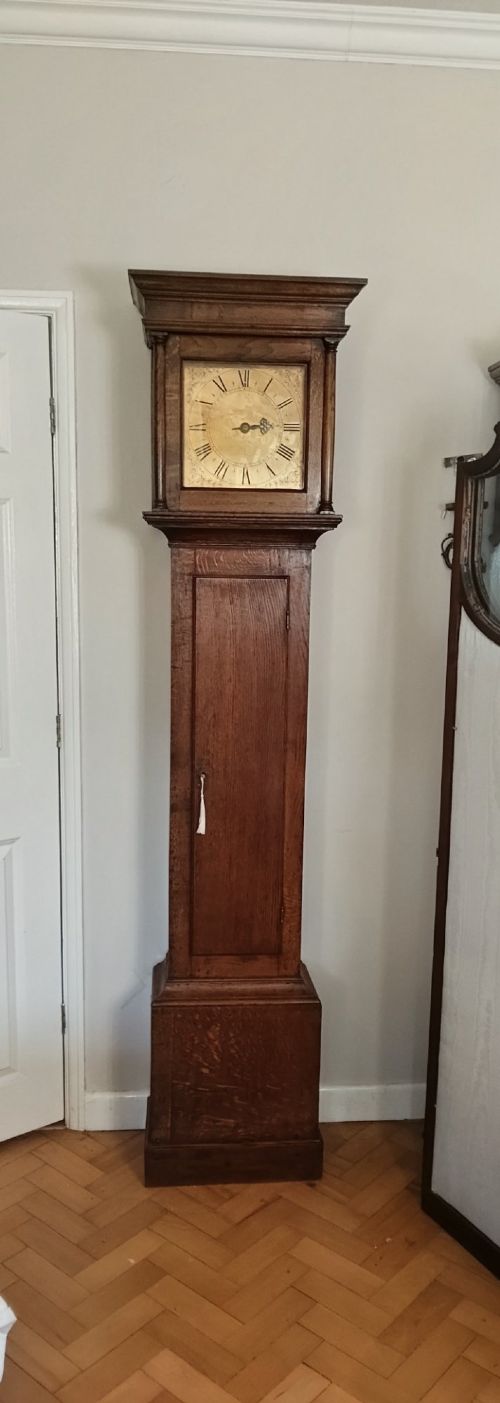
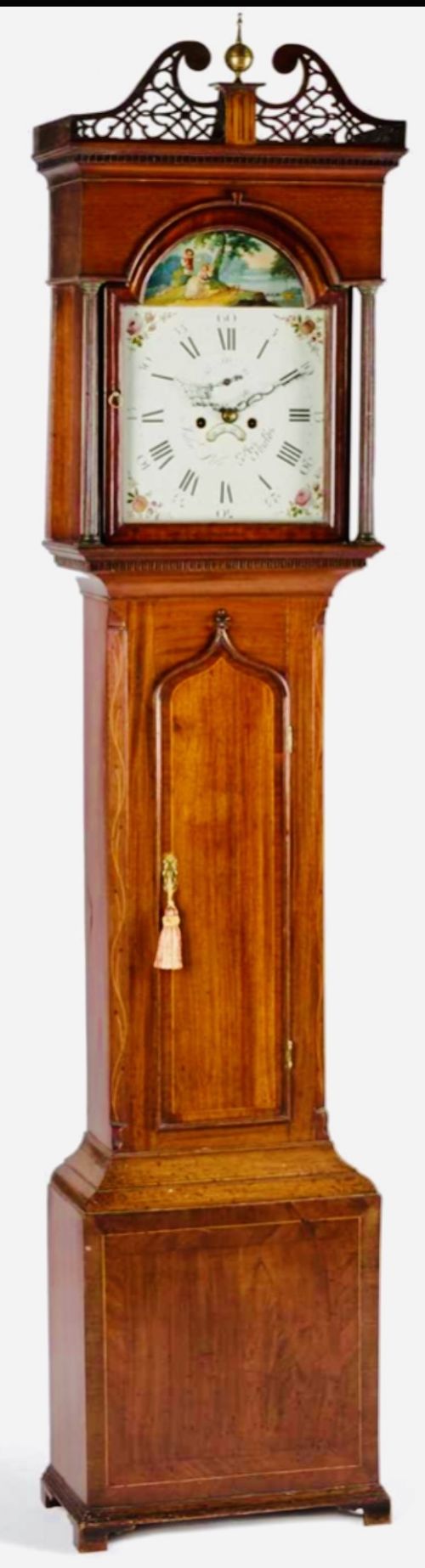
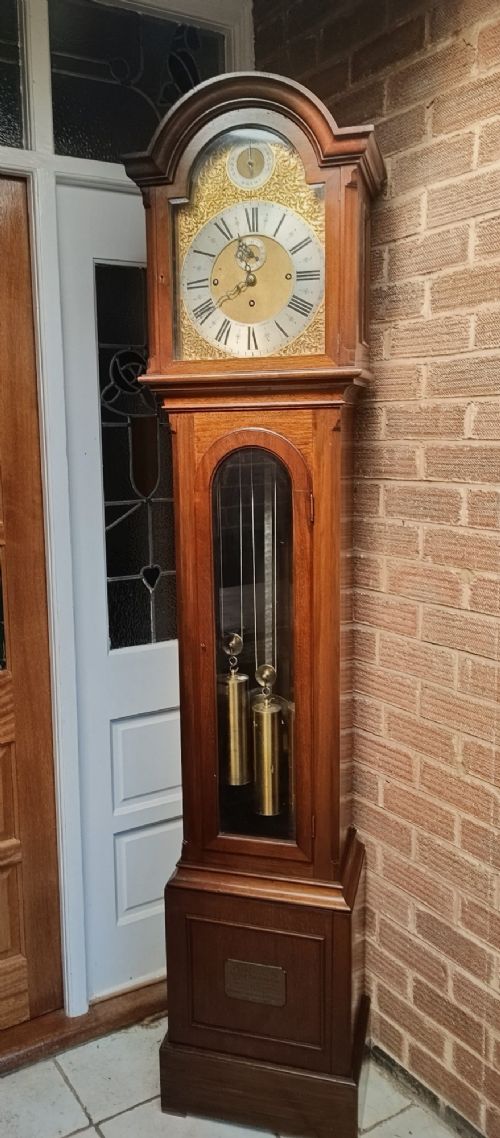
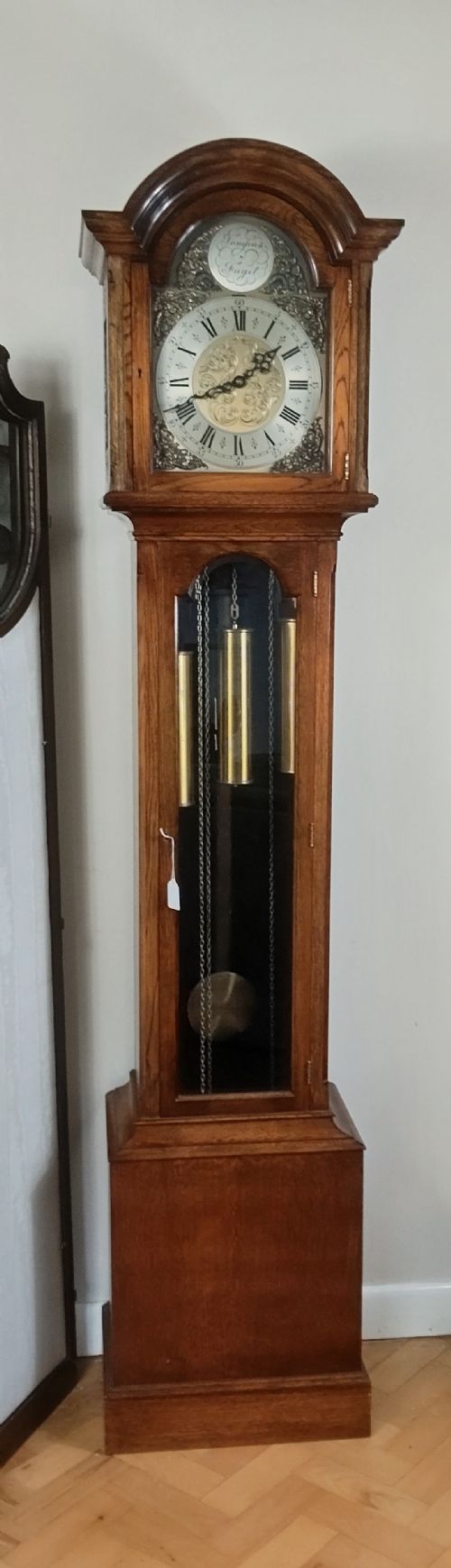


Brown Oak Floor Clock
A brown oak floor clock brings the steady rhythm of past centuries into a room through timber and brass.

Brown Oak Floor Clock
A brown oak floor clock, also known as a grandfather or longcase clock, stands upright to house a weight-driven movement and pendulum. These tall cases span several periods, with Georgian and 18th Century examples appearing frequently alongside later Victorian and 19th Century iterations.
The pieces on this page range from small formats with ten or eleven-inch dials to elaborate musical regulators and moon phase models. Cabinet makers housed these movements in oak cases, sometimes accented with mahogany crossbanding or brass dial fittings.
Regional British makers dominate the selection, with provincial clocks originating from towns and cities such as Birmingham, Chester, Skipton, and New Quay. Alongside standard eight-day and thirty-hour weight-driven movements, the listings include occasional Edwardian, Art Deco, and 1930s variations.
Factors of Quality
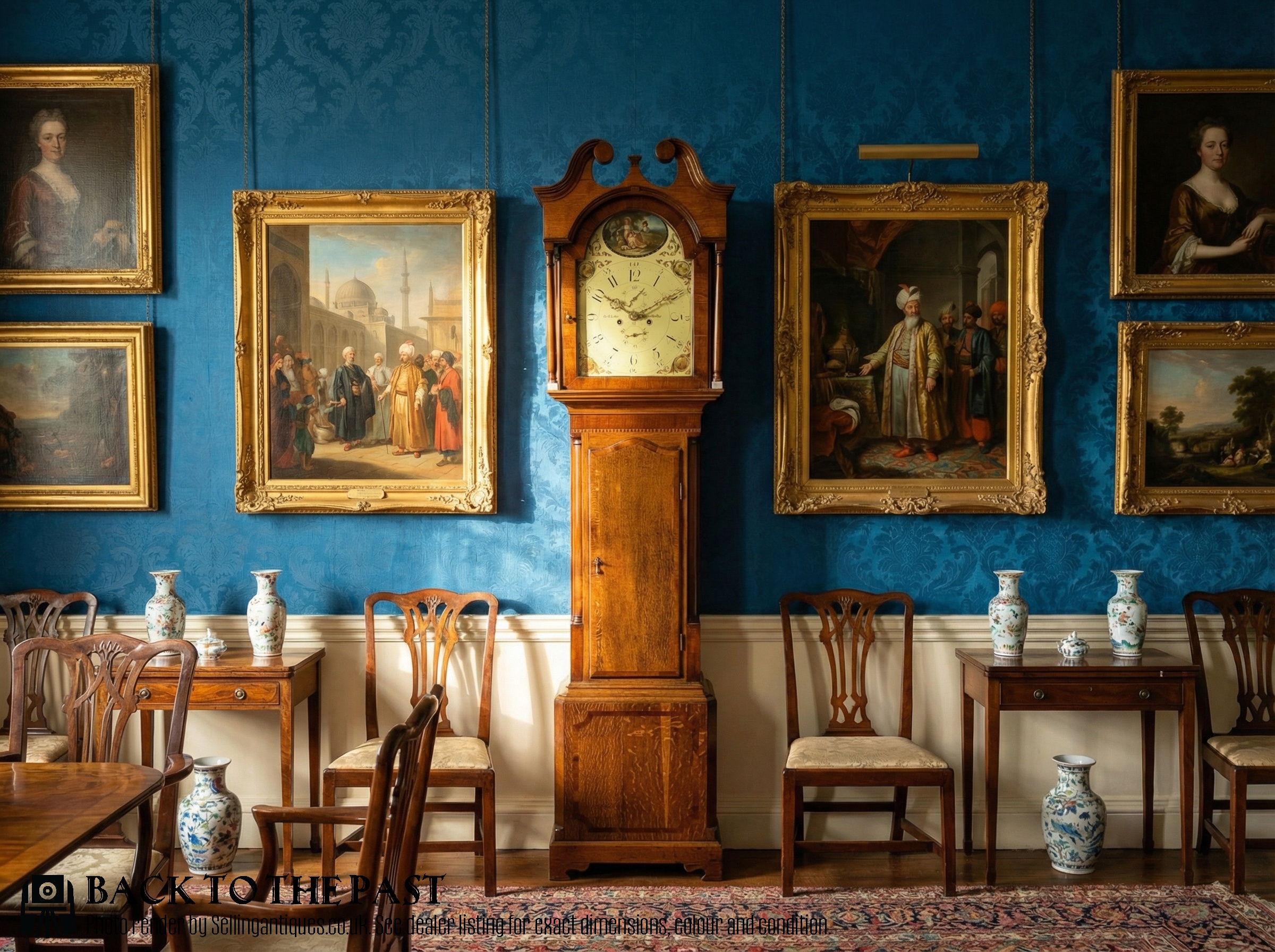
Quality in a brown oak floor clock rests on the harmony between the movement and the cabinetry. Clocks featuring signed dials from known provincial makers hold distinct interest compared to unsigned works.
The selection of timber grain, the crispness of brass dial engraving, and the integration of mahogany crossbanding separate standard workshop output from finer examples. Proportion also dictates worth, as smaller or more slender formats demand greater joinery skill.
Brown Oak Floor Clock Retail Price Guide 2026
Typical asking prices for brown oak floor clock among the pieces listed under this phrase on Sellingantiques today, from the lower quarter to the upper quarter. They describe what is for sale here now, not the wider market.
Listings feature oak, mahogany, brass, and enamel across Georgian, Victorian, and 1930s periods.
Lee of Great Marlow·Thomas Webbe of New Quay·Edward White Birmingham·David Craig Ford Path head·Richard Prew Of Tewksbury·Richard Alexander Devizes·James Coster Of Henley·Stanyer Nantwich·Preddy of Langport·Jn Wright Linton
The Brown Oak Floor Clock Glossary
- Longcase clock
- A tall pendulum clock enclosed in a wooden case that stands directly on the floor. These tall enclosures protected the weight-driven mechanism from dust and air currents.
- Grandfather clock
- A common alternative term for a tall weight-driven pendulum floor clock. The name gained popular usage following the nineteenth-century song concerning a large timepiece.
- Moon phase
- A dial mechanism tracking the lunar cycle through a rotating disc behind the clock face. This complication required precise gear ratios to display the phases of the moon accurately.
- Chapter ring
- The circular metal ring on a clock dial bearing the hour numerals. Georgian examples typically feature engraved Roman numerals filled with black wax.
- Spandrel
- An ornamental corner piece fitted between the dial circle and the square frame. Early examples were cast in brass and chased by hand before being gilded.
Brown Oak Floor Clock: Frequently Asked Questions
What is a brown oak floor clock?
A brown oak floor clock is a tall timepiece housed in an oak cabinet, designed to stand directly on the floor while enclosing a pendulum and weights.
These pieces measure time through mechanical movements, typically requiring manual winding at regular intervals depending on whether the mechanism runs for thirty hours or eight days.
How do I tell an 18th-century clock from a later one?
Eighteenth-century clocks generally feature square brass dials with cast spandrels, solid oak construction, and provincial maker signatures inscribed on the face.
Later Victorian and Edwardian examples often display arched painted iron dials, mahogany crossbanding, or alternative spring-driven and chiming movements.
Where should I place a longcase clock?
Floor clocks require a stable, dry interior wall with a solid floor surface to ensure the pendulum swings evenly and keeps accurate time.
Avoid placing them in areas subject to direct sunlight or rapid temperature shifts, which can affect the wooden case and internal metal components.
What does a strike or silent feature do?
A strike or silent lever allows the owner to silence the clock's hourly chime mechanism without stopping the timekeeping function.
This complication proved useful in bedrooms and living spaces where overnight chiming was undesirable.