
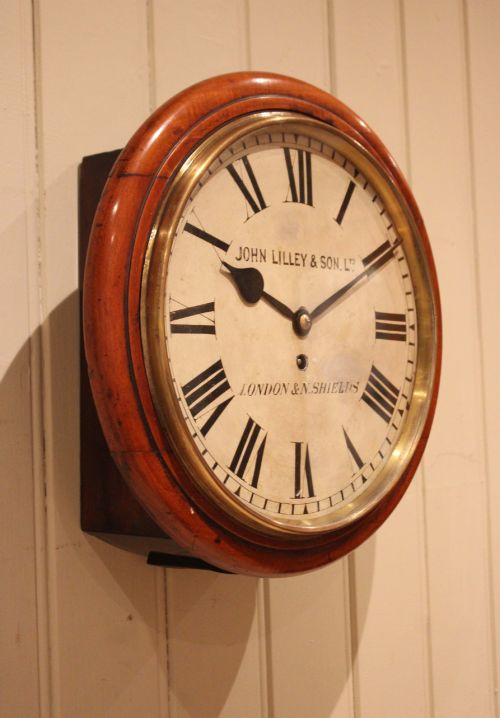
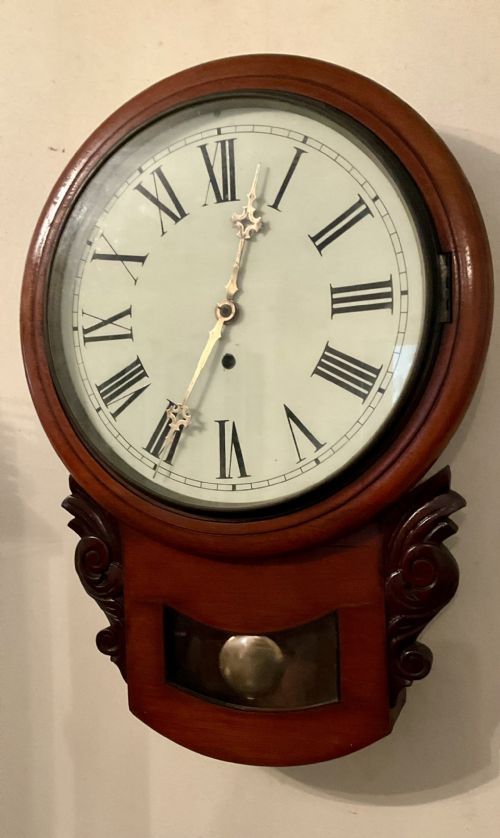
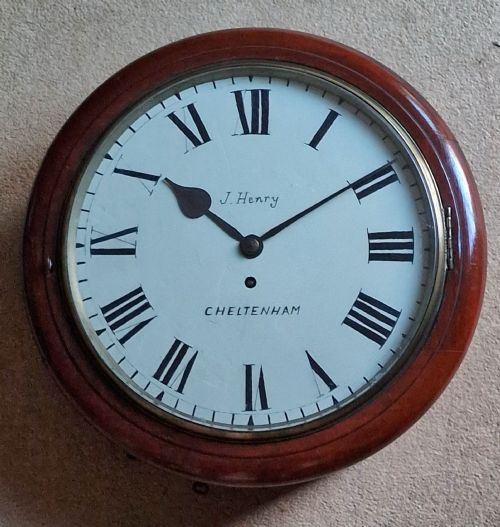
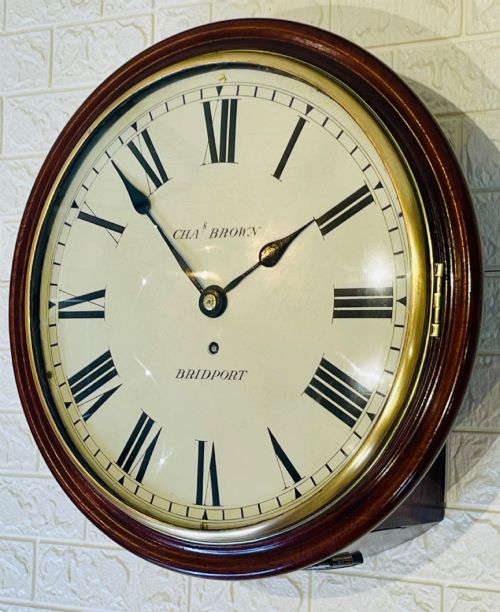


Brown Mahogany Wall Clock
A brown mahogany wall clock brings the dependable tick of a railway station or municipal office directly into a hallway.
Brown Mahogany Wall Clock
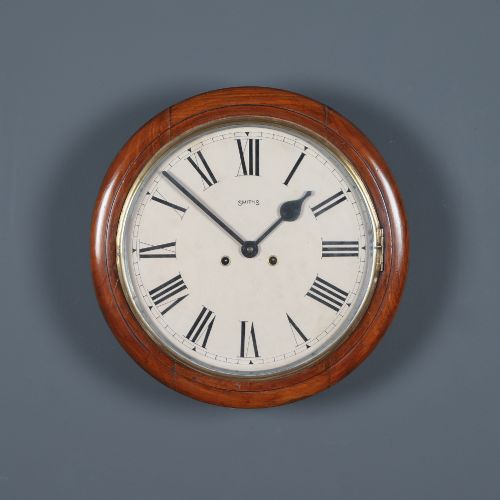
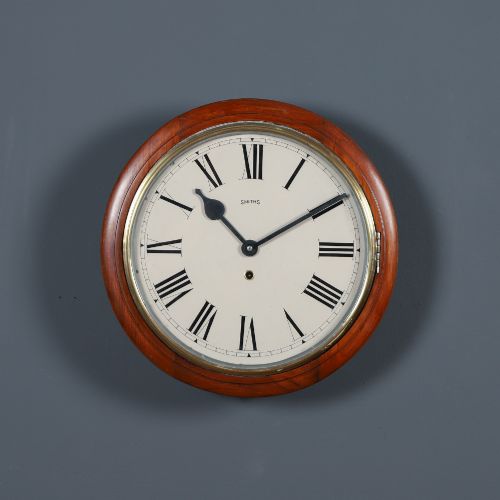
A brown mahogany wall clock is a solid timber timepiece designed to hang securely in public rooms, offices, and domestic hallways. The pieces seen here span centuries of British craftsmanship, ranging from disciplined Georgian examples to robust Victorian and Edwardian iterations.
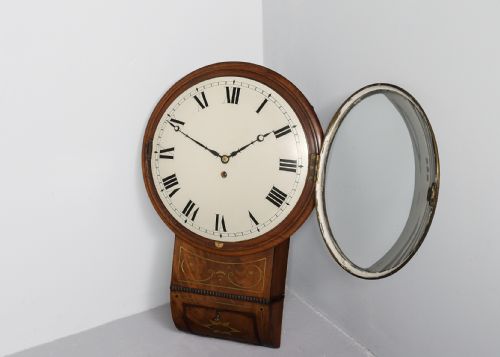
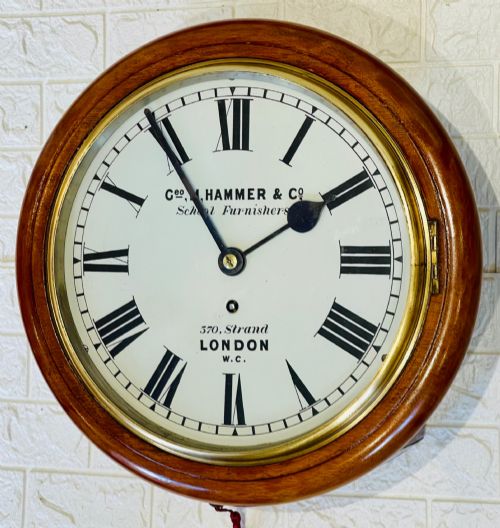
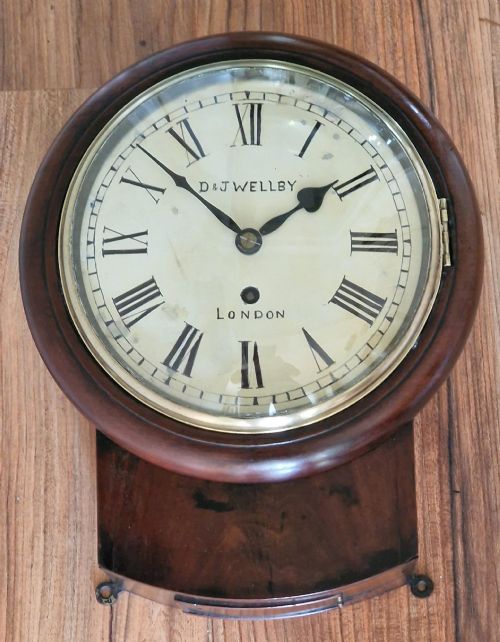
The most common version met on this page is the round dial wall clock, often fitted with a fusee movement designed for steady timekeeping. These pieces frequently show regional origins, appearing as railway station timepieces, school clocks, or domestic drop-dial variants in rich mahogany timber.
How they were made
Makers constructed the primary housing from dense mahogany, sometimes enhancing the visual depth with rosewood veneer or brass inlay. Dials typically feature painted metal, enamel, or convex glass protection, framed by circular wooden bezels that open for daily winding.
Internal mechanics rely upon brass gear trains driven by fusee or double barrel movements, translating stored spring tension into measured seconds. Iron components and steel arbours provide the structural backbone for the striking and timekeeping mechanisms housed within the timber cases.
The listings span multiple centuries, utilising mahogany, brass, glass, and iron across Victorian, Georgian, and Regency periods.
What varies in quality
Quality rests in the precision of the brass movement and the crispness of the dial markings rather than mere size. Master clockmakers filed wheel teeth by hand and engraved their signatures cleanly onto the metal faces, distinguishing workshop pieces from mass production.
The cabinetry dictates visual standing, where well-figured mahogany grain and tightly fitted access doors maintain the structural integrity of the case. Original components, from the pendulum bob to the brass bezel lock, separate preserved examples from heavily restored or altered pieces.
J Henry Cheltenham·D And J Wellby·John Walker·Cording of London·Edward Hannam
The Brown Mahogany Wall Clock Glossary
- Fusee
- A conical pulley used in mechanical clocks to equalise the torque of the mainspring as it unwinds. This mechanism ensures consistent power delivery to the escapement for accurate timekeeping.
- Drop dial
- A wall clock case featuring an extended lower wooden trunk to accommodate a longer pendulum or a weighted drop. This form became popular in railway offices and public rooms during the nineteenth century.
- Bracket clock
- A portable spring-driven clock originally designed to sit on a bracket or shelf. These pieces frequently utilise robust mahogany cases and fine brass carrying handles.
- Convex dial
- A clock face curved outward toward the viewer to reduce glare from interior lighting. It allows for easier reading from acute angles in large rooms.
Brown Mahogany Wall Clock: Frequently Asked Questions
What is a fusee wall clock?
A fusee wall clock uses a conical drum inside the mechanism to regulate the pull of the mainspring. This device maintains steady tension as the spring runs down.
Such movements were fitted into mahogany cases where reliable timekeeping mattered, such as railway stations, offices, and large domestic hallways.
How do I wind my wall clock?
Winding requires inserting a suitable key into the winding hole on the dial face and turning it gently until resistance stops the motion. Care must be taken not to overwind the spring.
Most eight-day movements need attention once a week, keeping the pendulum swinging steadily without forcing the mechanics.
Where should I hang a heavy mahogany clock?
A heavy mahogany clock needs direct support from a solid wall fixing, such as a masonry plug or a timber stud. Hanging it from a standard picture hook risks structural failure.
The weight of the timber case and brass movement demands a secure mounting to keep the pendulum beating in even rhythm.
How can I tell a railway clock from a domestic one?
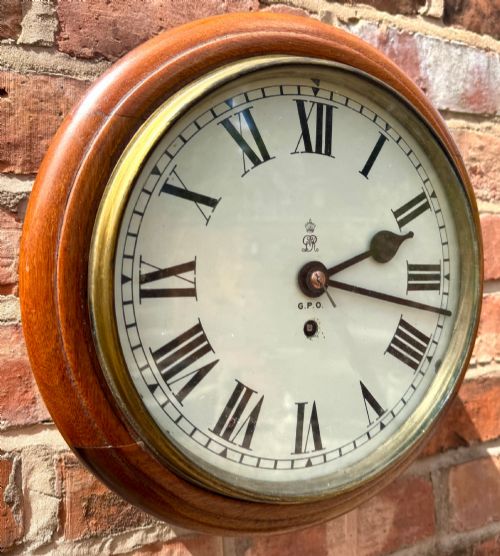
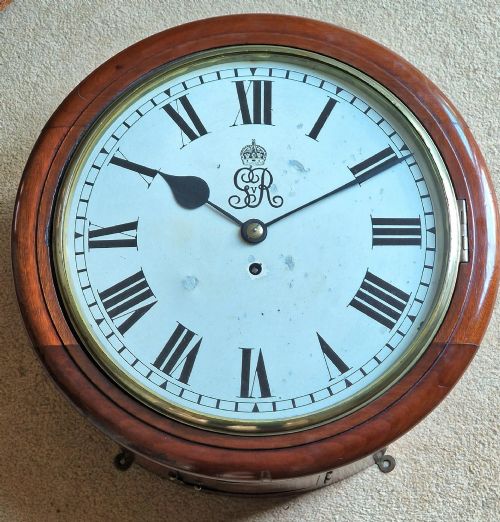
Railway clocks often feature specific company lettering on the dial, such as GVR, GPO, or LMS, denoting their official transport or postal service origins. Their dials tend to be clear and plain for rapid reading.
Domestic wall clocks frequently incorporate inlaid brass, carved mahogany cases, or decorative drop-dial trunks suited to residential interiors.
Why does my clock gain or lose time?
Temperature shifts and natural mechanical wear cause clock movements to alter their pace over time. The expansion of metal parts changes how the gear train operates.
Adjustment is managed by turning the regulating nut on the pendulum rod to lower or raise the bob until the beat aligns correctly.