


Brown Mahogany Kneehole Desk
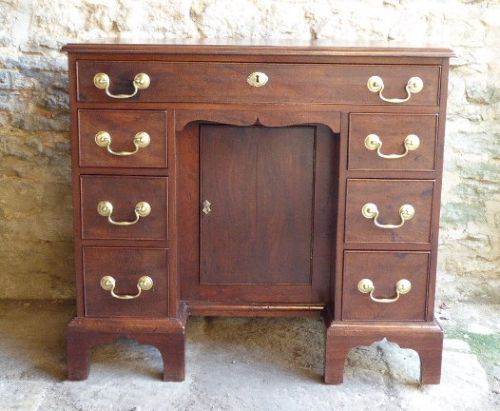
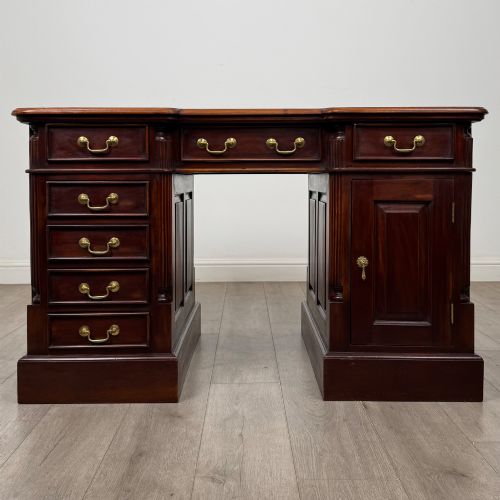
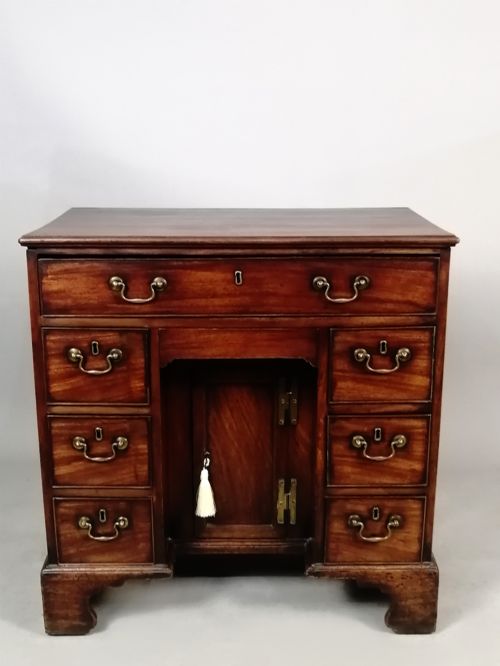
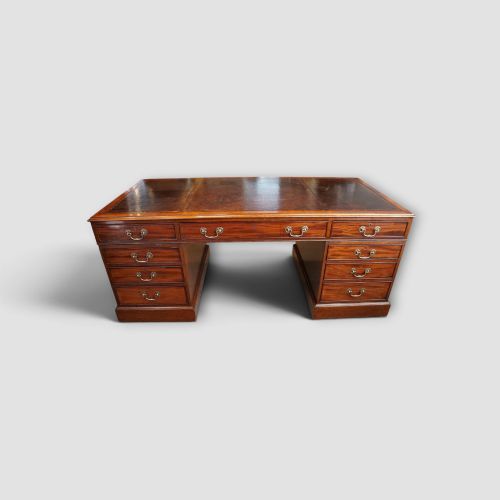
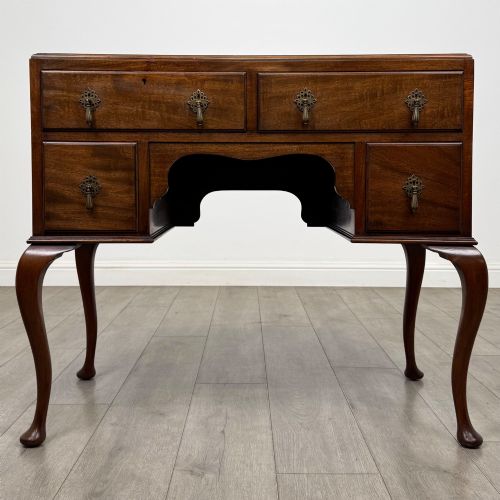
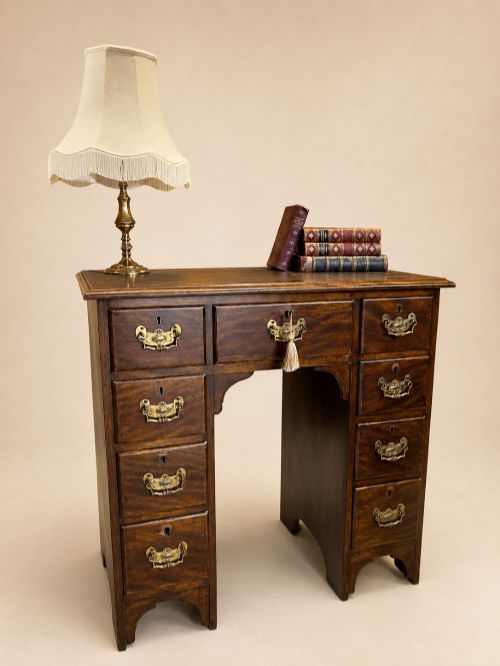
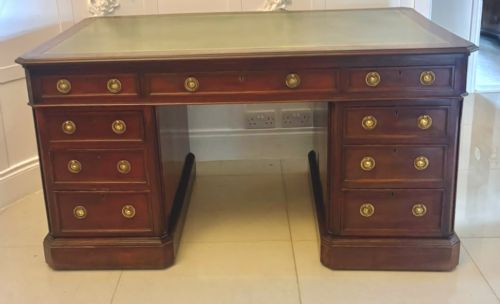
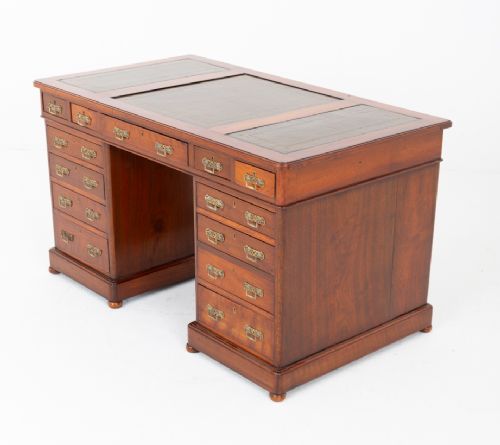
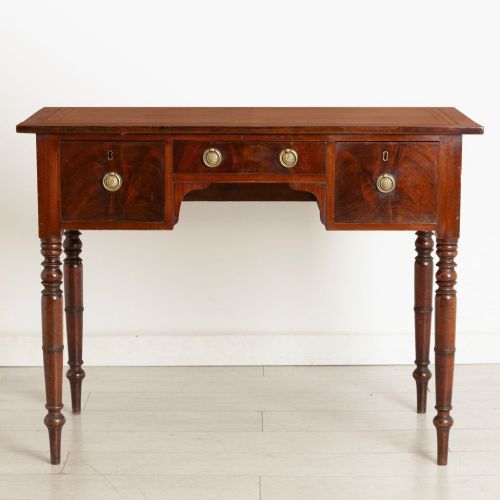
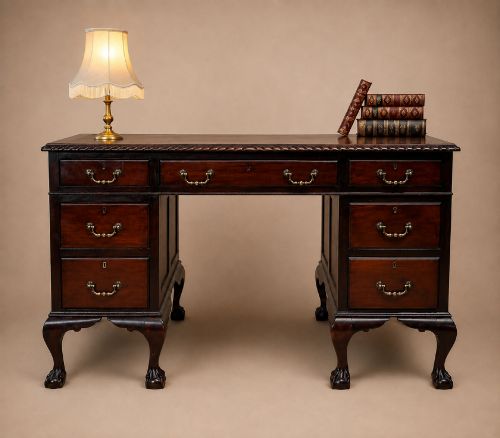
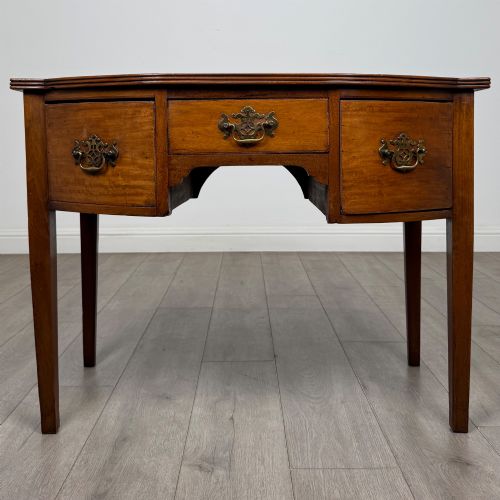
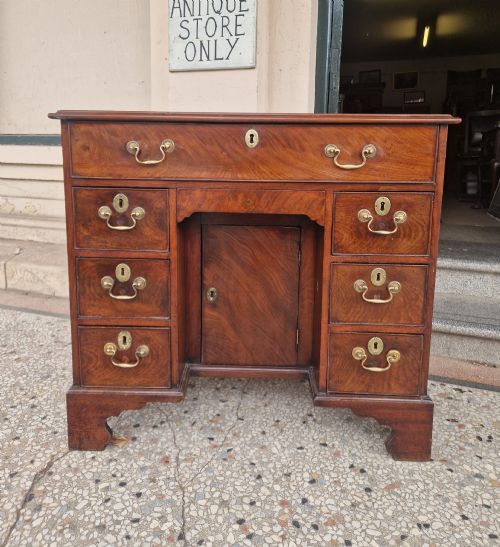
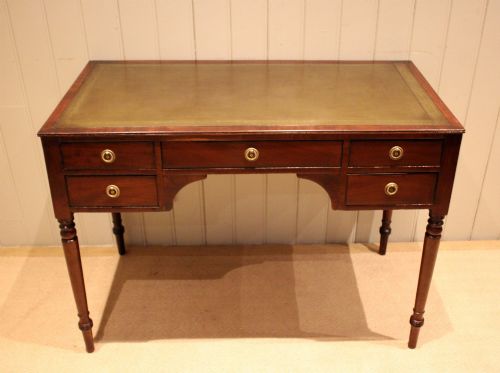
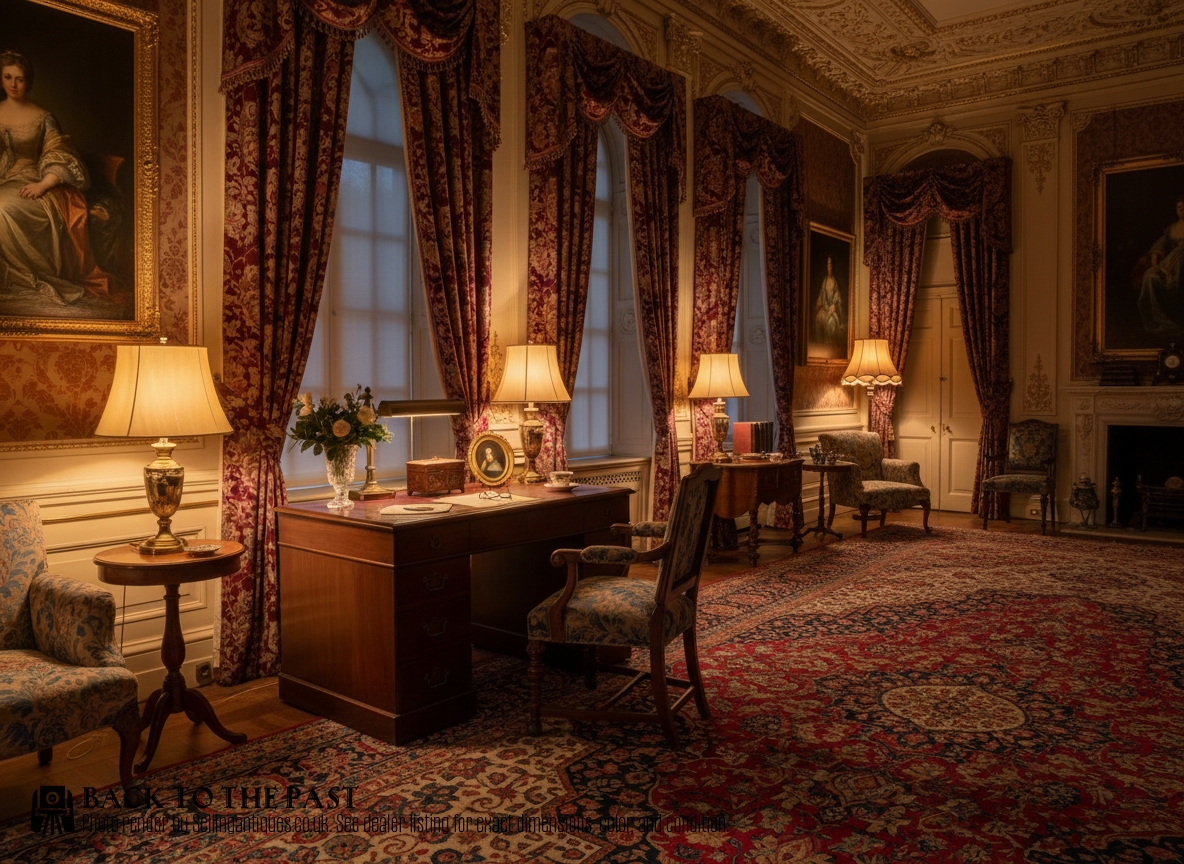
These brown mahogany kneehole desk examples combine sturdy pedestals with central recessed spaces, offering structured workspace built from rich timber.
Brown Mahogany Kneehole Desk
When searching for a brown mahogany kneehole desk, buyers encounter forms spanning Georgian, Victorian, Edwardian, and Regency periods, alongside later revival pieces. These items serve as compact writing stations or dressing tables featuring a recessed central well beneath the tabletop, flanked by pedestals of drawers.
The layout typically incorporates a central drawer above the kneehole space, with banks of smaller drawers arranged on either side. Such furniture originates primarily from the eighteenth and nineteenth centuries, though twentieth-century interpretations also appear across the listings.
How they were made
Construction relies heavily on solid mahogany and flame mahogany veneer applied to secondary timbers, providing deep figuring across drawer fronts and tops. Cabinetmakers shaped these surfaces using traditional joinery methods, incorporating brass hardware and leather inserts for writing surfaces.
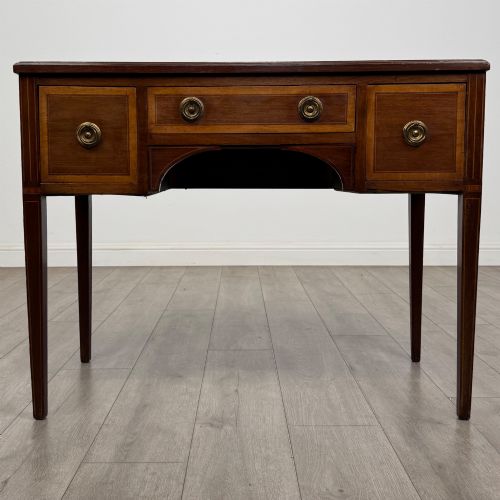
Detailing often involves inlay work utilising satinwood, boxwood, and ebony to create contrasting borders. Structural support rests on pedestal bases or bracket feet, while fitted interior compartments organise stationery and writing equipment.
Some desks hide secret stationery compartments within the pedestal walls for private correspondence.
What varies in quality
Quality separates through the depth of timber selection, particularly where symmetrical flame mahogany veneers match across multiple drawer fronts. Cabinetmaking precision defines the finer examples, evident in the tight fit of drawer dovetails and the retention of original brass handles.
The integrity of secondary woods and the sophistication of stringing or crossbanding further distinguish workshop output. Pieces maintaining original leather inserts and fitted interior stationery drawers demonstrate superior preservation and craftsmanship.
Trollope and sons
The Brown Mahogany Kneehole Desk Glossary
- Kneehole desk
- A writing table or pedestal desk featuring a recessed central space designed to accommodate the user's legs. This configuration allows for banks of drawers on both sides.
- Flame mahogany veneer
- A thin slice of timber cut from where a branch joins the main trunk, producing a distinctive flickering flame pattern. Cabinetmakers applied this to prominent surfaces for visual impact.
- Pedestal desk
- A heavy freestanding writing table supported by two vertical columns of drawers resting on the floor. These units provide substantial storage capacity.
- Stringing
- Thin inlaid lines of contrasting wood, such as boxwood or ebony, used to outline panels and drawer fronts. This decorative technique highlights geometric proportions.
- Secretaire
- A desk or chest featuring a pull-down writing flap that conceals a fitted interior of small drawers and pigeonholes. It combines storage with a dedicated writing surface.
Brown Mahogany Kneehole Desk: Frequently Asked Questions
How do I spot a Georgian desk?
Georgian pieces display precise cabinetmaking with fine dovetailing, hand-cut secondary timbers, and understated brass hardware without excessive ornamentation. The proportions remain balanced and structural lines stay clean.
Look inside the drawer construction for solid oak or mahogany sides rather than modern laminates or machine-cut joints. The timber patination should show deep, warm colour built through decades of waxing.
What is a kneehole desk used for?
These pieces function primarily as writing tables, correspondence stations, or dressing chests depending on the presence of mirrors or fitted stationery compartments. The recessed central space allows the user to sit comfortably close.
Drawers flanking the kneehole organise papers, inkwells, and personal items while keeping the main surface clear for daily tasks.
How do I care for mahogany timber?
Maintain the finish by applying natural beeswax sparingly and buffing with a soft cloth to nourish the wood without building up heavy residue. Keep the furniture away from direct heat sources and strong sunlight to prevent the timber from drying out.
Leather writing surfaces benefit from gentle cleaning with specialised balms designed to preserve suppleness and prevent cracking across the hide.
Are Edwardian desks different from Victorian ones?
Edwardian examples often lighter in proportion, frequently incorporating satinwood inlay, bow fronts, or Revival styles influenced by earlier Georgian designs. They reflect a shift towards brighter, more decorative domestic interiors.
Victorian models tend to be heavier and more imposing, utilising dark solid mahogany, flame veneers, and robust pedestal configurations designed for formal libraries and studies.