


Bracket Feet Mahogany Desk
A bracket feet mahogany desk brings the warmth and substance of eighteenth and nineteenth-century cabinetmaking straight into a room.
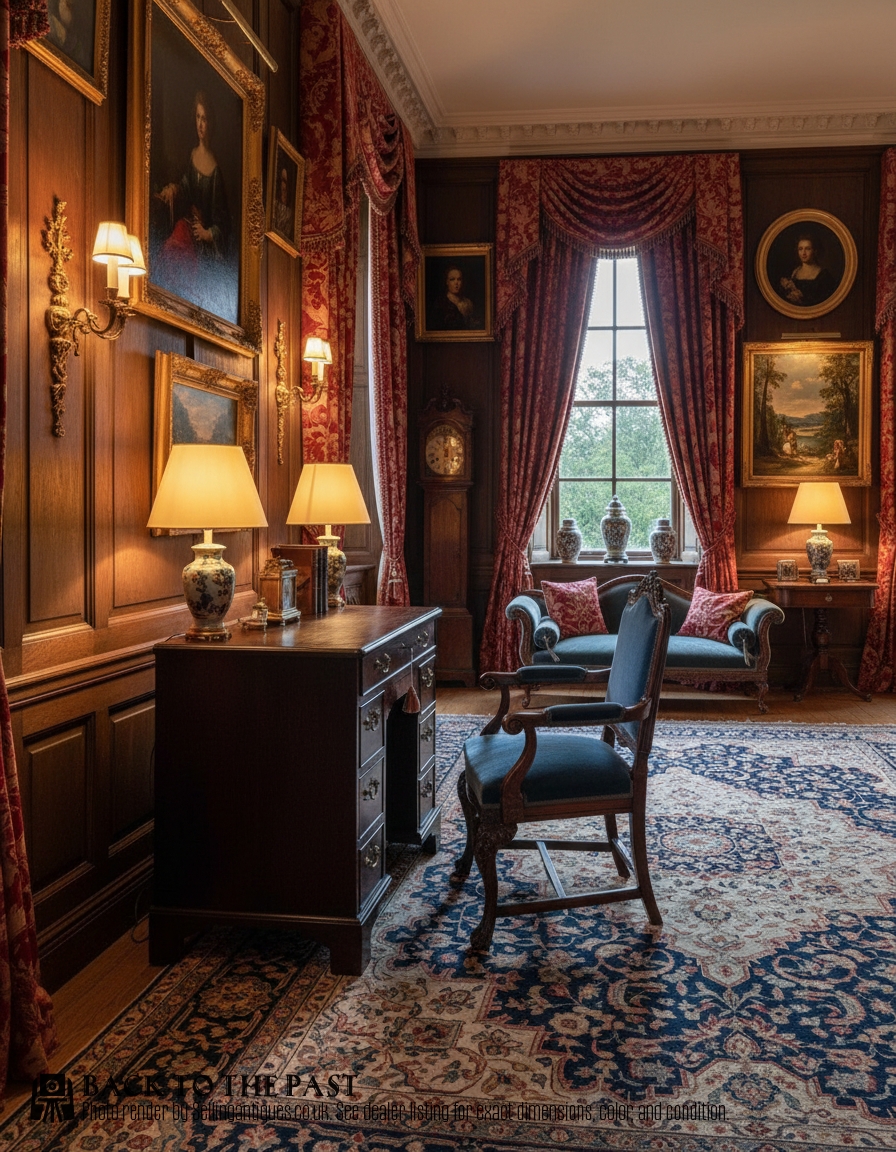
Bracket Feet Mahogany Desk
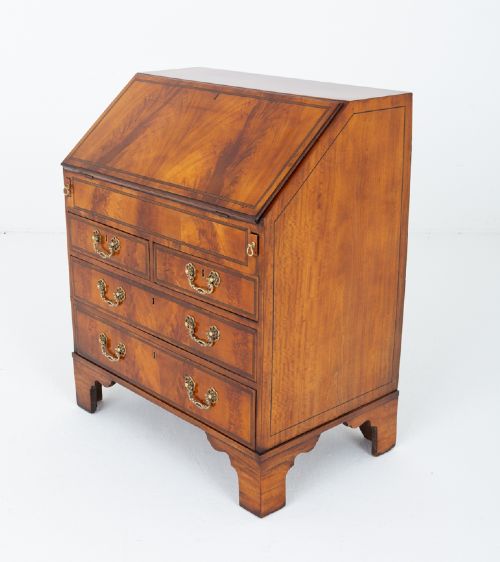
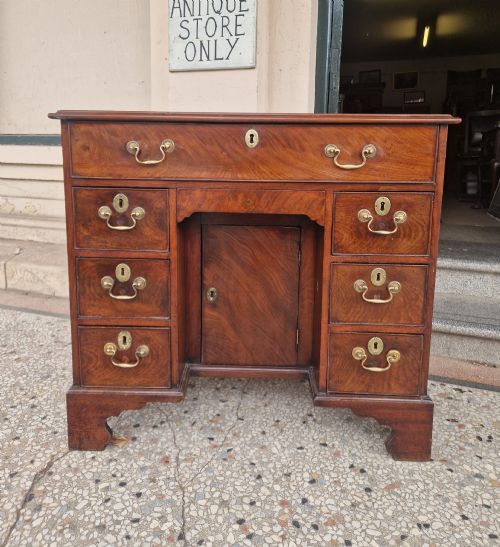
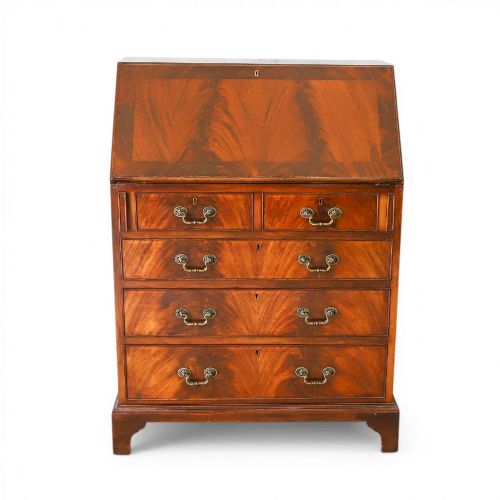
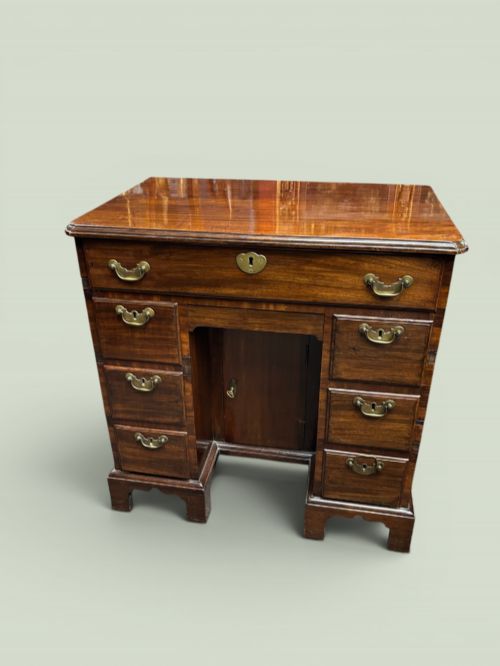
A bracket feet mahogany desk encompasses practical kneehole writing tables, fall-front bureaux and secretaire forms originating primarily from the Georgian and Victorian eras.
The pieces appearing most frequently on this page belong to the Georgian and George III periods, often built in smaller proportions with fitted interiors.
Makers constructed these sturdy timber pieces for libraries, studies and private dressing rooms, combining drawer storage with a designated writing surface.
Materials and construction methods
Cabinetmakers built these items using solid mahogany timbers, occasionally incorporating secondary woods like oak within internal drawer linings and framing.
Decorative details rely on subtle additions such as satinwood inlay, brass handles and escutcheons, alongside fitted leather or baize writing surfaces.
The characteristic bracket feet elevate the main body of the desk off the floor, spreading the weight evenly across the corners.
Listings span the Georgian, Victorian and Edwardian eras, alongside several twentieth-century items dating from 1910 and the 1930s.
Distinguishing quality across examples
Quality rests upon the choice of timber figure, such as flame mahogany veneers, and the crispness of the joinery around the bracket feet and drawer corners.
Internal complexity sets finer examples apart, particularly bureaux featuring tiered pigeonholes, secret compartments and small central cupboards.
Proportion dictates desirability, with diminutive and smaller-scale pieces commanding greater attention from collectors than standard large formats.
Bush of London·Joseph Jump of London
The Bracket Feet Mahogany Desk Glossary
- Bracket foot
- A simple, corner-supporting foot shaped like a bracket, often taking a shaped ogee or simple mitred form on case furniture.
- Bureaux
- Sloping-front writing desks that enclose a fitted interior of small drawers and pigeonholes when closed.
- Kneehole desk
- A freestanding writing table featuring a central recess for the legs, flanked by pedestals of smaller drawers.
- Secretaire
- A piece of furniture containing a pull-down writing drawer or fall-front panel that conceals a fitted desk interior.
- Satinwood inlay
- Contrasting blonde timber sections inserted into the mahogany surface to form decorative banding or geometric lines.
Bracket Feet Mahogany Desk: Frequently Asked Questions
What is a kneehole desk?
A kneehole desk is a compact writing table designed with a central recess for the user to sit comfortably, flanked on both sides by vertical stacks of small drawers.
Cabinetmakers built these forms during the eighteenth and nineteenth centuries to provide substantial drawer storage without requiring the large floor footprint of a full partner's desk.
How do I date an old mahogany bureau?
Dating relies on observing construction characteristics, timber thickness, handle hardware types and the complexity of the internal configuration.
Earlier Georgian pieces often display secondary oak framing inside the drawers and simpler dovetailing compared to later nineteenth-century or revival items.
Where were these desks placed in a home?
These desks typically stood in private studies, libraries, drawing rooms or bedrooms where correspondence and personal accounts were managed.
Smaller proportions allowed them to fit easily against parlour walls or beside windows to catch natural daylight for writing.
How should I care for a mahogany writing surface?
Maintenance involves dusting with a dry cloth and occasionally feeding the timber with traditional beeswax to preserve the natural lustre of the polished mahogany.
Harsh chemical sprays and direct sunlight should be avoided to prevent the rich reddish-brown colour from fading over time.