
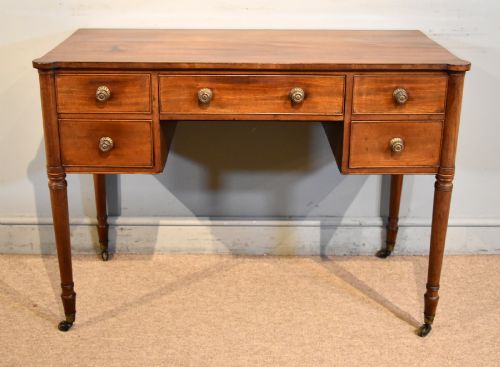
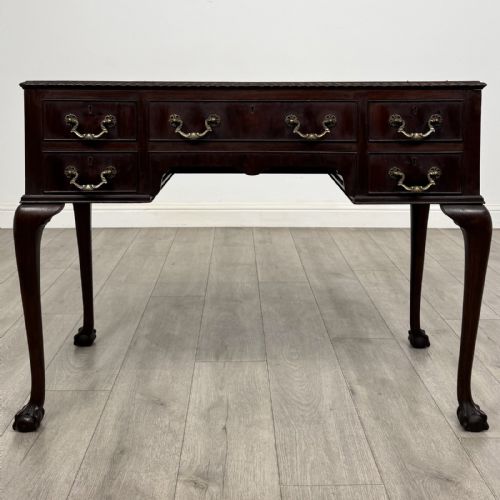
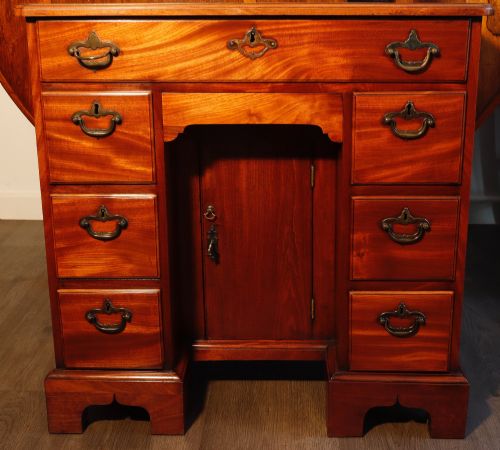

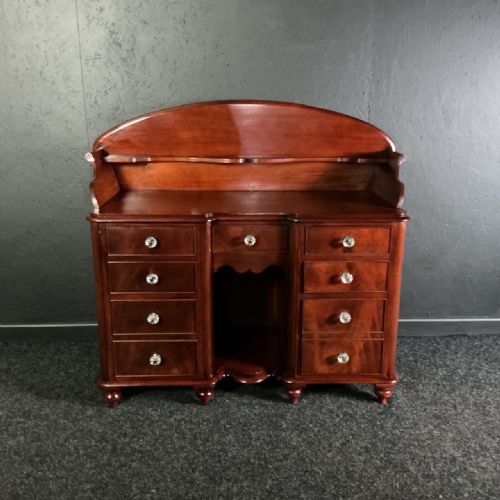


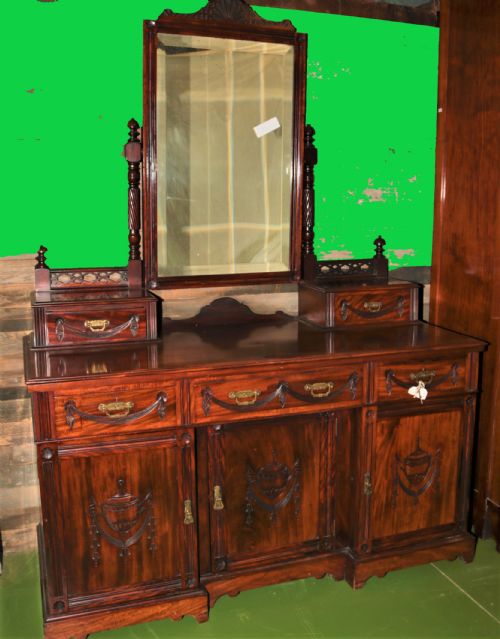

Traditional Mahogany Vanity Desk
These traditional mahogany vanity desk examples bring timeless timber and practical compartment work straight into the bedroom.
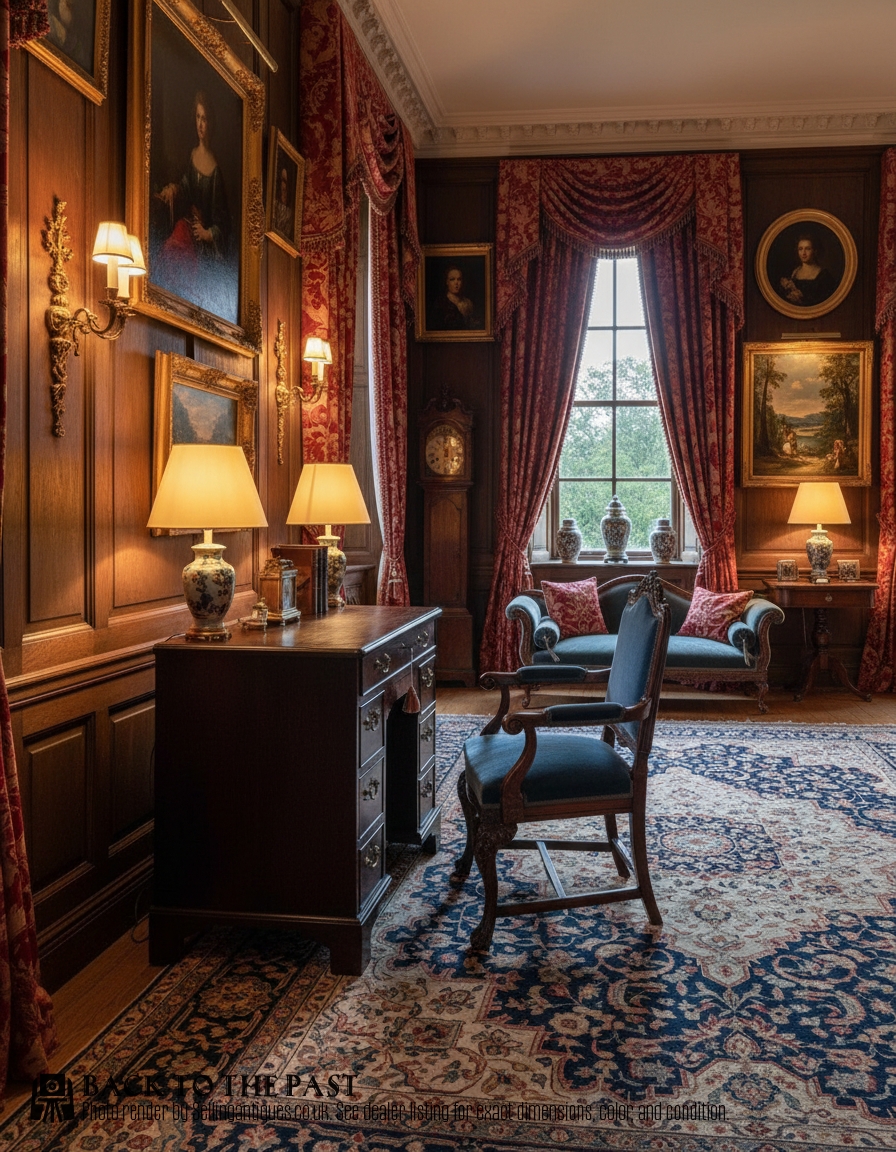
Traditional Mahogany Vanity Desk
A traditional mahogany vanity desk combines the practical surface of a writing table with the intimate storage of a dressing station. Buyers searching this phrase encounter pieces spanning the eighteenth century through to the Victorian era.
The selection on this page leans heavily toward kneehole desks, dressing tables, and washstands fashioned from rich timber. These forms serve double duty for writing letters and attending to morning toilets.
Materials and construction
Cabinet makers utilised solid mahogany and flame mahogany veneer over secondary timbers to achieve deep grain patterns. Brass hardware provides functional pulls and key escutcheons across the drawer fronts.
Delicate wood inlay adds linear contrast to flat surfaces, while structural integrity relies on traditional joinery. Occasional glass tops and damask fabric upholstery appear on associated seating elements.
Current listings feature pieces spanning the eighteenth century through to Victorian and nineteen-twenty revivals, constructed primarily in mahogany with brass and glass.
Assessing quality
Quality rests upon the choice of timber and the handling of veneer figures across drawer facades. Flame mahogany veneer demands careful bookmatching to succeed visually.
Finer construction shows in the crispness of wood inlay and the weight of cast brass handles. Period execution of styles such as Chippendale or George II distinguishes ambitious workshops from plain utility items.
The Traditional Mahogany Vanity Desk Glossary
- Flame mahogany
- A highly figured wood veneer displaying characteristic flickering flame patterns. Artisans select these cuts for prominent display on drawer fronts and primary surfaces.
- Kneehole desk
- A compact desk featuring a central recessed space for the legs beneath a bank of small drawers. This form became popular during the Georgian period.
- Wood inlay
- Decorative pieces of contrasting timber fitted flush into the primary surface. It creates geometric borders and floral motifs.
- Washstand
- A wooden stand designed to hold basins, ewers, and washing accessories. Many examples share similar proportions and timber construction with small dressing tables.
Traditional Mahogany Vanity Desk: Frequently Asked Questions
How do I date a mahogany desk?
Dating relies on observing construction methods, hardware styles, and overall proportions. Georgian and eighteenth-century pieces often feature hand-cut dovetails and simpler lines.
Victorian and later nineteenth-century examples may display heavier moulding or machine-sawn elements. Comparing the primary wood and veneer patterns against known stylistic periods helps narrow the decade.
Are these desks used for writing or grooming?
Many of these pieces were built to serve both purposes depending on the room and the owner's daily routine. Kneehole desks and dressing tables provide flat surfaces suited for paperwork or personal care.
Interior compartments often house small bottles, brushes, or writing implements. Their adaptable forms mean they transition easily between bedroom and study roles.
How do I care for antique mahogany furniture?
Mahogany thrives in stable room environments away from direct sunlight and sudden temperature shifts. Regular dusting with a soft, dry cloth preserves the polished surface.
Avoid commercial silicone sprays and excess moisture which can damage vintage veneer. A light application of quality beeswax paste occasionally feeds the timber and maintains its natural lustre.