
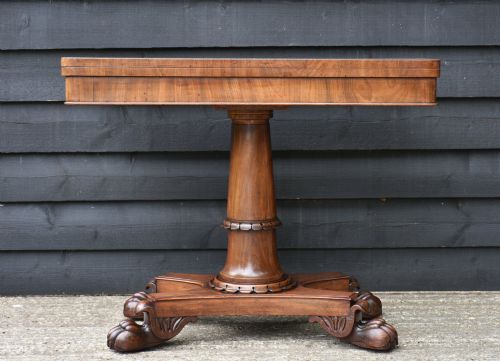
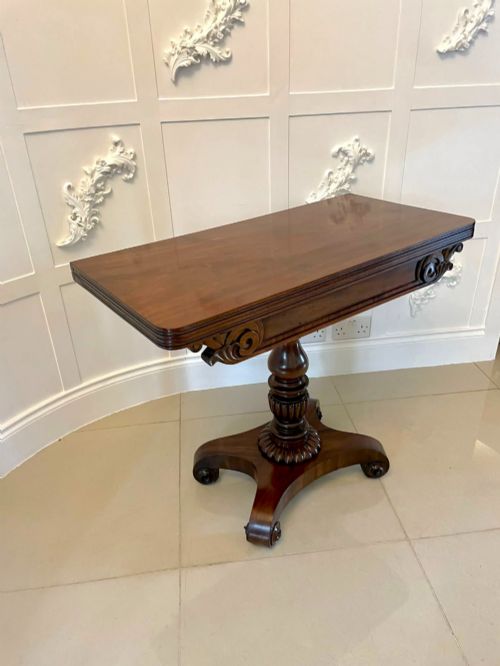
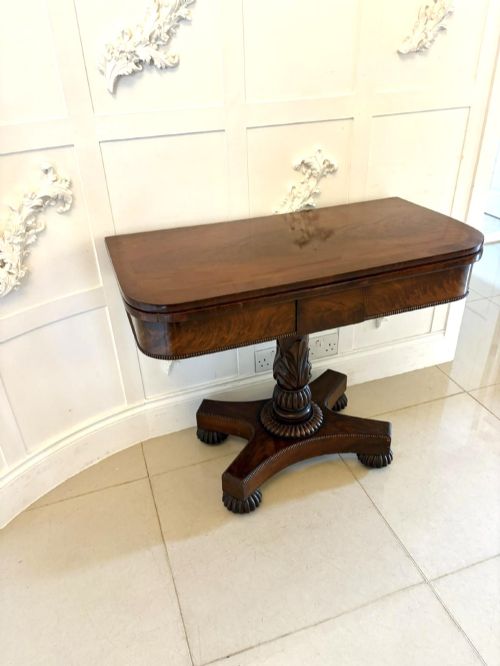
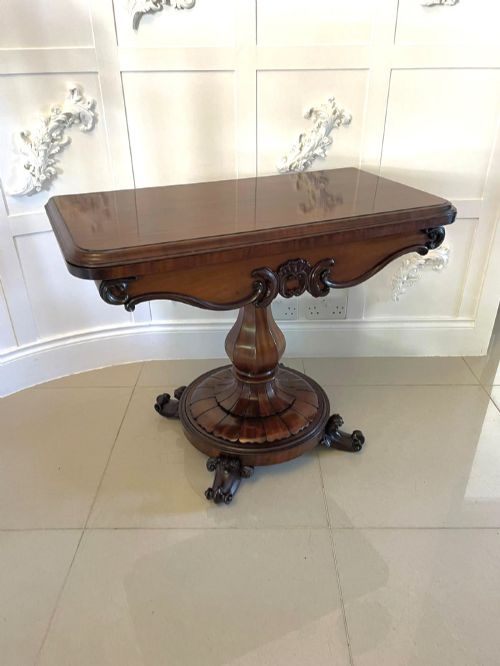
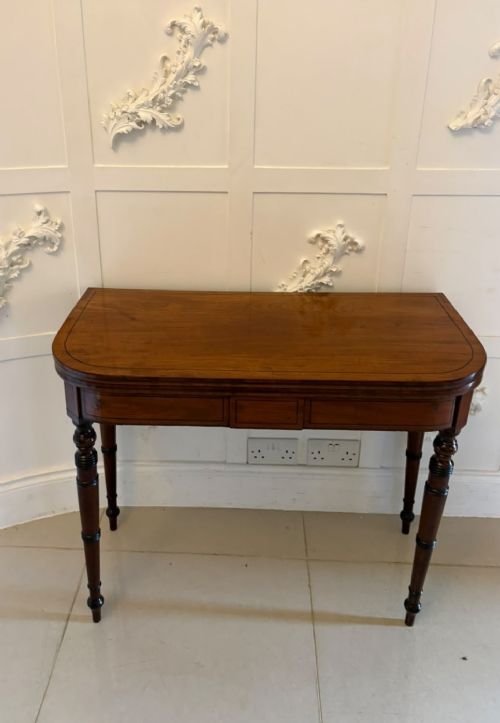
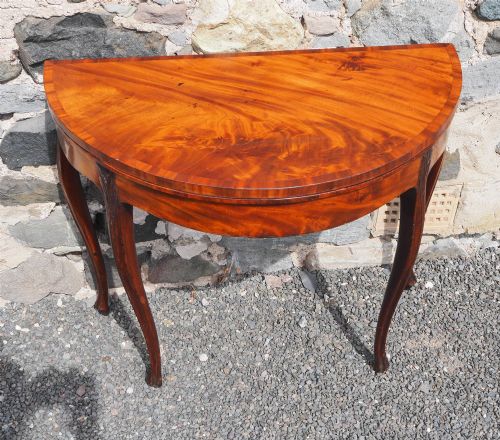
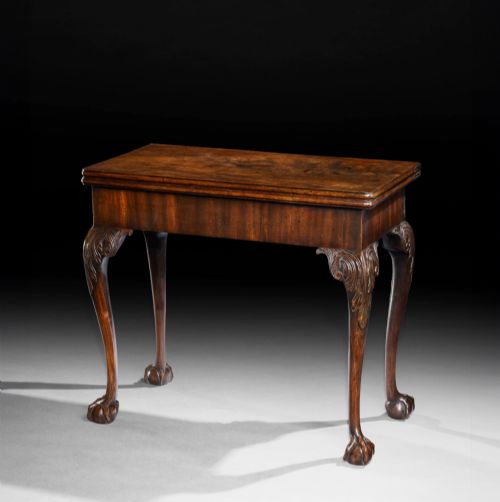
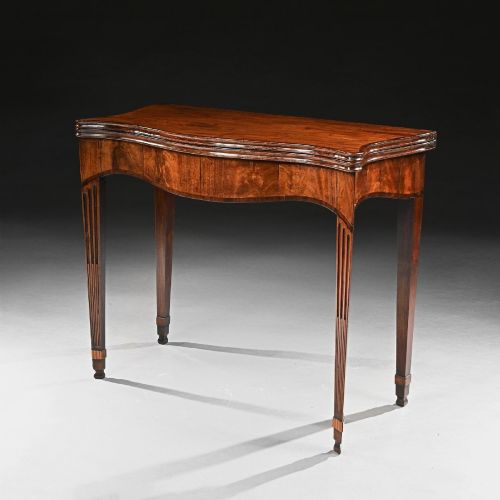
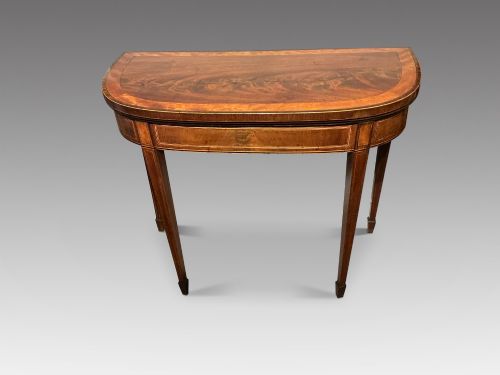
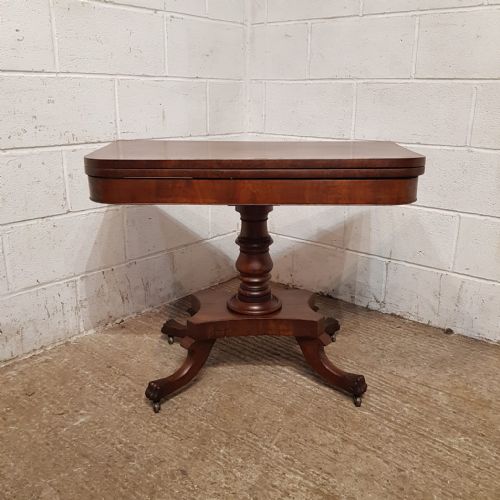


Brown Mahogany Games Table
A brown mahogany games table offers a fold-over top and clever internal space, bringing adaptable eighteenth and nineteenth-century craftsmanship directly into daily use.
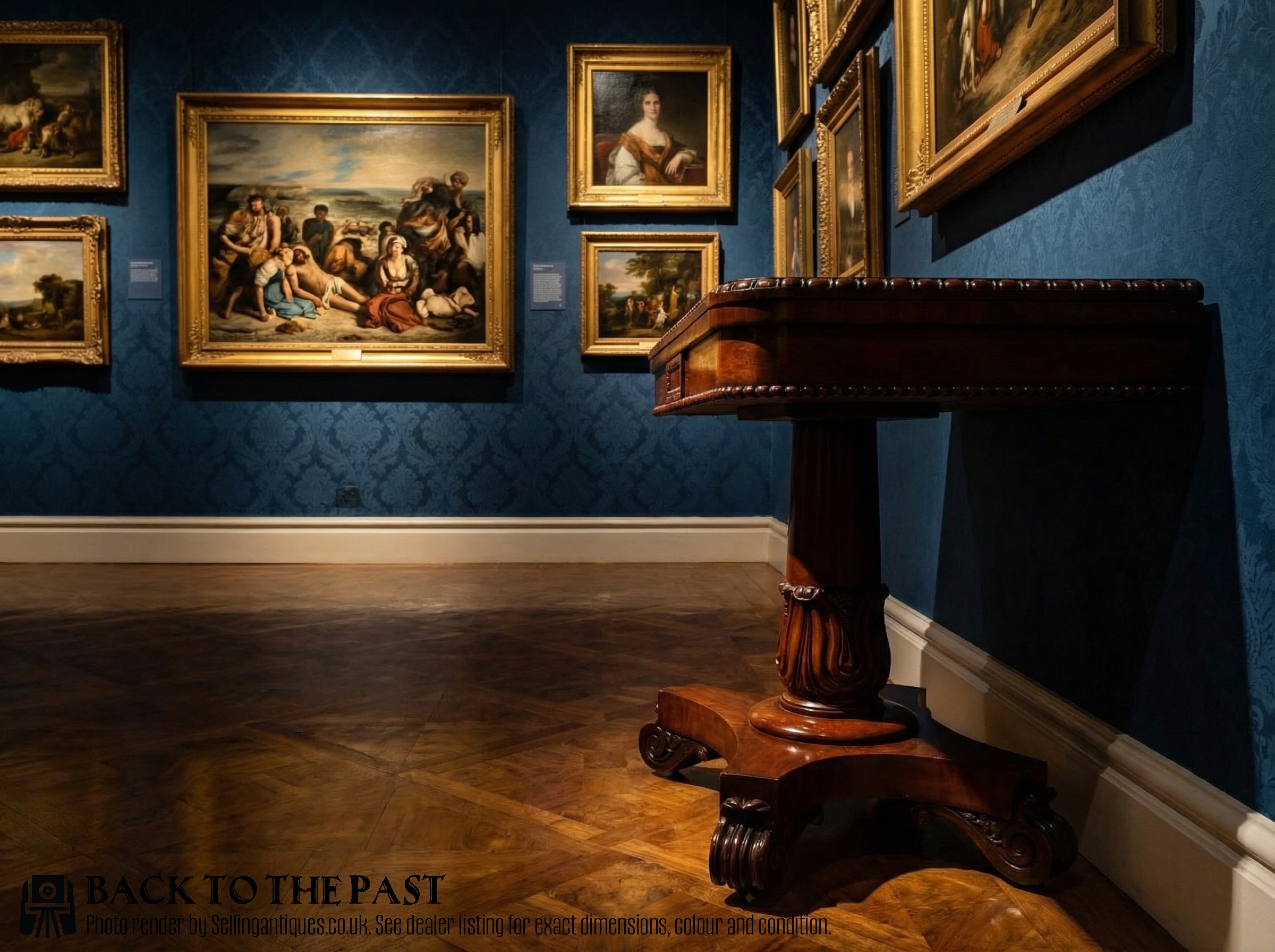
Brown Mahogany Games Table
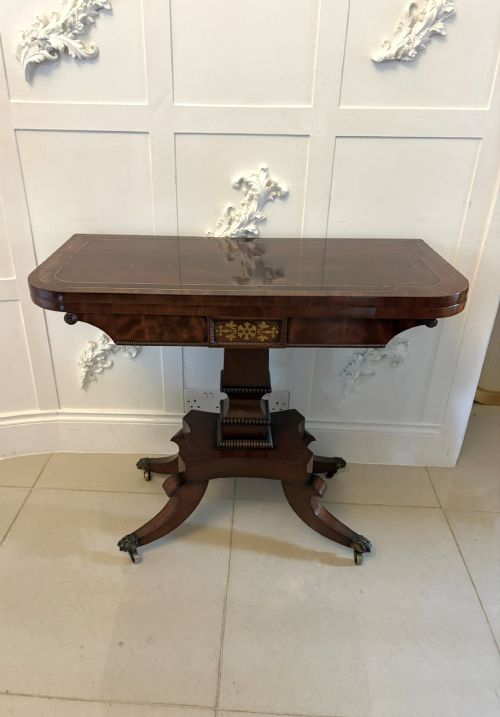
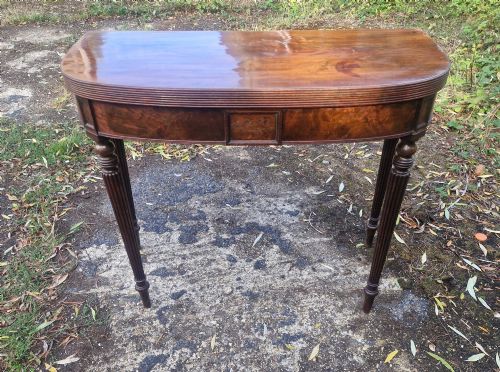
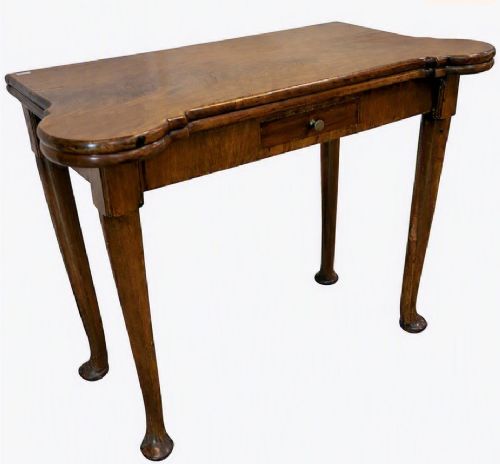
A brown mahogany games table is a versatile piece of antique furniture designed for card playing, tea, and general display. These tables span several distinct eras, appearing most frequently as Georgian, Regency, and William IV examples with clever folding leaves and concealed compartments.
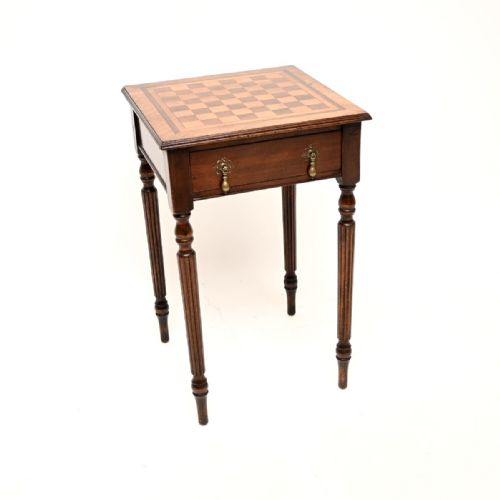
The assortment on this page covers card tables, tea tables, and console tables alongside specific games and sewing tables. Many feature fold-over tops supported by concertina actions or swing legs, transforming quickly from compact side furniture into full-sized gaming surfaces.
Origins stretch across English workshops as well as Irish and continental makers, utilising flexible forms like demi-lune, serpentine, and 'D' shapes. Buyers encounter everything from early eighteenth-century concertina designs to later Edwardian cross-banded variants.
How they were made
Cabinetmakers relied heavily on solid mahogany and rich mahogany veneers, often selecting figured timber or flame mahogany to give the folding top strong visual movement. Secondary woods support internal frames, while intricate details emerge through boxwood, satinwood, and walnut inlays.
Metalwork played a functional and decorative role, with brass accents appearing as subtle stringing or inlaid borders particularly on Regency models. Structural ingenuity defined the mechanism, utilising concertina actions and pivoting frames to support the heavy fold-over leaves securely.
Brown Mahogany Games Table Retail Price Guide 2026
Typical asking prices for brown mahogany games table among the pieces listed under this phrase on Sellingantiques today, from the lower quarter to the upper quarter. They describe what is for sale here now, not the wider market.
Hidden compartments tucked inside these tables often waited centuries to reveal forgotten card counters and stray pins.
What varies in quality
The standard of a brown mahogany games table depends largely on the selection of timber and the crispness of its construction. Tables featuring carefully matched flame mahogany veneers or fine satinwood and boxwood stringing demonstrate superior workshop execution.
Mechanical complexity marks the upper tier of production, particularly concertina action frames that allow all four legs to move outward symmetrically when opened. Original patination, refined proportions, and integrated internal storage compartments further distinguish exceptional pieces from standard utility items.
Gillows·Giles Grendey·Antoine Lampre·Bruce and Burns
The Brown Mahogany Games Table Glossary
- Concertina action
- An expanding frame mechanism that allows all four table legs to move outward when the top is unfolded, maintaining symmetrical balance. This sophisticated construction is typical of higher quality eighteenth-century examples.
- Demi-lune
- A half-moon shape used for table tops and frames that sits flush against a wall when closed. It opens into a full circle for card playing.
- Flame mahogany
- A distinct wood grain pattern created by cutting across the branch junction of the tree, producing fiery, swirling figures. Makers prized this timber for prominent display surfaces like table tops.
- Cross-banding
- A decorative border of veneer laid with the grain running perpendicular to the main surface. It frames the central panel of the table top.
- Inlay
- The technique of embedding contrasting woods or brass into the primary mahogany surface to create geometric patterns or borders.
Brown Mahogany Games Table: Frequently Asked Questions
What is a brown mahogany games table used for?
These pieces functioned historically as versatile furniture for card games, tea service, and writing. The hinged top folded open to reveal a baize-lined surface for evening entertainment.
Between uses, the folded tables served as console, side, or occasional tables against a parlour wall. Some versions also included fitted interior compartments for counters and cards.
How do you date a brown mahogany games table?
Dating relies on observing structural forms, leg styles, and timber types across different historical periods. Georgian and Chippendale pieces often display carved cabriole legs or concertina frames, while Regency examples favour brass inlay and 'D' shapes.
Later Victorian and Edwardian variations introduce different veneering techniques and lighter occasional formats. Comparing construction methods against known period markers clarifies the timeline.
How do you maintain the wood on these tables?
Maintenance requires keeping the mahogany surface away from direct sunlight and extreme temperature shifts to protect the timber and veneer. Regular gentle dusting preserves the historic finish without stripping natural oils.
Applying occasional appropriate wax helps nourish the antique grain. Avoiding excess moisture protects both the wood and internal folding mechanisms.
What is the difference between a tea table and a card table?
Tea tables generally featured flat wooden surfaces designed for porcelain and tea service when unfolded. Card tables frequently incorporated lined playing surfaces inside the fold, sometimes featuring small circular corner wells for candlesticks or coins.
Many listings combine these definitions as dual-purpose items due to their identical folding mechanics. Examining the interior surfaces usually reveals the intended primary use.