

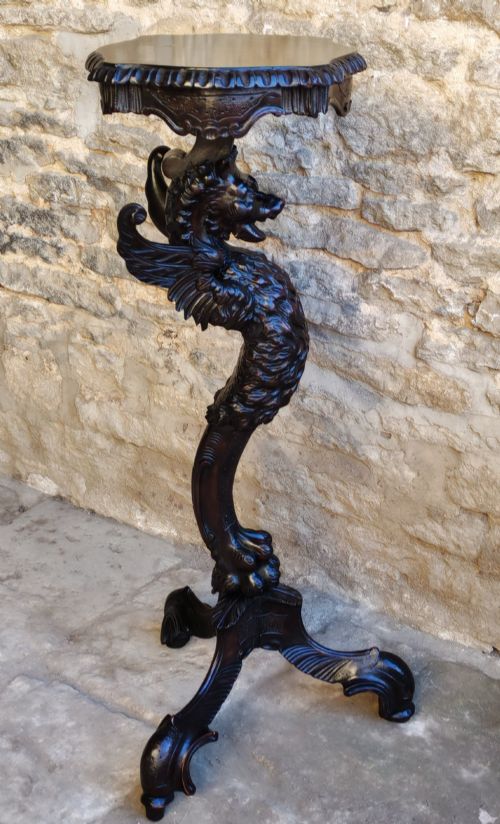
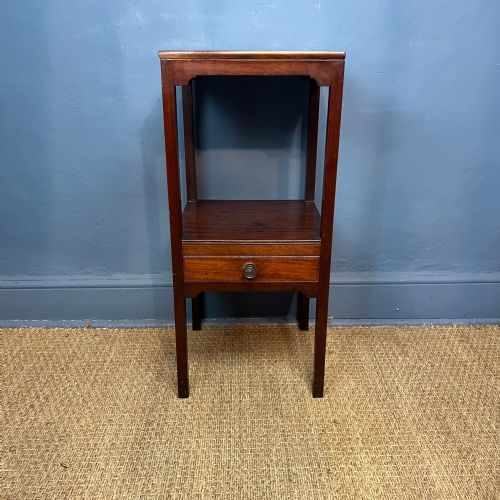
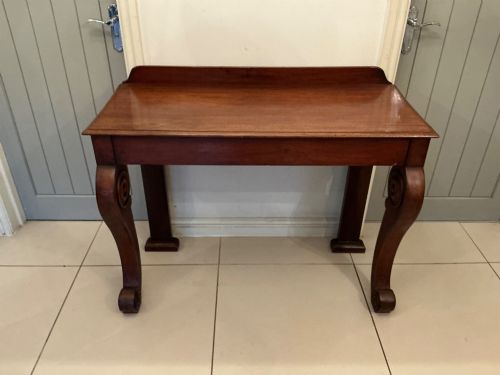
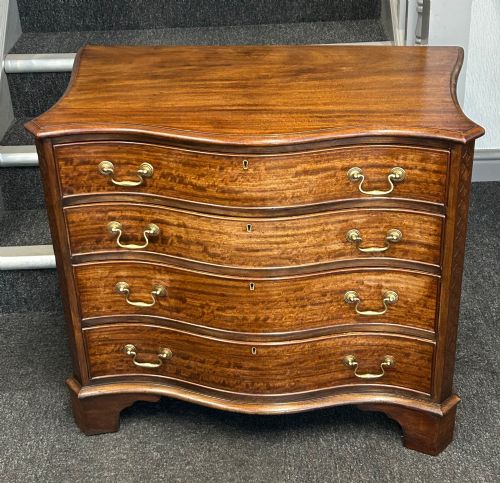
Brown Mahogany Furniture
Brown mahogany furniture spans centuries of cabinet-making, offering rich timber tones and solid construction for practical daily interiors.
Brown Mahogany Furniture
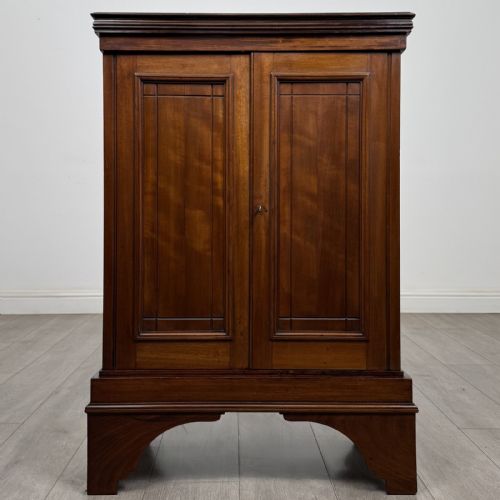
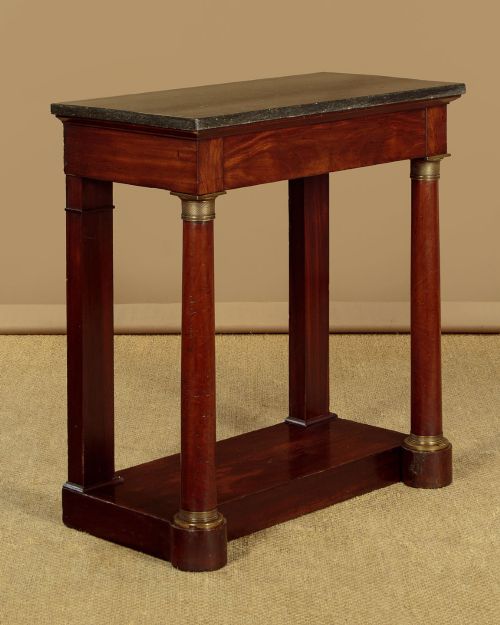
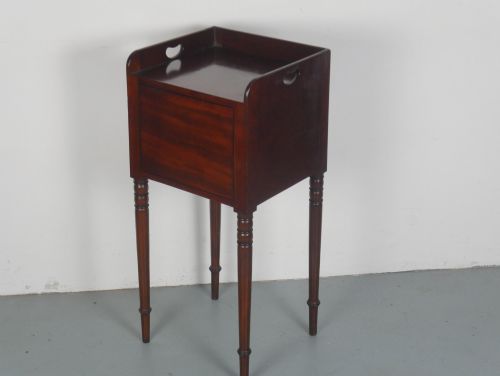
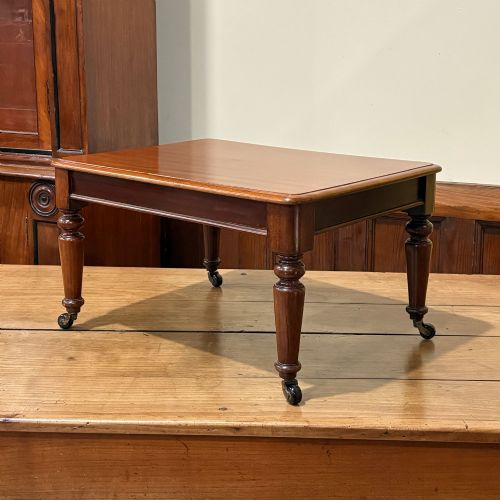
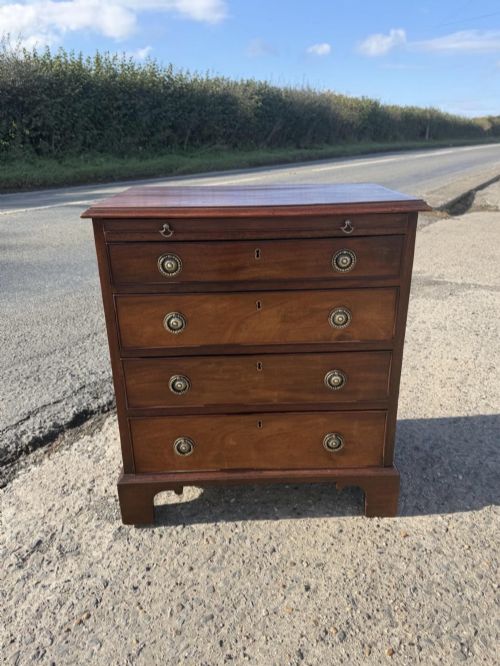
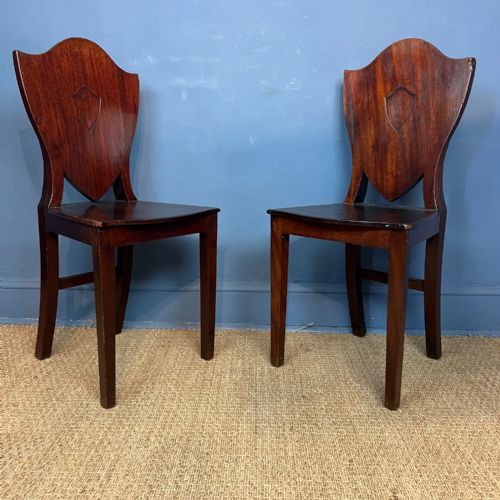
Brown mahogany furniture encompasses everything from formal Georgian chests and desks to practical Edwardian towel rails and occasional tables. These pieces originate across the eighteenth, nineteenth, and early twentieth centuries, reflecting changing domestic needs.
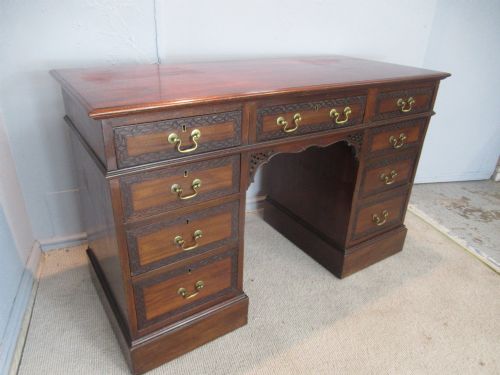
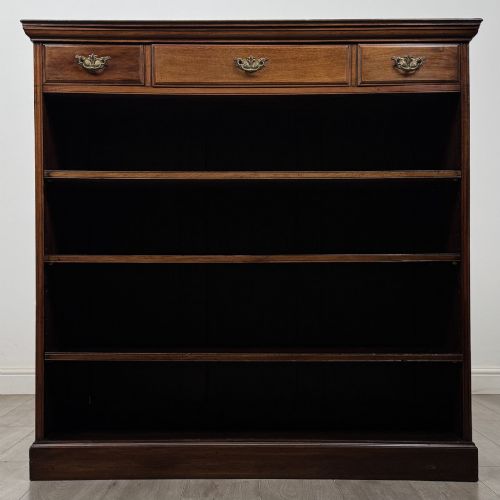
The selections here are dominated by functional domestic forms, particularly chests of drawers, writing desks, and display cabinets. Buyers encounter utilitarian items alongside grander dining tables and bookcases produced in regional British workshops.
Originating largely from Georgian, Regency, and Victorian periods, these items utilise dense hardwoods suited to heavy daily use. The emphasis remains on sturdy timber frames and functional compartments rather than fragile decorative surfaces.
How they were made
Cabinet-makers constructed these pieces primarily from solid mahogany or applied flame mahogany veneer over secondary timbers like oak. Workshops reinforced structural joints with brass fittings, while writing surfaces frequently incorporated inset leather panels.
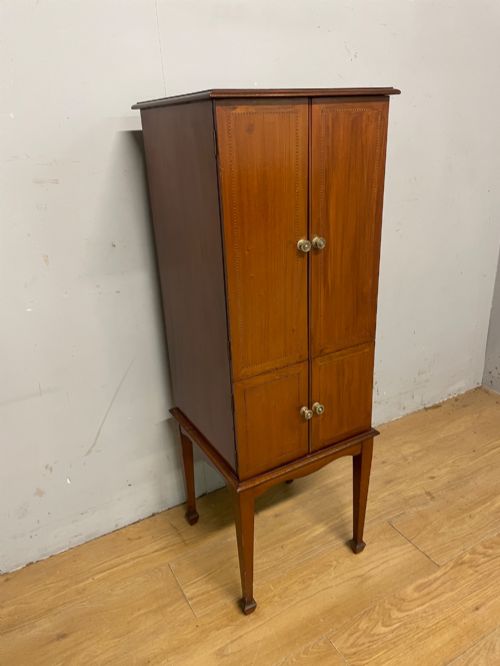
Surface finishing relied on hand-applied polishes that highlighted the natural grain variations of the timber. Marquetry details and satinwood inlay appear on select Edwardian and Dutch pieces to introduce contrasting colour.
Construction techniques evolved from eighteenth-century dovetailed drawer construction to later industrial production methods. Carpenters balanced structural rigidity with decorative grain selection, ensuring longevity across heavily handled domestic objects.
Brown Mahogany Furniture Retail Price Guide 2026
Typical asking prices for brown mahogany furniture among the pieces listed under this phrase on Sellingantiques today, from the lower quarter to the upper quarter. They describe what is for sale here now, not the wider market.
Listings feature multiple periods from the eighteenth to the twentieth centuries, dominated by mahogany, brass, and leather materials.
What varies in quality
Quality rests primarily in the selection of the timber and the precision of the cabinet-making. Superior pieces display carefully matched grain patterns, particularly figured or flame mahogany veneers that require expert application.
Hardware and secondary elements distinguish higher grades of manufacture, such as original pierced brasses, working locks, and adjustable shelving mechanisms. Finer construction also shows in tight dovetail joints and uniform secondary woods inside drawers.
Holland & Sons·Trevor Page & Co·Hewetsons·Trollope & sons
The Brown Mahogany Furniture Glossary
- Flame mahogany veneer
- A decorative wood slice cut from the fork of a tree where the branch meets the trunk. This creates a distinctive fiery, rippled pattern across drawer fronts and table tops.
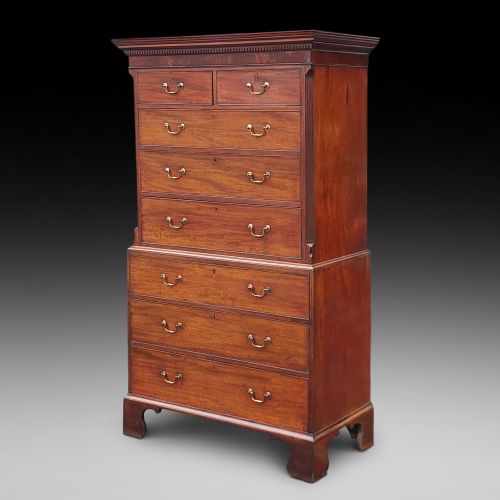
- Chest on chest
- A tall storage unit comprising two distinct carcass sections, one stacked directly upon another. This form typically provides generous drawer capacity while occupying a compact floor footprint.
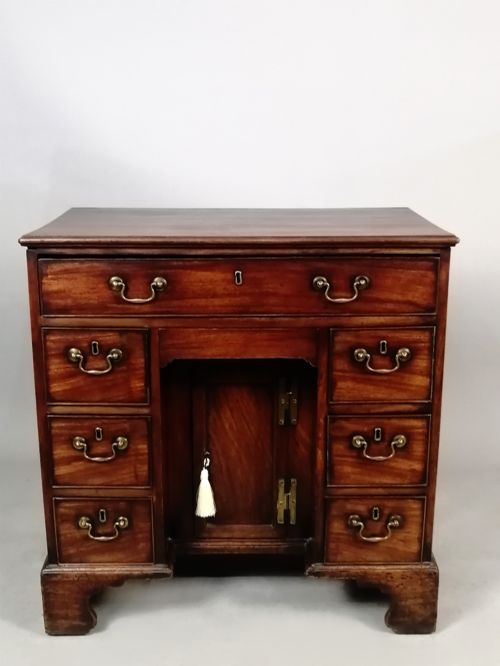
- Kneehole desk
- A writing table featuring a central recessed space for the legs, flanked by pedestals of drawers. These items offer dedicated workspace combined with enclosed storage.
- Dumb waiter
- A tiered revolving stand used in dining rooms to hold dishes and utensils without servant assistance. These items feature a central turned pillar supported by tripod legs.
- Compactum wardrobe
- A large multi-compartment clothing cupboard combining hanging space, shelves, and internal drawers within a single unified structure.
Brown Mahogany Furniture: Frequently Asked Questions
How do I date a mahogany chest of drawers?
Dating relies on examining construction methods, drawer linings, and overall proportions. Earlier eighteenth-century examples often feature hand-cut dovetails and oak secondary woods, whereas Victorian pieces display more regular machine-sawn components.
Hardware style and timber choice also provide clues. Georgian pieces frequently utilise Cuban mahogany with solid brass pulls, while later nineteenth-century items introduce veneered surfaces and standardised locks.
How should I care for antique mahogany surfaces?
Regular maintenance involves dusting with a soft, dry cloth and avoiding placement near direct heat sources or strong sunlight. These precautions prevent the timber from drying out or the polish from fading over time.
Application of traditional wax polish helps nourish the wood and maintain its sheen. Water spills should be wiped away immediately to protect the finish from staining.
What is the difference between Georgian and Victorian furniture?
Georgian furniture, produced during the eighteenth and early nineteenth centuries, generally prioritises restrained classical proportions and solid timber construction. Makers focused on architectural elements like bracket feet and dental moulding.
Victorian pieces reflect industrial manufacturing shifts and eclectic revival styles, often incorporating heavier proportions and elaborate decoration. These later items frequently utilised veneered surfaces alongside traditional solid timber.
Can I use an antique desk for daily work?
Many antique desks, such as pedestal desks and writing tables, remain entirely suitable for contemporary workspace requirements. Their drawers and flat surfaces accommodate modern stationery and laptop use.
Care should be taken with leather writing inserts to prevent surface damage from daily writing pressure. Using a desk pad helps preserve historical leather and wood finishes during regular tasks.