
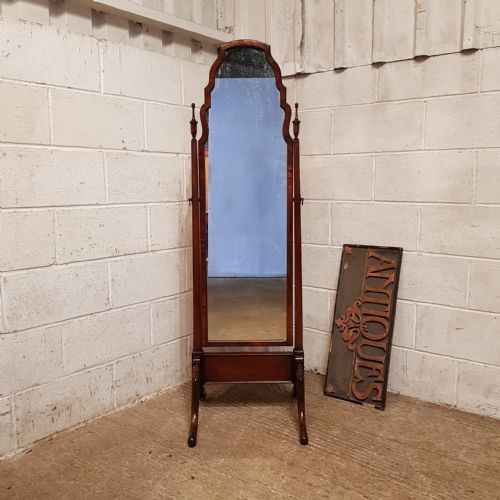


Brown Mahogany Floor Mirror
A brown mahogany floor mirror stands ready to tilt and catch the morning light, offering a full-length reflection framed in rich timber.
Brown Mahogany Floor Mirror
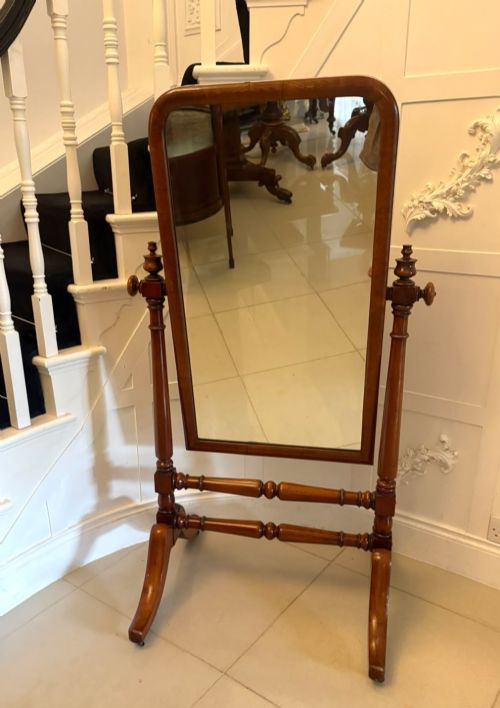
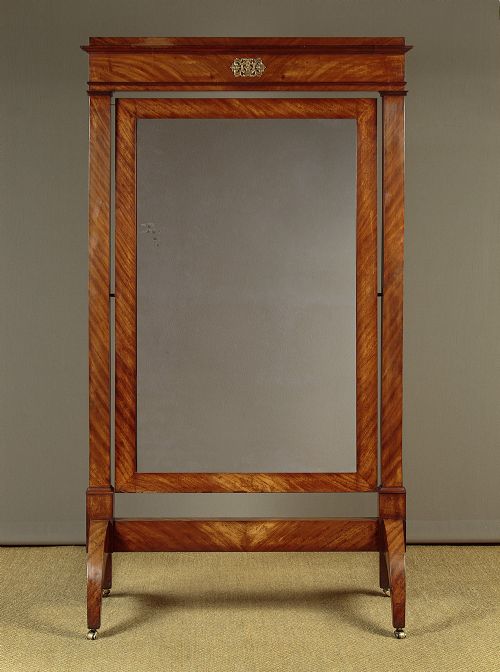
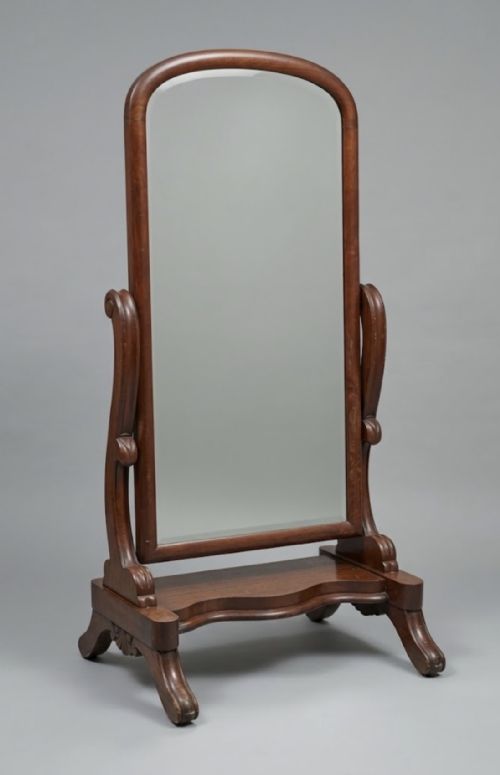
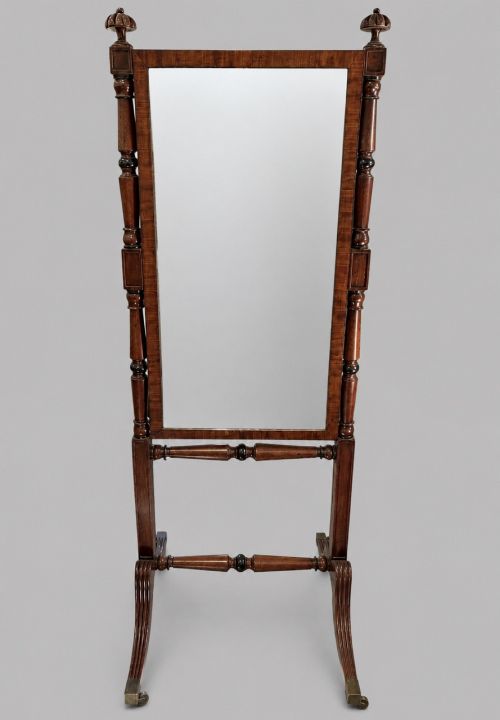
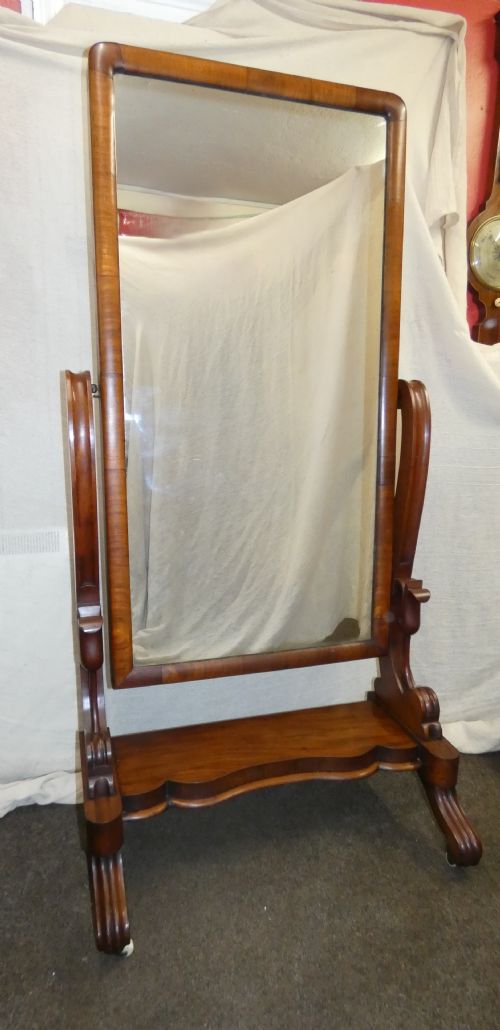
A brown mahogany floor mirror, most frequently encountered as a freestanding cheval mirror, provides a movable full-length glass panel supported on a sturdy frame. These pieces appear across several periods, with Victorian and Regency examples dominating the selection.
The form developed to assist with dressing, standing tall enough to reflect the entire figure while tilting on pivoting brass pins. Alongside standard cheval mirrors, the inventory includes specialised dressing mirrors, shaving stands, and tall framed variants.
Origins stretch from the Georgian and George III eras through the nineteenth century into the Edwardian period. Country house proportions sit beside neat, compact models designed for smaller chambers.
How they were made
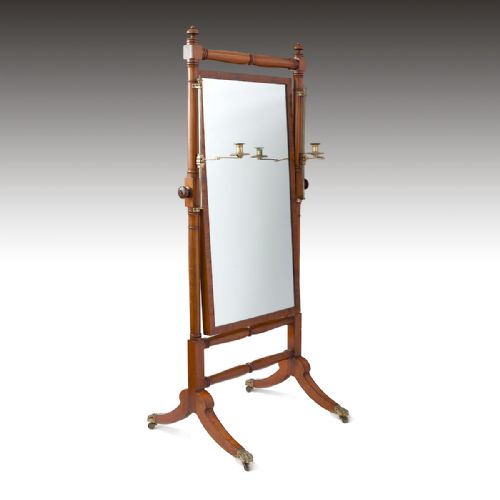
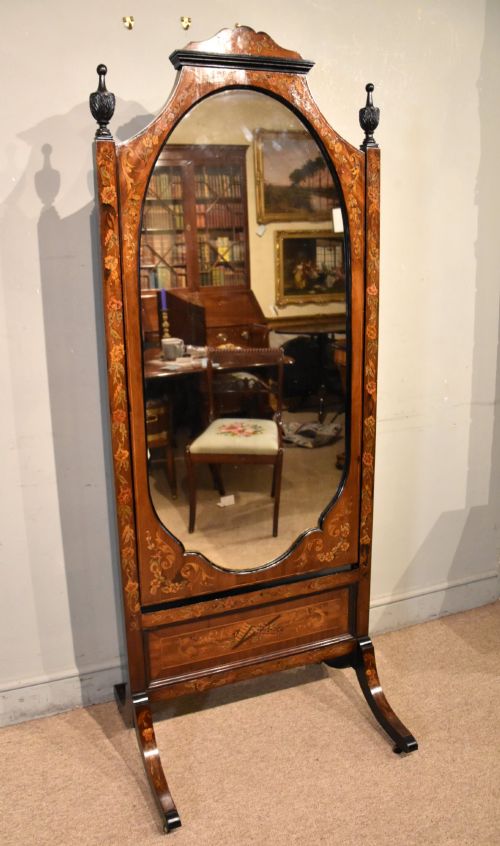
Makers constructed the primary frames using solid mahogany and figured veneers, often incorporating secondary timbers like satinwood for contrast. Marquetry inlay, brass candle holders, and sabots add refined detail to the structural woodwork.
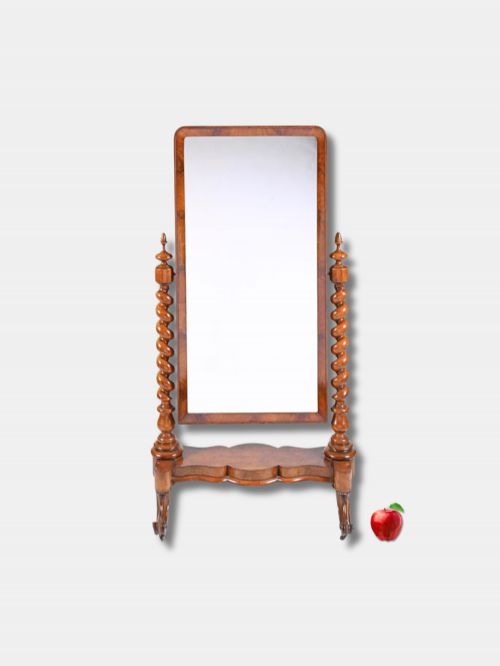
Support frames utilise turning, carved ornamentation, or sabre legs fitted with castors for mobility. Barley twist supports and turned framing members appear frequently in Victorian iterations, while earlier Regency pieces favour cleaner architectural lines.
The selection spans multiple eras, capturing the architectural restraint of Regency design alongside the heavier, carved forms of the Victorian epoch.
What varies in quality
Subtlety of timber selection and depth of cabinetmaking distinguish superior examples from simpler utilitarian pieces. Highly figured mahogany grain and crisp carving on the uprights denote careful workshop execution.
The integration of original brass pivoting hardware, candle arms, and floor castors elevates an example. Frames that retain their original mirror glass and functional tilting mechanisms demonstrate better preservation.
Gillow·Gillows
The Brown Mahogany Floor Mirror Glossary
- Cheval mirror
- A freestanding full-length mirror suspended on a vertical frame with pivoting pins. This design allows the glass to tilt to various angles.
- Sabot
- A protective brass or metal shoe fitted to the foot of a furniture leg. These often accompany sabre legs on Regency examples.
- Marquetry
- Decorative inlay work using various coloured woods to create patterned designs on the surface. This technique appears on selected Edwardian and Victorian frames.
- Barley twist
- A spiral turning carved into wooden uprights or supports. This decorative form is characteristic of mid-nineteenth-century joinery.
Brown Mahogany Floor Mirror: Frequently Asked Questions
How do I use a floor mirror?
Position the piece against a stable wall or corner where natural light can strike the glass. Adjust the tilt using the side pivots to achieve the desired angle for dressing.
Ensure the floor castors, where fitted, rest evenly on a flat surface to maintain balance when moving the frame.
Are these mirrors heavy?
Most examples possess substantial weight due to the dense mahogany framework and heavy glass panels. Freestanding designs rely on this mass for stability.
Many period versions include original castors to facilitate careful repositioning across a room without straining the frame joints.
How do I date a mahogany mirror?
Examine the timber finish, framing style, and turning techniques to place the piece within a stylistic period. Regency items often display architectural lines and sabre legs, while Victorian frames frequently feature turned supports or heavy mouldings.
Hardware such as brass pivot screws and candle arms also provide clues regarding the manufacturing era.
Can the mirror glass be tilted?
The central glass panel is hung on horizontal pivot pins fixed to the upright supports. Tightening or loosening the thumb screws on the sides allows the user to alter the angle of reflection.
Period mechanisms should be adjusted with care to protect the surrounding mahogany housing from undue stress.