



Antique Tilt Cheval Mirror
An antique tilt cheval mirror is a full-length dressing glass pivoted within a freestanding frame, offering adjustable reflection for bedroom or dressing room use.
Antique Tilt Cheval Mirror
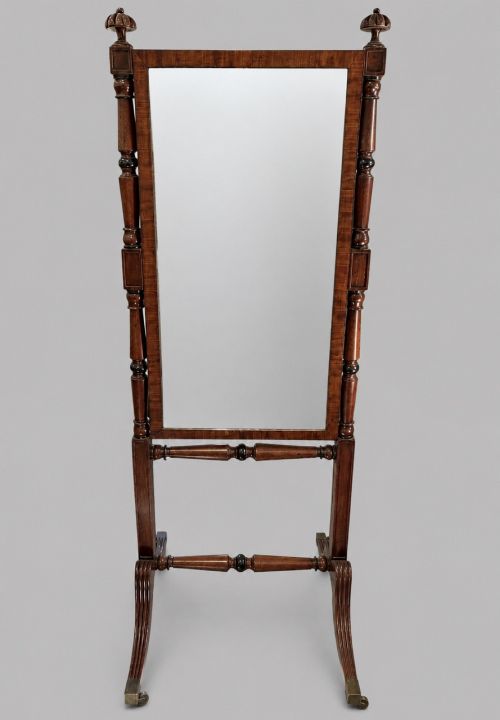
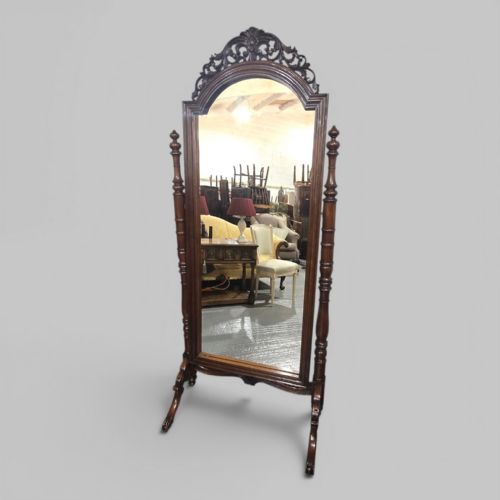
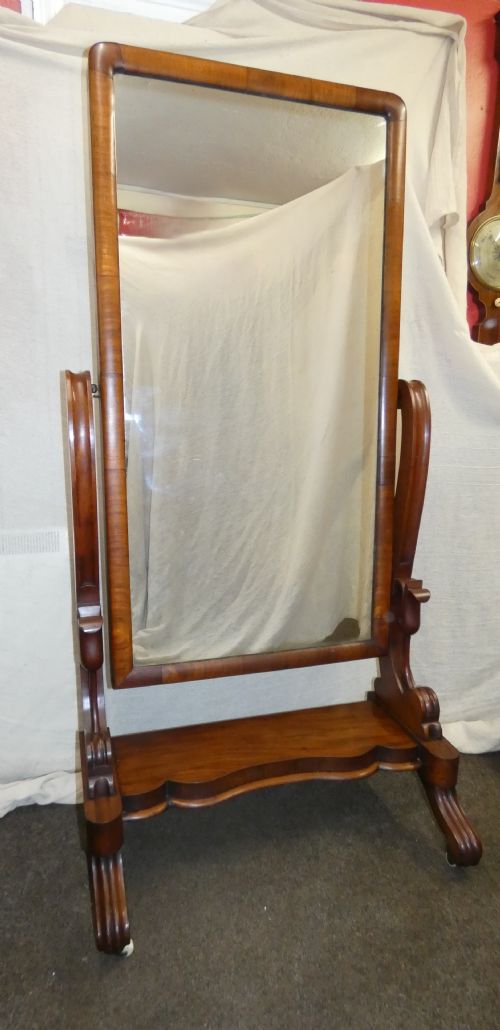
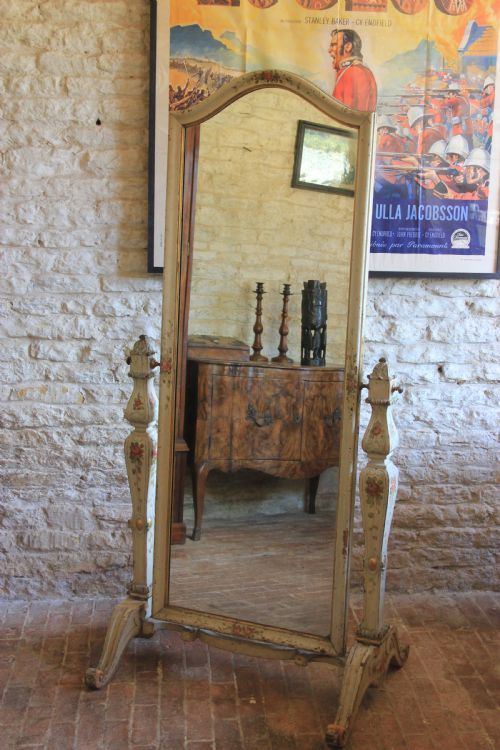
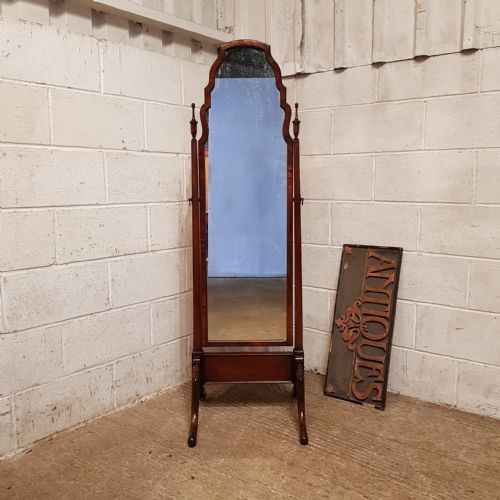
An antique tilt cheval mirror is designed for full-length viewing and stands independently upon the floor on its own supporting frame and legs. The glass swings on axis pivots, allowing the user to angle the reflection as needed during dressing.
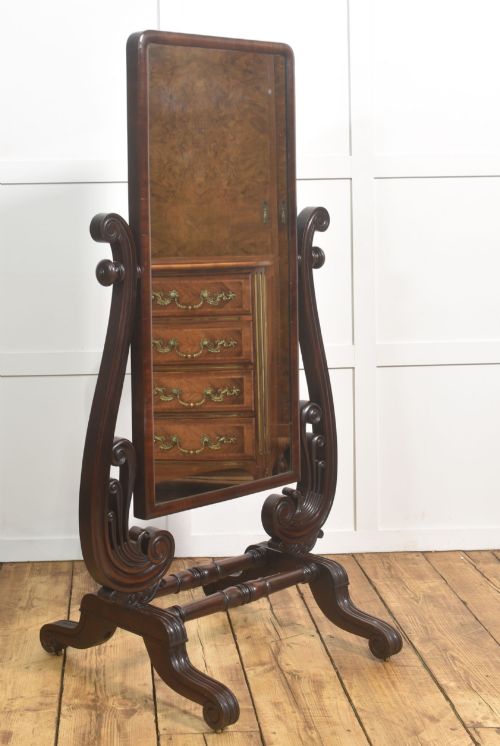
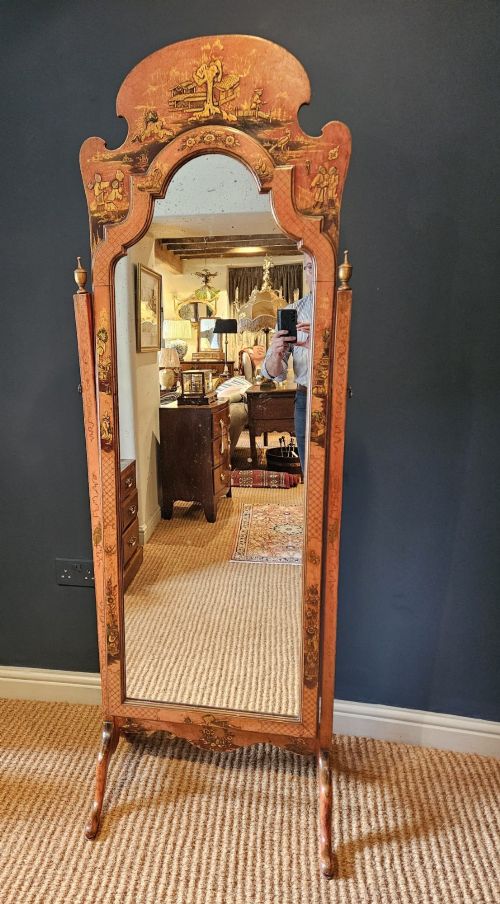
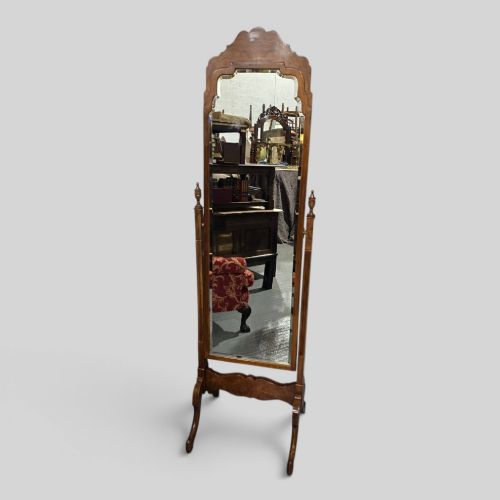
The versions most commonly met on this page date from the nineteenth century and the Edwardian era, constructed predominantly in mahogany with occasional examples in walnut, oak, and lacquered wood. Forms range from restrained Regency and William IV designs to elaborate Chinoiserie and French Empire interpretations.
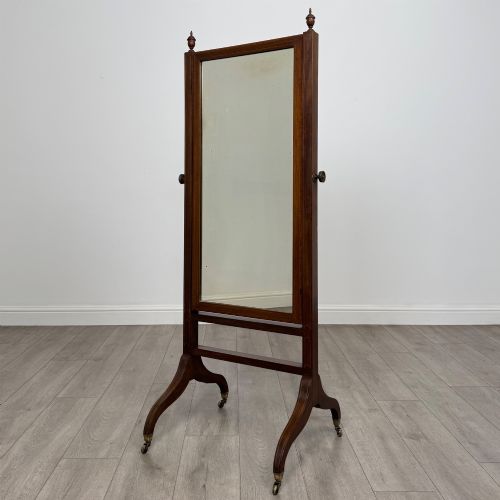
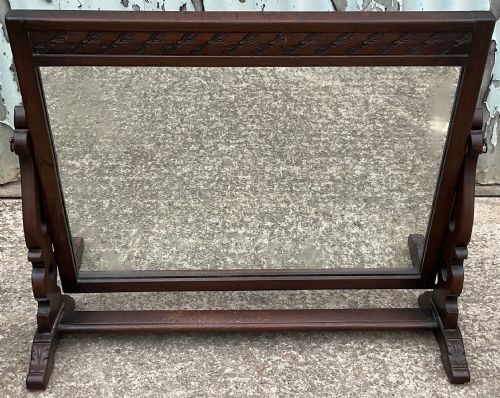
Most pieces function as floor-standing furniture, though occasional smaller iterations serve as table-top dressing glasses. The overarching form remains consistent: a vertical plate held by upright standards attached to sturdy feet or sabre legs.
How they were made
Cabinet makers utilised dense hardwoods such as mahogany and walnut to construct the sturdy uprights and frames necessary to support heavy glass plates. Flame mahogany veneers and burr walnut sections were frequently applied to primary surfaces to provide rich grain patterns.
Brass fittings, including pivot screws, sabots, and castors, were incorporated to facilitate the tilting mechanism and mobility of the heavy floor-standing frames. Joinery relied on traditional mortise and tenon construction to ensure stability under daily tilting use.
Listings span the nineteenth and early twentieth centuries, covering Victorian, Edwardian, Regency, and William IV styles in mahogany, walnut, and oak.
What varies in quality
Quality in an antique tilt cheval mirror depends upon the architectural proportion of the frame and the selection of timber veneers. Superior examples display carefully matched flame mahogany or burr walnut figures alongside robust, well-proportioned sabre legs or turned supports.
The sophistication of the brass hardware, such as chased sabots and substantial pivot mounts, distinguishes finer workshop production from standard utility pieces. Original mirror glass and well-preserved turning further elevate the standing of a piece within its period.
Waring and Gillow
The Antique Tilt Cheval Mirror Glossary
- Cheval mirror
- A freestanding full-length swing mirror supported by a frame with four legs. The term derives from the French word for horse.
- Tilt mechanism
- The system of pivots and thumbscrews allowing the mirror plate to angle forward or backward within its vertical standards.
- Sabre leg
- A curving, outward-flaring furniture leg of uniform section, typical of Regency design. It often terminates in brass castors.
- Sabot
- A metal sleeve or cap fitted to the foot of a furniture leg for protection and ornamentation. They appear frequently in brass on finer frames.
- Flame mahogany
- A highly figured wood veneer cut from the branch junction of the tree. It creates a distinctive feather-like pattern across the wood surface.
Antique Tilt Cheval Mirror: Frequently Asked Questions
What is an antique tilt cheval mirror?
An antique tilt cheval mirror is a tall, floor-standing dressing glass mounted on pivots within a sturdy wooden frame. This design allows the user to tilt the glass plate to various angles for full-length viewing.
Most surviving examples date from the nineteenth and early twentieth centuries, constructed in timbers such as mahogany, walnut, and oak.
How do you date an antique cheval mirror?
Dating relies on stylistic markers, timber choice, and construction details evident in the frame and legs. Regency and William IV pieces often feature sabre legs and brass mounts, while Edwardian versions may display simpler mahogany framing or inlaid decoration.
The transition of styles from heavy Victorian proportions to lighter Edwardian or 1920s Chinoiserie interpretations helps place a piece within its correct era.
Were these mirrors used in bedrooms?
These mirrors were primarily placed in bedrooms and dressing rooms to assist with full-length attire checks. Their freestanding nature allowed them to be positioned near windows or dressing tables without requiring wall attachment.
The adjustable tilt function made them practical for users of varying heights.
How do I maintain the tilt mechanism?
The tilt mechanism relies on pivot screws or nuts set into the vertical side posts that hold the mirror frame. Keeping these pivot points properly adjusted prevents the glass from slipping forward on its own.
Avoid over-tightening the brass hardware to protect the surrounding wood grain and internal threads from unnecessary strain.