

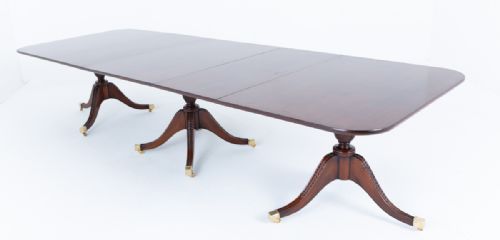
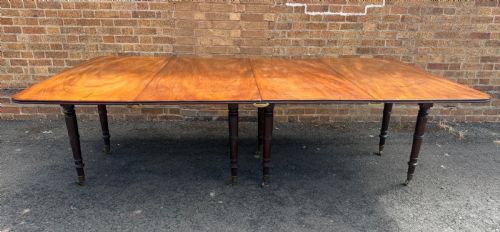
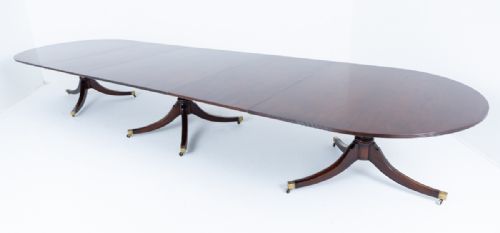
Brown Mahogany Banquet Table
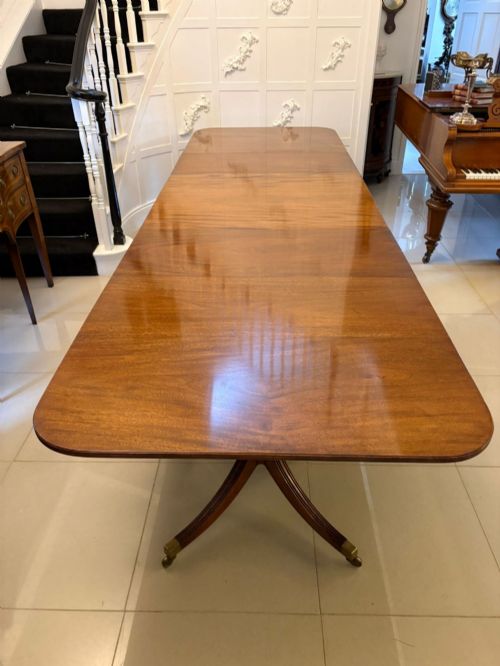
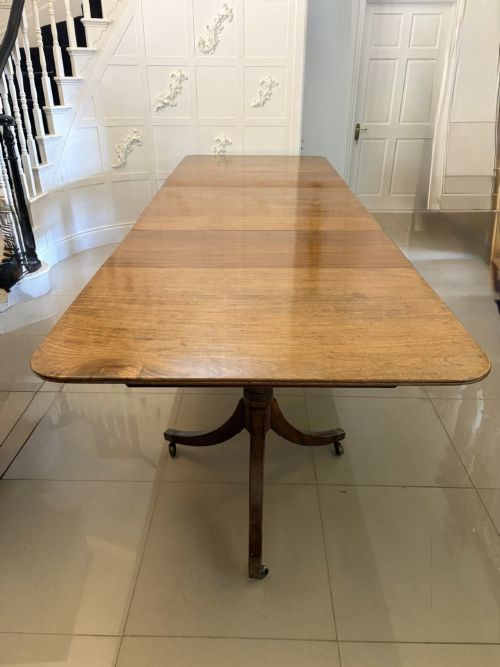
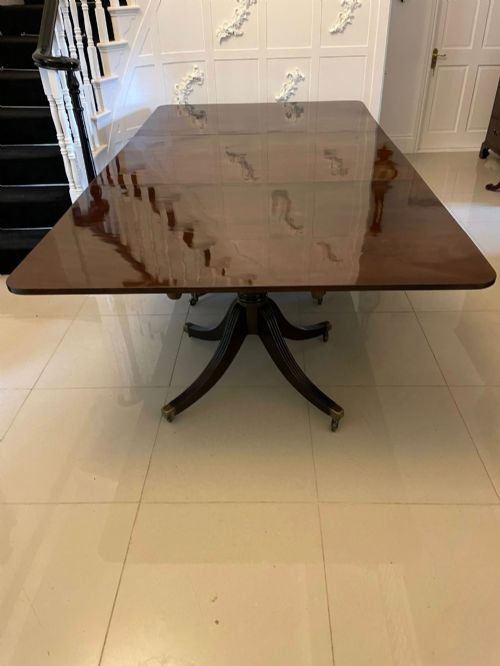
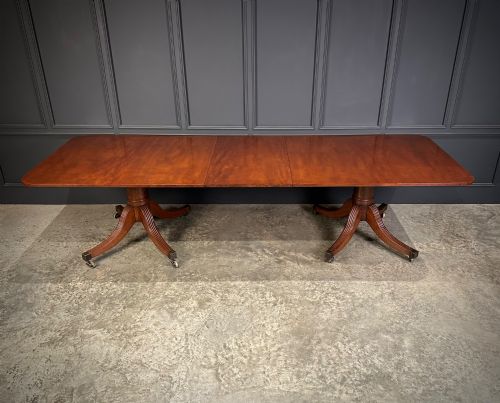
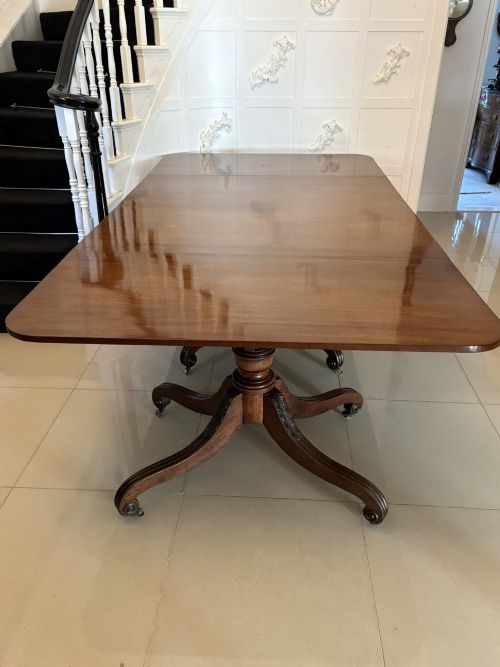
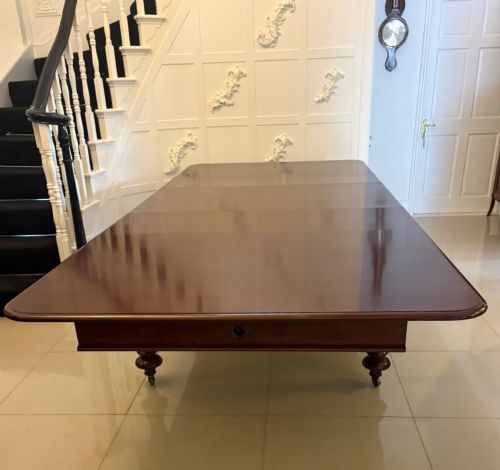
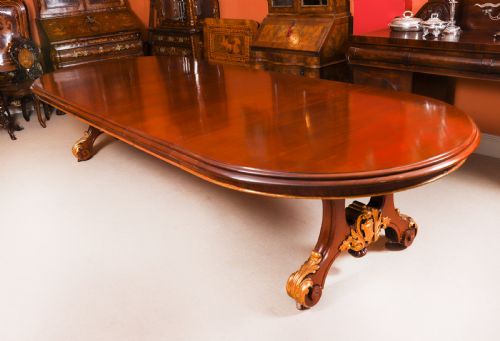
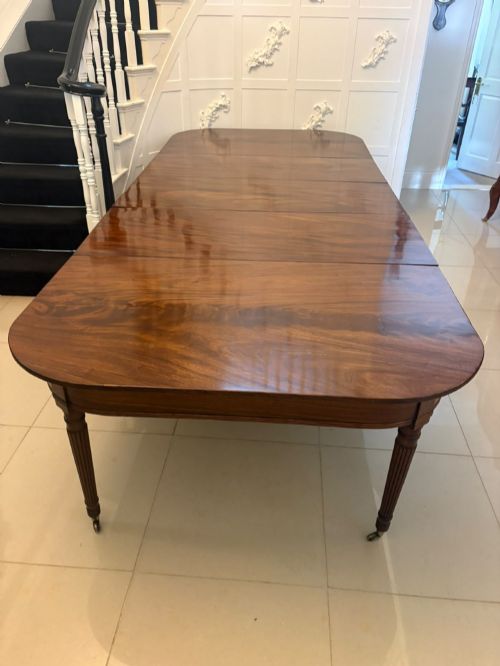
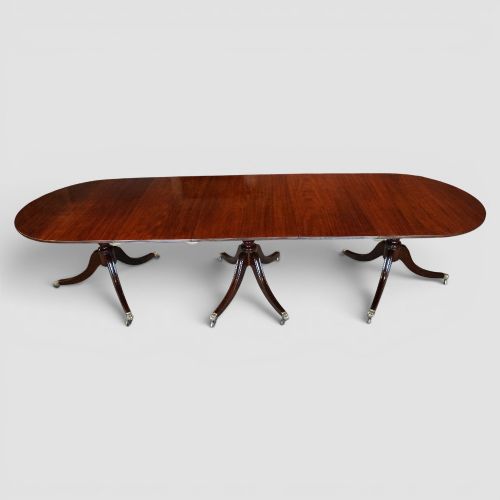
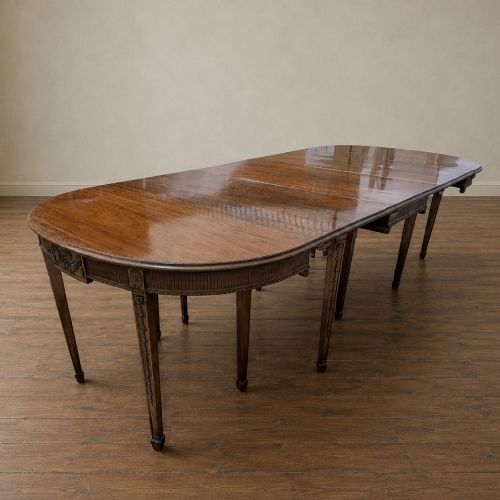
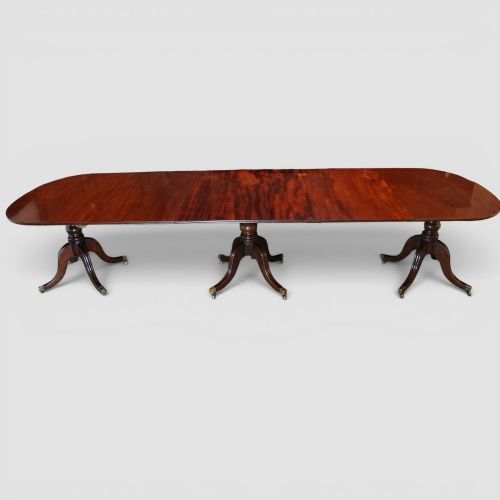
A brown mahogany banquet table provides a grand centrepiece for formal dining, bringing deep timber tones and stately proportions to large rooms.

Brown Mahogany Banquet Table
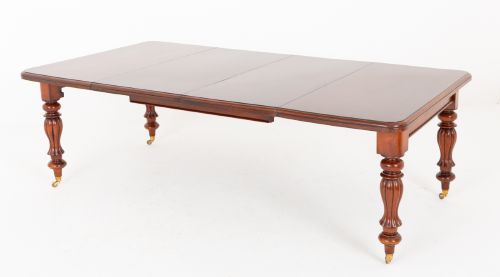
When you search for a brown mahogany banquet table, you encounter substantial dining furniture designed to host large gatherings. These tables predominantly date from the Georgian, Regency, and Victorian periods, featuring multi-pillar pedestals or extending leaves to accommodate numerous guests.
The pieces listed here span twin, triple, and four-pedestal constructions, often stretching past twelve feet in length. Figured and flame mahogany dominate the selection, offering rich grain patterns across extended table tops supported by brass castors and reeded legs.
How They Were Made
Cabinet makers utilised solid mahogany and Cuban mahogany veneers, selecting timber with prominent figuring to create striking table tops. Brass mechanisms and castors allowed heavy pedestal bases to move smoothly when expanding the surface.
Internal wooden runners and wind-out systems emerged during the nineteenth century to simplify the insertion of additional leaves. Carved details on pedestals and claw feet relied on skilled hand-chiselling rather than mass production.
Some nineteenth-century dining tables contain hidden hand cranks that require a gentle turn to reveal their inner workings.
What Varies in Quality
The standard of a banquet table rests upon the selection of the timber and the precision of the pedestal turning. Pieces displaying matched flame mahogany across all removable leaves command greater appreciation than those assembled from mismatched boards.
Structural integrity during full extension distinguishes finer examples from simpler constructions. Well-engineered winding mechanisms and robust pillar supports ensure the table remains level and stable when bearing heavy loads.
Gillows·Wylie and Lochead·Whytock and Reid
The Brown Mahogany Banquet Table Glossary
- Pedestal
- A central column support resting on splayed legs, commonly found in multi-pillar dining tables to allow maximum legroom for seated guests.
- Wind-out mechanism
- A mechanical screw system operated by a handle, enabling the table top to expand or contract smoothly when adding leaves.
- Flame mahogany
- A veneer cut from the branch junction of the mahogany tree, producing a distinctive flickering flame pattern across the wood.
- D-end
- A table end shaped in a semi-circle, allowing drop-in leaves to be inserted between matching rounded sections.
Brown Mahogany Banquet Table: Frequently Asked Questions
How do I extend the table?
Many tables utilise a mechanical wind-out system operated with a removable handle. Turning the handle separates the table ends, allowing you to drop in additional leaves.
Other examples rely on loose leaves supported by pull-out rails or heavy tilt-top pillar designs. Once the leaves are positioned, push the sections firmly together to close any gaps before locking them underneath.
How many people will it seat?
Seating capacity depends directly on the length of the table and the number of pillars or leaves. Twin pedestal versions typically seat ten to twelve people comfortably for dinner.
Triple and four-pedestal tables easily accommodate sixteen to twenty-four guests. Review the stated length and width in each listing to ensure adequate elbow room for diners.
How do I care for the surface?
Protect the polished mahogany finish by using heat-resistant mats and coasters under hot dishes and glasses. Avoid placing the table in direct sunlight or near heat sources to prevent the wood from drying out.
Dust regularly with a soft, dry cloth and apply a quality beeswax periodically to nourish the timber grain. Avoid silicone-based sprays, which can build up and dull the antique finish.
How do I identify the period?
Dating relies on examining construction methods, timber choices, and stylistic details such as reeded legs or brass paw castors. Georgian and Regency pieces often feature heavy Cuban mahogany and simpler architectural lines.
Victorian examples frequently incorporate more elaborate carvings, mechanical wind-out systems, and figured flame veneers. Comparing the leg configuration and underframe construction helps clarify the era of manufacture.