

Antique Extending Boardroom Table
An antique extending boardroom table provides scale and presence, seating large gatherings with robust timber pedestals and adaptable leaves.
Antique Extending Boardroom Table
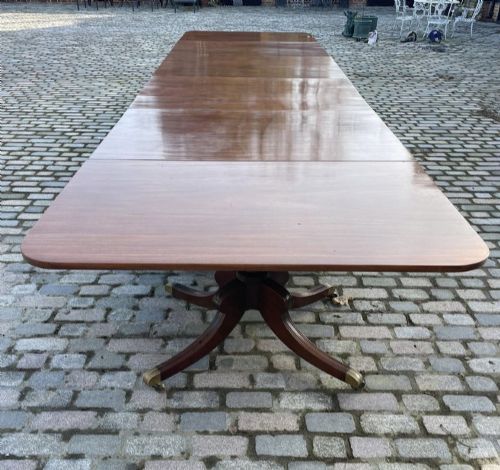
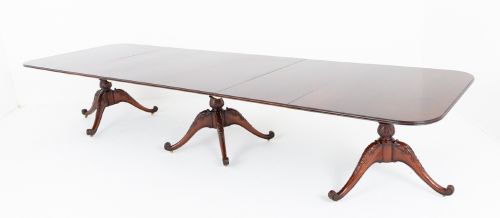
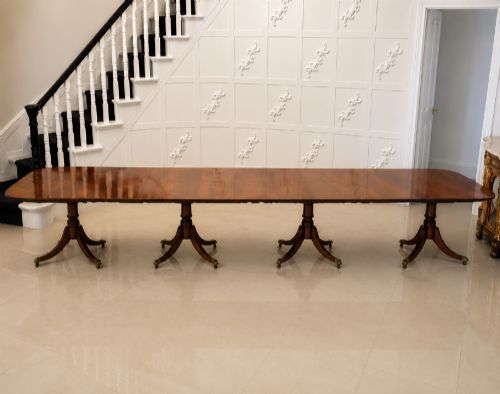
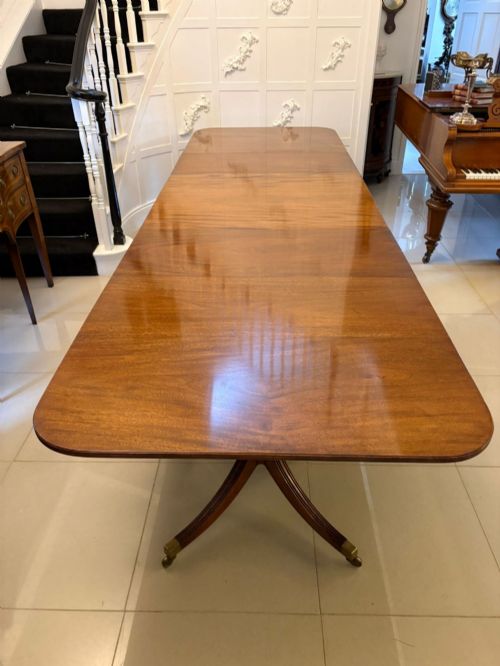
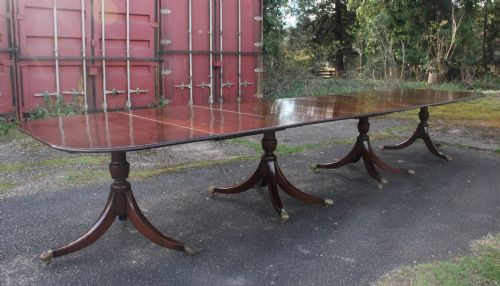
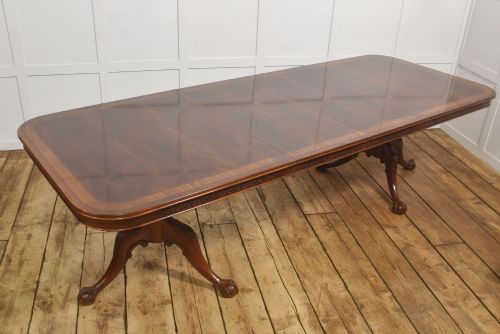
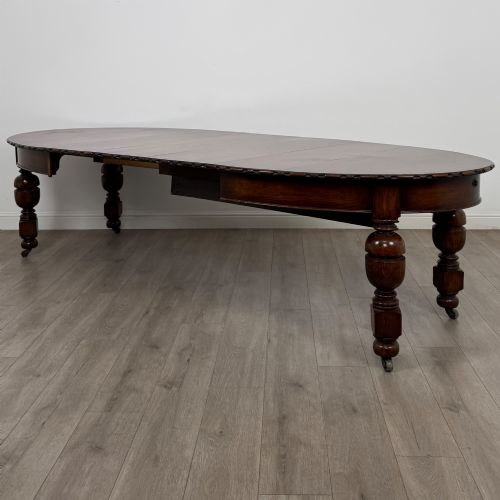
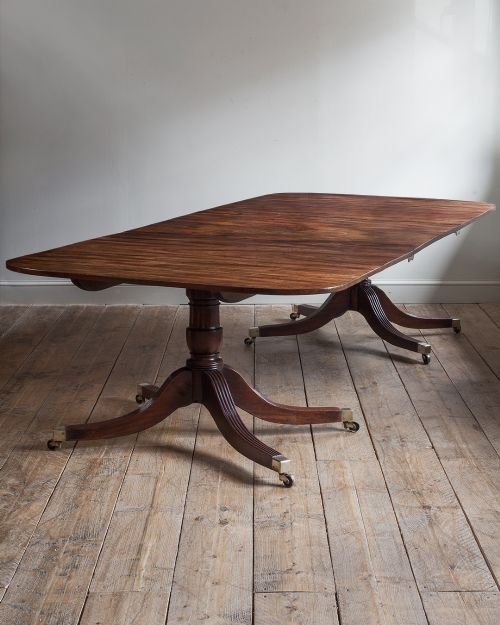
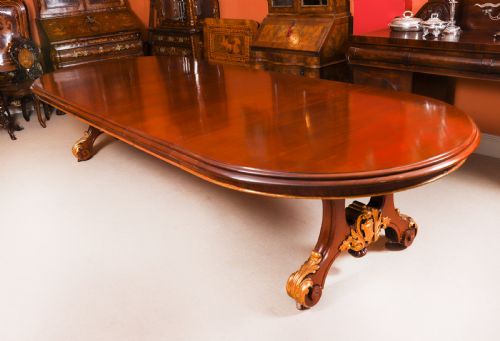
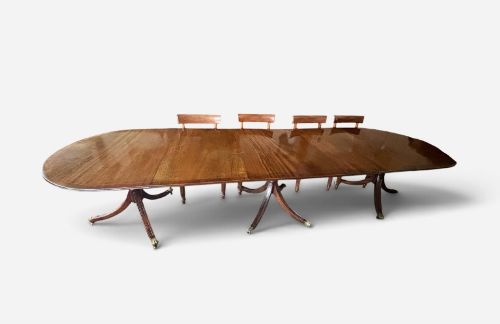
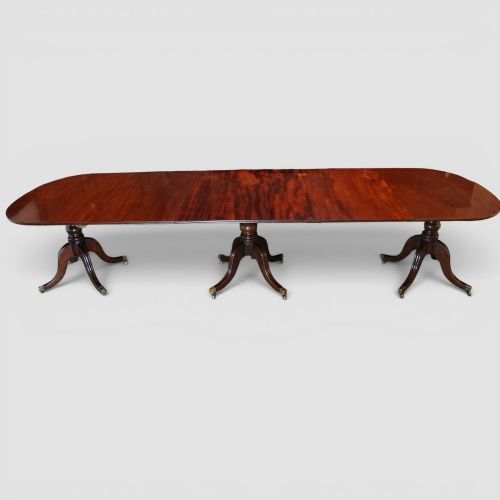
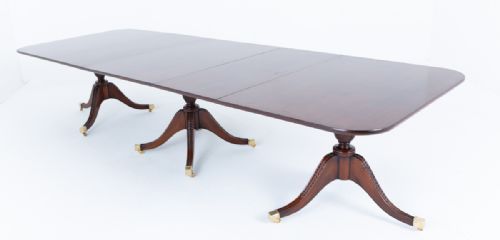
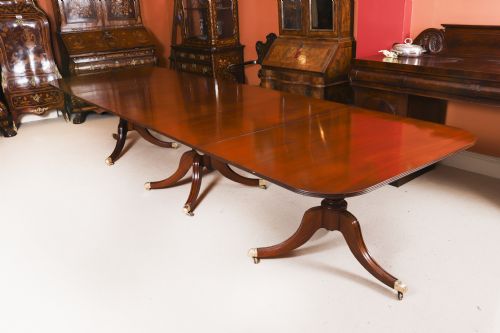
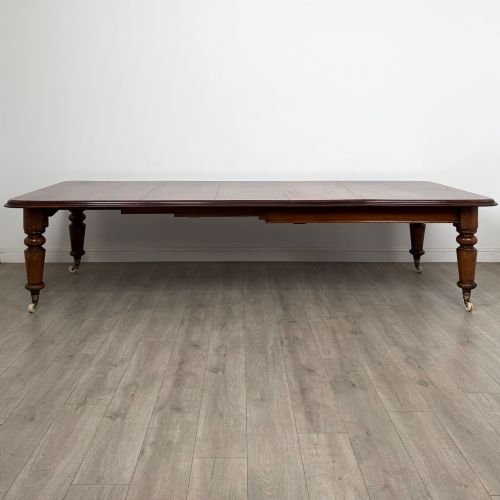
When you search for an antique extending boardroom table, you are looking at substantial multi-pillar pieces designed to accommodate large assemblies for dining or meetings. These tables appear most frequently from the 19th century through the early 20th century, emerging in forms like twin, triple, or four-pedestal constructions in mahogany and oak.
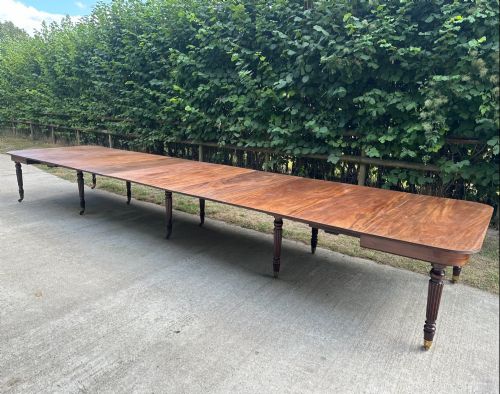
The specimens you meet on this page range from George III and Regency formats to Victorian, William IV, and Edwardian interpretations, as well as later revivals. They utilise removable leaves and pillar supports to expand from modest lengths into grand surfaces scaling up to twenty-eight seats.
How they were made
Cabinet makers constructed these surfaces primarily using solid timbers like mahogany, Cuban flame mahogany, and oak, often paired with figured mahogany veneers and brass fittings for castors and mechanisms. Selected pieces incorporate satinwood, rosewood, and gold leaf detailing.
The engineering relies on pillar and claw pedestals, sometimes numbering up to six, which support heavy tops while allowing integrated extension mechanisms and leaves to be inserted securely.
Listings feature periods spanning from 1800 through the Victorian era up to early 20th century revivals, constructed in mahogany, oak, and rosewood.
What varies in quality
The distinction between tiers rests upon timber selection, such as figured mahogany or plum pudding mahogany, alongside the complexity of the pillar configuration, ranging from twin pillars to monumental four and six-pillar arrangements. Maker attribution, such as Gillows, Wylie & Lochead, or Whytock & Reid, elevates a piece through refined carving and precise joinery.
Proportion and scale dictate the upper end of the range, where balanced proportions across lengths exceeding fifteen feet demonstrate superior architectural design rather than mere utility.
Gillows·Wylie & Lochead·Whytock & Reid
The Antique Extending Boardroom Table Glossary
- Pedestal
- A central column support resting on splayed legs, usually fitted with brass castors. These pillars allow multiple supports beneath long extending surfaces.
- Leaf
- A removable section of timber inserted into the centre of a table to increase its overall seating capacity. Leaves are stored separately when not in use.
- Cuban mahogany
- A dense, dark timber harvested in the Caribbean, prized for deep figuring and exceptional durability in 18th and 19th-century cabinet making.
- Pillar configuration
- The arrangement of vertical column supports beneath the table top, determining stability and weight distribution across extended lengths.
Antique Extending Boardroom Table: Frequently Asked Questions
How do I seat twenty people?
Tables featuring four or six pillars and multiple extension leaves provide the necessary surface area to seat twenty or more guests comfortably.
Larger formats spanning fifteen to twenty-eight feet accommodate these large gatherings while maintaining stability across the pedestals.
What woods were used?
Makers relied predominantly on mahogany, including figured, Cuban flame, and plum pudding varieties, as well as solid oak.
Secondary woods and occasional accents like rosewood, satinwood, and brass hardware appear across Regency and Victorian examples.
How do extension leaves work?
Removable timber leaves slot into the centre of the table when the pedestals are pulled apart to expand the surface.
Supporting mechanisms and alignment pins secure the additional sections in place for daily use or large assemblies.
How do I identify periods?
Stylistic markers such as George III proportions, Regency brass inlay, heavy Victorian mouldings, and Edwardian oak finishes define the era.
Maker attribution stamps and specific pillar turning styles further pinpoint the decade of manufacture.