
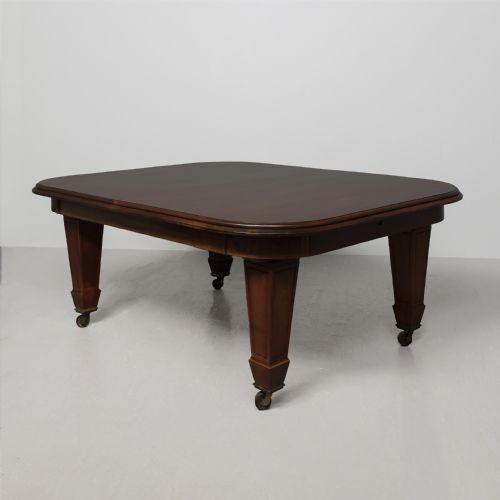

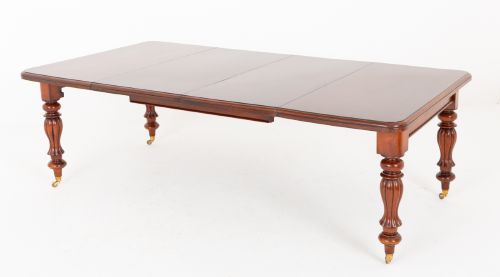
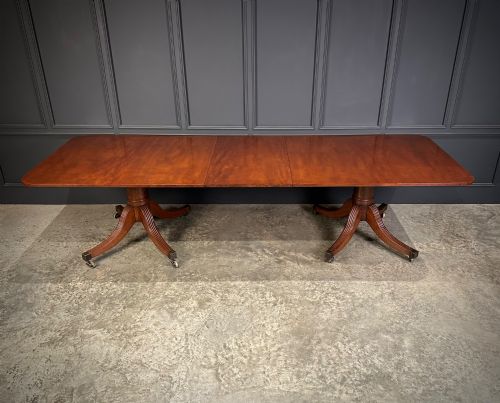
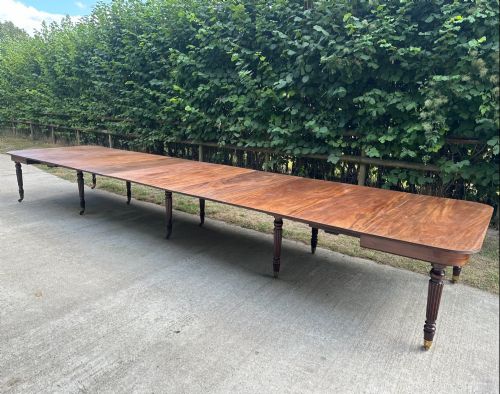
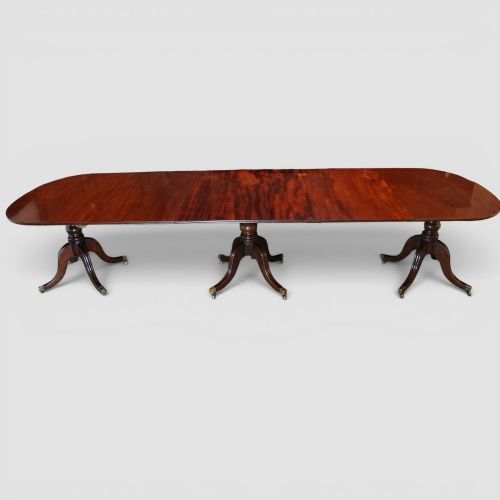
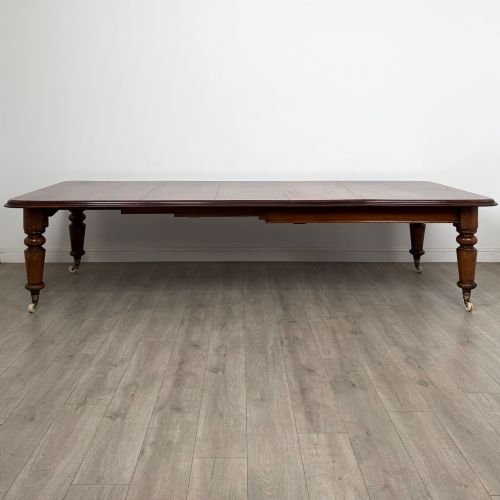


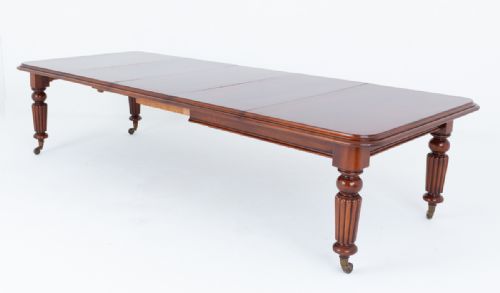


Victorian Mahogany Banquet Table
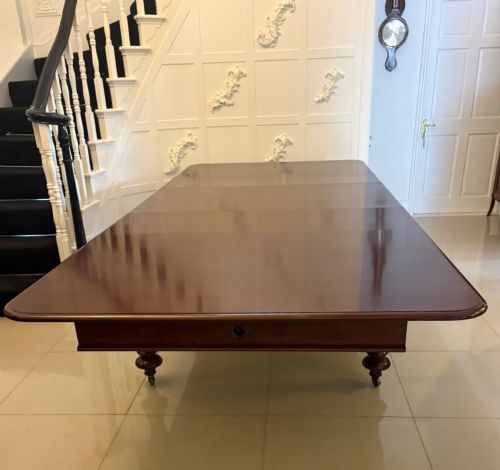
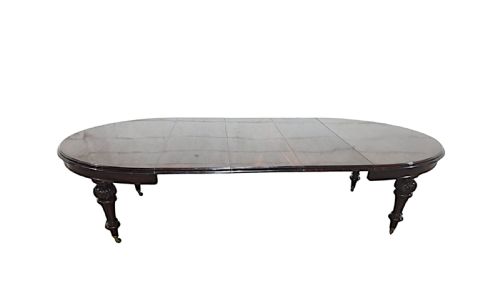
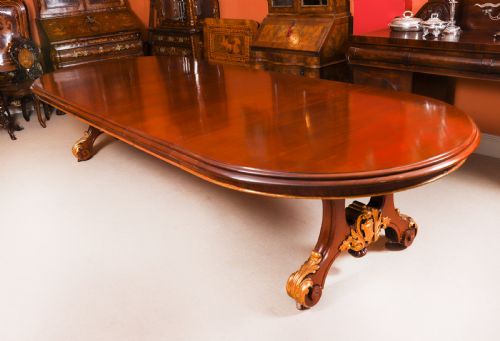
A victorian mahogany banquet table provides monumental scale and rich timber for large gatherings.

Victorian Mahogany Banquet Table
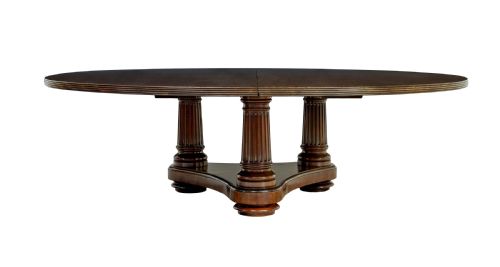
A victorian mahogany banquet table is a substantial dining piece built for large gatherings, frequently appearing as an extending or pedestal format designed to accommodate multiple leaves.
These tables span the nineteenth century, including specific periods such as William IV and Regency styles, ranging from modest two-leaf versions to grand formats seating upwards of twenty people.
Materials and construction
Construction relies heavily on mahogany and figured mahogany, including Cuban mahogany, paired with internal brass mechanisms for the extending wind-out systems.
Cabinet makers utilised secondary timbers for framing and applied brass castors to heavy pillar bases, alongside carved details such as claw and ball feet.
Tables incorporate removable leaves that expand the central surface area supported by sturdy pedestals or additional folding legs.
Some metamorphic tables manage to hide twenty-four diners inside a surprisingly compact footprint until cranked open.
Distinctions in quality
Quality rests in the choice of timber grain, seen in highly figured or flame mahogany surfaces, and the integrity of the extending mechanism.
Maker attribution elevates a piece significantly, particularly tables bearing the stamp or distinct characteristics of Gillows of Lancaster and London, Wylie & Lochead, or William and Gibton.
Proportion and scale dictate the tier of the piece, distinguishing exhibition quality boards of grand proportions from standard domestic examples.
Gillows·Wylie and Lochead·William and Gibton
The Victorian Mahogany Banquet Table Glossary
- Cuban mahogany
- A dense, dark timber prized for its rich grain and heavy weight in nineteenth-century cabinet making. It was frequently imported for high-status dining furniture.
- Wind-out table
- An extending dining table operated by a mechanical handle and internal screw mechanism. This system separates the top evenly to insert extra leaves.
- D-end
- A dining table format with semicircular ends that can be detached or separated. When uncoupled, the end sections function as side tables.
- Figured mahogany
- Timber exhibiting distinctive natural patterns such as flame or fiddleback figures. Cabinet makers positioned these veneers to catch the light on large surfaces.
- Pedestal base
- A central column support resting on carved feet rather than traditional corner legs. This design allows maximum legroom around large dining tables.
Victorian Mahogany Banquet Table: Frequently Asked Questions
How do wind-out tables work?
These tables contain an internal metal screw mechanism operated by a removable handle. Turning the handle draws the table halves apart to create a gap for extra leaves.
Once the leaves drop into place, the mechanism winds closed to secure the entire top tightly.
How many people can these seat?
Seating capacity ranges from small ten-seater formats to grand boards accommodating twenty to twenty-six diners. The exact number depends on the length and the number of original leaves retained.
Longer formats often span twelve feet or more, utilising multiple pedestals for stability.
What is Cuban mahogany?
Cuban mahogany is a dense, dark hardwood imported during the nineteenth century for high-end cabinet work. Its heavy weight and deep grain make it exceptionally durable.
Tables built from this material often display rich figuring across their primary surfaces.
Are leaves usually original?
Many tables retain their original numbered leaves that match the grain and patina of the main top. Some examples feature varying counts of extra leaves added to expand the dining length.
Checking the edge joints and timber alignment helps verify if the leaves belong to the original frame.