

Large Victorian Dining Table
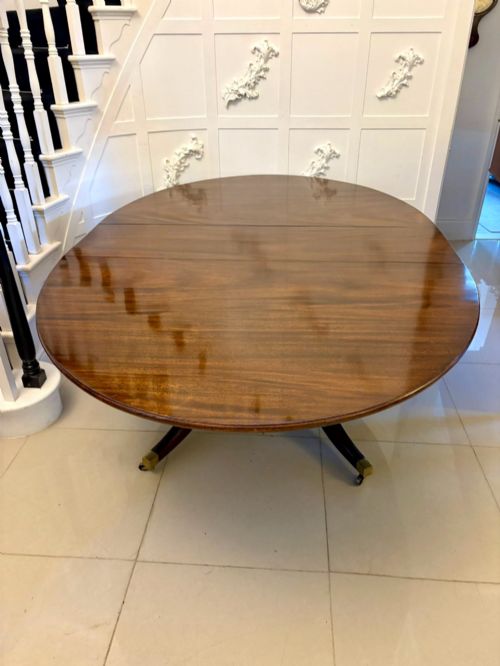
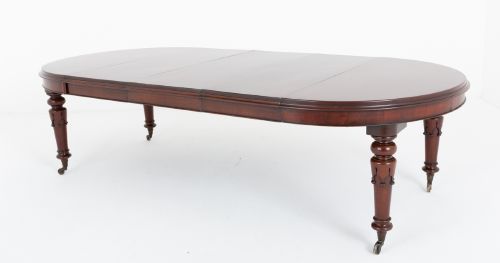
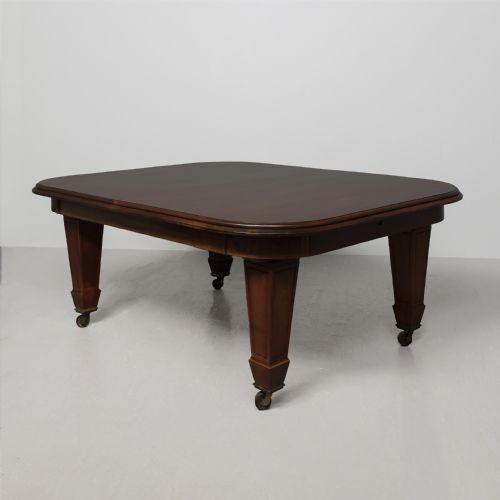
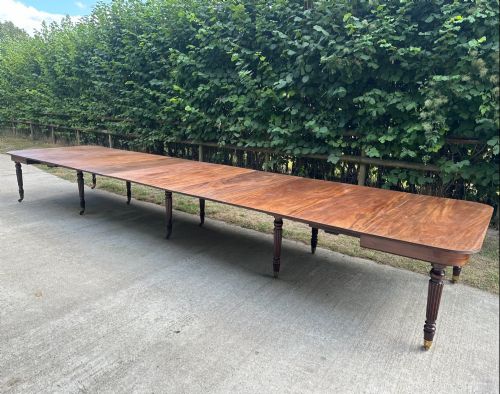
A large victorian dining table provides the generous proportions and solid timber required to seat large companies for family meals.

Large Victorian Dining Table
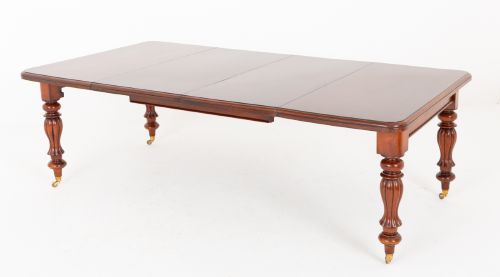
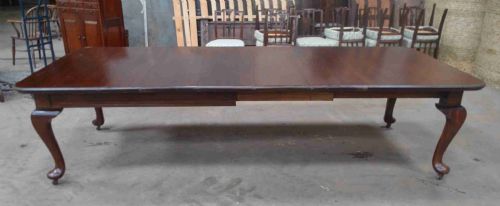
When searching for a large victorian dining table, buyers encounter substantial timber surfaces designed for communal dining in nineteenth century homes. These pieces accommodate many diners using clever mechanical systems that accept multiple removable leaves.
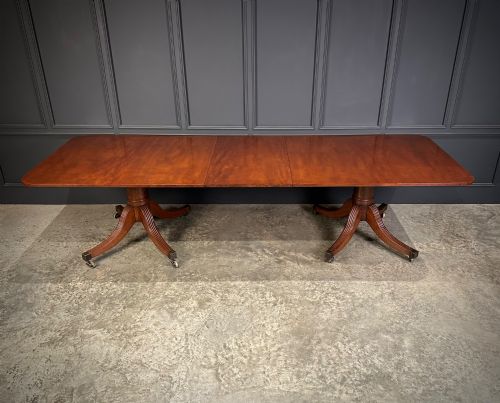
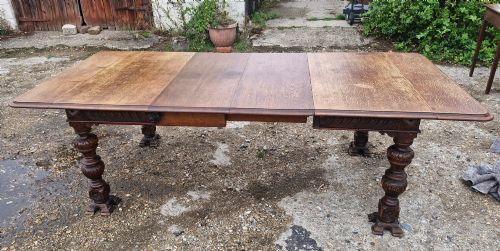
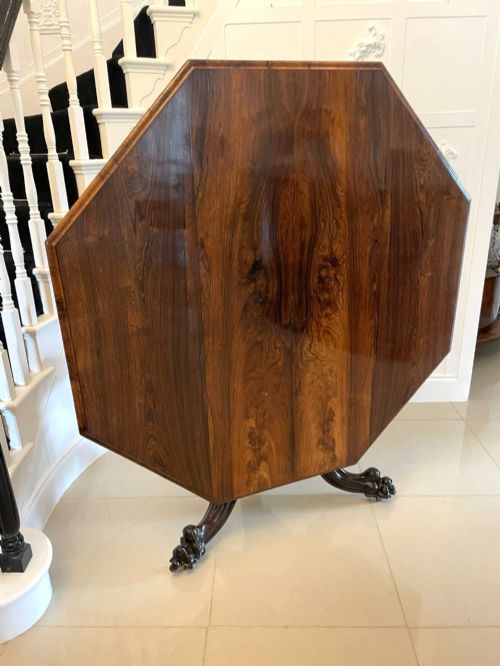
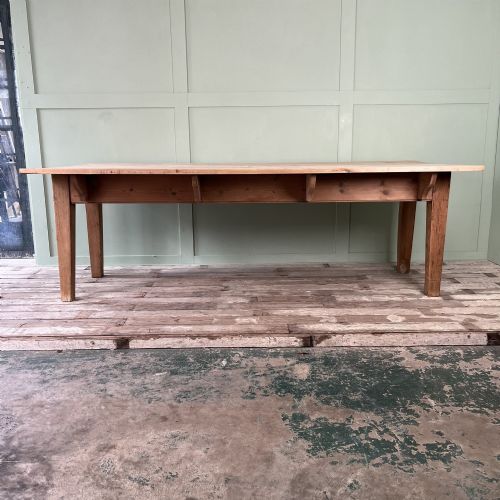
The versions most commonly met on this page include mahogany twin or triple pedestal models and robust oak or pine farmhouse tables. Dining rooms of the period also utilised circular centre tables and D-end formats to fit diverse room layouts.
Makers constructed these tables to serve central domestic functions, ranging from formal mahogany boardroom settings to rustic kitchen environments. Surviving examples reflect the varied social uses of the nineteenth century through their diverse woods and expanding designs.

How they were made
Cabinet makers utilised dense timbers like mahogany, walnut, and oak to build sturdy frames that endured daily domestic use. They frequently selected figured veneers for table tops to display rich wood grain patterns.
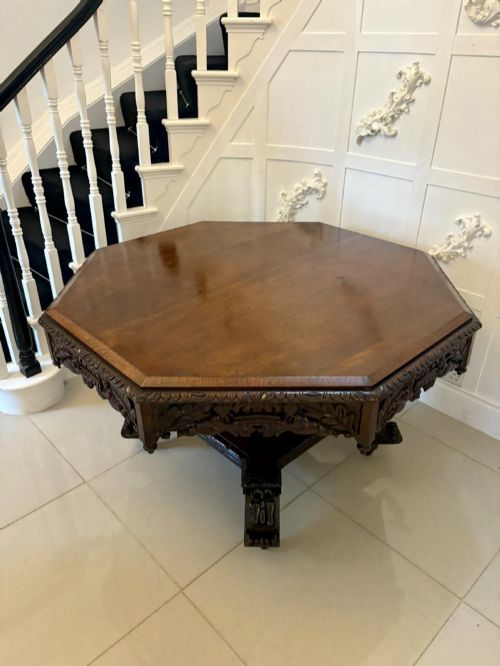
Expanding mechanisms relied on timber runners and brass winding gear operated with a crank handle to insert extra leaves smoothly. Carved details on pedestal bases and legs required skilled hand chiselling by workshop artisans.
Large Victorian Dining Table Retail Price Guide 2026
Typical asking prices for large victorian dining table among the pieces listed under this phrase on Sellingantiques today, from the lower quarter to the upper quarter. They describe what is for sale here now, not the wider market.
Listings feature nineteenth century extending tables in mahogany, oak, and pine alongside circular centre tables.
What varies in quality
Quality depends upon the selection of timber and the precision of the extending mechanism. Superior examples feature well-figured mahogany or quarter-sawn oak with matching grain across all inserted leaves.
The execution of carved ornamentation on pedestals and legs distinguishes standard workshop production from finer cabinet work. Robust construction of the internal framework ensures the table remains stable when fully extended.
Gillows·Wylie and Lochead·Maple and Co·William and Gibton
The Large Victorian Dining Table Glossary
- Extending table
- A dining table designed with a mechanism and removable leaves to increase its overall length.
- Pedestal base
- A central column support resting on carved feet, commonly used in pairs to hold large table tops.
- D-end
- A table configuration featuring semicircular ends that detach or fold, often forming part of an expanding set.
- Refectory table
- A long, narrow dining table traditionally built with solid wooden legs and a central stretcher.
- Leaf
- A removable board inserted into an extending table to provide extra seating space.
Large Victorian Dining Table: Frequently Asked Questions
How many people can a large dining table seat?
These tables typically accommodate ten to fourteen diners when fully extended with all original leaves in place. The exact capacity depends on the length of the frame and the inclusion of extra boards.
Buyers should measure their dining space carefully to ensure adequate room for chairs and movement around the extended table.
How do wind-out mechanisms operate?
A detachable metal crank handle fits into a socket beneath the table rim to turn internal screw threads. This action draws the pedestal bases apart or pushes them together evenly.
Regular light lubrication of the metal screw mechanism keeps the winding action smooth and prevents binding.
How should I care for a polished wood surface?
Maintain timber surfaces by applying quality beeswax periodically and buffing gently with a soft cloth to nourish the grain. Avoid placing hot dishes directly onto the polish to prevent heat rings.
Keep tables away from direct heat sources and strong sunlight to protect the wood from drying out and splitting.