

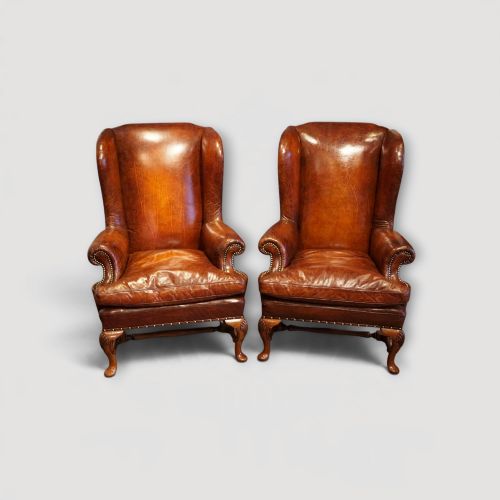
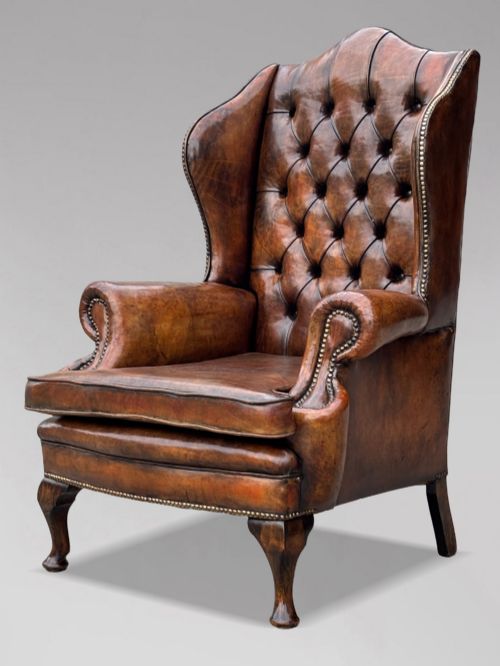
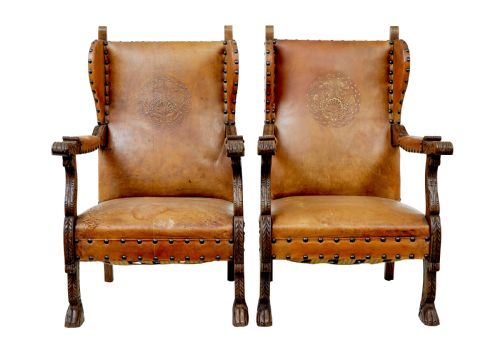
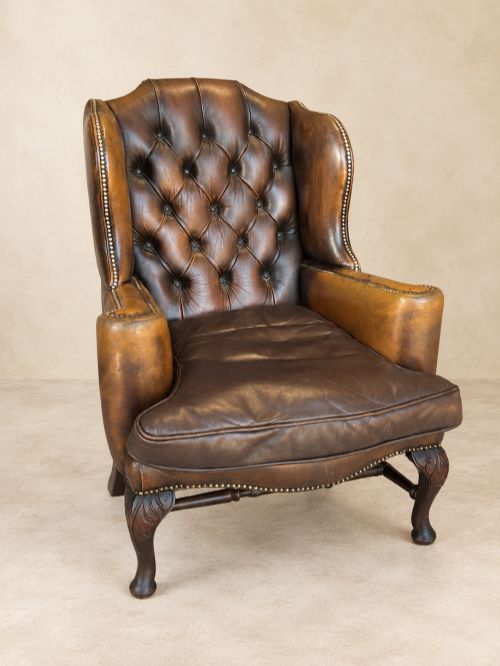
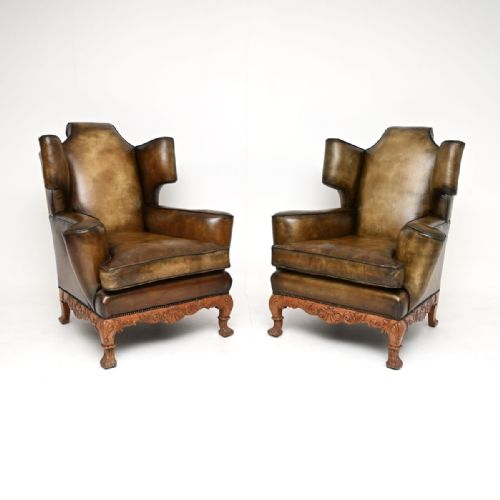
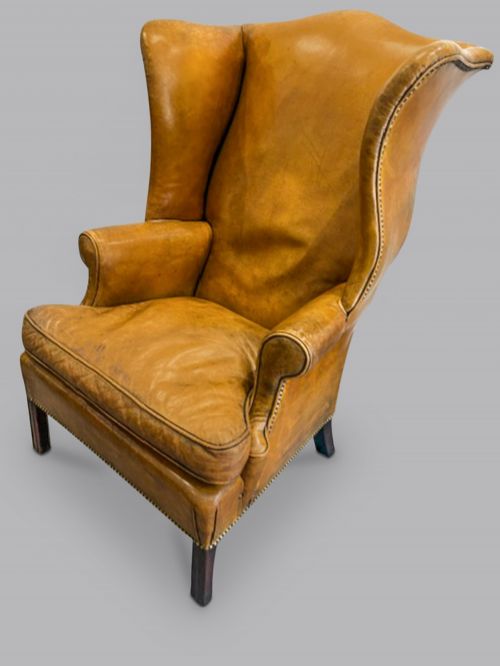
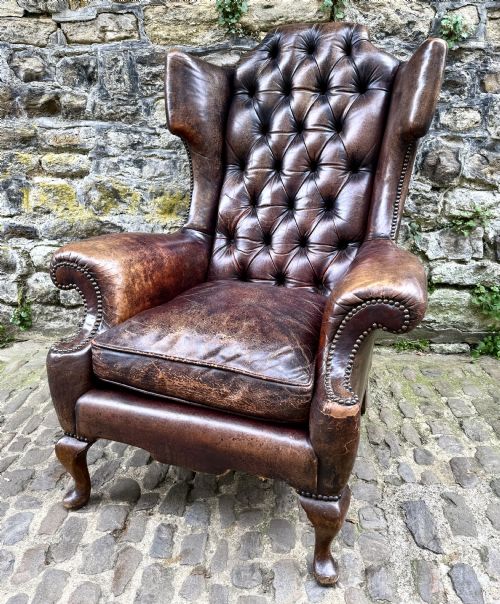


Brown Leather Wing Chair
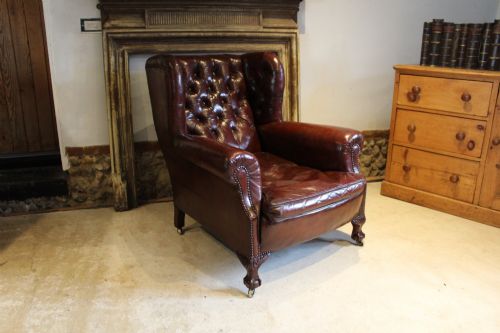
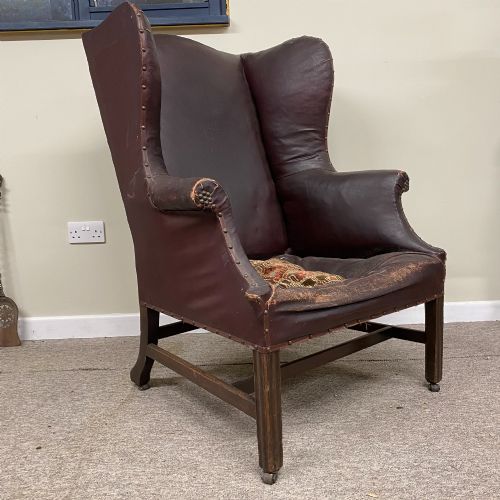
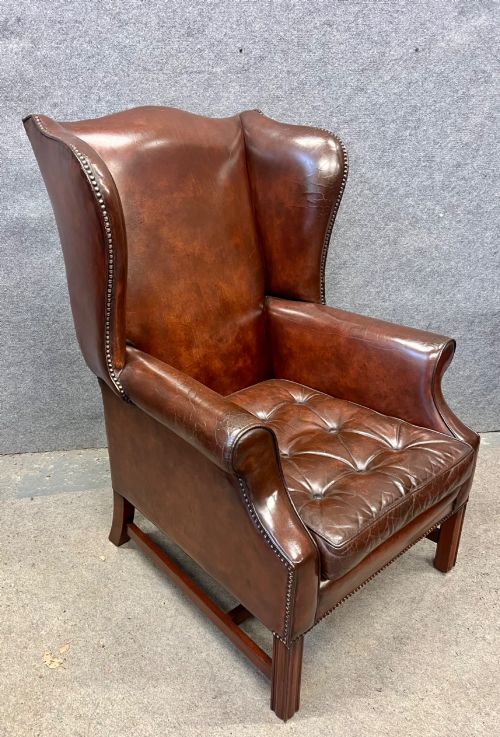
A brown leather wing chair brings deep comfort and historical character to a room, offering a tall back and enclosing panels designed originally to block drafts.
Brown Leather Wing Chair
When you search for a brown leather wing chair, you encounter seating designed for fireside warmth and upright reading from periods spanning the eighteenth century to the mid-twentieth century.
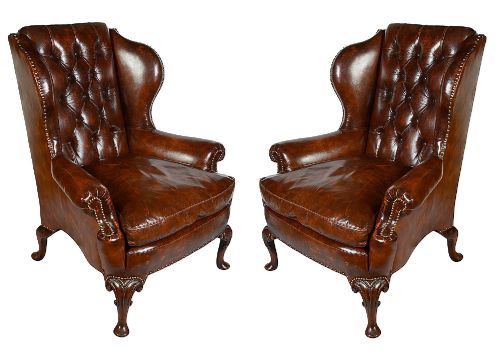
The most common examples on this page date from the nineteenth century and the 1920s, often presenting buttoned upholstery and classic high backs.
Makers drew on Georgian, Victorian, and Regency forms, producing substantial library chairs and Chesterfield styles supported on timber frames.
How They Were Made
Frames rely on durable hardwoods such as mahogany, oak, walnut, and general timber, providing structural stability beneath heavy upholstery.
Hides are stretched over padding, occasionally hand-dyed or hand-coloured, and secured with traditional methods including brass detailing.
Brown Leather Wing Chair Retail Price Guide 2026
Typical asking prices for brown leather wing chair among the pieces listed under this phrase on Sellingantiques today, from the lower quarter to the upper quarter. They describe what is for sale here now, not the wider market.
Some nineteenth-century versions include clever reclining mechanisms and invalid wheels for maximum drawing room luxury.
What Varies in Quality
The distinction between ordinary and superior examples lies in the depth of the timber carving, the richness of the leather's hand-dyeing, and the integrity of the frame construction.
Original period pieces from the Georgian era or Victorian workshops display proportion and craftsmanship that later revival pieces interpret with varying degrees of fidelity.
Fritz Hansen·John Ward
The Brown Leather Wing Chair Glossary
- Wing chair
- An upholstered armchair featuring side panels attached to the back to deflect draughts and retain heat. These pieces frequently appear in libraries and drawing rooms.
- Chesterfield
- A style of upholstered seating characterised by deep buttoning and rolled arms of equal height to the back. These often feature full leather upholstery.
- Cabriole leg
- A furniture leg that curves outward in a convex arc and tapers inward in a concave arc, ending in a pad or claw foot. This form appears frequently on eighteenth-century and revival seating.
- Porters chair
- A heavily enclosed hooded armchair originally designed to keep draft out from hallways where attendants sat. They often use substantial leather upholstery.
- Buttoning
- A method of securing upholstery by pulling tufting buttons deep into the padding to create a diamond pattern. This technique provides both structure and decorative texture.
Brown Leather Wing Chair: Frequently Asked Questions
How do I identify a true Georgian piece?
Examine the timber framing beneath the leather and study the proportions of the wings and arms. Genuine examples from the eighteenth century exhibit hand-cut joinery and timber patination consistent with age.
Revival pieces built in the twentieth century often copy these lines closely but utilise machine-cut elements and modern adhesives inside the frame.
What is the purpose of the side wings?
The prominent side panels were originally engineered to trap heat from an open hearth while shielding the occupant from cold room draughts.
Over time, the form transitioned from a functional necessity in large country houses into a statement of library furniture and formal drawing room comfort.
How should I care for vintage leather?
Maintain the hide by applying specialist leather balms periodically to prevent cracking and to preserve the suppleness of the hand-dyed surface. Avoid placing the chair near direct heat sources or strong sunlight.
Gentle dusting with a soft, dry cloth is sufficient for routine upkeep, keeping moisture away from the timber legs and brass tacking.
Are these chairs suitable for daily use?
Most antique examples possess robust hardwood frames built to withstand generations of sitting, provided the internal webbing and padding remain sound.
Checking the structural integrity of the joints ensures that the chair safely accommodates everyday lounging in a modern home.