


Brown Inlaid Wine Table
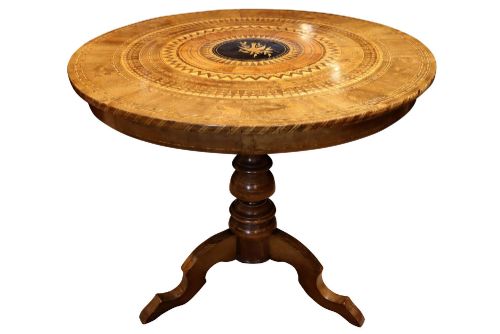
A brown inlaid wine table brings compact elegance to a corner, offering a stable surface for a glass or lamp.
Brown Inlaid Wine Table
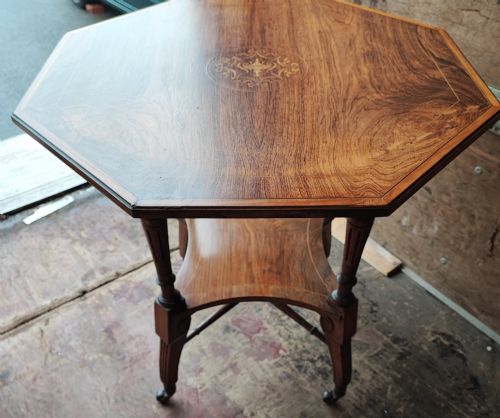
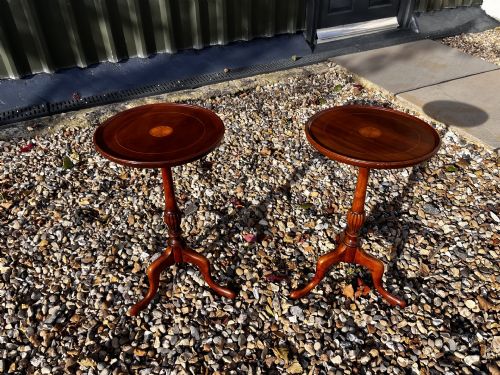
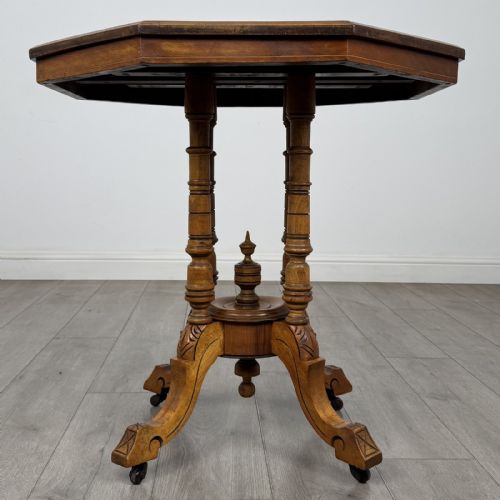
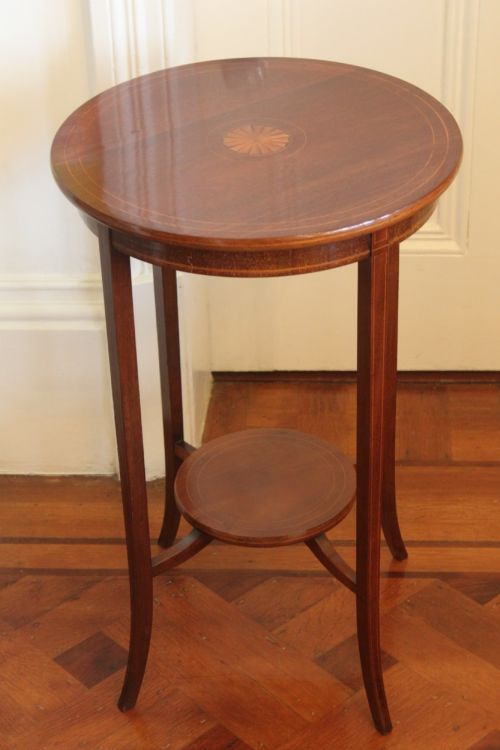
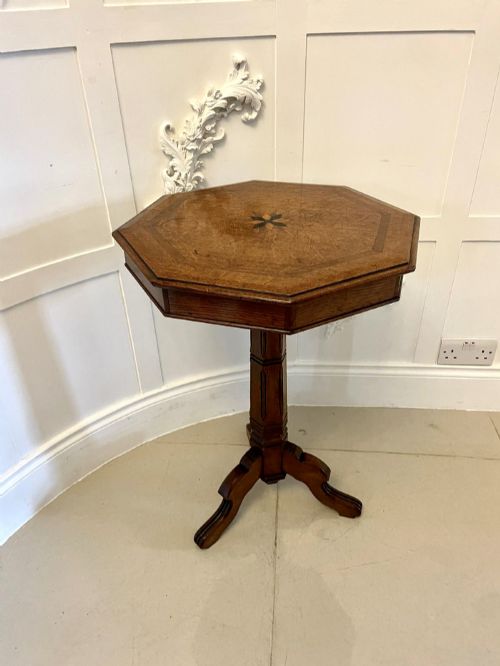
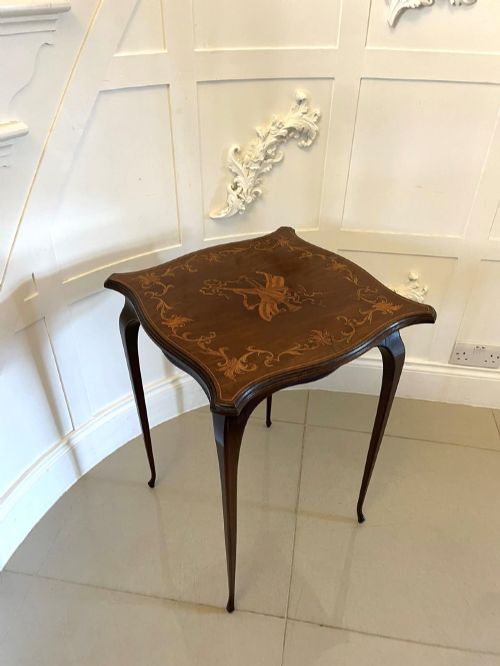
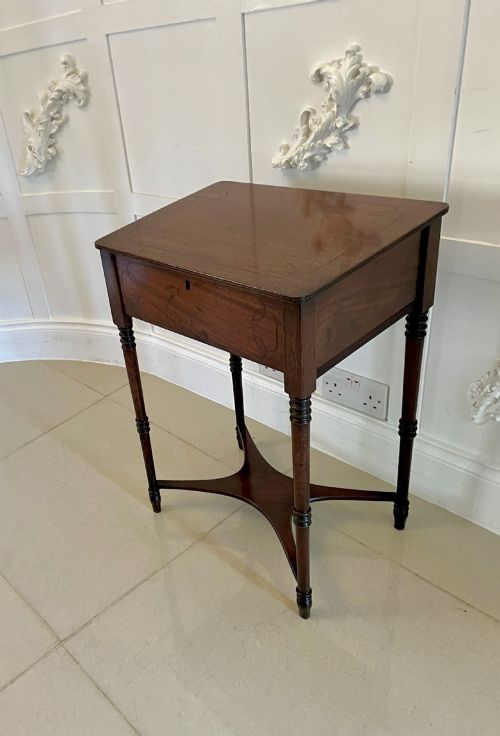
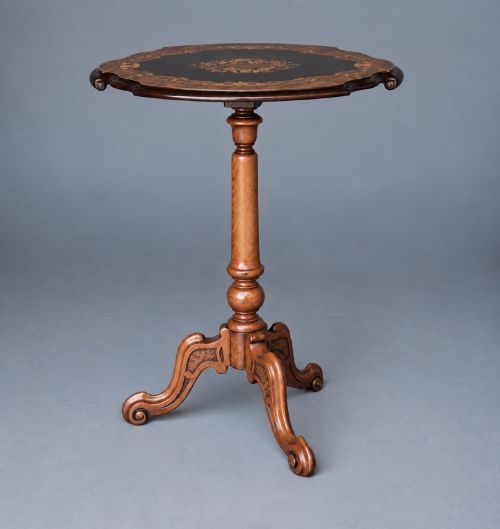
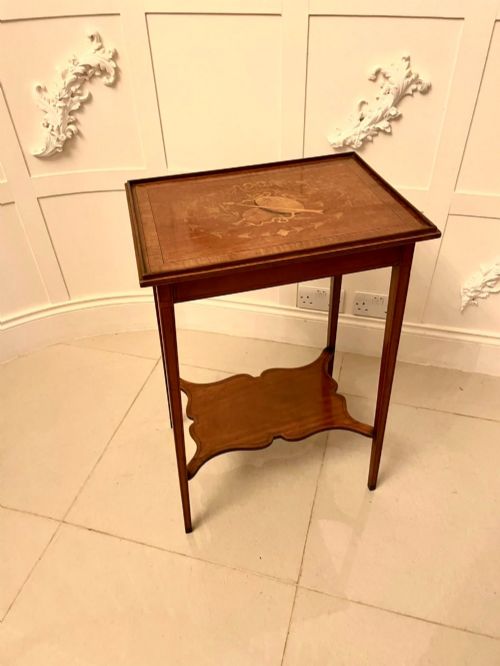
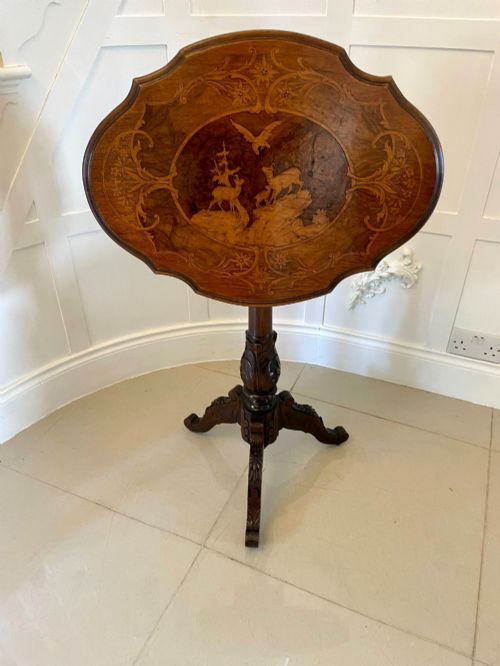
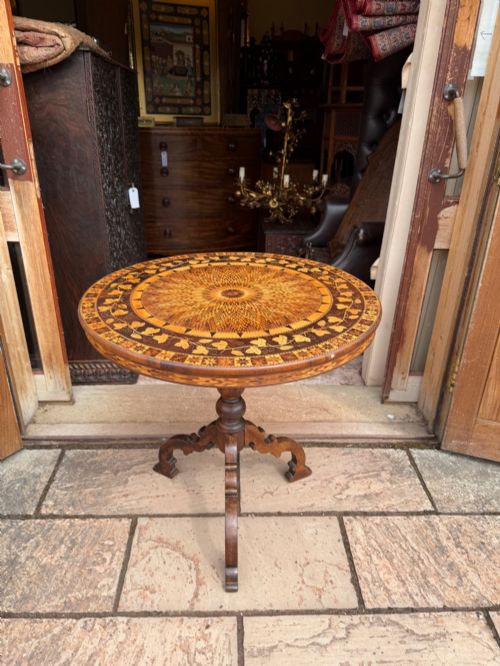
A brown inlaid wine table typically appears as a compact tripod stand or occasional piece designed for holding small items. The selections on this page span several decades from the Georgian and Victorian eras through the Edwardian period, often taking the form of wine tables, lamp tables, or urn stands.
Makers utilised various timber grounds such as mahogany, walnut, and burr walnut, shaping them into circular, oval, or octagonal tops. These small tables function effectively beside armchairs or in hallways, combining practicality with decorative wood detail.
How they were made
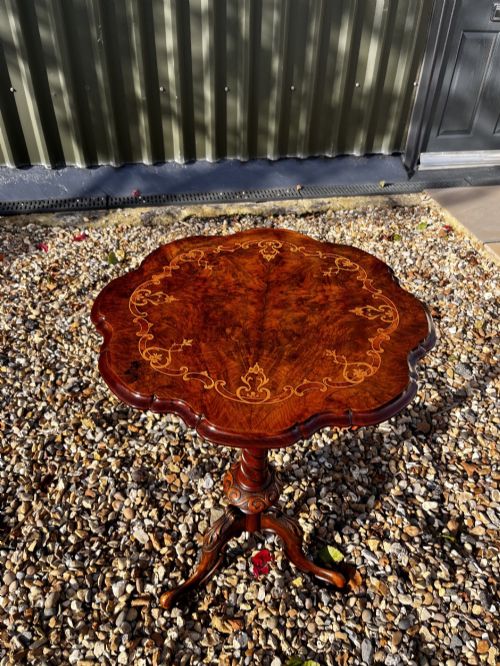
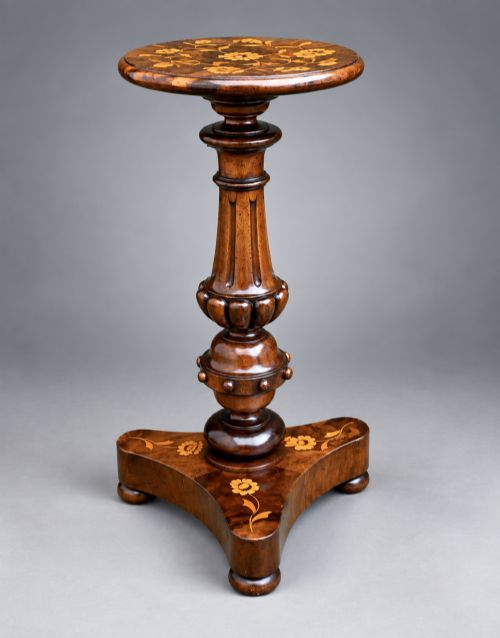
Cabinetmakers constructed these tables using solid timbers and veneers of mahogany, walnut, rosewood, and satinwood. Tops often feature contrasting details in boxwood or specialised wood inlay, creating floral marquetry or geometric parquetry patterns.
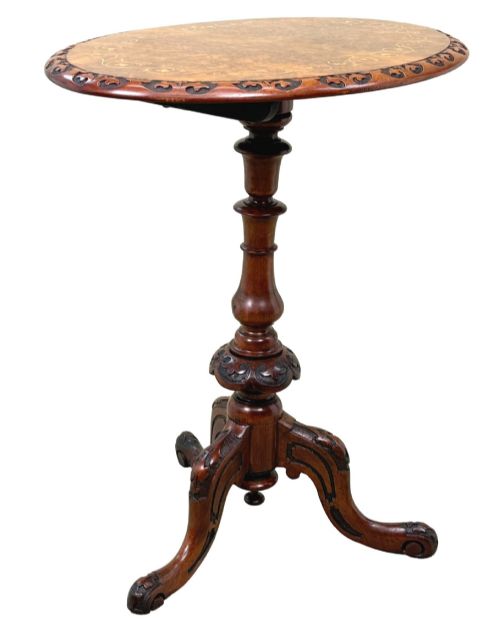
Structures frequently rely on turned central pedestals supported by three tripod legs, though four-legged variants also occur. Joinery techniques from the nineteenth and early twentieth centuries ensure rigidity in these slender proportions.
Brown Inlaid Wine Table Retail Price Guide 2026
Typical asking prices for brown inlaid wine table among the pieces listed under this phrase on Sellingantiques today, from the lower quarter to the upper quarter. They describe what is for sale here now, not the wider market.
Several examples incorporate elephant imagery into their intricate tripod carving, reflecting global design influences.
What varies in quality
The sophistication of the timber selection and the precision of the marquetry define the upper tier of these pieces. Burr walnut and finely figured mahogany command attention, especially when paired with intricate boxwood or multi-wood inlay.
Proportion and stability also dictate worth, as a well-balanced tripod base matches the refinement of the top surface. Subtle details like turned pedestals and crisp edge banding separate standard examples from finer work.
The Brown Inlaid Wine Table Glossary
- Marquetry
- Decorative wood veneer arranged in pictorial or ornamental patterns on a furniture surface. This technique allows artisans to create complex floral or geometric designs using contrasting timbers.
- Parquetry
- Geometric mosaic woodwork used for repeating patterns on table tops. It relies on precise small pieces of wood fitted together closely.
- Tripod table
- A small freestanding table supported by three legs radiating from a central pillar. This form gained popularity in the eighteenth and nineteenth centuries for its stability on uneven floors.
- Boxwood
- A dense, pale yellow wood frequently utilised for fine stringing and inlay details. Its sharp contrast against darker timbers makes inlay work stand out.
- Urn stand
- A tall, slender table originally designed to hold a tea urn. These pieces often feature raised edges or gallery tops.
Brown Inlaid Wine Table: Frequently Asked Questions
Where should I place a wine table?
These compact pieces fit easily beside a sofa or in an empty hallway corner. They hold a reading lamp or a drink without dominating the room.
Because of their small footprints, they suit tighter spaces where a full coffee table proves too large.
How do I date a brown inlaid table?
Examination of the secondary timbers, construction joints, and inlay styles helps establish the period. Victorian and Edwardian examples often display machine-cut veneers or specific revival motifs.
Georgian pieces tend to show simpler, heavier framing and hand-cut joinery beneath the polish.
Are these tables stable enough for daily use?
Most tripod and pedestal designs remain sturdy for holding lamps, books, or small decorative objects. Their central pillar construction distributes weight evenly across the feet.
Placing them away from heavy foot traffic prevents accidental tipping of slender legs.