





Chinese Export Tripod Table
A chinese export tripod table brings distinct Far Eastern craftsmanship and versatile form into a room, offering both practical surface space and striking historic character.
Chinese Export Tripod Table
A chinese export tripod table combines traditional Western furniture forms with Eastern decorative arts, created specifically for international markets from the eighteenth century onwards. Buyers searching for a chinese export tripod table encounter diverse iterations ranging from George III examples to later Edwardian interpretations.
The selection encompasses side tables, occasional tables, centre tables, and wine tables supported by three legs. Pieces display stylistic influences spanning Chinoiserie, Qing Dynasty designs, and Anglo-Indian aesthetics.
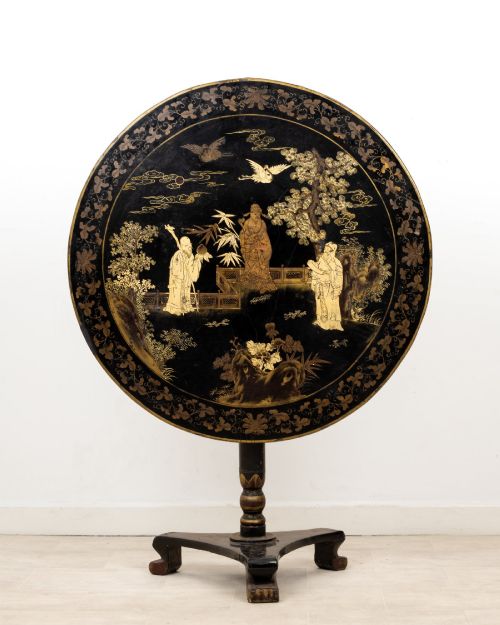
Materials vary from dense tropical hardwoods to lacquered surfaces enriched with gold leaf and brass details. These tables function effectively as display surfaces or prominent centrepieces within traditional and modern interiors.
Materials and construction
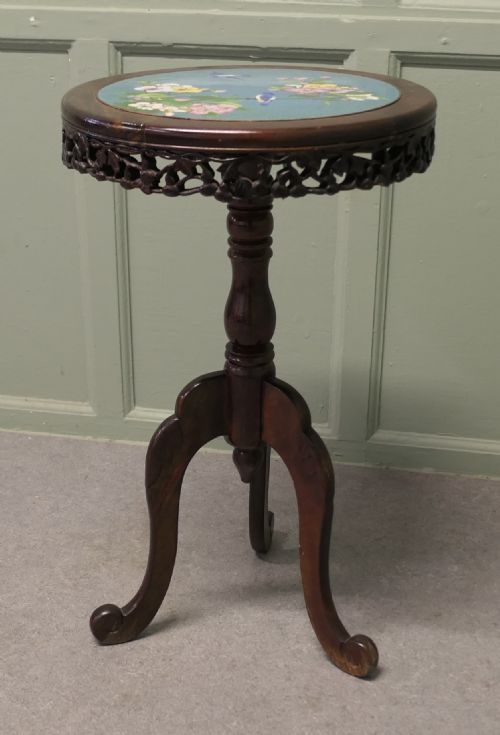
Cabinetmakers utilised durable timbers including rosewood, teak, and various heavy hardwoods to form the structural frames and intricate tripod bases. These dense woods provided the stability necessary for supporting carved tops and tilt mechanisms.
Surface decoration frequently involved layers of black or coloured lacquer applied to wood panels, sometimes augmented with hand-painted Chinoiserie motifs or applied gold leaf. Metal elements such as brass fixtures were integrated for structural reinforcement and visual contrast.
Chinese Export Tripod Table Retail Price Guide 2026
Typical asking prices for chinese export tripod table among the pieces listed under this phrase on Sellingantiques today, from the lower quarter to the upper quarter. They describe what is for sale here now, not the wider market.
Current listings and archive records feature rosewood, hardwood, teak, lacquer, and marble across eighteenth, nineteenth, and early twentieth-century periods.
Judging quality and execution
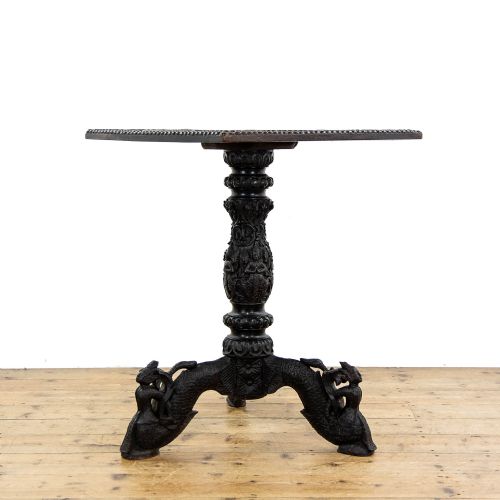
The distinction between standard examples and superior pieces rests upon the crispness of the carving and the depth of the timber. Finely rendered dragon motifs and intricate surface details demonstrate a higher level of artisanal skill.
The integrity of the lacquer work and the stability of the tripartite base determine the overall standard of preservation. Original surfaces untouched by heavy restoration retain greater historical honesty and visual appeal.
The Chinese Export Tripod Table Glossary
- Tripod table
- A small freestanding table supported by a central pillar resting on three legs. This form gained popularity in Europe during the eighteenth century for serving tea or displaying decorative objects.
- Chinoiserie
- European artistic interpretations of Chinese and East Asian artistic traditions, prominent in decorative arts and furniture design. It manifests in painted scenes, motifs, and architectural elements.
- Tilt top
- A tabletop mounted on a catch mechanism that allows the surface to be rotated vertically when not in use. This clever design saved floor space in compact domestic rooms.
- Lacquer
- A durable finish created from natural tree sap, applied in numerous thin layers and polished to a smooth sheen. It frequently serves as a base for intricate painted or gilded ornamentation.
- Hardwood
- Timber derived from broad-leaved trees, prized in antique furniture for its density, strength, and resistance to wear. Examples seen in these pieces include rosewood and teak.
Chinese Export Tripod Table: Frequently Asked Questions
What is a chinese export tripod table?
A chinese export tripod table is a small piece of furniture manufactured in the East for Western export markets, featuring a central column supported by three legs.
These tables combine functional European forms with distinctive Asian decorative techniques such as lacquerwork and intricate wood carving.
How were these tables used historically?
Historically, these tables served versatile functions in domestic interiors as wine tables, occasional surfaces for tea service, or decorative centrepieces.
Their relatively lightweight construction and tilt-top mechanisms allowed servants to move them easily or store them against walls when space was required.
How do I date a chinese export tripod table?
Dating relies upon examining the furniture style, construction joints, timber types, and decorative motifs against known historical periods. Eighteenth-century examples often reflect George III stylistic traits, whilst nineteenth and early twentieth-century pieces show Victorian or Edwardian influences.
Changes in lacquer composition and brass hardware also provide clues to the approximate decade of manufacture.
How do I care for antique lacquer?
Antique lacquer requires protection from direct sunlight, extreme temperature fluctuations, and excessive moisture to prevent cracking or fading.
Dusting gently with a soft, dry cloth is sufficient for routine maintenance without applying modern chemical polishes.