

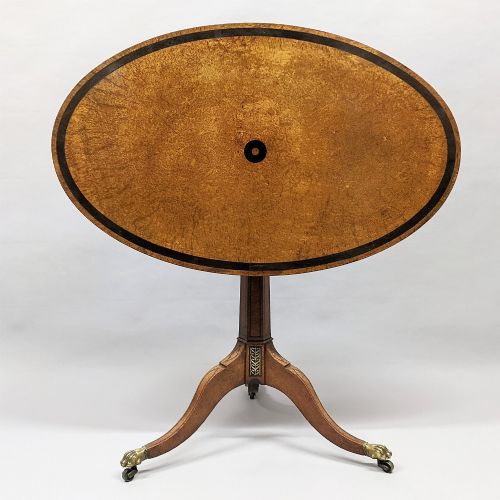


Georgian Oval Tilt Table
A georgian oval tilt table combines clever pivoting mechanism with handsome timber, offering a practical surface that clears space when not in use.
Georgian Oval Tilt Table
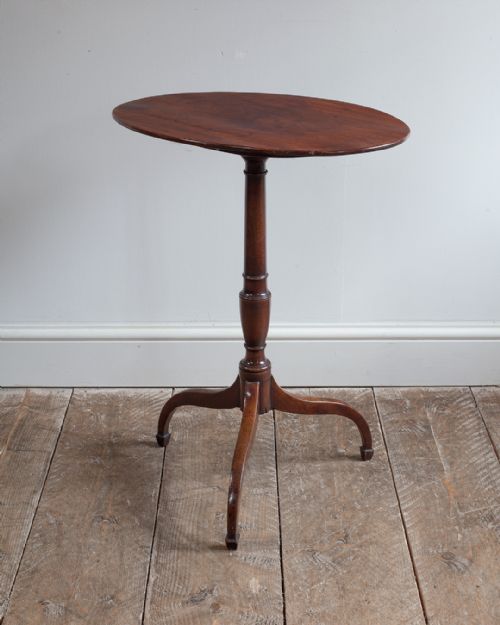
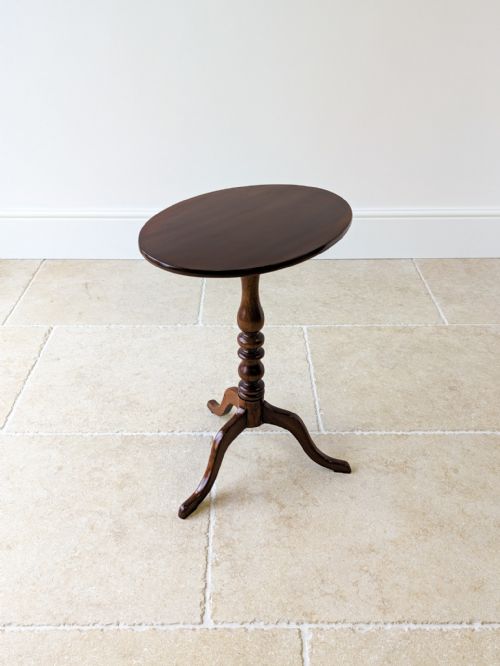
A georgian oval tilt table serves multiple rooms in the home, functioning primarily as a breakfast, dining, occasional, or tripod wine table. These pieces emerge predominantly from the Georgian, George III, Regency, and Edwardian periods, with occasional later revivals.
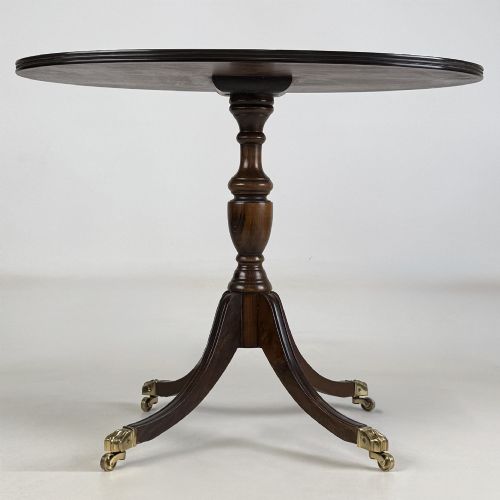
Makers adapted these tables for various domestic settings, utilising mahogany as the primary timber alongside exotic accents like satinwood, amboyna, and ebony. Buyers encounter both pedestal bases with splayed legs and tripod configurations.
Assessing Quality and Execution
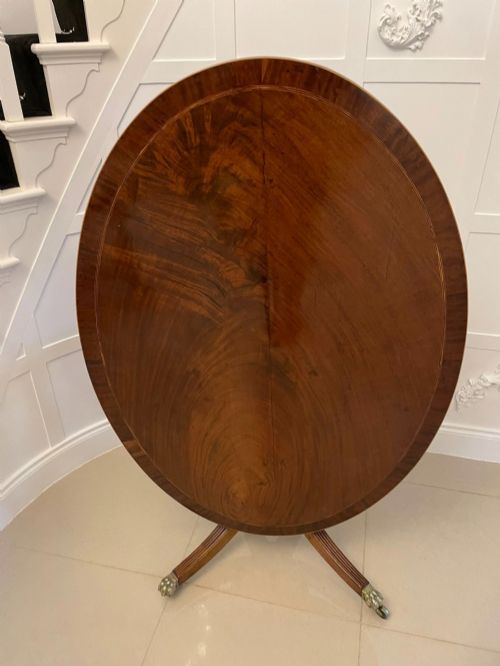
Quality reveals itself in the selection of timber figures, such as figured mahogany or burr oak veneer, and the precision of inlaid details like satinwood and amboyna borders.
The integrity of the pivoting mechanism dictates daily utility, where superior examples lock firmly without wobble and tilt smoothly on their brass fittings.
Proportion and stability in the pedestal or tripod base separate workshop standards, ensuring the table remains balanced whether upright or in use.
Georgian Oval Tilt Table Retail Price Guide 2026
Typical asking prices for georgian oval tilt table among the pieces listed under this phrase on Sellingantiques today, from the lower quarter to the upper quarter. They describe what is for sale here now, not the wider market.
Listings feature mahogany predominantly, complemented by occasional highlights in oak, satinwood, amboyna, and ebony.
The Georgian Oval Tilt Table Glossary
- Tilt-top
- A tabletop hinged to a central pillar that pivots vertically for storage. This clever mechanism allows the table to stand flat against a wall when not in use.
- Tripod base
- A support structure featuring three legs radiating from a central column. It provides steady footing on uneven floors.
- Crossbanded border
- A decorative band of veneer laid around the perimeter of the tabletop with the grain running perpendicular to the centre. It creates a neat framing effect.
- Pedestal table
- A table supported by a single central column rather than four corner legs. This design maximises legroom for diners seated around the oval top.
- Inlay
- Pieces of contrasting timber or other materials set flush into the primary surface to form decorative patterns. Satinwood and ebony are frequent choices for this technique.
Georgian Oval Tilt Table: Frequently Asked Questions
How do I use a tilt-top table daily?
Release the brass catch beneath the surface to pivot the oval top into a vertical position. This allows you to tuck the table against a wall to reclaim floor space in smaller rooms.
Lower the top back to horizontal for dining or serving when needed. Ensure the catch locks securely before placing heavy items on the surface.
Are these tables sturdy enough for dining?
Most examples are built from dense timbers like mahogany and feature robust pedestal or tripod bases designed to support meals. Larger pedestal versions offer considerable stability for dining.
Smaller tripod wine tables suit lighter tasks and occasional display. Check the central pivot and base connections to ensure the structure remains firm.
How do I tell a Georgian table from a later revival?
Examine the timber grain, construction joints, and underside wear for indicators of age. Georgian pieces display period-specific joinery and genuine patina built over centuries.
Revival pieces often utilise machine-cut elements or different secondary woods beneath the surface. Compare the hardware and finish against established period examples.
What is the difference between a breakfast table and a wine table?
Breakfast tables are larger pedestal designs meant for morning dining or central room placement. They provide generous oval surfaces supported by substantial pillars.
Wine tables are much smaller tripod pieces built for holding glasses or small objects beside seating. Their compact scale suits occasional use around the living space.