



Chinese Export Tea Table
A chinese export tea table brings distinct regional character to a room, ranging from carved hardwood occasional pieces to decorated lacquer nests.
Chinese Export Tea Table
When you search for a chinese export tea table, you encounter a variety of forms made for Western markets, including occasional tables, nests of tables, centre tables, and side tables. These pieces span periods from the eighteenth century through the nineteenth century and into the early twentieth century, encompassing Victorian and George III interpretations alongside Qing Dynasty pieces.
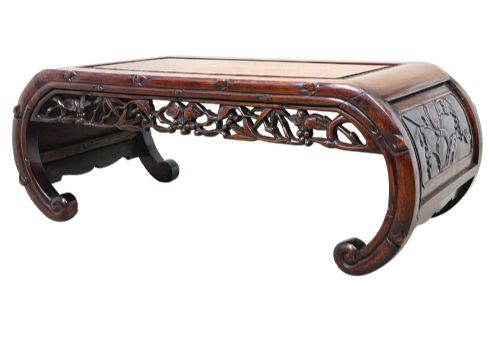
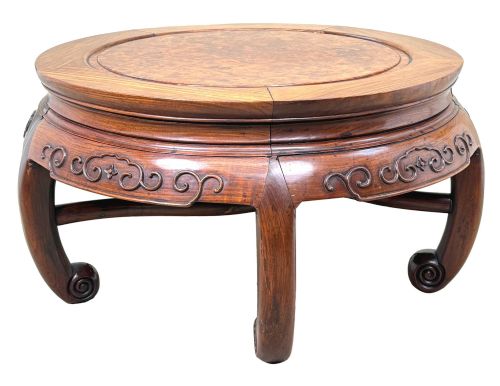
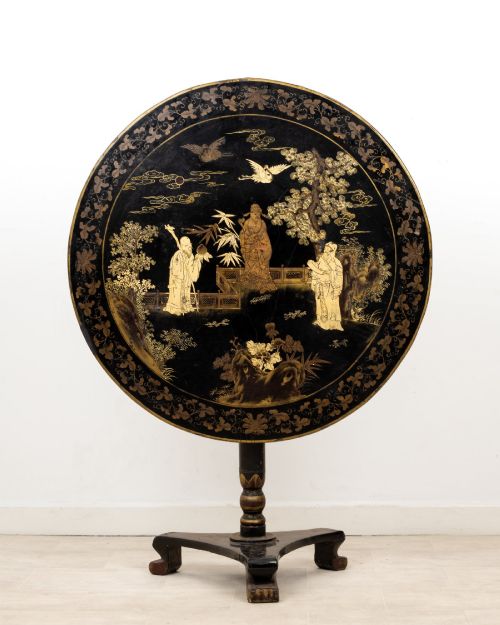
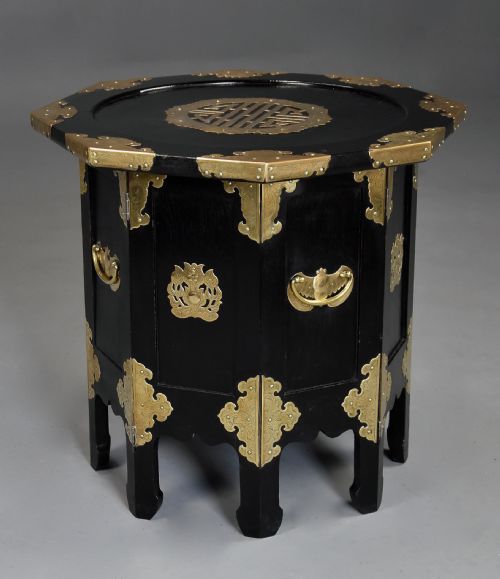
You are most likely to meet hardwood or lacquer versions on this page, often featuring carved details or Chinoiserie decoration. Forms range from tilt-top occasional tables and octagonal shapes to nests of four tables and larger centre tables with marble tops.
The stylistic influences draw upon Chinese Export, Oriental Export, and Anglo-Indian traditions. Makers utilised regional motifs such as dragons alongside traditional construction methods to satisfy European and British demand.
How they were made
The makers relied on dense timbers such as hardwood, rosewood, teak, and calamander, alongside general wood substrates for lacquered surfaces. These materials provided the structural integrity required for intricate hand carving and heavy use.
Decoration involved applied gold leaf, brass mountings, and hand-applied lacquer work, particularly on Chinoiserie decorated pieces and tilt-top tables. Ebonised finishes and marble inserts also appear across the selection, showing a combination of local craftsmanship and Western aesthetic preferences.
Chinese Export Tea Table Retail Price Guide 2026
Typical asking prices for chinese export tea table among the pieces listed under this phrase on Sellingantiques today, from the lower quarter to the upper quarter. They describe what is for sale here now, not the wider market.
Listings feature items from the eighteenth, nineteenth, and early twentieth centuries, constructed in hardwood, rosewood, teak, calamander, and lacquer.
What varies in quality
The depth and crispness of the hand carving separate standard examples from finer works, particularly on dragon side tables and octagonal occasional pieces. Superior items display precise joint work in nests of tables and well-balanced proportions in tilt-top mechanisms.
The execution of the lacquer and gold leaf decoration dictates the visual appeal of Chinoiserie and lacquer items. Higher grade pieces maintain intact surface finishes and coherent pictorial or decorative schemes across all tables in a nest.
The Chinese Export Tea Table Glossary
- Chinoiserie
- European decorative style in the imitation of Chinese artistic traditions. It appears on lacquer surfaces and furniture decorated for Western interiors.
- Hongmu
- Term for dense red or dark hardwoods used in Chinese furniture. It translates to red wood and describes the heavy timber found in Qing Dynasty nests of tables.
- Tilt-top
- Table construction featuring a mechanism that allows the top to pivot vertically. This design enabled the table to be stored flat against a wall when not in use.
- Occasional table
- Small table intended for subsidiary use in a room rather than a primary dining or writing purpose. Examples include octagonal and carved variants.
Chinese Export Tea Table: Frequently Asked Questions
What is a chinese export tea table?
A chinese export tea table is a piece of furniture made in China for Western export markets, encompassing various forms like occasional tables, nests, and tilt-tops.
These items combine traditional Chinese materials and motifs with European furniture shapes popular during the eighteenth and nineteenth centuries.
How do I date a chinese export tea table?
Dating relies on examining the construction style, timber types, and decorative motifs relative to known periods like the Qing Dynasty or the Victorian era.
Changes in hardware, such as brass mounts, and the specific style of Chinoiserie decoration also help place a piece within the eighteenth, nineteenth, or early twentieth century.
Where were these tables used?
These tables served primarily in British and European reception rooms, drawing rooms, and parlours for serving tea or displaying ornaments.
Nests of tables offered flexible surface space that could be stowed away, while centre tables stood as focal points in larger rooms.
How do I care for lacquer and hardwood?
Lacquer surfaces require protection from direct sunlight and excessive moisture to prevent cracking or fading of the delicate finishes and gold leaf.
Hardwood and rosewood structures benefit from regular dusting with a soft cloth and occasional treatment with appropriate natural waxes to maintain the timber.