
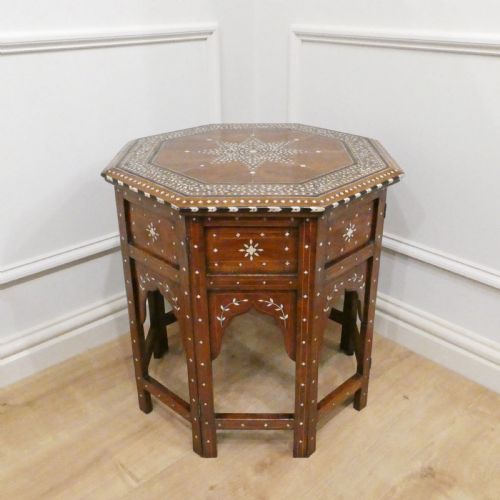
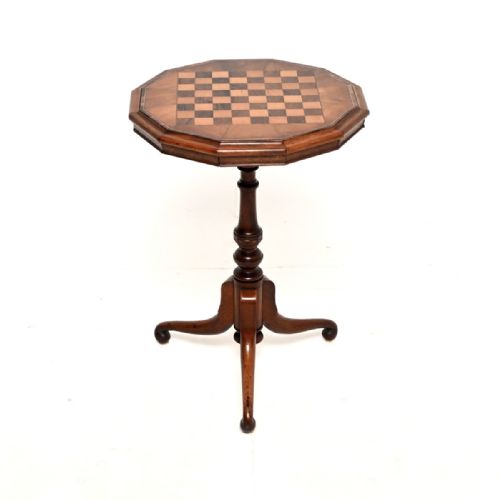


Brown Inlaid Octagonal Table
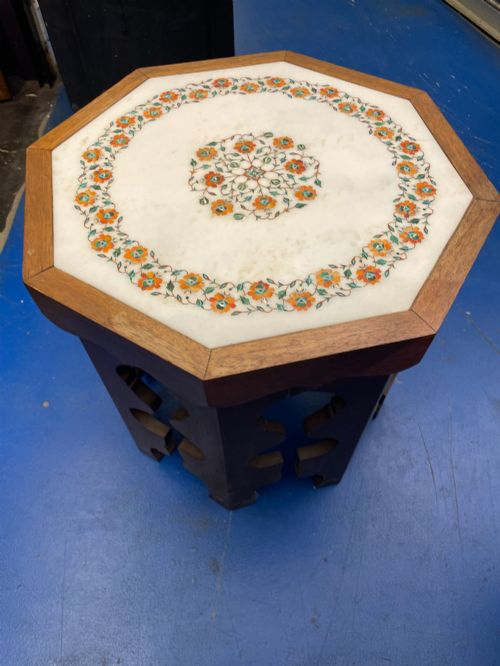
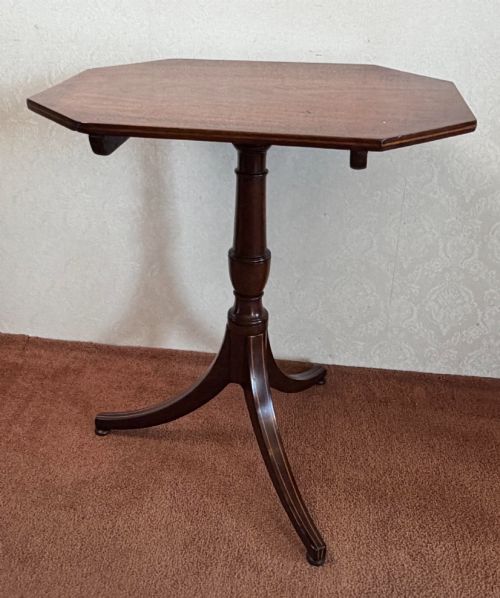
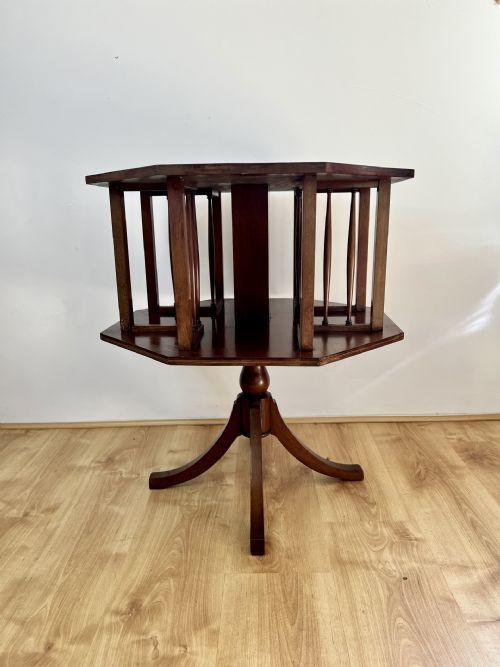
A brown inlaid octagonal table brings geometric form and rich timber to a room, offering a distinct surface for display or daily use.
Brown Inlaid Octagonal Table
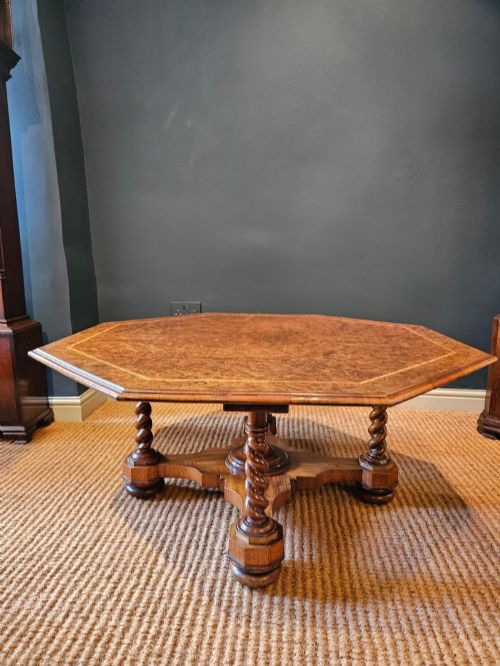
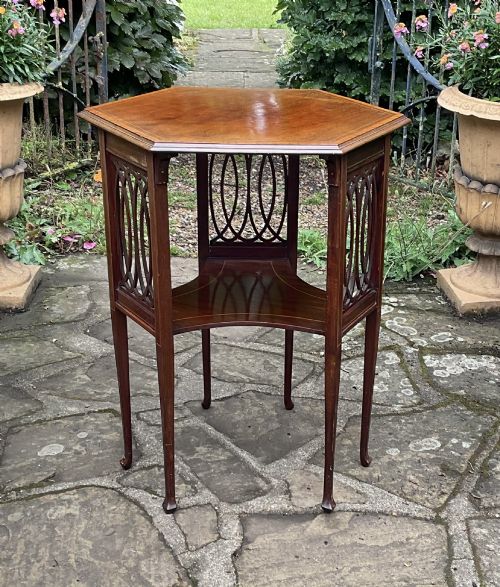
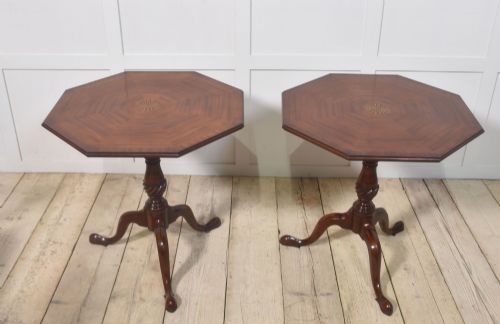
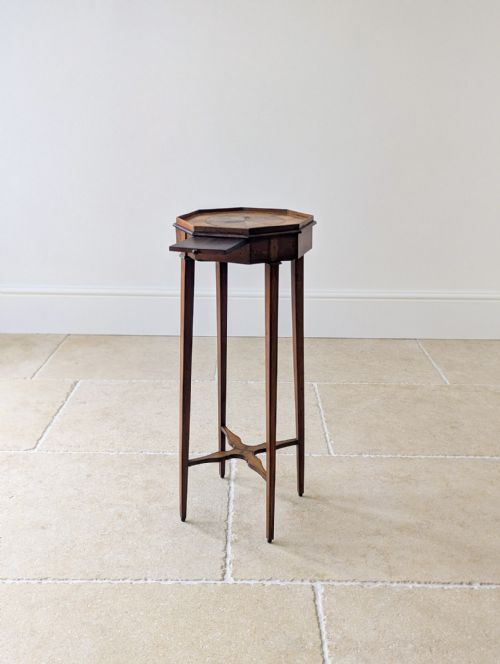
A brown inlaid octagonal table typically appears in Victorian, Edwardian, and nineteenth-century inventories as a centre table, occasional table, or specialised folding piece. These eight-sided surfaces serve practical roles in sitting rooms and hallways, constructed with varied timbers and contrasting decorative bands.
The selection ranges from British mahogany and walnut parlour furniture to imported Anglo-Indian items and continental marquetry work. Buyers encounter standard occasional formats alongside specific regional workshops producing geometric woodwork.
Timbers and inlay techniques
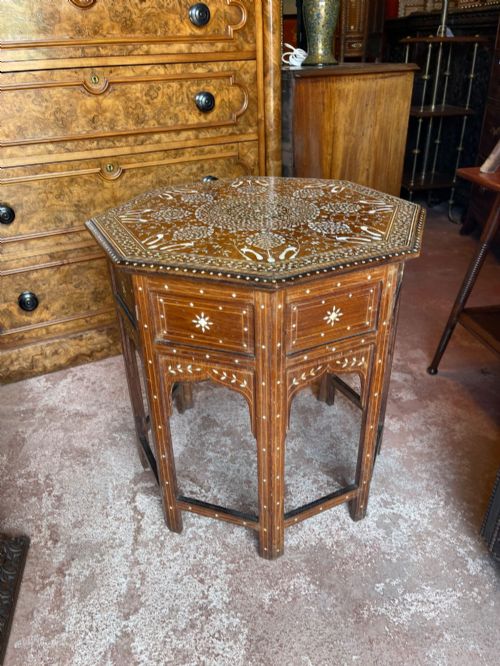
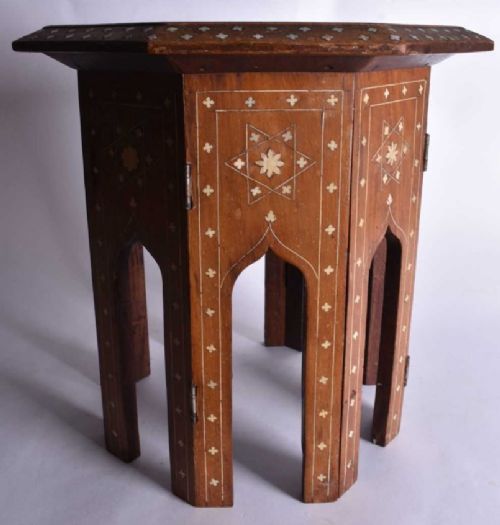
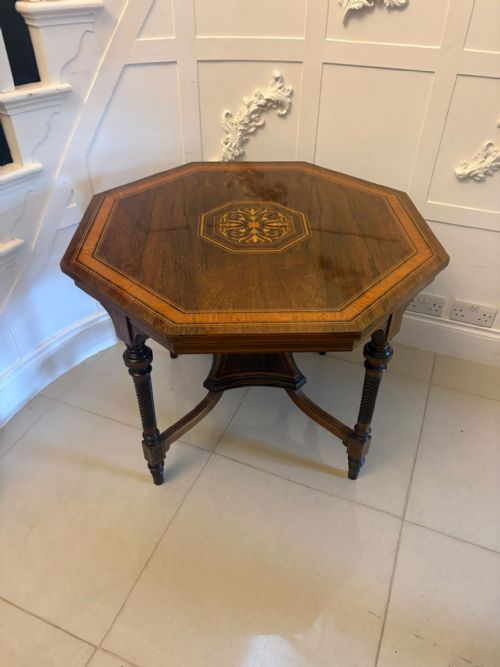
Craftsmen construct these tables from dense cabinet woods including mahogany, walnut, rosewood, satinwood, and teak. Surfaces receive contrasting decoration through the insertion of boxwood, brass, bone, mother-of-pearl, and specimen woods set flush into the primary timber.
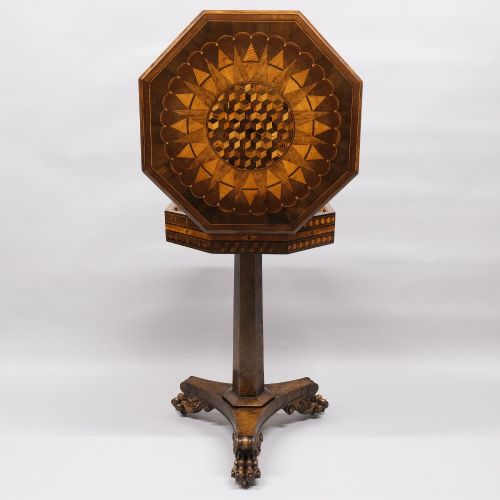
Joinery methods combine traditional framing with meticulous surface enrichment, where individual pieces of contrasting material form intricate borders, central rosettes, or geometric parquetry patterns across the eight-sided top.
Several tables arrive with built-in chess boards or hidden compartments for sewing needles, proving that past generations expected their furniture to multitask.
Assessing construction and decorative standard
Quality rests in the precision of the timber selection and the tightness of the inlaid elements. Superior examples display seamless integration where contrasting woods, brass, or shell meet the base material without gaps or excessive filler.
Depth of grain figure in the primary walnut or mahogany, coupled with the complexity and symmetry of the marquetry or parquetry design, separates standard utility pieces from finer decorative commissions.
Ralph Turnbull
The Brown Inlaid Octagonal Table Glossary
- Marquetry
- Decorative veneer applied to a furniture structure in patterns resembling a picture or design, utilising different coloured woods, metals, or shells. This technique creates elaborate pictorial surfaces on table tops.
- Parquetry
- Geometric mosaic of wood pieces used for decorative floors or table tops. It relies on repeating angular shapes like squares, triangles, and diamonds.
- Satinwood
- A durable, yellowish-brown timber from tropical trees that yields a lustrous, satin-like sheen. It appears frequently in lighter Edwardian decorative work.
- Hoshiarpur
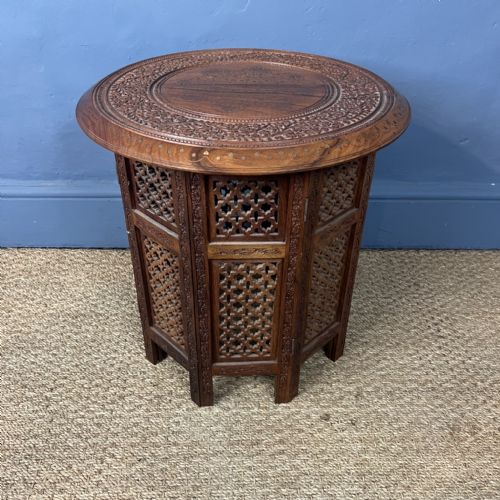
- A North Indian centre known for intricate woodwork involving detailed inlay of brass, bone, and shisham wood. Tables from this region often feature dense foliate and geometric carving alongside metalwork.
- Killarney Ware
- Irish ornamental woodwork usually made from arbutus wood, featuring marquetry scenes of local ruins and natural motifs. These pieces date predominantly to the nineteenth century.
Brown Inlaid Octagonal Table: Frequently Asked Questions
Where do I put an octagonal table?
An octagonal table fits well in the centre of a room as a focal point, or beside seating where its angled corners soften the geometry of a traditional square layout.
These pieces function effectively as lamp tables, display surfaces for ceramics, or small writing desks in a study or hallway.
How do I clean inlaid wood?
Dust surfaces regularly with a soft, dry cloth to prevent particles from settling into the microscopic crevices around the inlay materials. Avoid commercial liquid polishes that can loosen older adhesives and gums.
Apply a microcrystalline wax sparingly once or twice a year to nourish the timber and protect the contrasting woods or metals from moisture.
Are these tables sturdy enough for daily use?
Most examples are constructed from solid hardwoods like mahogany, walnut, or teak designed for regular domestic service. Their multi-sided frames distribute weight evenly across the central pillar or leg assembly.
Care should be taken with folding variations or delicate bone and mother-of-pearl inlay, which respond poorly to heavy impacts or excessive weight.
How do I distinguish Victorian from Edwardian pieces?
Victorian examples tend to employ darker, heavier timbers such as burr walnut and rosewood, often featuring dense carving and rich, dark patination. The construction prioritises solidity and formal presence.
Edwardian items frequently utilise lighter satinwood or mahogany with sparser, more delicate stringing and inlay, reflecting a shift toward brighter, airier domestic interiors.