

Brown Inlaid Nightstands
Brown inlaid nightstands bring together rich cabinet timbers and precise decorative banding, offering practical bedside storage with distinct period character.
Brown Inlaid Nightstands
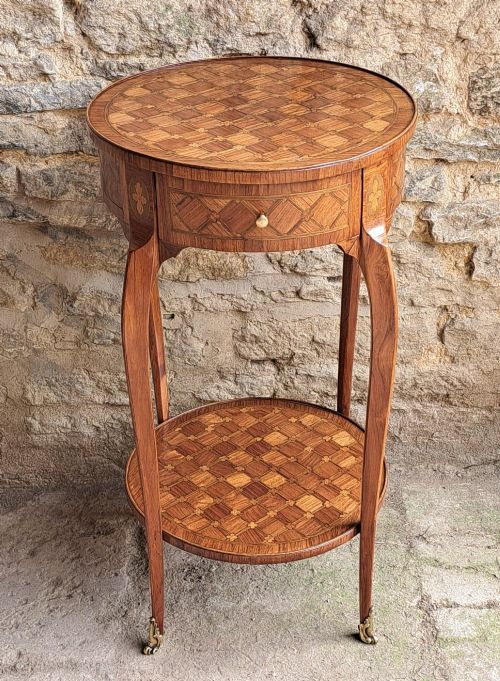
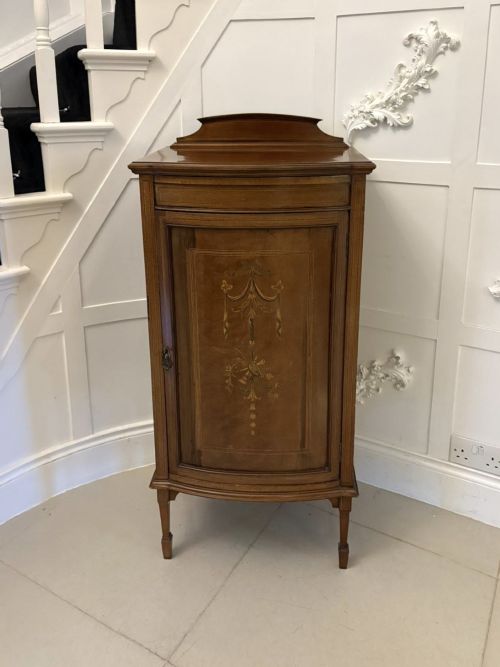
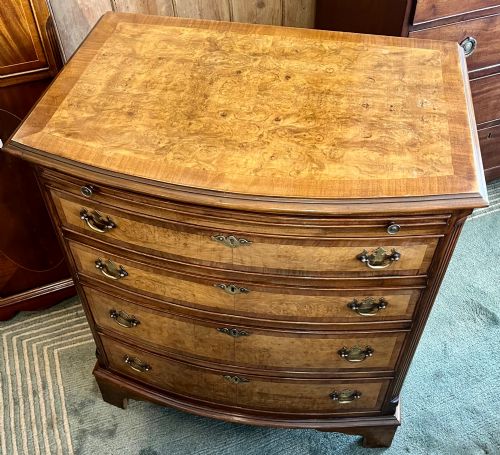
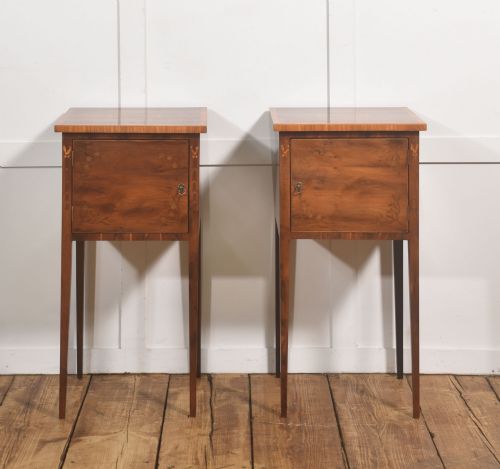
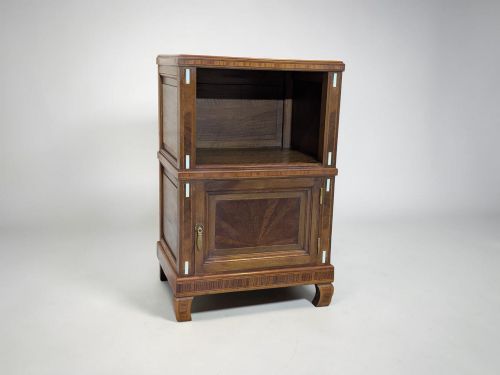
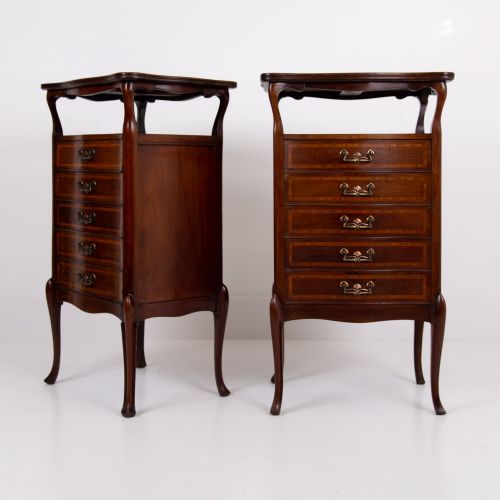
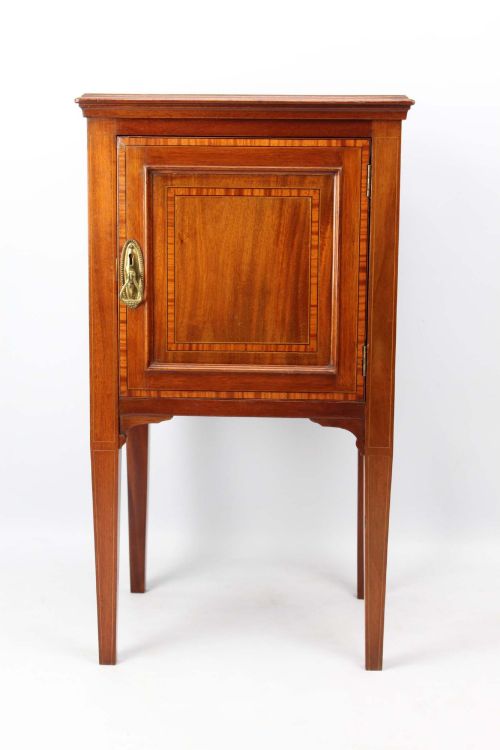
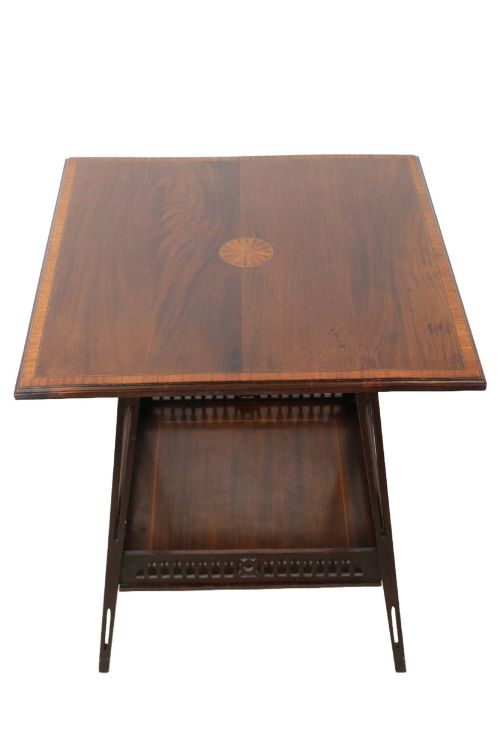
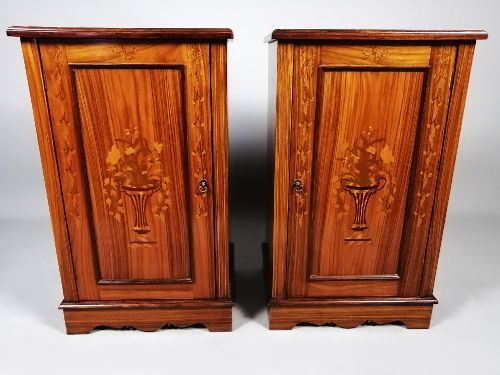
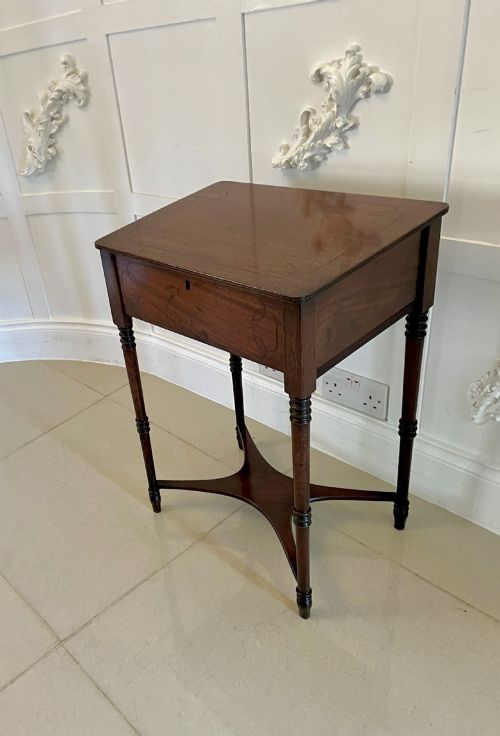
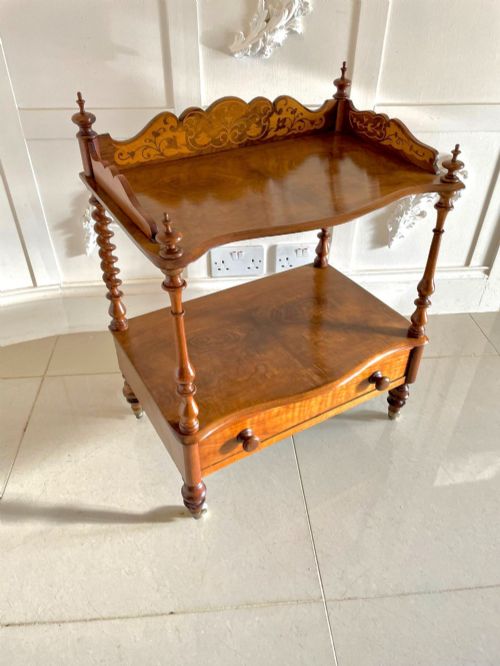
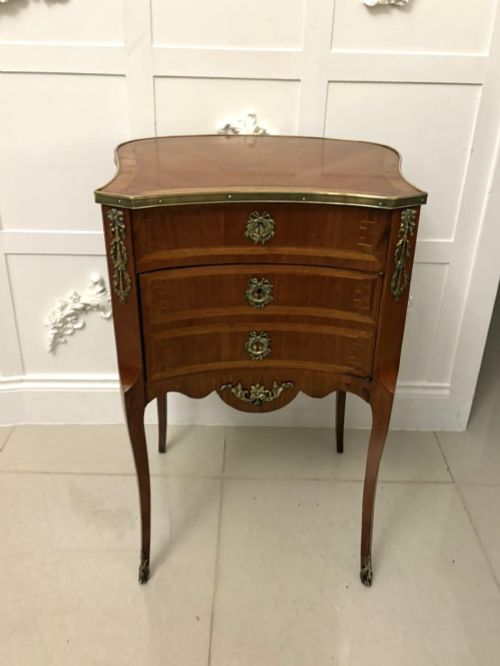
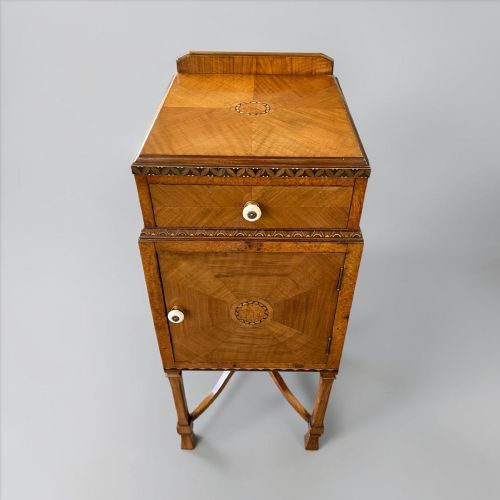
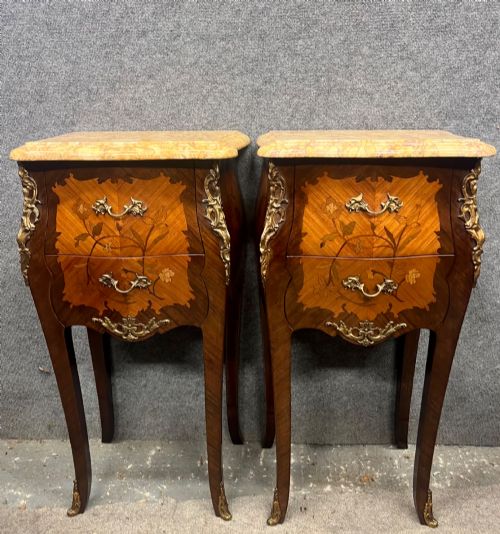
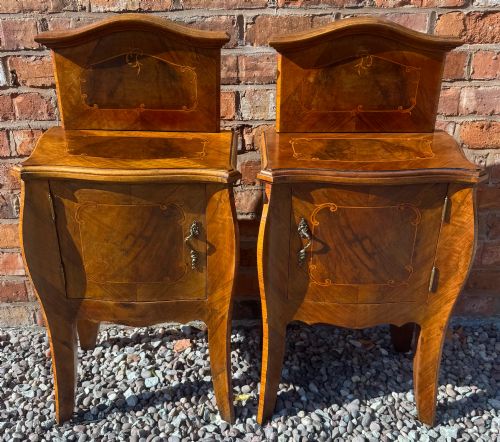
Brown inlaid nightstands encompass bedside cabinets, lamp tables, and small commodes produced across several centuries, with Edwardian and Victorian examples appearing most frequently. These pieces function primarily beside a bed while displaying contrasting wood inlay, marquetry, or parquetry work. Formats range from single door cupboards and open lamp tables to compact chests of drawers.
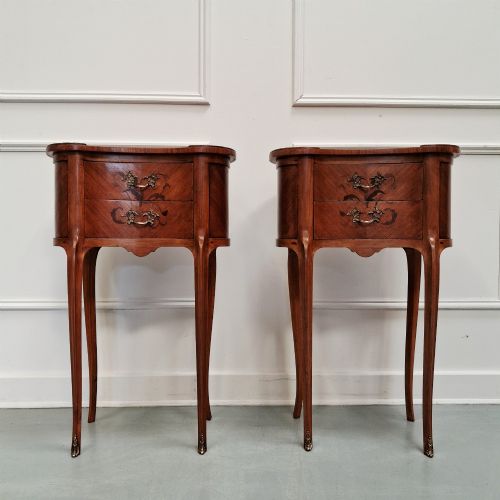
The selection draws on British, French, Italian, and Dutch cabinet-making traditions spanning the eighteenth, nineteenth, and early twentieth centuries. Pieces often arrive in matched pairs, though individual tables and commodes also surface regularly. Proportions remain generally neat to suit bedroom placement alongside varied bed heights.
Materials and construction
Makers utilised dense primary timbers such as mahogany, walnut, rosewood, kingwood, and satinwood as the structural and visible foundation for these cabinets. Selected sections often featured contrasting wood veneers arranged in geometric parquetry or pictorial marquetry motifs. Secondary decorative elements included boxwood stringing and cast brass handles or mounts.
Surface detailing frequently incorporated floral or urn marquetry set into the top panels and drawer fronts of the cabinet. Marble tops also appear on continental French and Italian pieces, adding weight and durable utility to the design. Cabinet construction relied on traditional joinery techniques appropriate to each specific period.
Brown Inlaid Nightstands Retail Price Guide 2026
Typical asking prices for brown inlaid nightstands among the pieces listed under this phrase on Sellingantiques today, from the lower quarter to the upper quarter. They describe what is for sale here now, not the wider market.
Some nineteenth-century bedside cupboards doubled discreetly as shoe cabinets, keeping evening footwear safely tucked away until morning.
Distinguishing quality factors
Quality in these bedside pieces rests upon the crispness of the marquetry cutting and the selection of figured wood grains. Superior examples display precise veneer matching and clean, unbroken inlay lines without excessive filler. The integration of structural elements like well-fitted drawers and stable door alignment also dictates the standard of execution.
Origin and stylistic cohesion further separate standard utility pieces from high workshop production. Cabinets attributed to established makers or specific regional schools display refined proportions and more ambitious decorative programmes. The condition of the original polished surface finish and the integrity of the timber movement directly influence the overall execution.
Trevor Page & Co·Sormani
The Brown Inlaid Nightstands Glossary
- Marquetry
- Decorative veneer work arranged in pictorial or floral patterns across a surface. This technique uses different coloured woods to create detailed imagery on cabinet tops and doors.
- Parquetry
- Geometric wood inlay forming repetitive patterns such as cubes or triangles. It provides a structured decorative surface on tabletops and commode fronts.
- Stringing
- Thin lines of contrasting wood inlay used to outline panels and drawers. Boxwood is frequently utilised for this delicate border work.
- Commodino
- A small Italian bedside cabinet or chest. These often feature shaped fronts and detailed marquetry typical of eighteenth-century design.
- Satinwood
- A lustrous yellow-brown timber used extensively for cabinet veneers and banding during the eighteenth and nineteenth centuries.
Brown Inlaid Nightstands: Frequently Asked Questions
What periods do these nightstands come from?
The pieces span from the eighteenth century through the Victorian and Edwardian eras into the early twentieth century. Designs reflect prevailing tastes including Georgian, Sheraton Revival, and French Louis XV styles.
Construction methods and timber choices correspond directly to these respective periods, with later reproductions and revivals appearing alongside authentic period items.
Are these bedside cabinets sold in pairs?
Many listings comprise matched pairs of bedside cabinets or lamp tables, particularly those originating from the Edwardian period and continental workshops. Single tables and commodes also feature prominently in the selection.
Buyers searching for symmetrical bedside placement will find several dual configurations alongside standalone pieces.
What wood types are most common?
Mahogany and walnut form the structural and visible basis for the majority of British and Victorian examples. Exotic timbers such as rosewood, kingwood, and satinwood appear frequently in continental and decorative marquetry pieces.
Inlay work often incorporates lighter woods like boxwood to create contrast against the darker body timber.
How do I identify French styles?
French influence appears through shaped serpentine fronts, elaborate marquetry panels, and occasionally fitted marble tops. Louis XV and Louis XVI revival pieces display characteristic cabriole legs or delicate mounts.
These continental examples often utilise kingwood or rosewood veneers arranged in intricate parquetry patterns.