

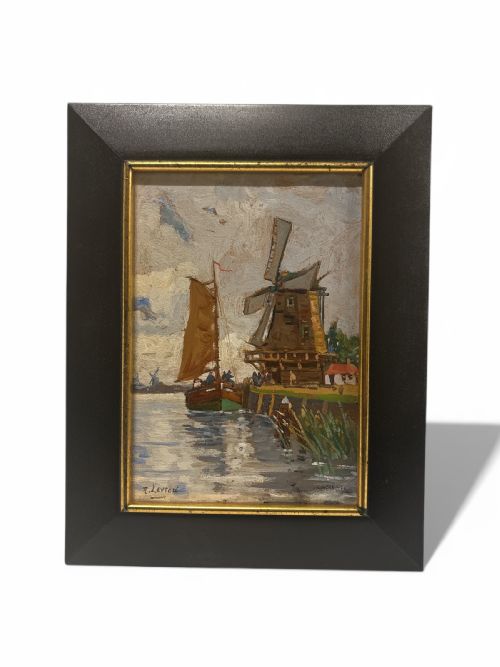
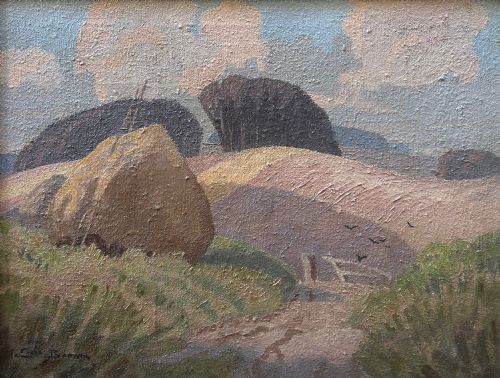
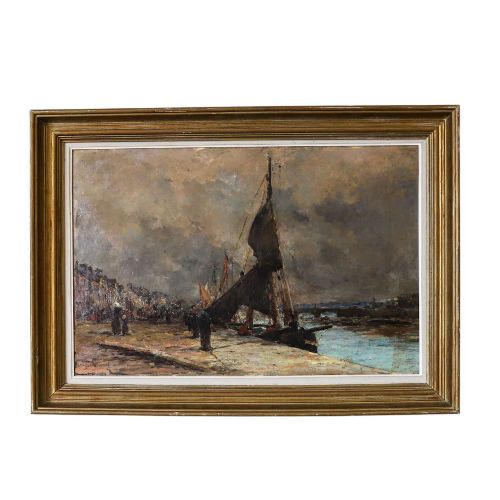
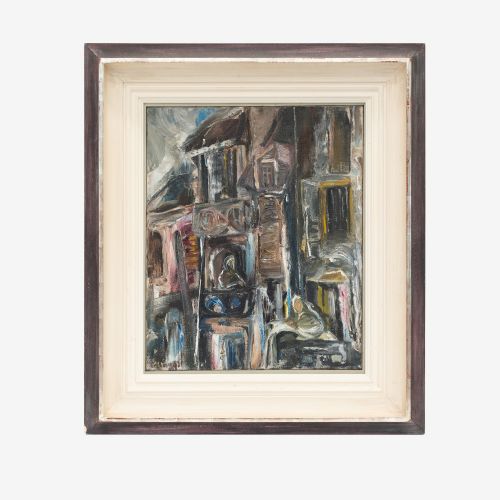
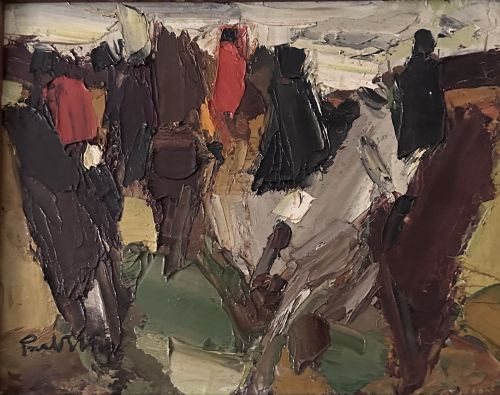


Brown Impasto Oil Painting
A brown impasto oil painting brings tactile depth and earthy tone to a room through thick pigment built up on canvas, board or panel.
Brown Impasto Oil Painting
A brown impasto oil painting uses thick, raised paint applications that leave visible brush strokes or palette knife marks, creating a distinct physical surface. These works span from the nineteenth century through the mid-twentieth century, encompassing British Impressionism, Expressionism and Post-Impressionism.
You are most likely to encounter mid-century examples alongside works from the Edwardian period and the nineteen-forties. The subjects range from maritime scenes and industrial estuaries to still lifes, cityscapes and rural pastures.
The compositions include signed original pieces by named artists alongside traditional landscapes and abstract interpretations. Works appear on stretched canvas, wooden boards and wooden panels, often set within period frames.
How they were made
Artists built these works using oil paint applied heavily to canvas, board or wooden panel supports. The thick pigment, known as impasto, was manipulated with brushes or palette knives to leave a raised, textured finish that caught the light.
The physical structure relies on sturdy wooden supports and frames that could sustain the heavy weight of layered oil paint over decades. Many pieces retain their original wooden framing, which complements the substantial texture of the painted surface.
Listings feature works executed on canvas, board and wood panel supports.
What varies in quality
The success of a brown impasto oil painting depends on how well the heavy pigment and earthy palette create a sense of light and space. Skill in handling thick paint separates works with dynamic surface movement from those that appear heavy or flat.
Compositional strength and the confident handling of brushwork or palette knife marks define the better examples. The relationship between the dense texture and the underlying subject determines the visual impact of the piece.
Kenneth Cozens·R Leyton·Eric Brown·Lilian Colbourn·Baruch Shalom Oskotsky·E A Minardo·Hein Hoppmann·Ronald Ossory Dunlop·Florence Hess·Herbert Royle·Edward M Elliott·Ernst Louizor·Frederick William Jackson·Kershaw Schofield·Owen Bowen·Raymond Arthur Roadnight·Donald McIntyre
The Brown Impasto Oil Painting Glossary
- Impasto
- Paint applied thickly to a canvas or panel so that it stands out from the surface. This technique allows brush strokes and knife marks to retain their physical shape after drying.
- Board
- A rigid flat support made of wood or pressed material used instead of stretched canvas. Artists frequently utilised panels and boards for smaller or more direct plein air studies.
- Impressionism
- A nineteenth-century art movement characterised by relatively small, thin yet visible brush strokes and an emphasis on accurate depiction of light. The style prioritises the immediate visual impression of a scene.
- Post-Impressionism
- A predominantly French art movement that developed from Impressionism, extending its limitations while retaining its use of vivid colours and thick paint. Artists rejected the strict naturalism of Impressionism in favour of more expressive forms.
Brown Impasto Oil Painting: Frequently Asked Questions
Where should I hang a heavy impasto work?
Choose a wall with stable ambient conditions away from direct sunlight, extreme heat sources and high humidity. Proper wall anchors are essential because thick oil paint and wooden frames add considerable weight to these pieces.
Position the painting at eye level where natural side lighting can catch the raised texture of the brushwork. Good illumination enhances the three-dimensional quality of the pigment.
How do I identify the period of a painting?
Examine the canvas preparation, stretcher frames, board types and framing styles used in the construction. Stamped manufacturer marks on wooden panels or stretcher bars often provide clues to the era of production.
Artist signatures, historical subjects and stylistic movements offer further dating evidence. Comparing the handling of paint with documented works from specific decades helps confirm the date.
Are these paintings ready to hang?
Most pieces arrive framed and fitted with picture wire or appropriate hardware on the reverse. You should inspect the hanging cord and frame integrity before mounting the work on a wall.
Unframed panels or canvases may require professional framing to protect the edges and support the structure. Ensure any new framing accommodates the physical depth of the impasto surface.