


Brown Hand Knotted Rug
A brown hand knotted rug brings tactile depth and tribal heritage into an interior through durable wool and distinct motifs.
Brown Hand Knotted Rug
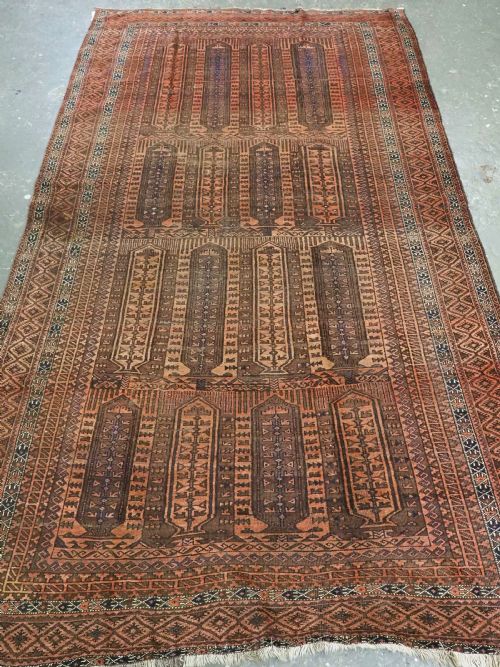
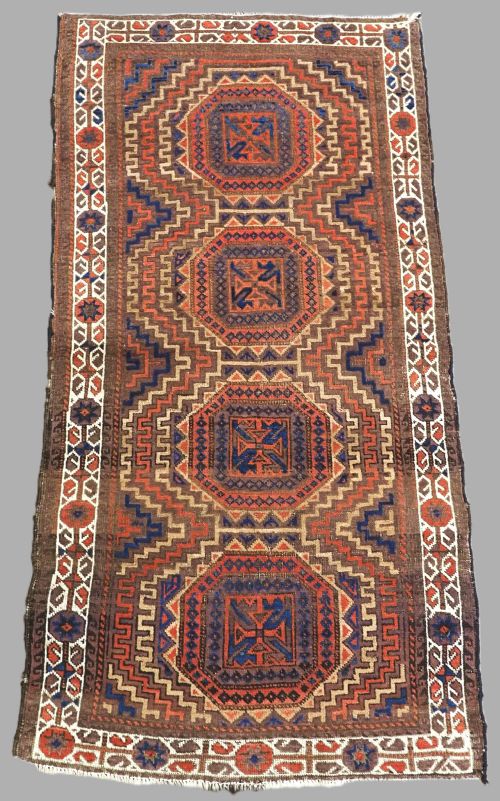
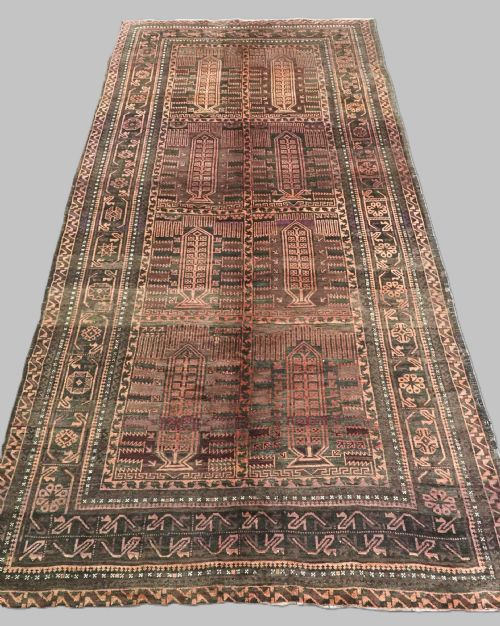
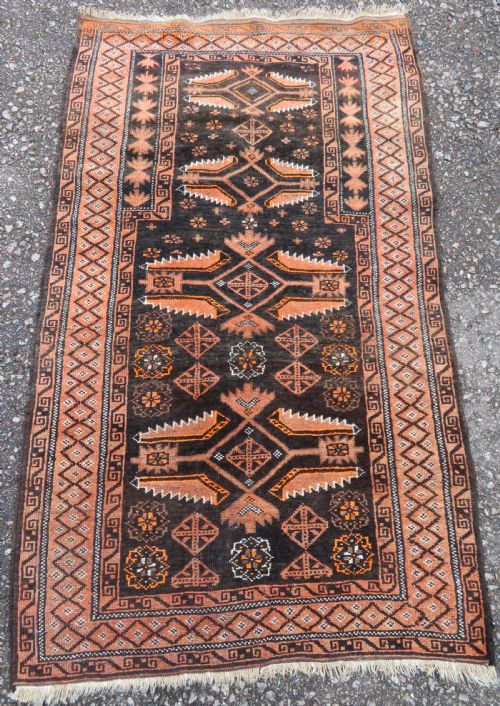
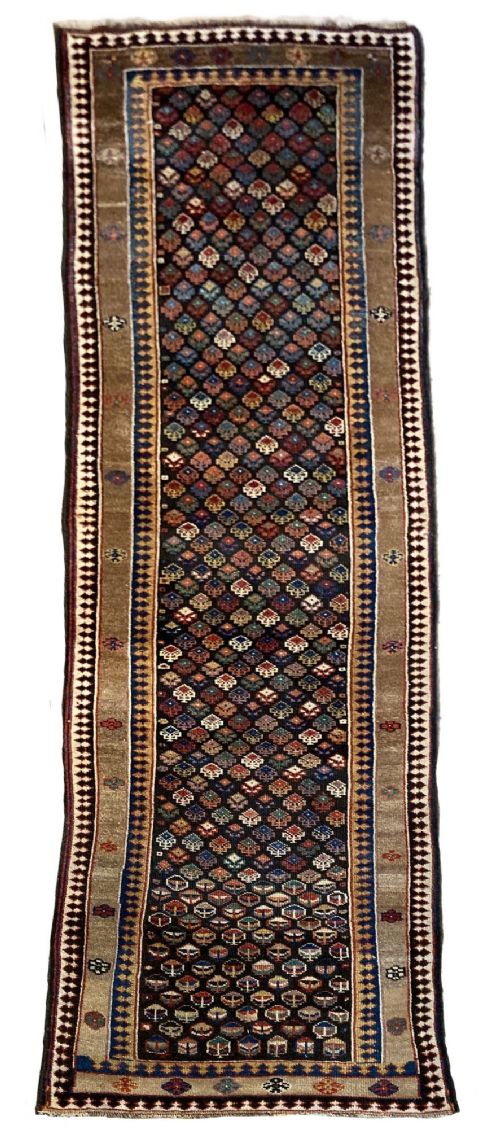
When you search for a brown hand knotted rug, you encounter tribal and nomadic textiles originating from Central Asia, Persia, and the Caucasus dating from the nineteenth century into the early twentieth century. These floor coverings and small textiles include formats such as prayer rugs, runners, and main carpets created by various tribal groups.
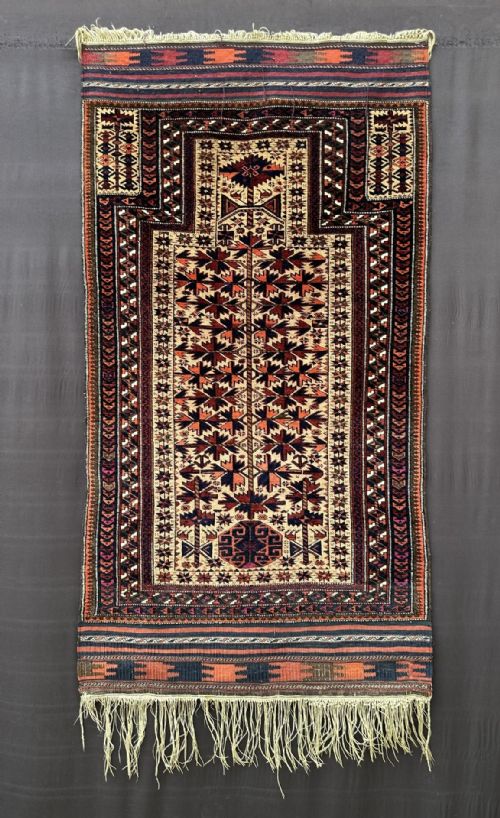
The selections on this page are heavily represented by Afghan Baluch, Turkmen, and Kurdish weaving traditions. You will frequently find pieces featuring traditional geometric motifs, repeating guls, and specific structural layouts like mihrab prayer designs.
How they were made
Weavers constructed these textiles predominantly using wool pile on cotton or wool foundations, frequently incorporating hand-spun yarn and goat hair. The reliance on natural dyes yielded deep, earthy tones that ground the brown colour palette.
Individual knots tied by hand formed the dense pile, ensuring structural integrity across large carpets and smaller hallway runners alike.
Listings feature wool, cotton, and goat hair combined with natural dyes across nineteenth and early twentieth-century formats.
What varies in quality
The nuance of knot density and the precision of the tribal geometry distinguish finer examples from simpler village work. Superior pieces display careful handling of natural dyes, resulting in rich variation across the wool surface.
The clarity of specific design elements, such as repeating guls or intricate mihrab arches, marks the distinction between standard utilitarian production and master regional weaving.
The Brown Hand Knotted Rug Glossary
- Gul
- A repeating octagonal medallion motif frequently found in Turkmen and Baluch tribal rugs. This design element often distinguishes specific regional weaving traditions.
- Prayer rug
- A small textile featuring a mihrab or arch design indicating the direction of prayer. These pieces were traditionally utilised for personal devotion.
- Runner
- A long, narrow carpet format designed for hallways and corridors. They frequently adapt tribal geometric patterns to a linear scale.
- Kilim end
- The flatwoven termination at either end of a pile rug, often featuring supplementary weft-float patterns. These protective borders preserve the structural knotting.
- Pushti
- A small-format mat or rug intended for personal seating or placement on a surface. They display the same detailed knotting found on larger main carpets.
Brown Hand Knotted Rug: Frequently Asked Questions
How do I identify a tribal rug?
Tribal rugs typically feature geometric motifs, repeating guls, and asymmetrical layouts rather than courtly floral curves. They reflect the specific nomadic or village heritage of their makers.
Materials usually consist of hand-spun wool and natural dyes, giving the pile a varied, earthy texture that develops character over time.
What is a prayer rug?
A prayer rug is a smaller format textile characterised by a mihrab or arch shape at one or both ends. These rugs were traditionally used for individual daily prayers in nomadic and village settings.
They often incorporate symbolic elements such as lotus leaf or mosque designs within the main field.
Where were these rugs made?
These textiles originate from regions across Central Asia, the Caucasus, and Persia, produced by groups such as the Baluch, Turkmen, and Kurds. The borderlands between nations often generated distinct regional design hybrids.
Tribal groups transported their upright looms seasonally, incorporating local materials into each weave.
How should I care for an old wool rug?
Protect your wool textile by vacuuming gently without a rotating brush roll to preserve the hand-knotted pile. Professional cleaning suited for antique natural-dye carpets ensures the fibres remain stable.
Using an appropriate underlay prevents slipping and reduces friction between the foundation and the floor.