

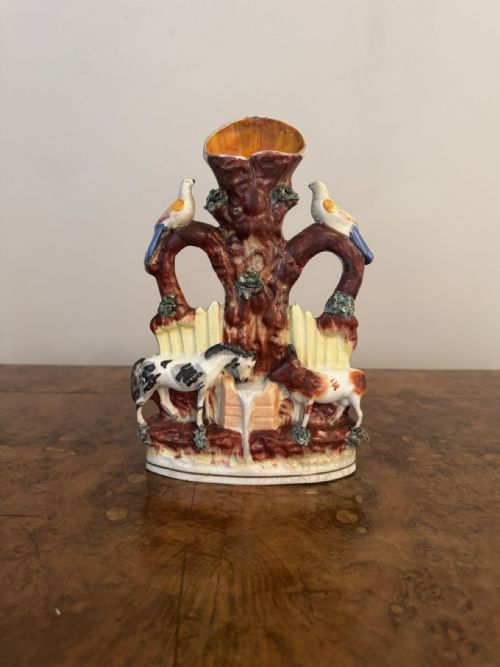
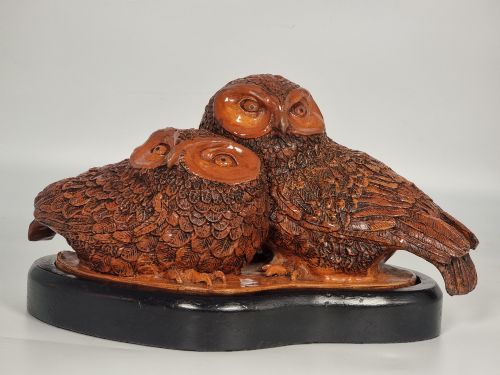
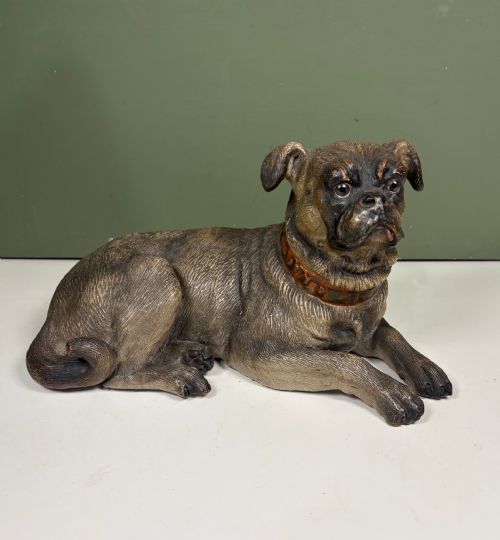


Brown Glazed Pottery Figurine
These brown glazed pottery figurine examples range from Staffordshire animals to Chinese figures, each offering rich historic character.
Brown Glazed Pottery Figurine
A brown glazed pottery figurine brings domestic charm and historical craftsmanship into a room. When exploring this selection, buyers encounter figures originating across the nineteenth and early twentieth centuries, alongside distinct revival and studio pieces.
The assortment on this page leans heavily toward nineteenth-century Staffordshire animal studies, including pugs, greyhounds, spaniels, and lions. Alongside these domestic subjects appear human figures, Toby jugs, teapots, and diverse international works spanning various decorative styles.
How they were made
Makers shaped these objects using earthenware, terracotta, stoneware, and pearlware, often building forms by hand or utilising press moulds. Artisans applied lead glazes, treacle glazes, or sancai glazes to achieve the characteristic rich brown surfaces.
Many items incorporate enamel detailing over the ceramic body before a final firing. Bases remain unglazed or receive a simple ebonised finish where wooden stands support the heavier sculptural forms.
Brown Glazed Pottery Figurine Retail Price Guide 2026
Typical asking prices for brown glazed pottery figurine among the pieces listed under this phrase on Sellingantiques today, from the lower quarter to the upper quarter. They describe what is for sale here now, not the wider market.
Listings span periods from eighteen hundred through the nineteen thirties, encompassing Victorian, Edwardian, and Georgian eras alongside Asian styles.
What varies in quality
The depth and consistency of the brown glaze distinguish finer examples from standard production pieces. Superior items display an even gloss or deep treacle pooling that accentuates the underlying modelled details.
Sculptural precision also sets pieces apart, with better modelled Staffordshire figures and studio works showing careful attention to facial expressions and anatomical proportions. The presence of clear maker marks or specific regional attributions adds historical weight.
Rockingham Pottery·Wedgwood and Co·Lancaster and Sons·Rozenburg
The Brown Glazed Pottery Figurine Glossary
- Treacle glaze
- A rich, dark brown lead glaze common on nineteenth-century Staffordshire ceramics. It creates a glossy, translucent finish that pools heavily in crevices.
- Pearlware
- A refined earthenware developed in the late eighteenth century featuring a thin glaze with a faint bluish tinge. It served as a smooth body for painted and moulded figures.
- Staffordshire figure
- A ceramic ornament produced by various potteries in the English county of Staffordshire. These figures typically depict animals, historical personages, or domestic scenes.
- Sancai glaze
- A low-firing lead glaze system producing three distinct colours, often amber, green, and cream. It is characteristic of Tang dynasty ceramics and later revival pieces.
- Majolica
- A type of earthenware coated with an opaque tin glaze and painted with brightly coloured metal oxides. Victorian examples often combine this technique with naturalistic modelling.
Brown Glazed Pottery Figurine: Frequently Asked Questions
How do I date a brown glazed pottery figurine?
Dating relies on examining the ceramic body, glaze characteristics, and any impressed marks on the underside. Nineteenth-century pieces often show typical Staffordshire potting traits and heavier crazing.
Style and subject matter also offer strong clues. Victorian animal figures and early studio pieces each carry distinct manufacturing signatures from their respective decades.
Where were Staffordshire animal figures displayed?
These figures traditionally sat upon mantlepieces in nineteenth-century parlours, often arranged in formal pairs facing inward. They served as prominent decorative ornaments for middle-class homes.
Owners frequently placed them on side tables or display shelves where their brown and treacle glazes caught the light of oil lamps and hearths.
What is the difference between earthenware and stoneware figures?
Earthenware is a porous, lower-fired ceramic body that requires a glaze to become impermeable. It forms the foundation of most traditional Staffordshire animal figures and majolica pieces.
Stoneware is fired at higher temperatures until vitrified, resulting in a denser and more durable material. Figures made from stoneware generally feel heavier and resist moisture naturally.