


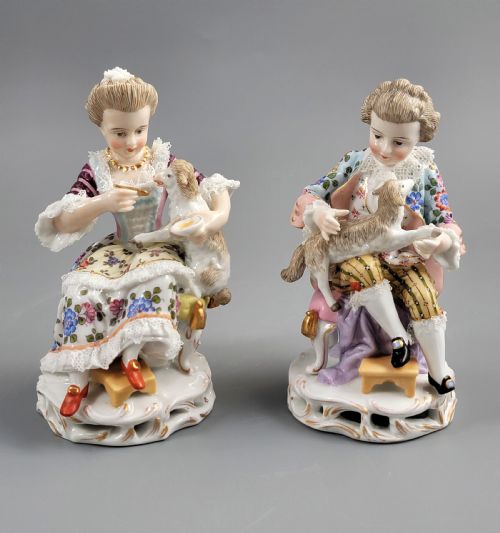


White Ceramic Pastoral Figure
These white ceramic pastoral figure examples bring rustic charm to a mantel, combining glazed earthenware and porcelain with delicate rural subjects.
White Ceramic Pastoral Figure
When you search for a white ceramic pastoral figure, you encounter sculptural ceramics depicting shepherds, gardeners, milkmaids, and children with lambs. These pieces span the eighteenth and nineteenth centuries, drawing on Georgian and Victorian tastes.
The objects take several forms, including standalone figurines, pairs of garden workers, figural candlesticks, watch holders, and spill holders. English earthenware and continental hard-paste and soft-paste porcelain represent the primary origins of these rural subjects.
You are most likely to meet nineteenth-century German factory figures and Victorian Staffordshire earthenware on this page. These interpretations range from Rococo revival styles to simple flat-back mantel ornaments.
How they were made
Factories utilised press moulds and slip-casting techniques to form the complex shapes of sheep, baskets of grapes, and rustic figures. Artisans then hand-painted finer details onto the fired bodies before a final glaze firing fixed the colours.
White Ceramic Pastoral Figure Retail Price Guide 2026
Typical asking prices for white ceramic pastoral figure among the pieces listed under this phrase on Sellingantiques today, from the lower quarter to the upper quarter. They describe what is for sale here now, not the wider market.
Listings feature porcelain and earthenware from eighteenth and nineteenth-century factories, including pieces styled after Chelsea and Derby.
What varies in quality
Application of enamel and gilding also dictates the standard of the piece, with master painters achieving subtle gradients on skin and garments. Lesser examples show hurried brushwork and heavy-handed gilding that obscures the underlying ceramic form.
Meissen Porcelain·Derby Porcelain·Sitzendorf·KPM·Samson·Ludwigsburg
The White Ceramic Pastoral Figure Glossary
- Soft-Paste Porcelain
- A type of ceramic body composed of white clay and glass frit, fired at lower temperatures than hard-paste porcelain. It has a warm, slightly creamy appearance under the glaze.
- Hard-Paste Porcelain
- A true porcelain made from kaolin and petuntse, fired at very high temperatures to create a dense, vitreous white body. It resists scratching and shows great durability.
- Spill Holder
- A hollow ceramic vessel incorporated into a figure group, designed to hold taper candles or wooden spills for lighting pipes and fires. These items combine practical household use with ornamental design.
- Flat Back
- A style of Staffordshire pottery figure moulded with a finished front and an unglazed, flat reverse designed to stand against a wall. This technique saved materials and kept production costs lower.
- Enamel
- A vitreous composition fused to the surface of porcelain or earthenware during a secondary low-temperature firing. It provides the vibrant colours found on garments and floral details.
White Ceramic Pastoral Figure: Frequently Asked Questions
What are pastoral figures?
Pastoral figures are ceramic sculptures depicting idealized rural life, typically showing shepherds, shepherdesses, milkmaids, and gardeners with animals.
These decorative objects became popular in European homes during the eighteenth and nineteenth centuries to evoke a sense of peaceful countryside charm.
How were figural candlesticks used?
Figural candlesticks served both an ornamental and practical purpose on dining tables, mantelpieces, and sideboards. They combined sculptural beauty with a functional socket to hold wax candles for illumination.
Makers often integrated pastoral characters into the base or stem to delight diners during evening gatherings.
Where should I display these ceramics?
These ceramic figures suit prominent display areas like mantelpieces, enclosed display cabinets, or sturdy side tables away from heavy household traffic. Placing them on stable surfaces protects fragile elements like protruding fingers, leaves, and lambs.
Good lighting helps reveal the fine enamel painting and delicate gilding details.