

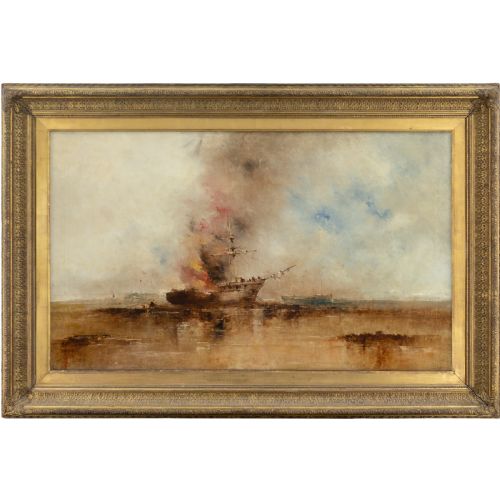
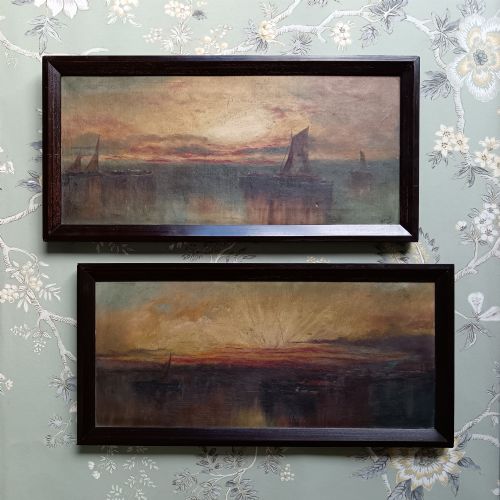
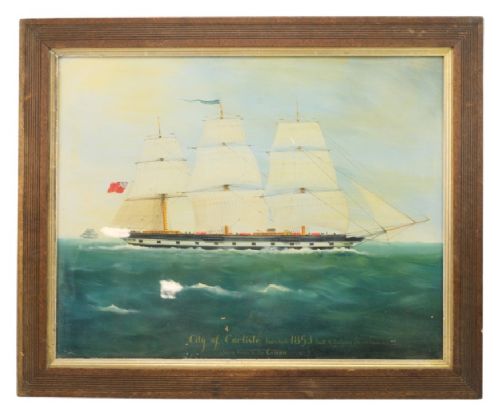
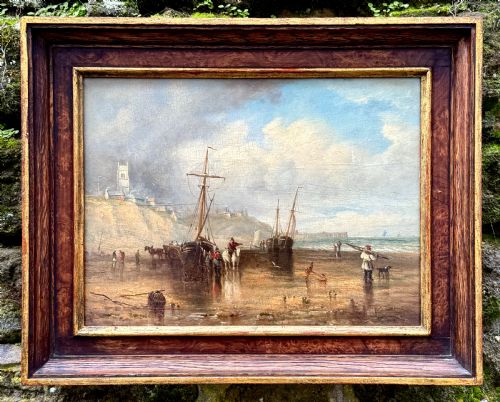
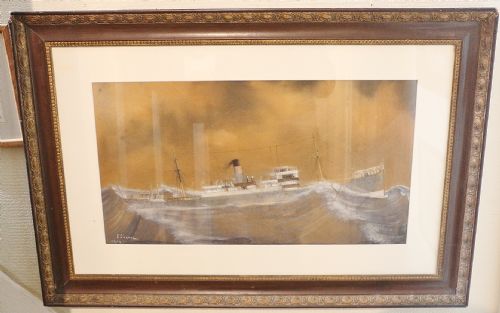
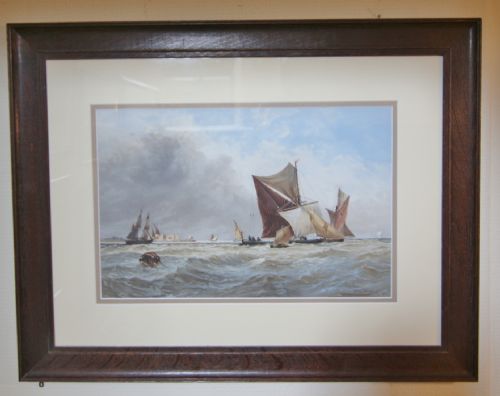
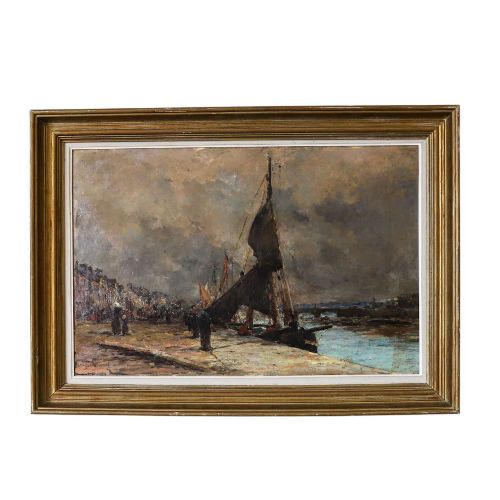
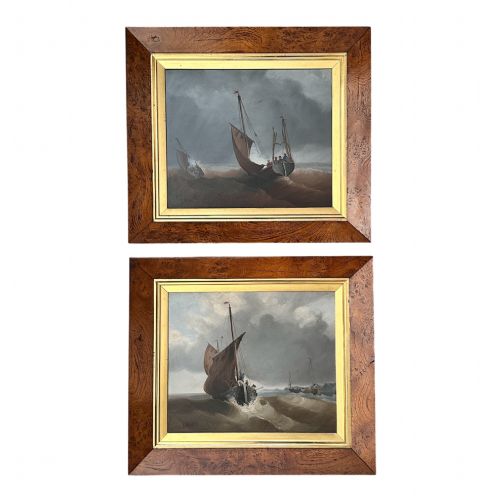
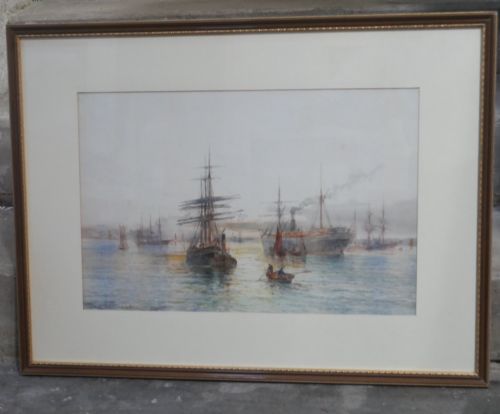
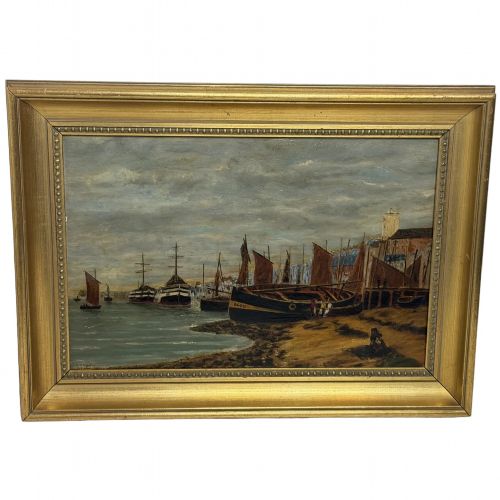
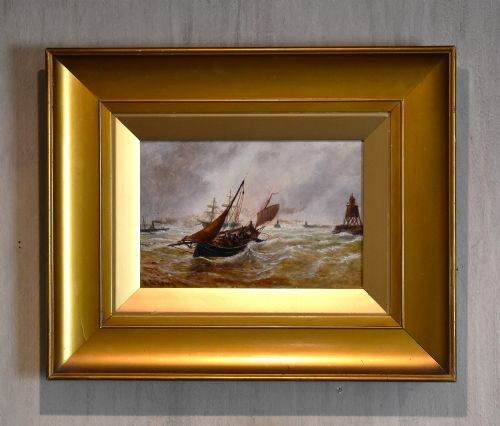
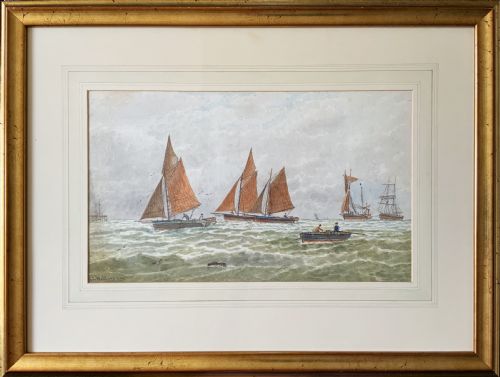
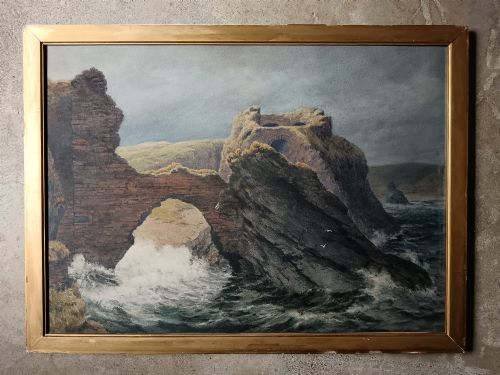


Brown Framed Seascape Painting
These brown framed seascape painting works capture coastal motion and maritime atmosphere through 19th-century and early 20th-century brushwork.
Brown Framed Seascape Painting
A brown framed seascape painting brings historical maritime subjects, coastal harbours and open waters into an interior space. Collectors seek out these works for their atmospheric depiction of British and European shores, shipping traffic and tidal estuaries.
The pieces appearing on this page span the Victorian, Edwardian and mid-20th-century eras, presented primarily in wooden frames that complement the nautical pigments. Common formats include oil on canvas, gouache on board and delicate watercolours on paper.
The subjects range from calm river estuaries and local fishing boats to dramatic storm scenes involving steamships and naval vessels. Many carry specific regional identifications, from Scarborough and the River Tyne to foreign coasts and open seas.
Materials and Construction
Painters of these coastal scenes utilised oil paint on stretched canvas or applied watercolours and gouache onto prepared paper and board. The mediums allow for the nuanced depiction of shifting light on water, stormy skies and atmospheric coastal haze.
The works are housed in wooden frames, frequently finished with gilt inner slips or painted dark tones that contrast with the maritime palette. Glazing is typically applied to protect paper and watercolour works from moisture and light exposure.
Several artists braved the unpredictable North Sea spray just to capture the exact shade of a grumpy steamship ploughing through rough waters.
Evaluating Coastal Artistry
Quality in a brown framed seascape painting rests upon the artist's ability to render the movement of water and atmospheric light convincingly. Masterful handling of maritime rigging, vessel perspective and turbulent weather distinguishes superior compositions from simpler decorative works.
The condition of the canvas or paper support and the originality of the associated wooden frame contribute significantly to the standing of a piece. Works bearing clear artist signatures, exhibition histories or documented coastal locations hold distinct appeal for collectors.
James Orrock·William McAlpine·Thomas Creswick·T B Hardy·John Moore of Ipswich·Bernard Benedict Hemy·George Stanfield Walters·John Moxon·Richard Harry Carter·Gyrth Russell·Gustave De Bréanski·Edward Henry Eugene Fletcher·T S Wallis·Owen Bowen·George Henry Knight·Paul Jean Clays·Eugene Boudin·Joseph Newington Carter
The Brown Framed Seascape Painting Glossary
- Gouache
- An opaque water-based medium that provides denser colour and sharper highlights than traditional watercolour. Artists frequently utilised it on board to capture crisp maritime details.
- Lugger
- A type of small fishing vessel rigged with lug sails, commonly depicted in West Country and coastal scenes. These boats formed a staple subject for marine painters working along British shores.
- Estuary
- The tidal mouth of a large river where the tide meets the current. Painters of the 19th century frequently chose these transitional waterways for their interplay of shipping traffic and changing light.
- Gilt slip
- A narrow decorative border, typically finished in gold leaf, positioned inside the main wooden frame to separate the painting from its outer moulding.
- Marine art
- Any form of art that depicts or draws its main inspiration from the sea, ships and coastal life. This genre encompasses naval engagements, harbour views and open ocean scenes.
Brown Framed Seascape Painting: Frequently Asked Questions
What periods do these seascapes come from?
The available works originate primarily from the 19th century, the Victorian era and the early decades of the 20th century. A smaller number extend into the mid-20th century.
These dates are evidenced by artist active years, inscribed dates on canvases, and traditional framing styles characteristic of the Victorian and Edwardian periods.
How should I hang a framed watercolour?
Watercolour paintings require protection from direct sunlight to prevent fading of the pigments and discolouration of the paper support. They are best positioned on interior walls away from direct heat sources.
Ensuring stable room humidity helps preserve both the paper and the wooden frame over time.
Are all these paintings signed by the artist?
Many of the works carry visible signatures, monograms or contemporary inscriptions identifying the creator or the coastal location. Unsigned examples are often attributed to specific regional schools of painting based on style and technique.
Documentation on the reverse of the canvas or frame sometimes provides further clues to origin.
What is the difference between oil and watercolour marine paintings?
Oil paintings utilise a thick pigment suspension on canvas or board, allowing for textured brushwork and deep, saturated tones suited to stormy seas. Watercolours employ transparent washes on paper, offering a lighter and more luminous finish.
Oils are generally displayed without glass protection, whereas watercolours require glazing to safeguard the delicate paper surface.