
Brown Equestrian Wall Art
Brown equestrian wall art brings the tradition of equine portraiture and racing scenes into domestic spaces through oils, watercolours, and prints.
Brown Equestrian Wall Art
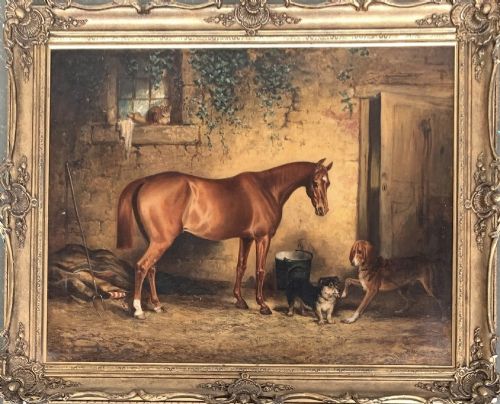
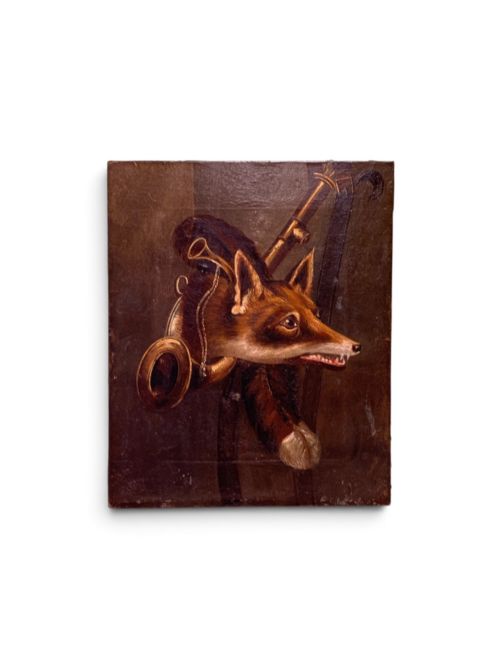
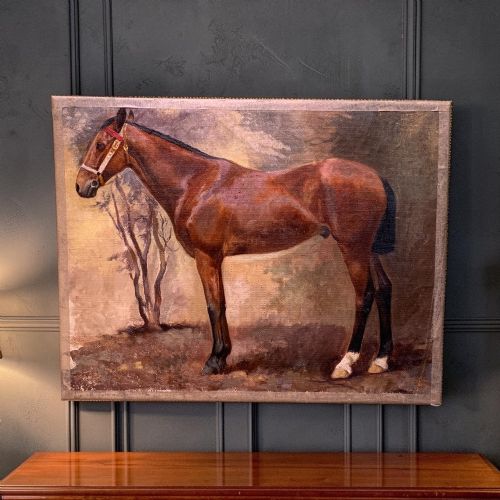
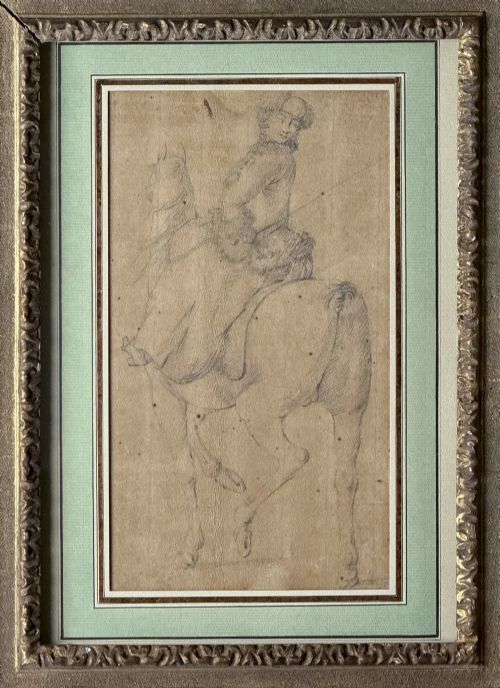
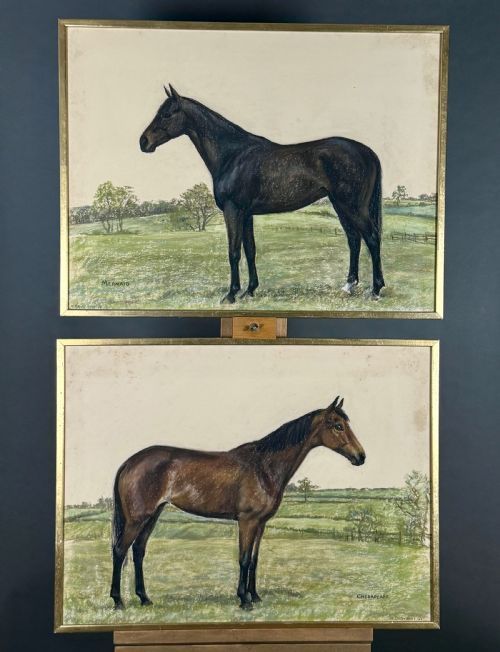
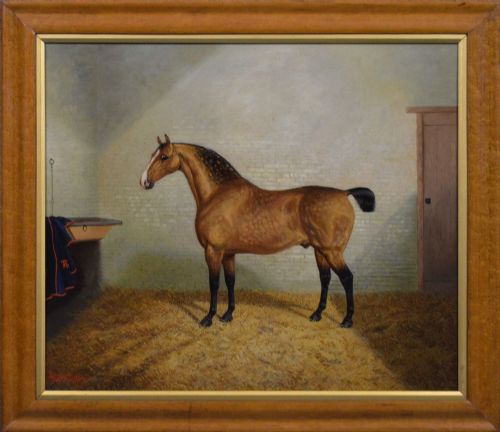
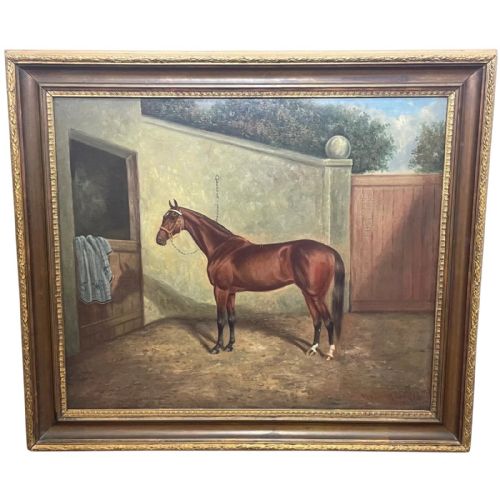
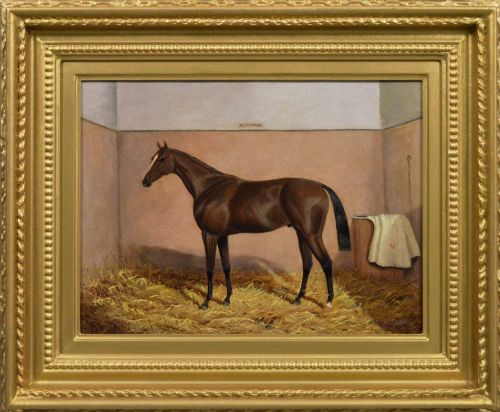
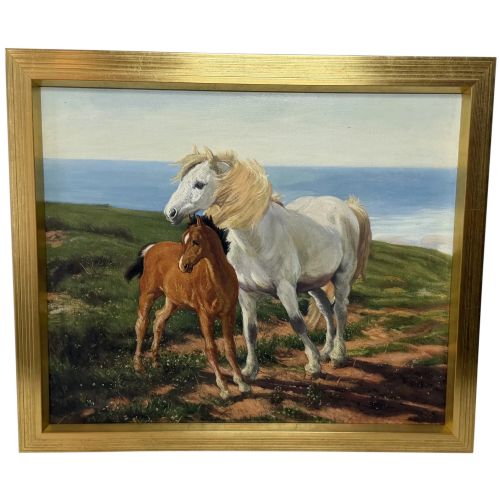
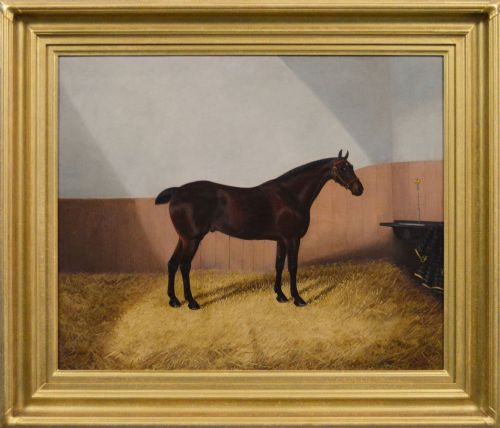
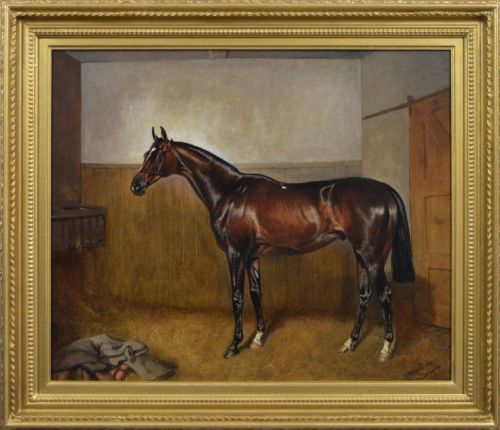
Brown equestrian wall art encompasses paintings, drawings, and prints focusing on horses, stables, and racing subjects. When you search for brown equestrian wall art, you encounter everything from detailed Victorian oil portraits of named racehorses to mid-century pastel and chalk drawings.
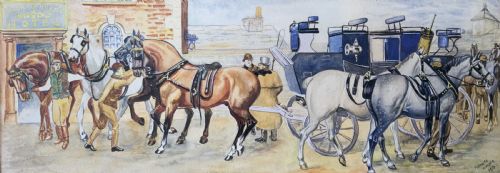
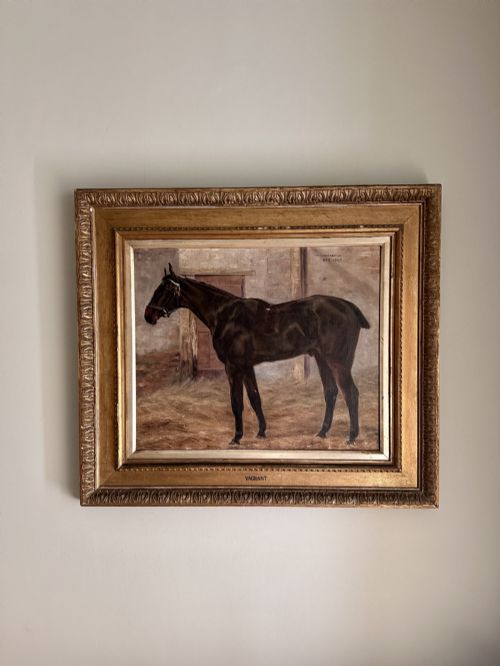
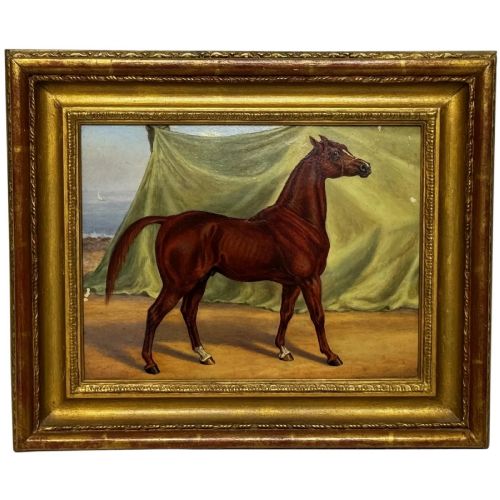
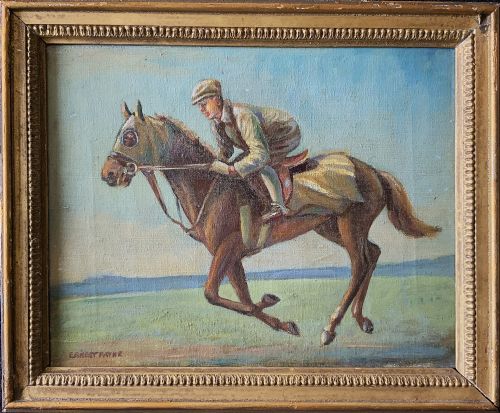
The pieces on this page span several centuries, with a strong representation of nineteenth-century and early twentieth-century British works. Subjects range from solitary bay hunters and grey mares to dynamic racing scenes and coaching watercolours.
Framed prints and original oil paintings dominate the selection, often housed in period wooden frames with gilt accents. Buyers choose these works to anchor a study, library, or hallway with traditional sporting heritage.
Materials and construction
Artists working within this genre primarily utilised oil paint on canvas or wood panels, alongside watercolours, gouache, and pastels on paper. Many works rely on rich earth tones, capturing the chestnut, bay, and dapple coats of the animals against darker stable interiors or muted landscape backdrops.
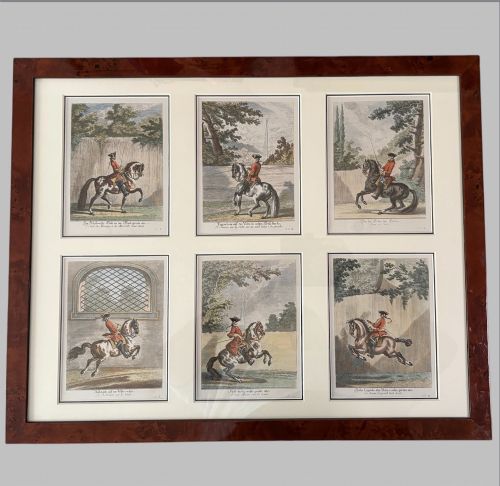
Framing forms an integral part of the physical object, with oak, walnut, and gilt wood frames protecting the canvas or paper supports. Hand-coloured copper engravings and published prints from the period demonstrate alternative graphic techniques used to reproduce equine imagery.
The inventory includes portraits of named racehorses alongside depictions of working horses and hunting scenes.
Factors of quality
Quality in these works rests upon the anatomical precision of the horse and the handling of light across the muscular form. Master painters capture weight, movement, and the distinct expression of the animal, whereas lesser works result in stiff postures and flat planes of colour.
The integrity of the original medium, whether oil, watercolour, or pastel, combined with the matching period frame, dictates the overall standard of the piece. Provenance linking a canvas to a named racehorse, estate, or exhibited artist elevates the historical value of the artwork.
Henry Barraud·Albert Clark·Fred Fitzpatrick·John Ferneley Senior·John Rattenbury Skeaping
The Brown Equestrian Wall Art Glossary
- Equestrian
- Pertaining to horses, horse riding, and the representation of horses in art.
- Bay
- A horse coat colour characterised by a reddish-brown body with black points on the mane, tail, and lower legs.
- Gouache
- An opaque water-based paint that dries to a matte finish, frequently used in twentieth-century works on paper.
- Provenance
- The documented history of ownership of an artwork, tracing its origin back to the creator or initial collection.
Brown Equestrian Wall Art: Frequently Asked Questions
How do I identify the subject of a horse painting?
Many nineteenth-century works include inscriptions on the canvas or frame identifying famous racehorses, such as derby winners or stable champions. Artists often recorded the name of the horse, the owner, or the specific estate directly on the work.
If no inscription is present, the conformation of the horse, the style of the jockey's silks, or the background landscape often provide clues to the era and setting.
Are these works original or prints?
The selection includes a mixture of unique original oil paintings, watercolours, and pastels alongside period prints and hand-coloured engravings. Listings explicitly state the medium used for each individual piece.
Original oils on canvas represent the majority of the larger works, while prints and drawings offer alternative ways to collect equestrian imagery.
How should I frame and hang equestrian art?
Most pieces arrive in their original wooden or gilt frames, which complement the darker tones of the artwork. It is best to maintain these frames where structurally sound to preserve the historic integrity of the piece.
Position the art away from direct sunlight to protect vulnerable watercolours, pastels, and nineteenth-century canvas pigments from fading.