


Racehorse Art Prints
These racehorse art prints capture the speed and theatre of the turf through historical depictions of celebrated champions and famous race meetings.
Racehorse Art Prints
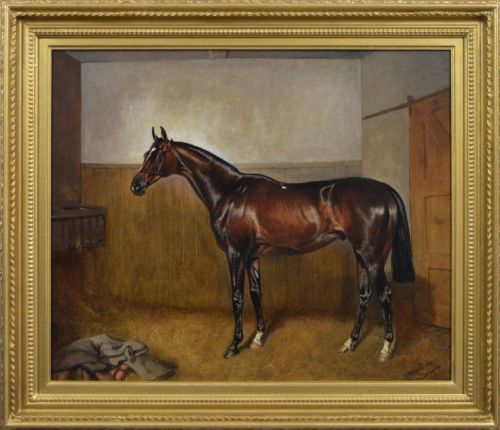
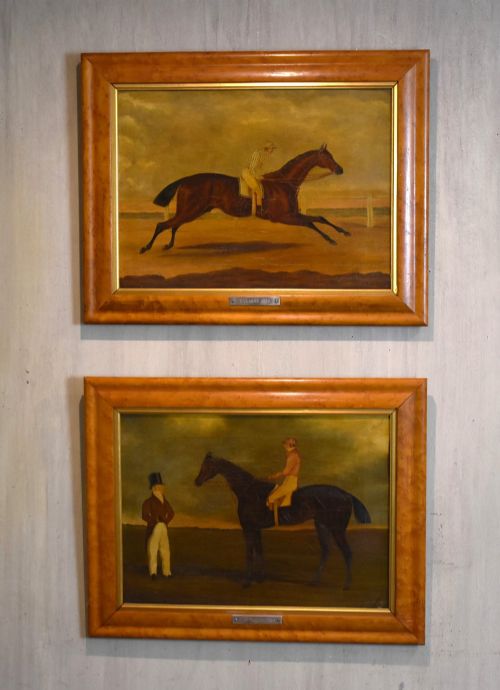
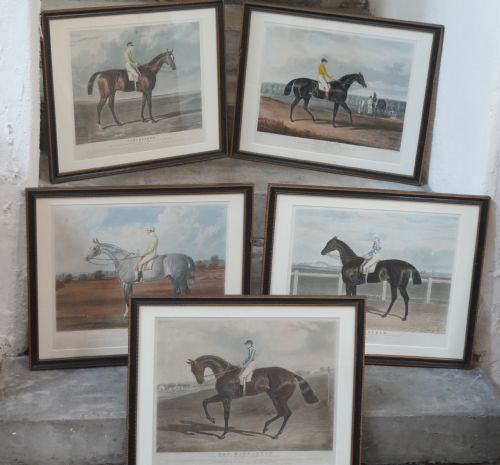
When you search for racehorse art prints, you encounter a selection spanning the Georgian era through to the early twentieth century, capturing celebrated thoroughbreds and historic racecourses. The examples on this page encompass framed prints, engravings, aquatints, and photographic sets alongside original oil paintings on canvas and panel.
You are most likely to meet nineteenth-century prints and engravings, often framed behind glass in wood or gilt wood surrounds. These works depict legendary runners such as General Peace, Creeping Molly, and Diamond Jubilee with their jockeys up.
The material record includes paper prints, ink engravings, oil paint, and glass, reflecting both mass-produced nineteenth-century sporting imagery and unique twentieth-century photographic portfolios.
How they were made
The manufacturing techniques combine traditional printmaking, hand-colouring, and painted oils on canvas. Engravings and aquatints on paper were frequently produced using metal plates inked by hand and pressed to capture fine linear detail.
Paintings utilise oil paint on canvas or board, applied by artists who recorded the conformation of the horse and the specific colours of racing silks. Eglomise methods appear in reproductive works, employing reverse painting and gilding on glass to frame the central subject.
Framing materials range from simple wooden mouldings to elaborate gilt wood surrounds, often protecting fragile paper surfaces beneath glass.
Listings feature works from the Georgian era, nineteenth century, and early twentieth century, executed in oil paint, ink on paper, and eglomise on glass.
What varies in quality
Quality rests upon the precision of the draughtsmanship and the fidelity with which the artist captures the anatomy and motion of the thoroughbred. Works by named painters and established engravers demonstrate superior control over proportion, perspective, and the depiction of the turf.
The condition of the paper, ink, and pigments determines the visual impact of prints and paintings. Pieces retaining crisp line work, clear plate marks, and original framing elements stand apart from heavily faded or compromised examples.
John Alfred Wheeler·John Frederick Herring Snr·Abraham Cooper·Alfred Wheeler·John Atkinson·Isaac Cullin
The Racehorse Art Prints Glossary
- Aquatint
- A printmaking technique that produces tonal effects similar to watercolour washes by using acid to etch resin-covered copper plates. It was widely utilised in nineteenth-century sporting prints to render atmospheric skies and shadowed turf.
- Eglomise
- A process involving cold painting and gilding on the rear face of glass to create a reflective, decorative border. This technique appears on specific twentieth-century decorative reproductions.
- Engraving
- A method of cutting design lines directly into a metal plate with a sharp tool called a burin. The resulting incisions hold the ink for transfer onto paper.
- Gilt wood
- Timber frames finished with a thin layer of gold leaf or metallic gilt powder. They frequently accompany nineteenth-century prints and oil paintings.
Racehorse Art Prints: Frequently Asked Questions
What periods do these prints cover?
The selection spans from the Georgian period through the nineteenth century and into the early decades of the twentieth century. You will find works dated from seventeen fifty-three up to nineteen thirty-three.
This chronological spread shows how depictions of thoroughbreds evolved from early engravings into twentieth-century photographic portfolios and Impressionist-influenced paintings.
How were these artworks framed originally?
Many prints and paintings utilise wood and gilt wood frames, frequently glazed with glass to protect the paper surfaces beneath. These housings range from simple period mouldings to ornate gilded surrounds.
Original glazing and framing help preserve the paper and ink from environmental degradation over the decades.
Are these items original prints or paintings?
The page includes both unique hand-painted oil canvases and multiple-plate printed works such as engravings and aquatints. Some entries represent photographic sets of famous racehorses.
Each listing specifies whether the piece is an oil painting, an engraving, an aquatint, or a photographic print.
How do I identify the horses depicted?
Many historical prints and paintings include inscriptions on the mount or canvas detailing the name of the winning horse and sometimes the jockey or race meeting. Famous subjects include General Peace, Diamond Jubilee, Creeping Molly, and Canezou.
These contemporary titling details allow you to research the racing history and pedigree of the specific animal shown.