
Brown Carved Credenza
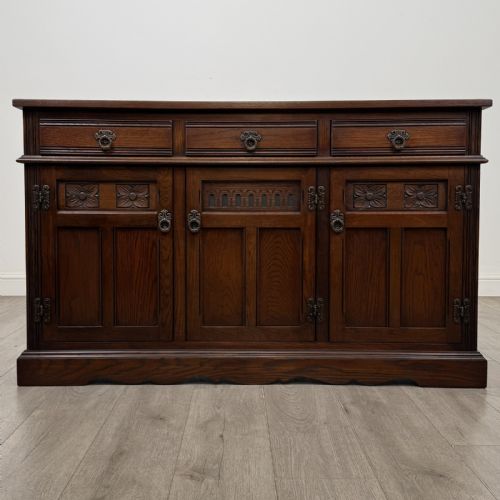
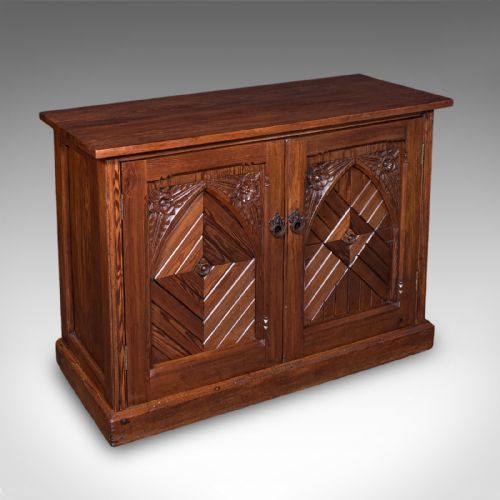
These brown carved credenza examples bring solid timber and deep relief into a room, offering practical storage with heavy period presence.
Brown Carved Credenza
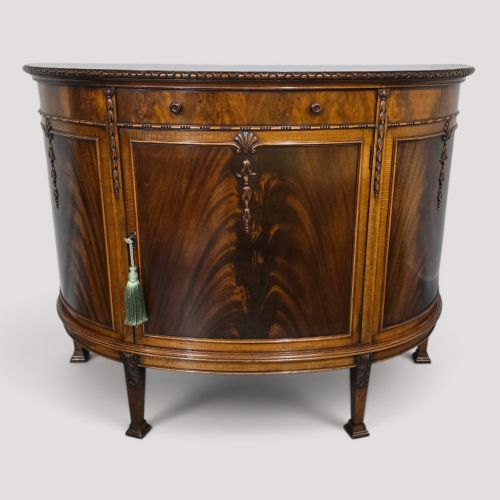
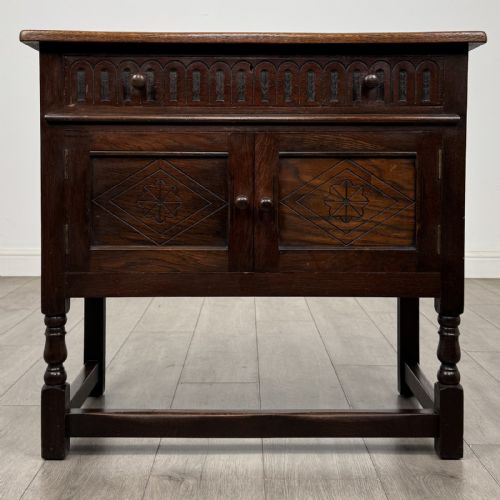
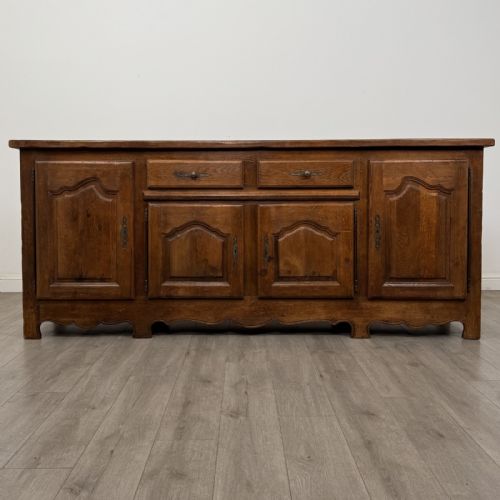
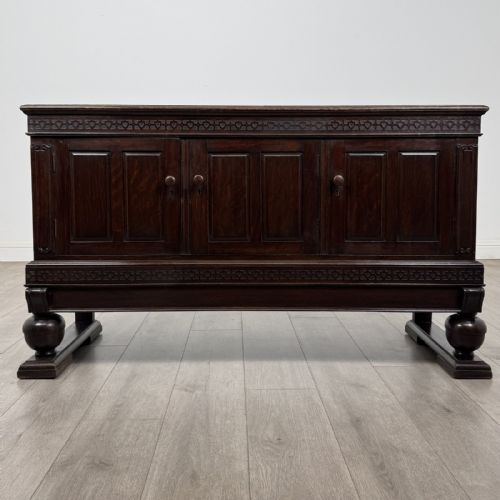
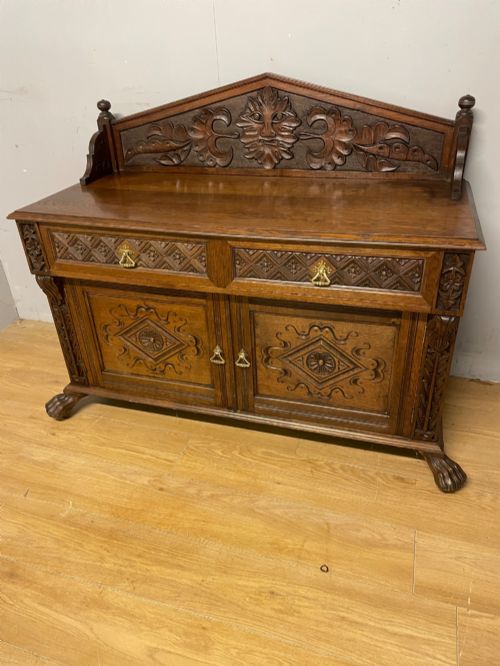
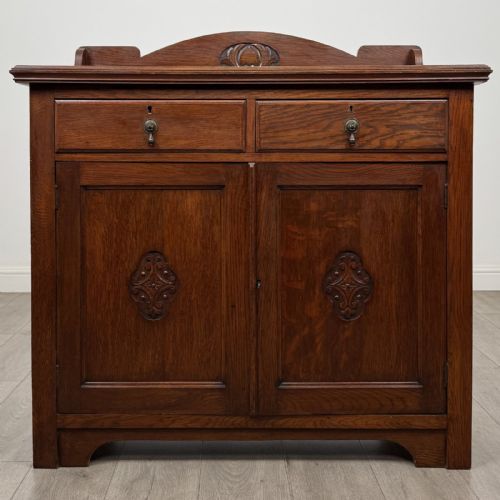
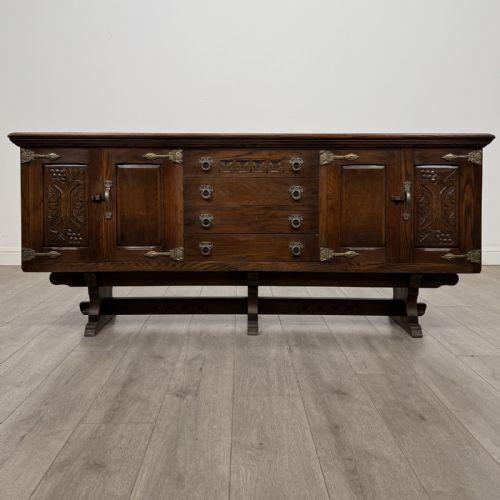
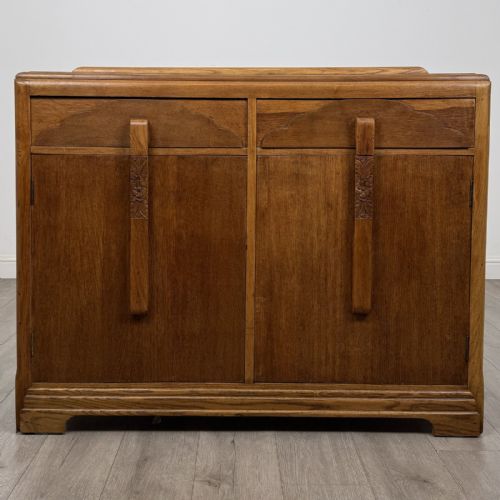
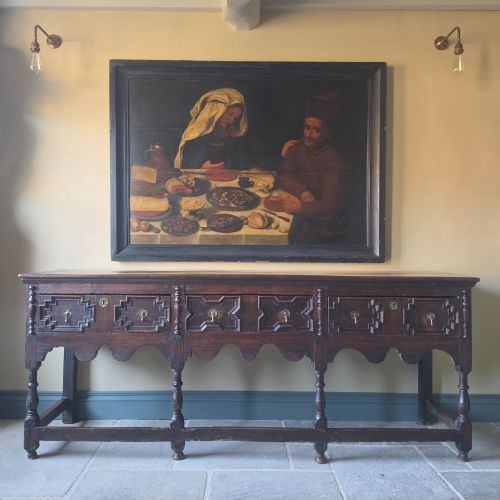
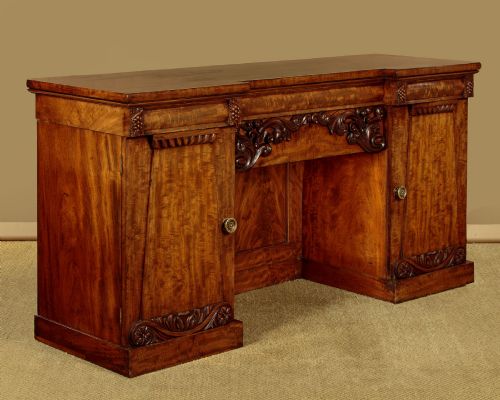
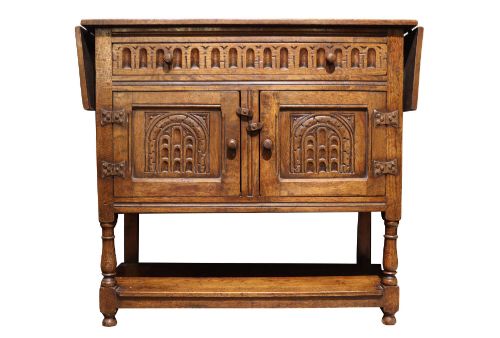
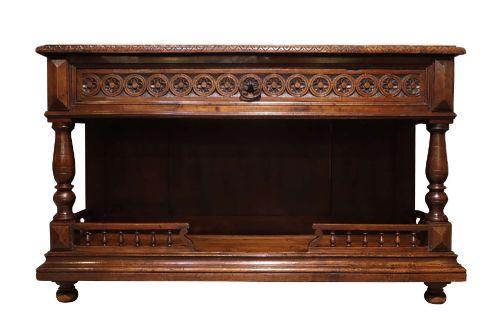
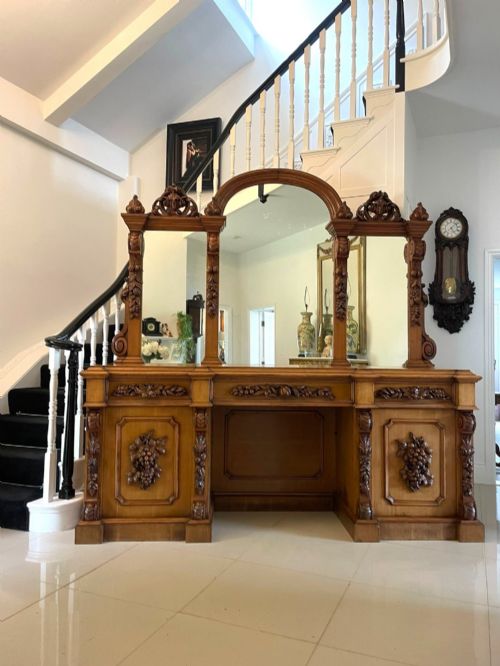
When you search for a brown carved credenza, you encounter substantial storage furniture spanning centuries of cabinet making, though the forms appearing here lean heavily toward oak sideboards, dresser bases, and enfilades. These pieces range from early provincial oak tables and low dressers to elaborate mirror-backed Victorian servers and compact Edwardian cabinets.
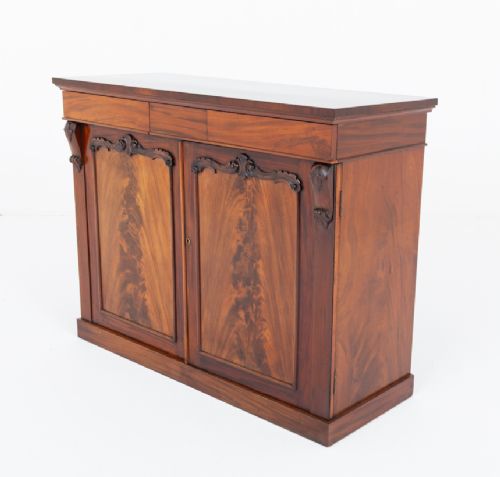
The aesthetic vocabulary encompasses Jacobean Revival geometric mouldings, Gothic panels, and foliate carvings, alongside smoother surfaces of mahogany and burr walnut. Most pieces serve the traditional function of dining room storage, presenting cupboards and drawers designed for tableware and linen.
Materials and construction methods
Makers relied primarily on native oak, complemented by rich reserves of mahogany, burr walnut, and pollard oak selected for dramatic grain patterns. Panels frequently display deep hand-chiselled relief work, linenfold motifs, or geometric applied mouldings.
Hardware consists of brass handles, drop pulls, and occasionally marble tops fitted to French enfilades. Construction employs traditional joinery, ensuring rigid framing for heavy timber doors and deep drawers.
Several oak cupboards manage to incorporate watchful Green Man carvings to guard your dining room cutlery.
Judging the standard of execution
Quality rests upon the depth and crispness of the timber carving, alongside the selection of figured veneers such as burr walnut or pollard oak. Superior examples display thoughtful proportions, balanced grain alignment across multiple doors, and original brass hardware.
Lesser pieces show mechanical rather than hand-worked detailing, or simpler secondary timbers used in hidden structural components. The integration of structural elements like galleries and mirrors also dictates the overall finish of the piece.
Shoolbred & Co.·Ambrose Heal
The Brown Carved Credenza Glossary
- Enfilade
- A long sideboard or buffet originating in France, typically featuring three or more doors aligned in a continuous front. These pieces provide expansive surface space and deep interior capacity.
- Dresser base
- An open-topped wooden table fitted with drawers and lower cupboards, historically used in kitchens and dining rooms for food preparation and storage. They often stand on sturdy cabriole or straight legs.
- Pollard oak
- Oak timber taken from trees that were cut back to the trunk to encourage dense, gnarled branch growth. The resulting wood displays intense, speckled grain patterns highly prized by nineteenth-century cabinet makers.
- Linenfold
- A style of carved wooden panelling that resembles folded fabric, popular during the Tudor and Gothic revival periods. This technique creates rhythmic vertical shadows across cupboard doors.
- Serpentine front
- A furniture front characterised by a curving line that bulges outward in the centre and recesses inward at the sides. This shape requires advanced carpentry skills to match grain and joints accurately.
Brown Carved Credenza: Frequently Asked Questions
Where should I place a brown carved credenza?
These substantial pieces anchor dining rooms or large entrance halls, providing a solid surface for lamps and serving dishes while concealing tableware below.
Ensure adequate floor space allows cabinet doors and drawers to open fully without obstruction from surrounding furniture.
How do I care for antique timber surfaces?
Maintain the wood by applying natural beeswax periodically to nourish the grain and protect against dry indoor climates. Avoid placing pieces in direct sunlight or near heat sources to prevent timber splitting.
Dust regularly with a soft, dry cloth rather than using silicone sprays that build up over time.
What distinguishes Jacobean revival from original work?
Revival pieces produced in the nineteenth and early twentieth centuries utilise machine-assisted joinery alongside hand-carving, often identifiable by secondary modern timbers or specific hardware styles.
Examining the interior construction, drawer linings, and backboards usually reveals the true manufacturing era of the timber.
Can I use these cabinets for modern media storage?
Many sideboards and enfilades offer deep cupboards that accommodate electronic equipment, provided you verify internal dimensions before purchase.
Some cabinets may require discreet cable management modifications to suit modern electrical devices.