
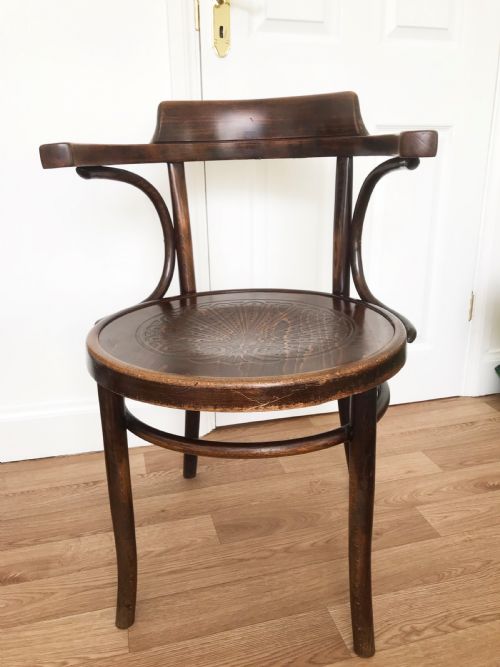


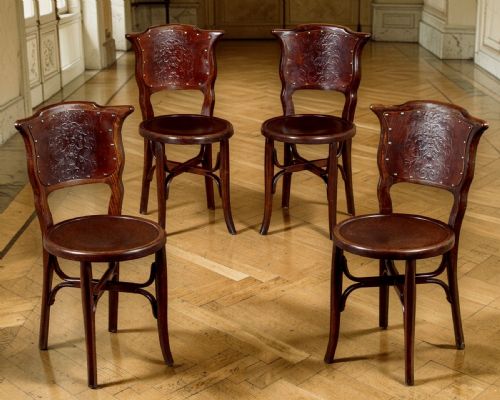


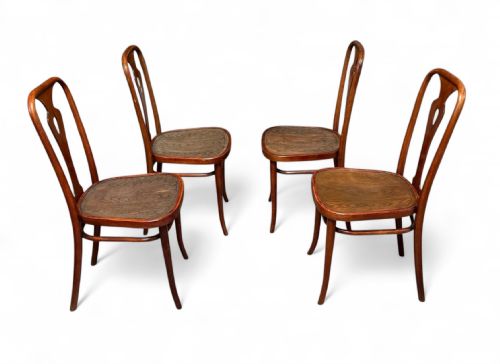


Brown Bentwood Chairs
Brown bentwood chairs are steam-bent classics of café and home, bringing curvaceous nineteenth and early twentieth century utility to modern dining and work spaces.
Brown Bentwood Chairs
When you search for brown bentwood chairs, you encounter seating shaped by steam heat across the nineteenth century, Edwardian era, and the early decades of the twentieth century. These pieces encompass dining chairs, bistro sets, rocking chairs, and swivel desk chairs originating from workshops and makers of that period.
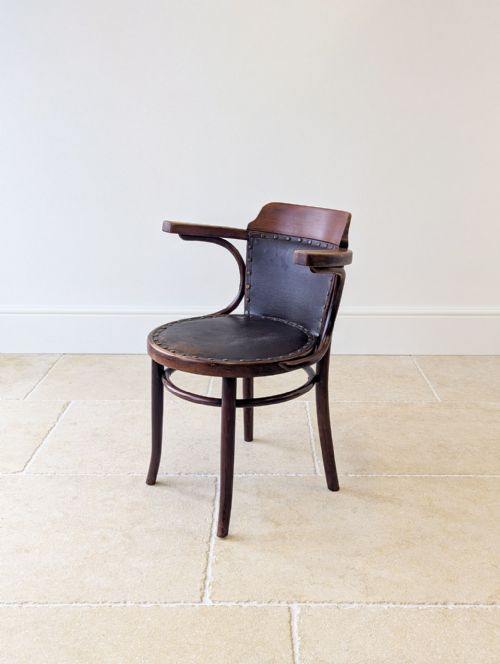
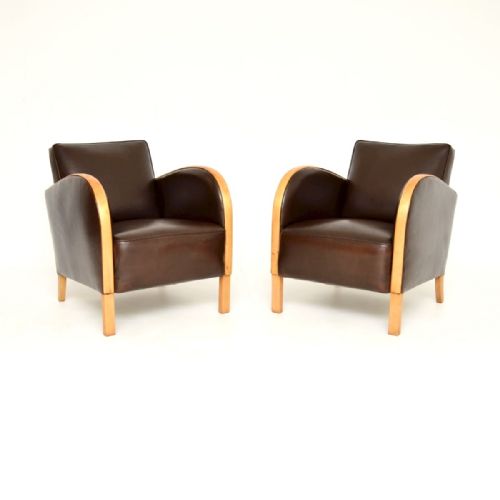
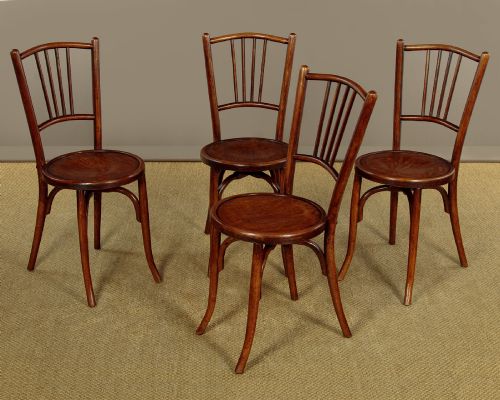
The listings on this page show single examples, matched pairs, and larger sets of four to twelve chairs. You will find standard dining chairs alongside armchairs, carvers, and specific desk or office seating.
The forms span simple bistro seating to elaborate Art Nouveau and Art Deco designs, alongside occasional Windsor and grotto style variants. Most examples emerge from the foundational bentwood centres of production in Austria and Britain.
How They Were Made
Makers utilised beech, beechwood, and occasionally ash, elm, or birch, exposing solid timber to steam until it became pliable enough to pull around iron metal forms. This process allowed craftsmen to create continuous, curving frames without traditional heavy joinery.
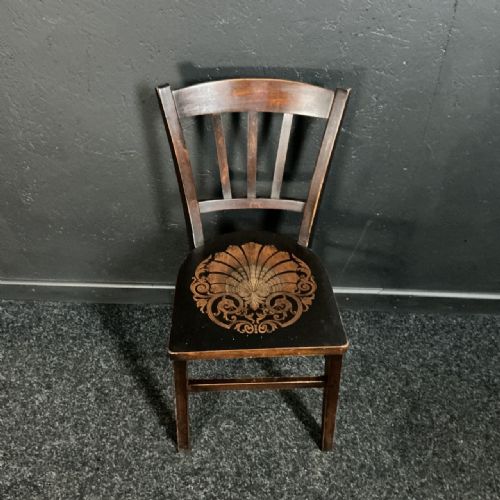
Seats incorporated perforated plywood, woven cane, pressed embossed patterns, or upholstered leather panels fastened directly to the bent frames. Brass fittings appeared on swivel desk models to support mechanical movement.
Listings feature beech, leather, plywood, brass, cane, and oak across periods spanning the nineteenth century through the 1930s.
What Varies in Quality
Quality rests in the precision of the steam bending and the integrity of the original timber grain rather than simple age alone. Maker attribution, such as pieces bearing factory stamps or clear lineage to major workshops, elevates a chair above anonymous production.
The survival of original surfaces, whether polished wood or embossed plywood seat patterns, dictates the distinction between standard utilitarian seating and high-grade collector pieces. Complete sets and specific functional forms like rocking chairs and swivel armchairs also influence standing.
Codina·Thonet·J & J Kohn
The Brown Bentwood Chairs Glossary
- Bentwood
- Wood that has been heated with steam and bent into curved structural forms. This technique defines the rounded frames of bistro and café seating.
- Carver
- An armchair designed with arms, typically placed at the head of a dining table or utilised as a desk chair. These pieces match the simpler side chairs in a set.
- Cane
- Woven plant material used to form light, breathable seats and back panels. It appears frequently on dining and bistro chairs from the Edwardian period.
- Plywood
- Thin boards glued together with grain running in alternate directions to provide strength. Embossed examples feature pressed decorative patterns on the seat.
- Windsor
- A traditional wooden chair constructed with a solid saddle seat into which the legs and back spindles are wedged. These appear alongside steam-bent seating in nineteenth century listings.
Brown Bentwood Chairs: Frequently Asked Questions
How do I date a bentwood chair?
Dating relies on construction methods, labels, stamps, and the complexity of the design. Earlier nineteenth century pieces often feature simpler joins and distinct maker marks stamped into the wood.
Later Edwardian and 1920s examples introduce machine-pressed plywood seats and different fastening hardware. Comparing the seat panel and the curvature helps narrow the production decade.
Are these chairs suitable for daily dining?
Most bentwood dining chairs and bistro sets were engineered precisely for heavy commercial hospitality use. Their lightweight, sturdy construction makes them practical for everyday household dining.
Care should be taken with antique cane or leather seats to ensure they support regular weight without sagging or tearing.
What is the difference between a bistro chair and a desk chair?
Bistro chairs are generally lightweight, armless side chairs designed to tuck easily beneath small café tables. Desk chairs often incorporate swivel mechanisms, brass fittings, or wider armrests suited to prolonged sitting.
Desk variants frequently feature leather upholstery or wider supportive back rails for office environments.
How should I clean and maintain bentwood?
Maintain the wood finish using a mild, dry or slightly damp cloth to remove dust without stripping the aged patina. Avoid excessive moisture, particularly on cane and plywood seats where dampness can weaken the glue and plant fibres.
Applying a suitable wax polish preserves the sheen of beech and birch frames.