






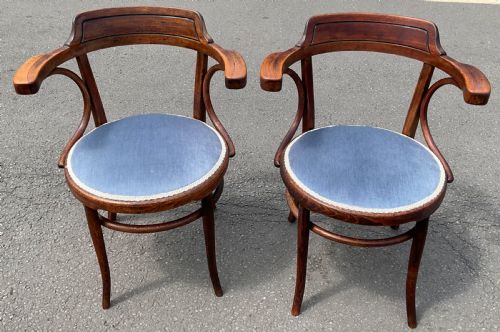

Antique Thonet Chairs
Antique thonet chairs bring lightness and structural ingenuity to a room, offering the unmistakable curves of steam-bent wood.
Antique Thonet Chairs
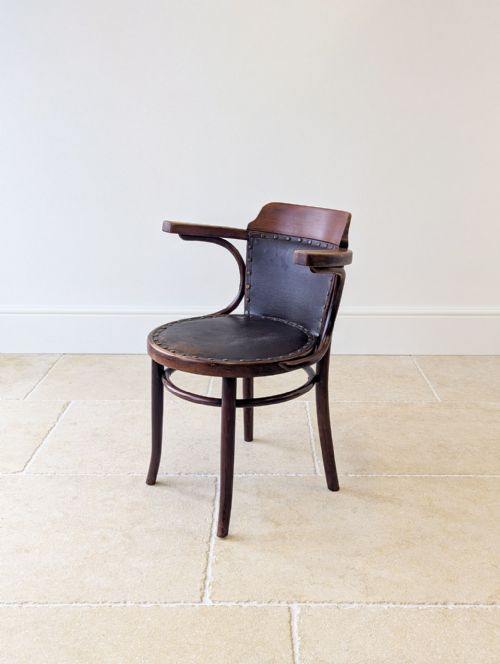
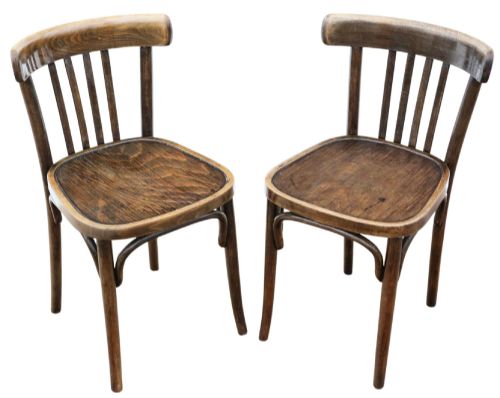
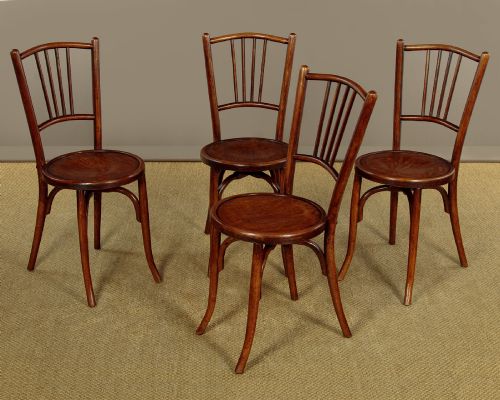
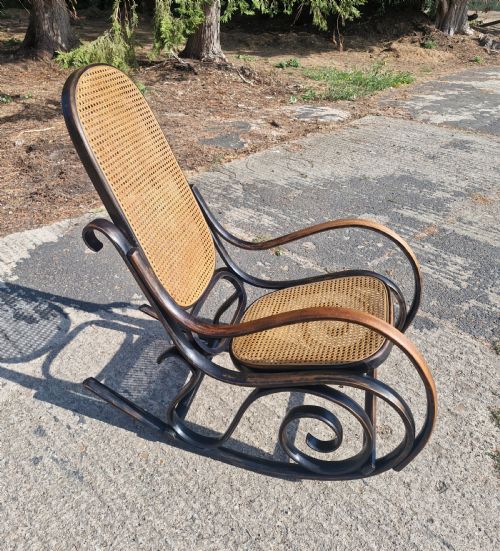
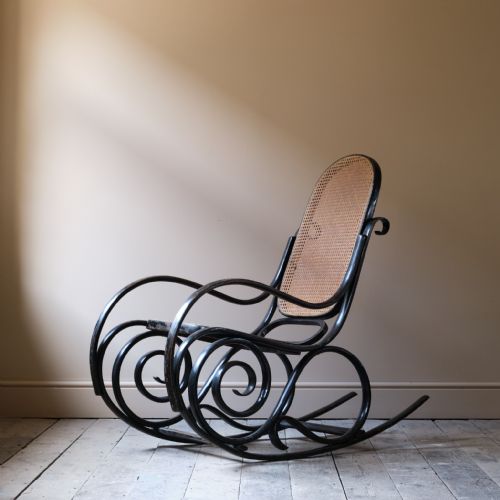
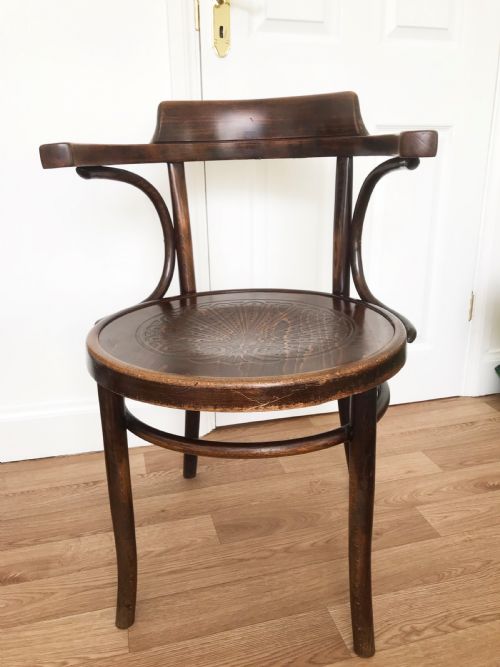
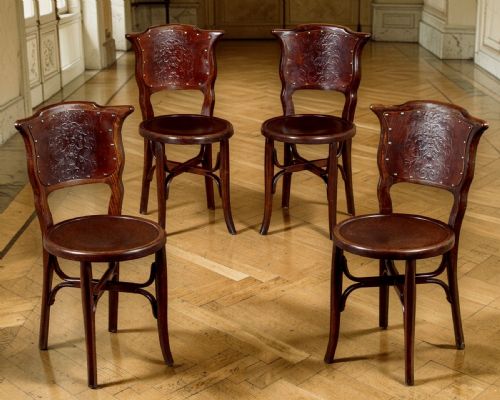
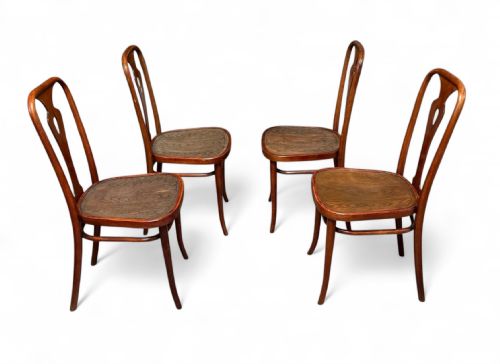
Antique thonet chairs comprise seating forms created through steam-bent wood techniques, spanning dining chairs, armchairs, rocking chairs, desk chairs, and children's variants. These pieces originate across the nineteenth century, the Edwardian era, and into the mid-twentieth century.
Bistro dining chairs and rocking chairs appear most frequently among these listings. They showcase origins linked to makers such as Thonet, Jacob and Josef Kohn, Fischel, and Codina, reflecting styles from Victorian bentwood to Vienna Secession.
What varies in quality
Quality rests upon the crispness of the steam-bent curves and the integrity of the joints connecting the wooden elements. Tighter, smoother radiuses demonstrate superior manipulation of the timber during production.
The choice of seat material and the preservation of original manufacturer stamps or labels distinguish standard production pieces from higher-tier workshop examples.
Listings feature beech, plywood, and cane alongside leather and brass, spanning Victorian, Edwardian, and mid-century periods.
Jacob and Josef Kohn·Thonet·Codina·Fischel
The Antique Thonet Chairs Glossary
- Bentwood
- Wood shaped by exposure to steam and pressure. This technique allows timber to form rounded profiles impossible with standard joinery.
- Cane
- Plant material woven into an open pattern for chair seats. It provides a lightweight, flexible surface.
- Vienna Secession
- An artistic movement influencing design around nineteen hundred. It brings geometric clarity and restrained ornamentation to bentwood forms.
- Carver
- An armchair designed with armrests, often used at the head of a dining table or as a desk seat.
Antique Thonet Chairs: Frequently Asked Questions
How do I identify a genuine Thonet chair?
Look for stamped manufacturer marks, paper labels, or characteristic model numbers pressed into the wooden underside or frame. The precision of the steam-bent curves also points toward established workshop production.
Examine the construction methods, noting whether the components rely on original brass screws and traditional bentwood joinery rather than modern adhesives.
Were these chairs used in cafes?
Many bentwood designs served European cafes, bistros, and public spaces due to their lightweight construction and durability. Sets often originated from commercial establishments seeking practical, elegant seating.
Dining chairs and larger matched groups reflect this commercial history, engineered to withstand heavy daily use.
How should I care for cane seats?
Keep cane seats clean using a damp cloth and allow them to dry naturally to maintain the tension of the plant fibres. Avoid placing them near direct heat sources that might cause the material to become brittle.
Occasional light moisture helps prevent the woven strands from drying out over time.
What periods do these chairs cover?
The pieces span from the nineteenth century through the Edwardian era and into the nineteen-twenties and nineteen-sixties. Styles range from Victorian bentwood to Art Nouveau and Vienna Secession.
Each period introduces subtle shifts in leg profiles, backrest geometry, and upholstery choices.