
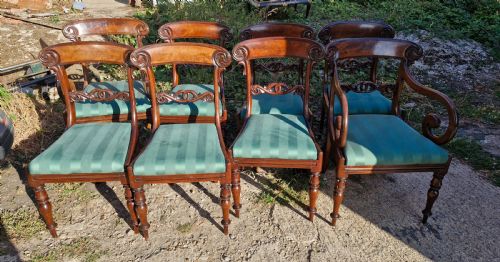
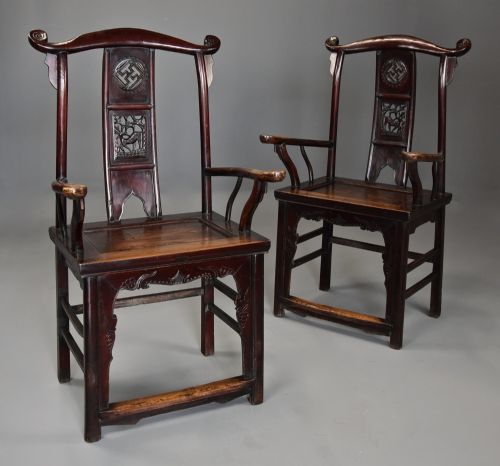
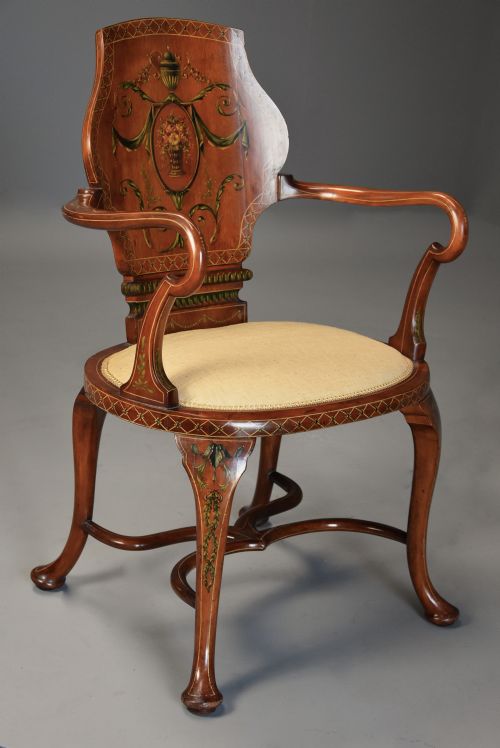
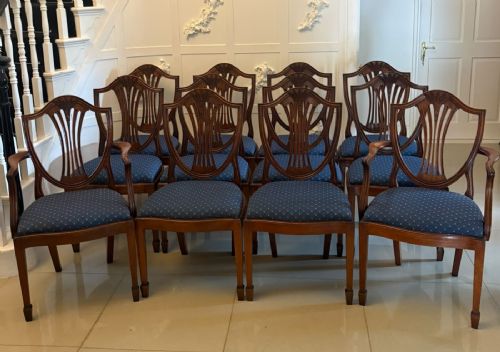
Wooden Side Armchairs
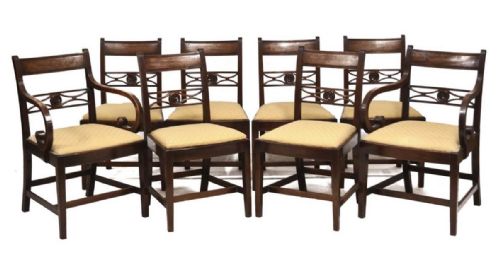
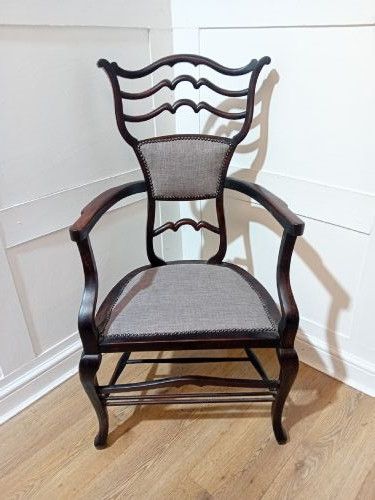
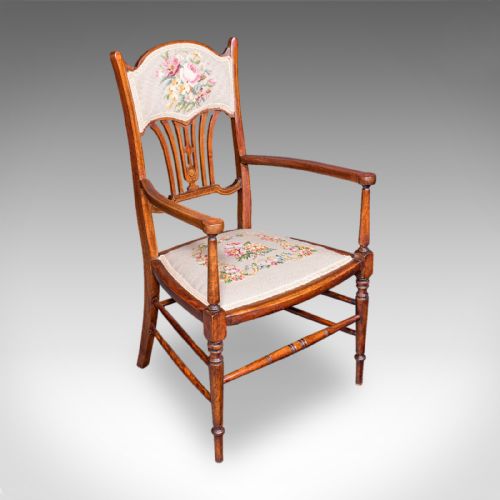
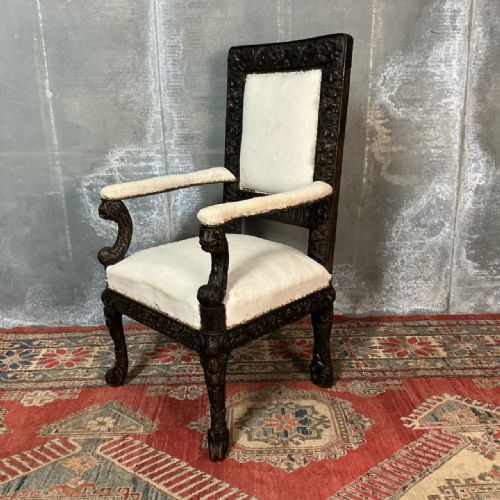
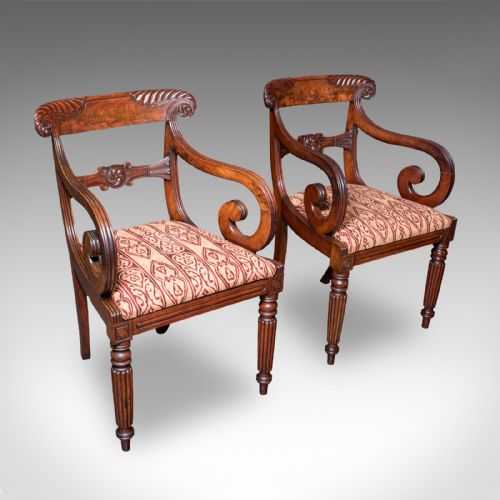
These wooden side armchairs offer robust seating solutions, ranging from Georgian mahogany carvers to Edwardian satinwood models, sought after for daily functional utility.
How they were made
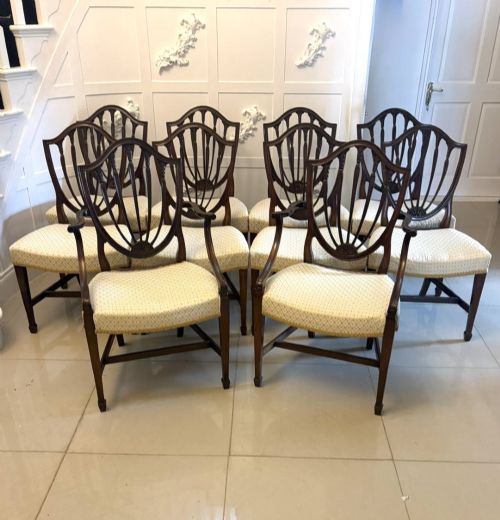
Craftsmen utilised solid hardwoods including mahogany, oak, beech, ash, walnut, and satinwood, often shaping the timber into shield backs, ladder backs, or curved arm structures.
Upholstered versions incorporate textiles such as leather, velvet, and fabric fastened over padded seats, whilst painted and lacquered finishes decorate specific decorative items.
What varies in quality
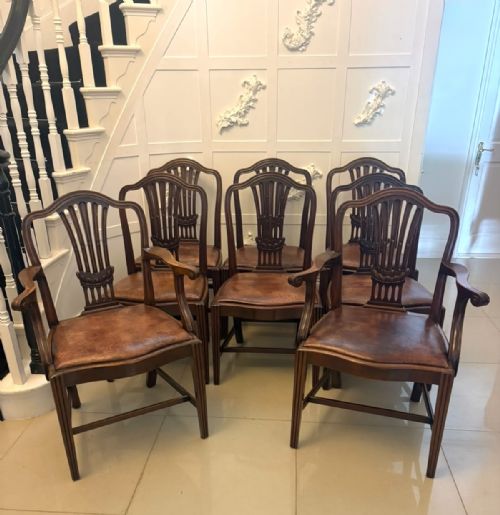
Distinction in quality rests on the crispness of carved details in the timber, the integrity of the joinery in the frame, and the survival of original upholstery surfaces like tan leather.
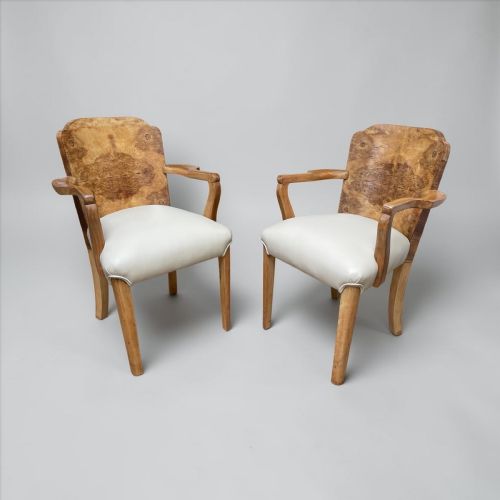
Makers utilised select timbers with strong grain patterns, such as figured mahogany or satinwood, paired with refined proportions that elevate standard seating into exhibition pieces.
Listings feature wooden side armchairs spanning the eighteenth, nineteenth, and twentieth centuries in mahogany, oak, and satinwood.
Maple and Co·Thonet
The Wooden Side Armchairs Glossary
- Carver
- An armchair designed to match a set of dining chairs, typically placed at the head of a table.
- Shield back
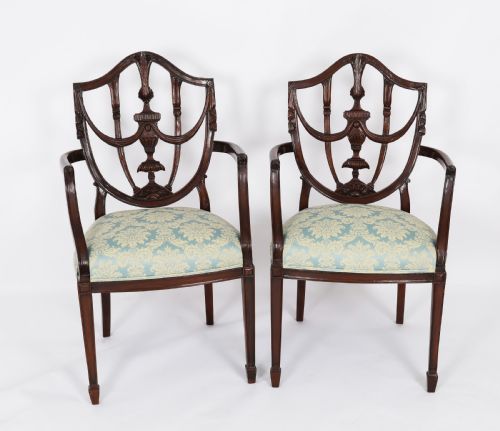
- A chair back shaped like a heraldic shield, popular in eighteenth-century and revival dining furniture.
- Elbow chair
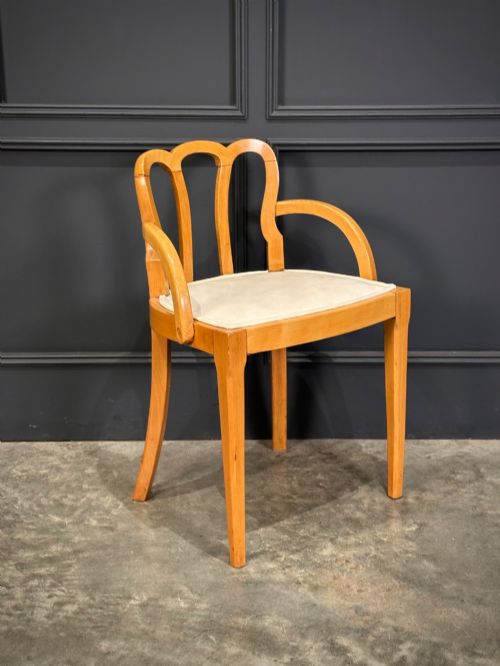
- An open armchair with short armrests, frequently used in morning rooms and bedrooms.
- Yokeback
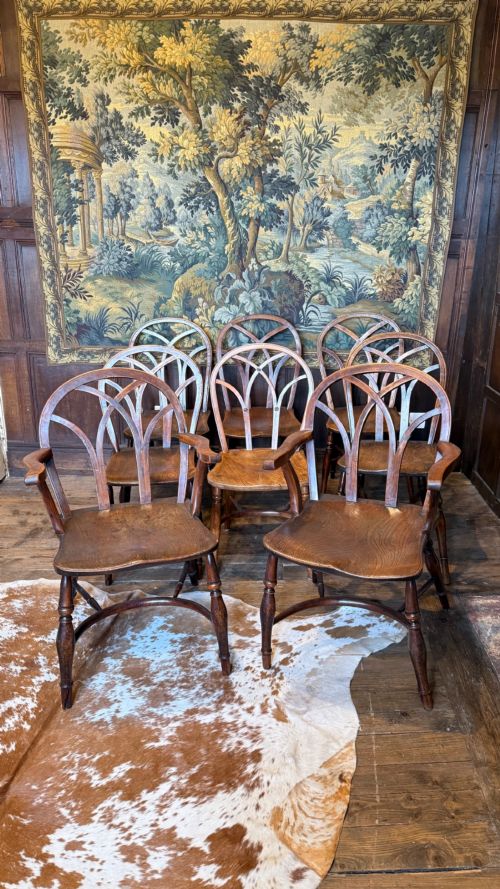
- A chair back featuring a top rail curved in the manner of a yoke, seen in specific regional and imported forms.
- Grotto style
- Decorative furniture carved to resemble natural rock formations, shells, and marine motifs.
Wooden Side Armchairs: Frequently Asked Questions
What is a carver chair?
A carver chair is an armchair built to accompany a matching set of single dining chairs.
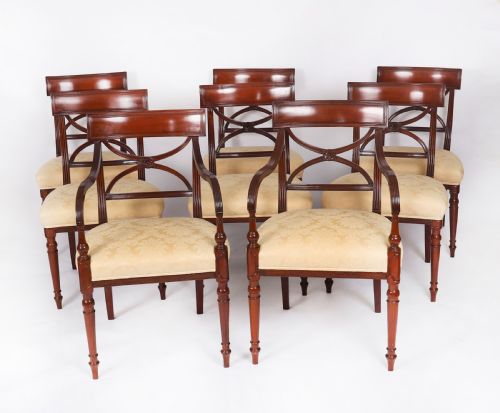
Historically, two carvers accompanied six or eight single chairs around a dining table.
How do I identify a Georgian armchair?
Georgian armchairs typically feature mahogany construction with carved splats, cabriole legs, or straight legs connected by stretchers.
They display proportion and restraint characteristic of eighteenth-century cabinetmaking.
Where were elbow chairs used?
Elbow chairs served in morning rooms, reception rooms, and bedrooms as comfortable secondary seating.
Their open armrests provided support without the bulk of a fully upholstered armchair.
What are shield back chairs?
Shield back chairs feature a backrest carved in the contour of an upright shield, frequently ornamented with wheat ears or drapery.
This design gained prominence during the late eighteenth century and saw revivals through the Victorian and Edwardian periods.