




Bronzed Spelter Mantel Figure
These bronzed spelter mantel figure pieces combine metalwork and sculpture to ornament period interiors with distinct figural and decorative designs.
Bronzed Spelter Mantel Figure
A bronzed spelter mantel figure represents a sculptural cast metal object designed for display on a mantelpiece, frequently finished with a dark or metallic patination that mimics true bronze. These decorative works appear across several distinct historical periods, running from Victorian and Edwardian iterations through to geometric Art Deco designs.
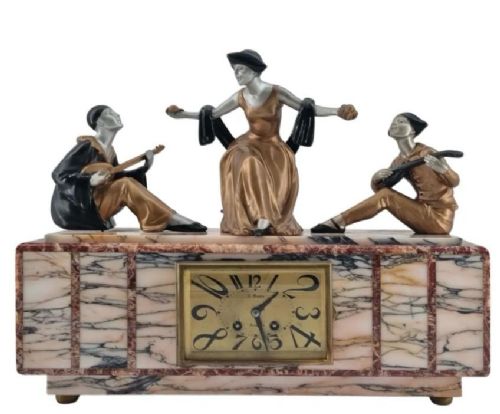
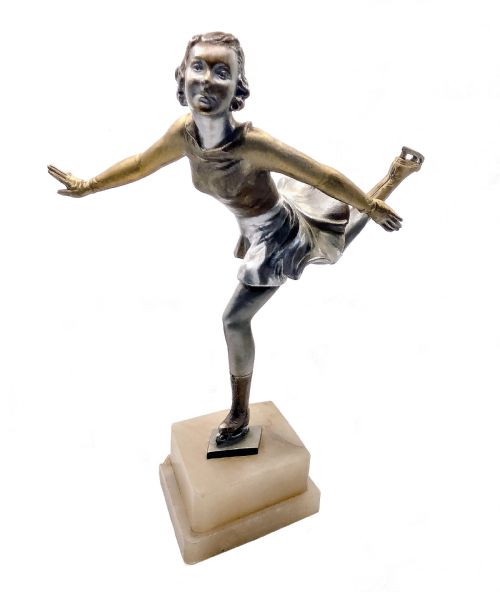
The objects take various physical forms on this page, including standalone figurines, figural mantel clocks, clock garniture sets, candlesticks, and table mirrors. Figures range from individual subjects like soldiers and skaters to paired compositions and allegorical studies.
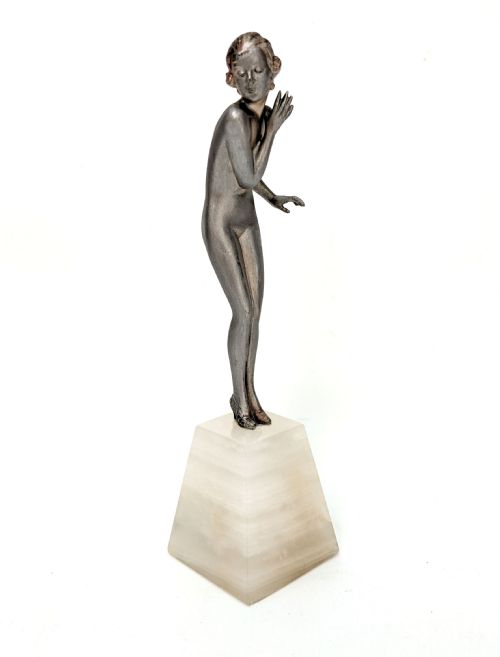
Makers and designers from French workshops frequently produced these pieces, utilising styles such as Art Nouveau, Renaissance Revival, and French Rococo Revival alongside streamlined Art Deco aesthetics. Buyers encounter figures mounted upon substantial bases of marble, onyx, or alabaster.
How they were made
Craftsmen cast these figures using spelter, an alloy based primarily on zinc, which proved a fluid and economical medium for capturing intricate sculptural detail. Workshops then applied a surface finish, often described as bronzed or patinated metal, to give the softer zinc alloy the appearance of heavier bronze.
Many sculptures incorporate secondary materials to form complete mantel objects, combining cast metal figures with bases of marble, onyx, or alabaster. Clock movements, glass elements, and brass fittings complete the functional garniture sets and table mirrors recorded in the listings.
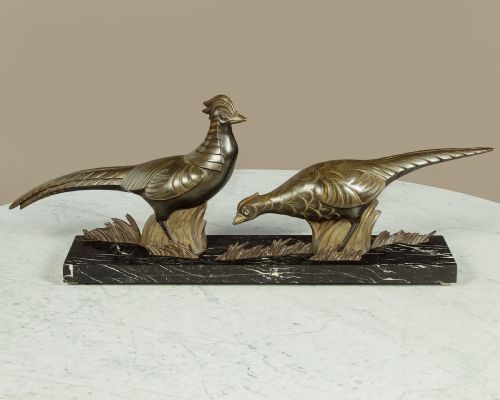
Ice skaters and golden pheasants share the mantelpiece with Renaissance soldiers in this diverse metallic menagerie.
What varies in quality
The integration of the figure with its base separates ordinary productions from finer works, where mounting on genuine marble, onyx, or alabaster is executed with precision. Named works associated with known designers or prominent foundries display a distinct artistic vigour in their modelling.
Sega·Josef Lorenzl·Chiparus·Phillipe H. Mourey
The Bronzed Spelter Mantel Figure Glossary
- Spelter
- A zinc alloy utilised extensively for decorative castings in the nineteenth and twentieth centuries. It provides a lighter and softer alternative to bronze.
- Patinated metal
- Metal treated with chemicals, heat, or paint to alter its surface colour and produce a simulated aged or bronzed finish. This treatment protects the underlying alloy while defining surface detail.
- Clock garniture
- A set comprising a central mantel clock accompanied by matching side pieces such as vases, candelabra, or figural sculptures. These matched sets dominated formal mantelpiece decoration.
- Alabaster
- A fine-grained mineral stone used for sculptural bases and ornaments. Its translucent quality distinguishes it from denser marbles.
- Figural
- A term describing artwork that represents human or animal forms. These pieces depict distinct characters, dancers, animals, and allegorical figures.
Bronzed Spelter Mantel Figure: Frequently Asked Questions
What is a bronzed spelter mantel figure?
A bronzed spelter mantel figure is a decorative cast metal sculpture finished to resemble bronze, produced for display on a mantelpiece.
These pieces encompass standalone statues, figures mounted on clocks, and sculptural pairs created during the nineteenth and twentieth centuries.
How do I clean my mantel figure?
Dust the surface gently with a soft, dry cloth to prevent the accumulation of dirt within the intricate recessed areas.
Avoid using liquid cleaners, polishes, or abrasive cloths, as these substances can strip the patinated or bronzed finish from the spelter alloy.
Are these figures made of real bronze?
No, these objects are cast from spelter, which is a zinc-based alloy rather than copper and tin bronze.
Workshops applied a bronzed patination to the surface of the softer metal to achieve the visual effect of traditional bronze sculpture.
How do I distinguish Art Deco from Victorian pieces?
Victorian and Edwardian examples often display ornate Revival styles, classical motifs, and elaborate classical drapery.
Art Deco pieces from the nineteen-thirties favour streamlined geometries, stylised human forms, and sleek marble or alabaster bases.