



Bronze Finish Sculpture
These pieces known as bronze finish sculpture offer the visual weight and warmth of cast metal through alternative materials.
Bronze Finish Sculpture
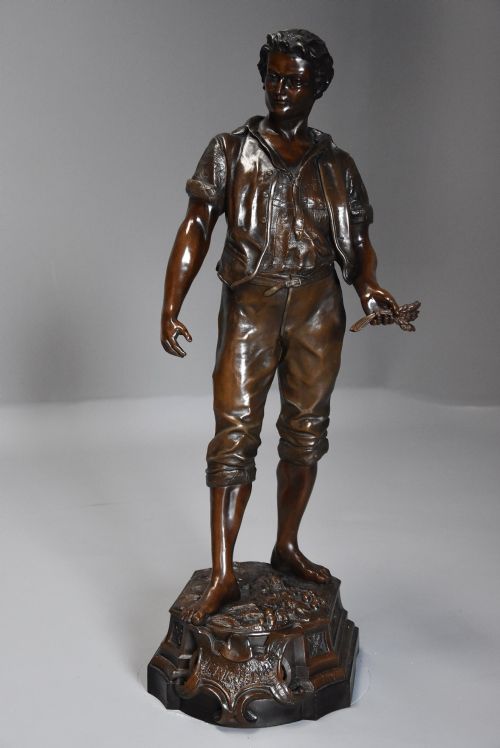
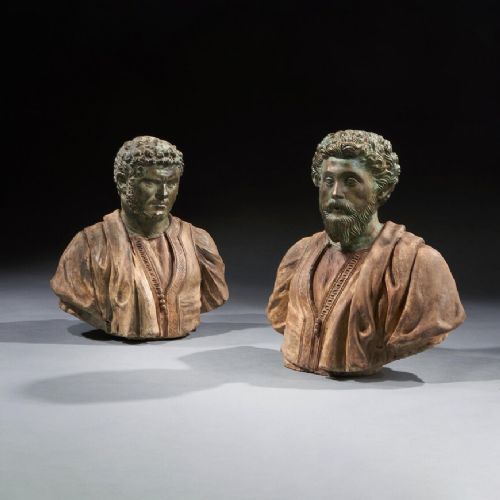
A bronze finish sculpture is a decorative figure or bust designed to simulate genuine metal casting through surface patination or specific base materials. When you search for bronze finish sculpture, you encounter figural representations, portrait busts, animals, and functional objects such as candlesticks and desk accessories.
The objects span from the late nineteenth century through the early twentieth century, taking forms associated with Art Nouveau, Art Deco, Neoclassical, and Gothic Revival styles. You are most likely to meet French figural works and portrait studies mounted upon marble or wooden bases.
Originating largely from European workshops and foundries, these pieces served as accessible ornamental art for domestic interiors. They adopt subjects ranging from classical historical figures and farm labourers to animals and allegorical female forms.
How they were made
Makers utilised alternative casting and moulding mediums, predominantly spelter, terracotta, plaster, and iron, rather than solid bronze. These core materials were cast or modelled to achieve intricate detail before receiving surface treatments.
A surface patina, metallic paint, or bronze finish was applied to the hardened body to mimic the appearance of aged or patinated bronze. Some pieces incorporated bases of Verdi green marble, onyx, or wood to provide stability and visual contrast.
Medieval characters balanced precariously on stilts appear among the patinated spelter candlesticks.
What varies in quality
Quality rests in the crispness of the modelled detail and the depth of the applied bronze finish or patina. Superior examples retain fine facial expressions, drapery folds, and surface textures without loss or heavy wear to the patinated skin.
The choice of base materials, such as genuine Verdi green marble or onyx rather than plain wood, indicates the tier of the piece. Signature placement from recorded makers or well-executed patination on spelter and terracotta elevates the standing of the work.
F. Milliot·Jennings Brothers·Frederic Goldscheider·Antoine-Felix Bouré·Moreau
The Bronze Finish Sculpture Glossary
- Spelter
- A zinc alloy commonly utilised in European foundries as a cost-effective alternative to bronze. It accepts patination well and was widely employed for figural statues during the nineteenth and early twentieth centuries.
- Terracotta
- Fired clay used for sculptural models and portrait busts. It offers a warm earthy texture that readily accepts painted or bronze finishes.
- Patina
- The surface sheen or colour achieved through chemical treatment, paint, or natural ageing on metal and simulated metal finishes. It provides the visual depth associated with aged bronze.
- Maquette
- A small-scale preliminary model or study created by a sculptor prior to executing a finished work. These preparatory pieces preserve the direct touch of the maker.
- Animalier
- A nineteenth-century artistic style focusing on realistic depictions of animals, particularly lions, bulls, and horses. It gained popularity across French and European foundries.
Bronze Finish Sculpture: Frequently Asked Questions
What is a bronze finish sculpture?
A bronze finish sculpture is a decorative figure, bust, or object made from a non-bronze material such as spelter, terracotta, or plaster and treated with a metallic coating to resemble cast bronze.
These pieces were produced to offer decorative domestic art with the visual appeal of bronze at a different scale of production.
Are these sculptures solid bronze?
No, the pieces listed under this category utilise alternative base materials including spelter, terracotta, iron, plaster, and wood.
A bronze finish or patination is applied to the exterior to simulate the appearance of solid cast metal.
What periods do these sculptures come from?
The available pieces primarily date from the nineteenth century through the early decades of the twentieth century.
Common eras represented include the Victorian period, Art Nouveau, and Art Deco movements.
How do I display a bronze finish sculpture?
Place the sculpture on a stable surface away from direct sunlight, excessive moisture, and fluctuating temperatures to protect the patinated finish.
Many figures come set on marble or onyx bases which provide natural stability and a finished presentation for tabletop display.