






Bronze Urn Sculpture
These bronze urn sculpture pieces bring classical dignity and neoclassical poise into a room, forged in cast metal and patinated bronze.
Bronze Urn Sculpture
A bronze urn sculpture typically takes the form of a classical vessel, a garden planter, or a figural vase rooted in nineteenth-century design. These objects draw heavily on Grand Tour souvenirs, classical antiquity, and neoclassical ideals, often translating ancient architectural forms into cabinet-sized works of art.
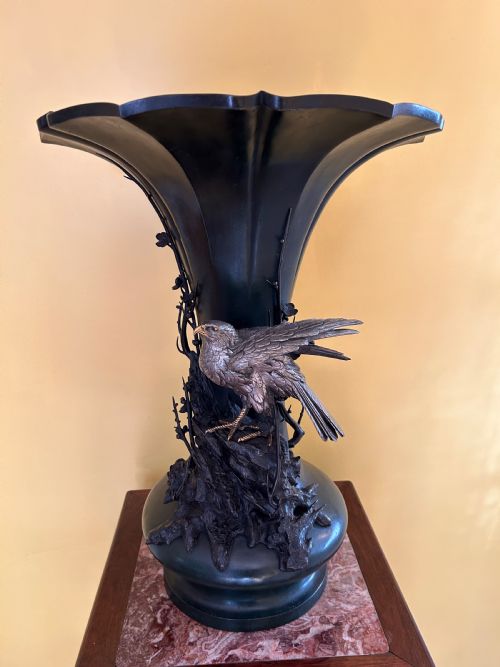
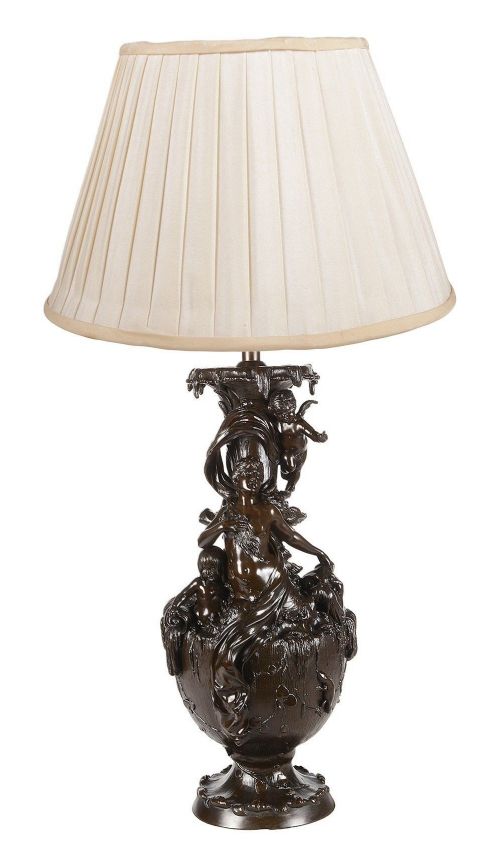
You will most frequently encounter nineteenth-century pieces alongside works from the nineteen-hundreds, spanning styles from Neoclassical and Art Nouveau to Japanese Meiji period casting. The selection ranges from lidded desk urns and table lamps to monumental garden vessels and figural vases.
Many examples incorporate mixed media, pairing cast bronze with marble bases, ormolu mounts, and gilt surfaces. These hybrid pieces function simultaneously as decorative sculpture and as functional vessels or lighting.
Materials and construction
The primary material is cast bronze, frequently enhanced with patinated, gilded, or ormolu finishes to create contrast and highlight surface detail. Founders employed traditional lost-wax casting methods to achieve the intricate relief work seen on classical Warwick vases and figural sculptures.
Marble frequently serves as a structural base or pedestal, providing weight and a neoclassical contrast to the dark patinated metal above. Mixed metal techniques and applied gilding appear across both European foundry works and Japanese Meiji period examples.
Listings feature works spanning the nineteenth and early twentieth centuries, incorporating bronze, marble, and ormolu.
Distinguishing quality
The integration of secondary materials dictates the stature of a piece. Superior examples unite cast bronze with carefully turned marble bases and fire-gilded ormolu mounts that fit seamlessly without gaps.
Charles Korschann·Jean Dunand·Genryusai Seiya·Auguste Cain
The Bronze Urn Sculpture Glossary
- Patina
- The surface coloration and chemical sheen developed naturally over time or applied chemically by the foundry. This finish protects the underlying metal and defines the visual character of the bronze.
- Ormolu
- Finely ground high-carat gold applied to a bronze base using a mercury amalgamation process, or cast brass with a bright gold-like finish. It provides rich highlights on neoclassical mounts and bases.
- Grand Tour
- A cultural journey undertaken by wealthy Europeans in the eighteenth and nineteenth centuries to study classical antiquities. Souvenirs purchased on these travels included bronze reductions of famous ancient vases.
- Meiji Period
- The era in Japanese history from eighteen sixty-eight to nineteen twelve marked by exceptional mastery in bronze casting and mixed metalwork. Works from this period often depict natural motifs such as elephants, birds, and flora.
Bronze Urn Sculpture: Frequently Asked Questions
What is a Grand Tour bronze?
A Grand Tour bronze is a nineteenth-century miniature reproduction of a famous classical sculpture or ruin, brought back as a travel souvenir by educated travellers.
These reductions allowed collectors to display miniature versions of ancient Greek and Roman monuments, such as the Warwick Vase, within domestic interiors.
How do I care for patinated bronze?
Patinated bronze requires minimal intervention, needing only occasional dusting with a soft, dry cloth to prevent the accumulation of grit.
Avoid using commercial metal polishes, harsh cleaning agents, or oils, as these substances can strip away the historical patina and damage the surface finish.
What is the difference between neoclassical and art nouveau styles?
Neoclassical pieces draw strict inspiration from ancient Greek and Roman art, featuring symmetrical urn forms, classical deities, and architectural dignity. Art Nouveau designs embrace asymmetrical organic lines, fluid natural motifs, and distinct floral or figural elements.
While neoclassical works rely on balance and historical precedent, Art Nouveau focuses on dynamic movement and natural growth.
Where were these bronze sculptures made?
These pieces originated primarily in European foundries, particularly in France, alongside significant metalwork production from Japanese workshops during the Meiji period.
European foundries often utilised classical traditions, while Japanese makers applied advanced mixed metal techniques to depict flora, fauna, and temple vessels.