
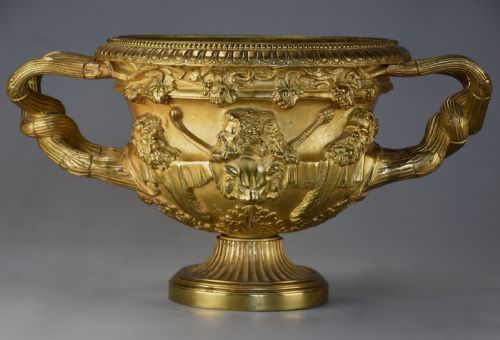


Grand Tour Souvenir Vase
A grand tour souvenir vase brings home the classical sculpture of Italy and Greece, scaled down in bronze, marble, and alabaster for the nineteenth-century parlour.
Grand Tour Souvenir Vase
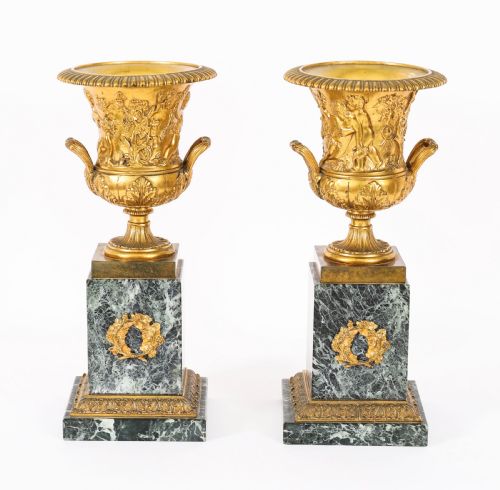
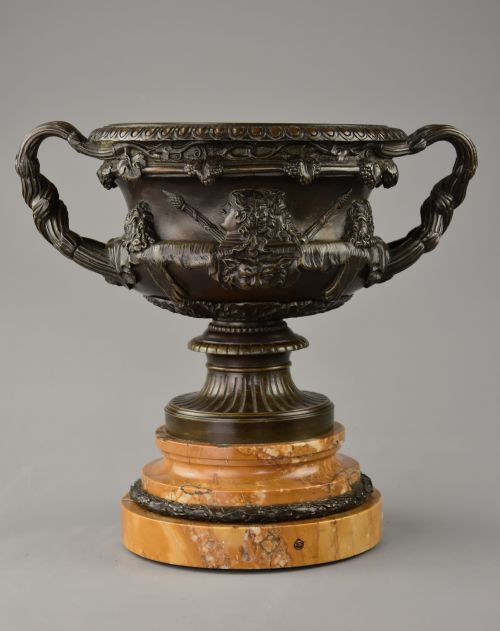
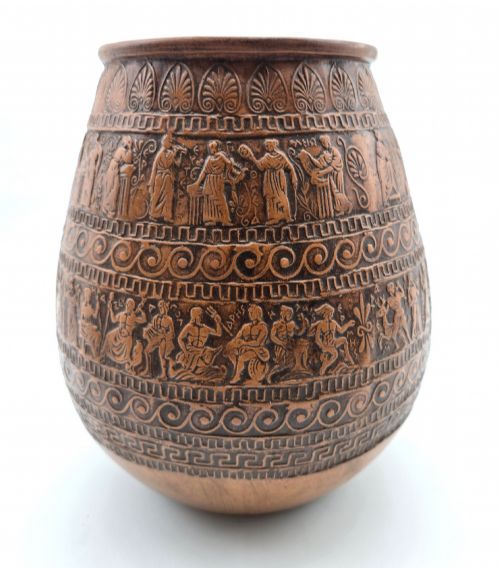
When searching for a grand tour souvenir vase, collectors examine miniature bronze reductions and carved stone vessels brought back by travellers from nineteenth-century continental journeys. The pieces on this page span the Victorian era, Regency period, and later nineteenth century, originating from Italian and French workshops.
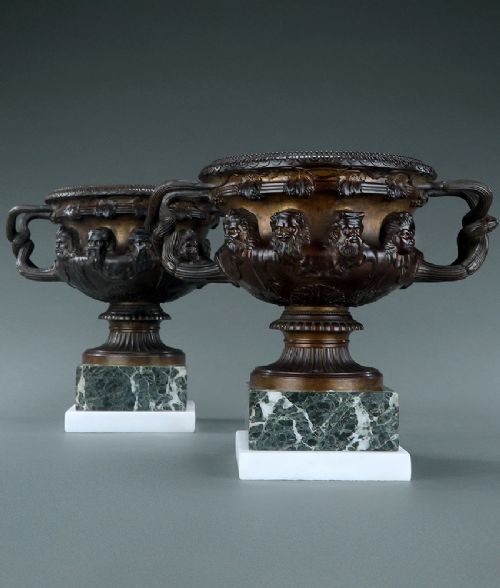
The forms replicate famous classical antiquities including the Warwick, Borghese, Albani, and Medici vases. Buyers encounter campana urns, krater vases, and tripod Atheniennes executed in materials that mimic ancient stone and metalwork.
How they were made
Foundry workers cast metal pieces in bronze, gilt bronze, silvered bronze, and brass, frequently utilising lost-wax methods to capture the crisp detail of classical friezes and handles. Stone examples employ green marble, serpentine marble, and alabaster, turned on lathes and hand-carved to emulate ancient marble statues.
Many metal vessels receive applied patination or fire gilding, while stone urns rely on the natural banding and translucency of the mineral. Bases often incorporate wooden pedestals or stepped plinths to elevate the display.
Listings feature nineteenth-century dates, spanning the Regency period through the Victorian era up to eighteen-ninety.
What varies in quality
The distinction between ordinary souvenirs and superior library pieces rests in the sharpness of the metal chasing and the depth of the casting. Better bronze reductions preserve the intricate facial expressions of centaurs and vine leaves found on the original museum antiquities, rather than softening into muddy outlines.
In stone vessels, quality shows in the selection of the marble or alabaster block, where clean mineral figure and even polishing outweigh surface embellishment. Heavier gauge metals and tightly fitted multi-part bronze assemblies indicate superior workshop production.
Bardedienne
The Grand Tour Souvenir Vase Glossary
- Warwick Vase
- A celebrated Roman marble krater discovered at Hadrian's Villa, featuring high-relief masks and vine scrollwork. Nineteenth-century founders reproduced this form extensively in bronze.
- Campana Urn
- A bell-shaped vessel with a flaring rim and a pedestal foot, modelled after ancient terracotta and marble garden pots.
- Reduction
- A smaller scale copy of a full-sized public monument or sculpture, cast in metal to fit domestic display spaces.
- Cassolette
- A decorative vase with a reversible lid that functions either as a closed urn or a holder for perfume and potpourri.
- Athenienne
- A tripod stand supporting a bowl or vase, designed in the neoclassical taste after ancient Greek and Roman braziers.
Grand Tour Souvenir Vase: Frequently Asked Questions
What is a grand tour souvenir vase?
These pieces are miniature metal castings and stone carvings purchased by nineteenth-century travellers visiting classical sites in Italy and Greece. They replicate famous archaeological finds to decorate domestic interiors.
Craftsmen produced them in bronze, marble, and alabaster during the Victorian and Regency periods, capturing the aesthetic of antiquity for northern European homes.
How do I identify the subject of the vase?
Many vessels bear distinct shapes and figurative reliefs that point directly to specific archaeological excavations in Rome and Tivoli. Profiles featuring low handles and bell bodies typically reference the Warwick or Borghese collections.
Inscriptions, specific handle designs, and companion friezes help differentiate between models such as the Medici, Albani, and Townley urns.
Were these vases used for plants?
Some metal campana urns and stone vessels functioned practically as posy holders, small planters, or desk accessories in nineteenth-century rooms. Others served purely as decorative mantelpiece ornaments.
Heavier marble and alabaster pieces remained ornamental, while bronze versions occasionally accommodated metal liners for cut flowers.